

Estonia supplied D-30s to Ukraine; SIPRI records 9 delivered in 2022 and 31 delivered in 2023 as second-hand aid, and ArmyInform reported Ukrainian FPV crews striking two Russian D-30 howitzers near Myrnohrad in January 2026.
Role detailsArtillery
D-30 122 mm howitzer
Also known as
- 2A18
- M1963
- Lyagushka
- Frog
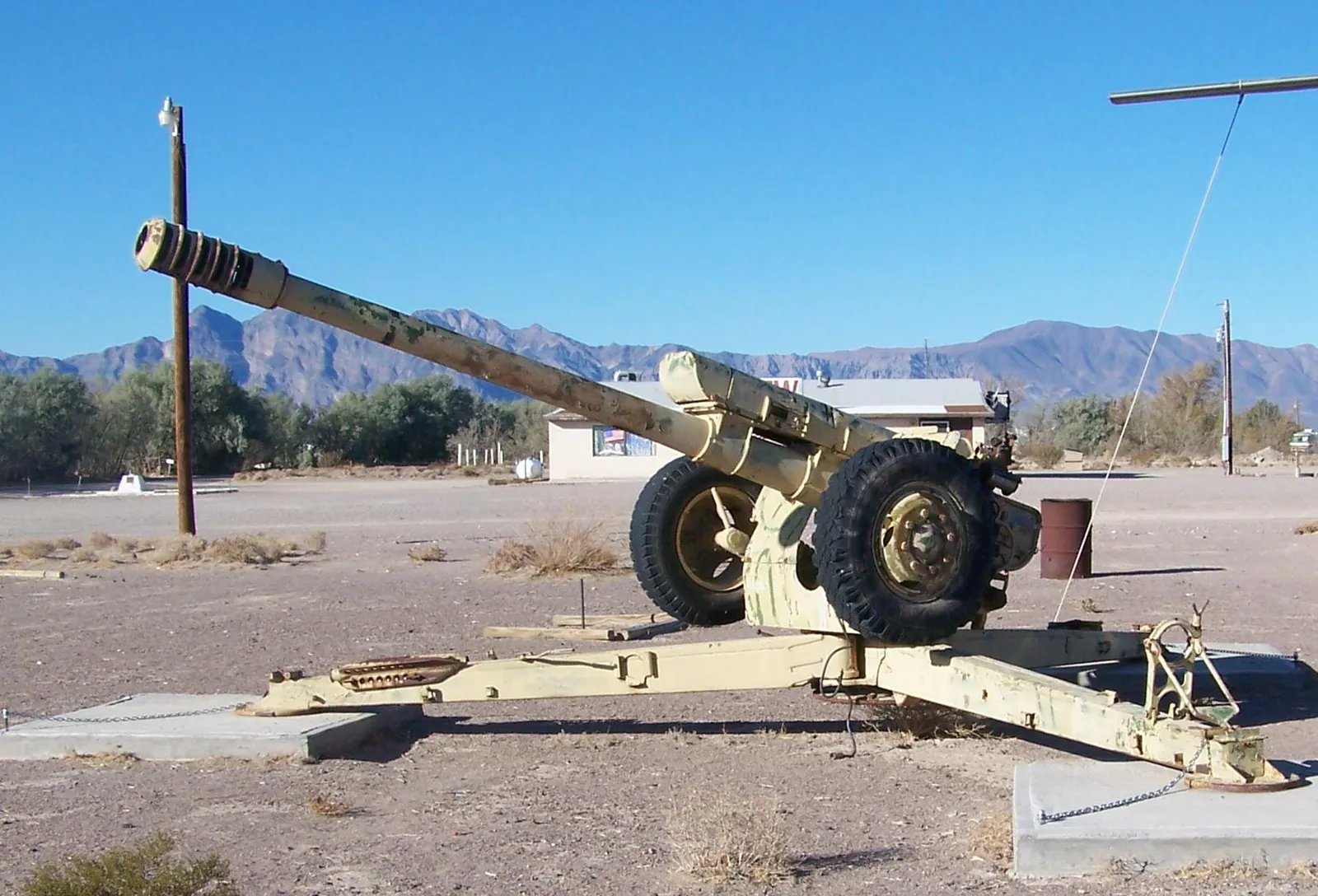
The D-30, also known as the 2A18, M1963, or Frog, is a Soviet 122 mm towed howitzer designed by OKB-9 under F. F. Petrov and built at Plant No. 9 in Yekaterinburg. Its three-trail carriage gives 360-degree traverse, and official U.S. Army support material describes the gun as still manufactured internationally and fielded by more than 60 countries' armed forces.
Role in Conflicts


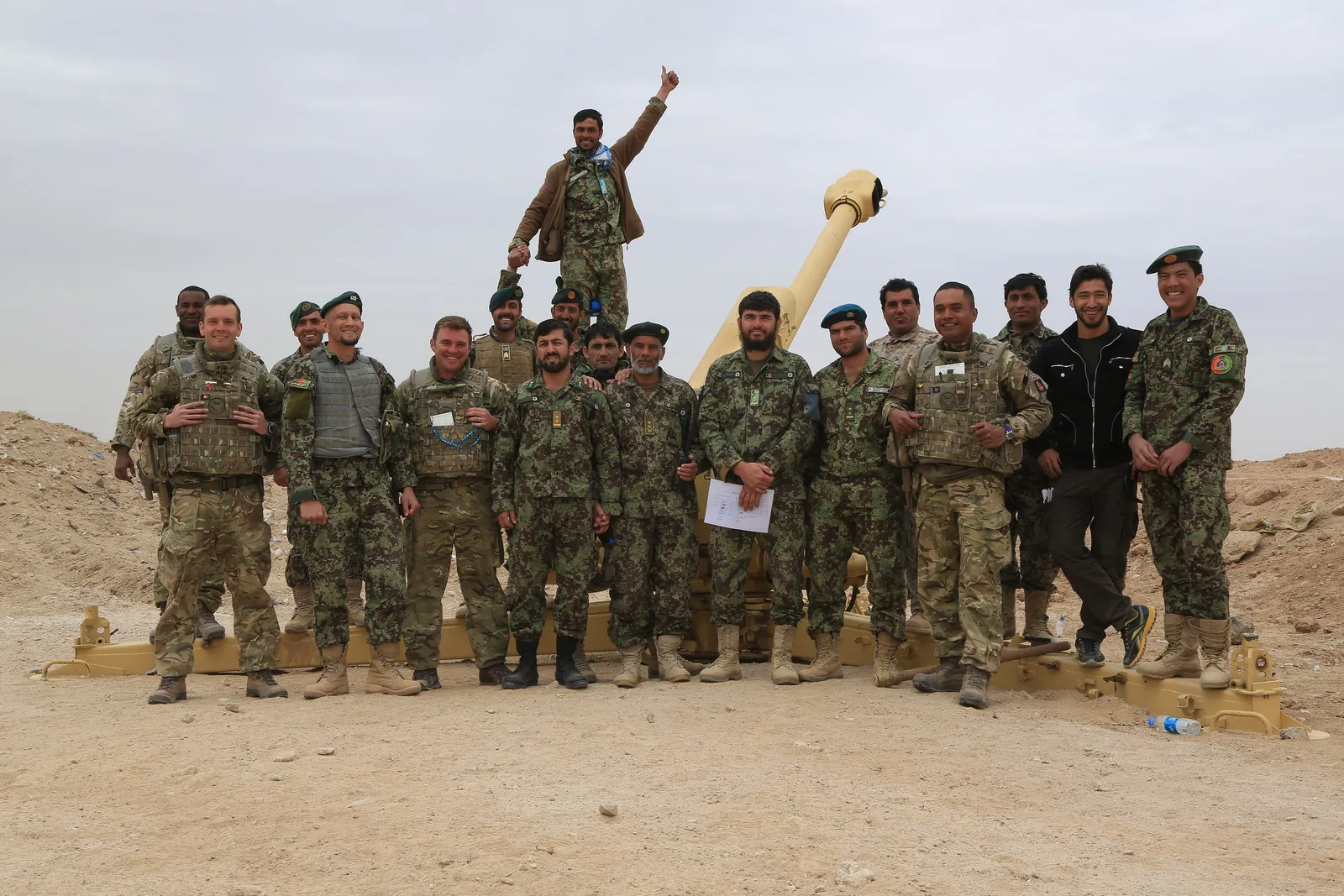
Afghan National Army crews fired D-30 howitzers during U.S.-supported artillery training and live-fire events in Afghanistan, including joint fire-direction training in Nuristan and a 2014 Regional Corps Battle School demonstration.
Role details
Fielded by Armenian and Artsakh forces during the 2020 fighting, with Oryx listing 122 mm D-30 howitzers destroyed, damaged, and captured from that side.


Used by Syrian government forces for artillery fire support, including Homs-area reporting in 2012; opposition forces also operated captured D-30s, and Oryx documented fourteen D-30s captured from Syrian Arab Army and affiliated positions in late 2024.
Role details- Side
- Tigray forces

Documented among the Tigray Defence Forces' heavy weapons during the war, with Oryx listing 122 mm D-30 howitzer 2A18 pieces in TDF possession.

Documented by Oryx in the Yemeni Army's pre-war towed-artillery inventory and described as equipment available to Yemeni parties on the battlefield; the source does not assign the listed D-30s to a single faction.
Role detailsDocumented in a Lake Chad Basin lethal-materiel study as D-30 towed artillery in service with, or recovered from, Boko Haram factions; the source treats the list as cumulative and not a current holdings snapshot.

2014 Second Libyan Civil War: fielded by the Libyan National Army, with Oryx documenting 122mm D-30 howitzers in an LNA parade and in the LNA's Tarhuna supply depot after the GNA's June 2020 advance.

2023 Sudan War: fielded by the Sudanese Armed Forces, with Oryx listing 122mm D-30 howitzers in Sudan's current wartime inventory of towed artillery.
- Side
- Islamic State
2014 War Against the Islamic State: used by the Islamic State in Mosul as truck-mounted 122mm D-30 howitzers firing at U.S. Navy EP-3 aircraft.
Role details- Side
- Islamic State
2013 War in Iraq: used by the Islamic State in Mosul as truck-mounted 122mm D-30 howitzers firing at coalition aircraft.
Profile / Specs
Profile
- Origin
- Soviet Union
- Built by
- Artillery Plant No. 9
- Built in
- Soviet UnionRussia
- Type
- 122 mm towed howitzer
- Service note
- Cold War design in current service
- Designer
- OKB-9 under F. F. Petrov
- Designed
- Late 1950s
- Produced
- Early 1960s onward; D-30A production continued into the 2006-2013 period according to NDU
Specifications
- Crew
- 6
- Caliber
- 122 mm
- Weight
- 3,200 kg
- Firing range
- 15,300 m standard; 21,900 m with RAP
- Rate of fire
- 6-8 rounds per minute; U.S. Army PM CAS lists 10-12 rounds per minute maximum and 5-6 sustained
- Traverse
- 360 degrees on three-trail carriage
- Elevation
- -7° to +70°
- Breech
- Semi-automatic vertical sliding wedge
- Towing speed
- Up to 80 km/h by truck in U.S. Army PM CAS data
- Ammunition
- Separate-loading 122 mm shells with variable charges
- Fire control
- PG-1M panoramic telescope, OP 4M-45 direct-fire sight, K-1 collimator
Variants
Open sources use D-30, 2A18, D-30A, and 2A18M for the Soviet towed-howitzer family, while several export or local-production names describe national copies and self-propelled adaptations.
| Variant | Configuration | Designation notes |
|---|---|---|
| D-30M | Midlife product-improvement model | FAS treats the D-30M as a product-improved D-30 model in the same 122 mm family. Sources: D-30 / 2S1 lineage |
| D-30A / 2A18M | Modernized serial model | NDU and OKB-9 chronology material identify the D-30A / 2A18M as the modernized serial designation. Sources: 122-mm D-30 Howitzer, OKB-9 Product Chronology |
| D-30A-1 / 2A18M-1 | Later D-30A subvariant | NDU lists the D-30A-1 / 2A18M-1 as a later model in the D-30A production sequence. Sources: 122-mm D-30 Howitzer |
| D30J | Yugoslav-produced version | Army Recognition lists D30J among foreign-produced D-30 family variants. Sources: D-30 2A18 |
| Saddam | Iraqi-produced version | Army Recognition lists Saddam as an Iraqi-produced D-30 family variant. Sources: D-30 2A18 |
| SP 122 | Egyptian self-propelled adaptation | Army Recognition lists SP 122 as an Egyptian self-propelled version tied to the D-30 family. Sources: D-30 2A18 |
| Type 85 | Chinese self-propelled adaptation | Army Recognition lists Type 85 as a Chinese self-propelled version in the wider D-30 family. Sources: D-30 2A18 |
 | Self-propelled derivative | FAS describes the 2S1 Gvozdika as using a modified D-30 barrel and the D-30 ammunition family. Sources: D-30 / 2S1 lineage |
Self-Propelled Derivatives
The D-30 family also fed self-propelled artillery development, so the page keeps one clear derivative relationship here rather than overloading the specs table.
| Compatible item | Item type | Compatibility evidence |
|---|---|---|
| 122 mm self-propelled howitzer | FAS describes the 2S1 Gvozdika as using the D-30 barrel and ammunition set, making it the closest cataloged self-propelled derivative of the D-30 family. Sources: D-30 / 2S1 lineage |
Ammunition Fired
The D-30 fires a broad family of separate-loading 122 mm rounds, from standard high-explosive cartridges to a laser-guided shell.
| Ammunition | Ammunition type | Firing evidence |
|---|---|---|
 | Separate-loading 122 mm artillery ammunition | STV documents current 122 mm high-explosive cartridges intended for D-30 and 2S1 howitzers, covering the standard separate-loading ammunition family alongside guided shells such as Kitolov-2M. Sources: STV 122 mm D-30 and 2S1 Ammunition |
 | Semi-active laser-guided 122 mm shell | FAS lists the Kitolov-2M as one of the D-30's other ammunition types, and STV separately documents current 122 mm high-explosive cartridges intended for D-30 and 2S1 howitzers. Sources: D-30 / 2S1 lineage, STV 122 mm D-30 and 2S1 Ammunition |
Mounted On
| Carrier | Carrier type | Carriage evidence |
|---|---|---|
 | 122 mm artillery piece | Klüser's ATS-59 category list identifies ATS-59-122 as an ATS-59 D-30 122 mm type, making the D-30 the named gun mounted on the vehicle. |
Timeline
D-30 122 mm howitzer Key Events
Development Begins
OKB-9 develops the D-30 as a replacement for the M-30 122 mm howitzer.
Sources: 122-mm D-30 Howitzer, D-30 / 2S1 lineage
Service Entry
The D-30 enters Soviet service and serial production at Artillery Plant No. 9 in Yekaterinburg.
Sources: 122-mm D-30 Howitzer, OKB-9 Product Chronology
D-30A Modernization
NDU lists the D-30A / 2A18M as the modernized serial model, while FAS describes the D-30M and D-30A as midlife product improvements.
Sources: 122-mm D-30 Howitzer, OKB-9 Product Chronology
Afghan Refurbishment Support
U.S. Army PM TAS receives the D-30 program assignment, starts refurbishing D-30s for the Afghan National Army artillery corps, and establishes an Afghan central workshop.
Sources: PM CAS D30 Product Page
Afghan Live-Fire Demonstration
Afghan National Army soldiers fire a D-30 at Camp Shorabak during a Regional Corps Battle School live-fire artillery demonstration.
Sources: File:Afghan National Army soldiers fire a 122mm Howitzer 2A18 (D-30) 140312-M-EN264-180.jpg, ANA forward observers, artillery, FDC hit the mark during joint training in Nuristan
Estonia Announces D-30 Aid
Estonia announces a Ukraine aid package that includes 122 mm D-30 howitzers; SIPRI transfer records list Estonian D-30 deliveries to Ukraine in 2022 and 2023 as second-hand aid.
Sources: Estonian Minister of Defence: Allies must give Ukraine heavy weaponry, SIPRI Arms Transfers Database trade 65102, SIPRI Arms Transfers Database trade 66249
Myrnohrad Strike Report
ArmyInform reports Russian D-30 howitzers struck near Myrnohrad during the 2014 Russia-Ukraine War.
Sources: Myrnohrad without enemy guns: Pilots strike two Russian D-30 howitzers
Carriage And Ammunition Notes
Federation of American Scientists material highlights the D-30's unusual three-trail carriage, muzzle-first towing arrangement, and recoil mechanism above the tube, all of which help distinguish the weapon from many older 122 mm howitzers.
STV Group's 122 mm ammunition catalog lists both reduced-charge and full-charge high-explosive cartridges intended for D-30 and 2S1 howitzers, while FAS also identifies rocket-assisted and semi-active laser-guided Kitolov-2M ammunition in the broader D-30 ammunition family.
U.S. Army D-30 support material describes refurbishment and training assistance for the Afghan National Army artillery corps, giving the page a separate service-context lane from the Soviet design and export-variant history.
Media
D-30 122 mm howitzer Videos
D-30 122 mm howitzer Images
Related Weapon Systems


Sources
122-mm D-30 HowitzerPublisher: National Defence University of Ukraine | Note: Supports manufacturer, design background, service history, and core D-30 specifications. | Accessed: 2026-06-19D-30 2A18Publisher: Army Recognition | Note: Supports additional system background, armament, mobility, traverse, range, and rate-of-fire context. | Accessed: 2026-06-19D-30 / 2S1 lineagePublisher: Federation of American Scientists | Note: Describes the D-30 family relation to the 2S1 Gvozdika and its ammunition family, including Kitolov-2M. | Accessed: 2026-06-24PM CAS D30 Product PagePublisher: U.S. Army Capability Program Executive Ammunition & Energetics | Note: Official U.S. Army product page supporting D-30 specifications, global service context, and Afghan National Army refurbishment and training support. | Accessed: 2026-06-24ANA forward observers, artillery, FDC hit the mark during joint training in NuristanPublisher: The United States Army | Note: Documents 2001 War in Afghanistan D-30 howitzers fired by Afghan National Army artillery crews during U.S.-supported forward observer, artillery, and fire-direction-center training in Nuristan. | Accessed: 2026-06-30STV 122 mm D-30 and 2S1 AmmunitionPublisher: STV Group | Note: Manufacturer ammunition page listing reduced-charge and full-charge 122 mm high-explosive cartridges intended for D-30 and 2S1 howitzers. | Accessed: 2026-06-24Modelling vehicle history - ATS-59-122Publisher: Klüser | Note: Identifies ATS-59-122 as an ATS-59 D-30 122 mm type, supporting the reciprocal mounted-gun relationship from the D-30 page. | Accessed: 2026-06-28OKB-9 Product ChronologyPublisher: GlobalSecurity.org | Note: Lists the D-30A / 2A18M in OKB-9's product chronology as a later adoption. | Accessed: 2026-06-24Estonian Minister of Defence: Allies must give Ukraine heavy weaponryPublisher: Estonian Ministry of Defence | Note: Documents Estonia's 2014 Russia-Ukraine War aid package including 122 mm D-30 howitzers for Ukraine. | Accessed: 2026-07-07SIPRI Arms Transfers Database trade 65102Publisher: Stockholm International Peace Research Institute | Note: Documents 2014 Russia-Ukraine War transfer context: Estonia supplied 9 second-hand D-30 122 mm towed guns to Ukraine, delivered in 2022 according to SIPRI's trade record. | Accessed: 2026-07-07SIPRI Arms Transfers Database trade 66249Publisher: Stockholm International Peace Research Institute | Note: Documents 2014 Russia-Ukraine War transfer context: Estonia supplied 31 second-hand D-30 122 mm towed guns to Ukraine, delivered in 2023 as aid after Russia's 2022 invasion according to SIPRI's trade record. | Accessed: 2026-07-07Myrnohrad without enemy guns: Pilots strike two Russian D-30 howitzersPublisher: ArmyInform | Note: Documents Ukrainian FPV operators striking two Russian D-30 howitzers near Myrnohrad during the 2014 Russia-Ukraine War. | Accessed: 2026-07-07The Fight For Nagorno-Karabakh: Documenting Losses On The Sides Of Armenia And AzerbaijanPublisher: Oryx | Note: Documents 122 mm D-30 howitzer 2A18 pieces fielded by Armenian and Artsakh forces in the 2020 Nagorno-Karabakh Conflict through losses and captures in 2020. | Accessed: 2026-06-20A 3-day SMO Done Right - 2024 Syrian Rebel Offensive and the Resulting Collapse of the Regime Military in Northern SyriaPublisher: Oryx | Note: Documents direct 2011 Syrian Civil War use by Syrian Arab Army and affiliated forces through 122 mm D-30 howitzers captured in the late-2024 rebel offensive. | Accessed: 2026-06-20Defense One Syrian War ArtilleryPublisher: Defense One | Note: Documents direct 2011 Syrian Civil War use by identifying D-30 122 mm howitzers among Syrian government artillery used in the early-2012 Homs attack. | Accessed: 2026-07-05Oryx Syrian Arab Army Photo ReportPublisher: Oryx | Note: Documents direct 2011 Syrian Civil War use by describing the 122 mm D-30 as one of the Syrian Arab Army's primary artillery guns during the civil-war period. | Accessed: 2026-07-05Washington Institute Harakat HazmPublisher: The Washington Institute for Near East Policy | Note: Documents direct 2011 Syrian Civil War use by reporting that Harakat Hazm operated 122 mm D-30 howitzers among its field artillery. | Accessed: 2026-07-05DFRLab Syrian Civil War Pushed to Israel BorderPublisher: Atlantic Council DFRLab | Note: Documents direct 2011 Syrian Civil War use by identifying a D-30 towed howitzer in rebel-controlled Quneitra/Daraa border terrain and noting rebel possession and use of D-30s during the conflict. | Accessed: 2026-07-05The Tigray Defence Forces - Documenting Its Heavy WeaponryPublisher: Oryx | Note: Documents 122 mm D-30 howitzer 2A18 pieces among Tigray Defence Forces heavy weapons in the 2020 Tigray War. | Accessed: 2026-06-20Handbook Of Pre-War Yemeni Fighting VehiclesPublisher: Oryx | Note: 2014 Yemen Civil War: documents 122 mm D-30 howitzers fielded by the Yemeni Army before the Houthi takeover and described as available to Yemeni parties on the battlefield. | Accessed: 2026-06-20Photo Report: Haftar's Last ParadePublisher: Oryx | Note: 2014 Second Libyan Civil War: documents 122mm D-30 howitzers fielded by the Libyan National Army and shown in the LNA's 2021 parade after the war's main 2014-2020 phase. | Accessed: 2026-06-22Disaster at Tarhuna: When Haftar Lost Another Stronghold In Crushing Defeat To The GNAPublisher: Oryx | Note: 2014 Second Libyan Civil War: documents 122mm D-30 howitzers captured from the LNA's Tarhuna supply depot after the GNA advance. | Accessed: 2026-06-22From Conflict To Conflict: Sudan’s Fighting VehiclesPublisher: Oryx | Note: 2023 Sudan War: lists 122mm D-30 howitzers in Sudan's current wartime inventory of towed artillery. | Accessed: 2026-06-22That Time Soviet Howitzers Were Used as Anti-Aircraft Guns by the Islamic StatePublisher: Oryx | Note: Documents 2014 War Against the Islamic State and 2013 War in Iraq direct use by the Islamic State, including truck-mounted 122mm D-30 howitzers fired at coalition aircraft over Mosul. | Accessed: 2026-06-22The Management of Lethal Materiel in Conflict SettingsPublisher: IPIS | Note: 2009 Boko Haram Insurgency: documents D-30 towed artillery fielded by or recovered from Boko Haram factions in the Lake Chad Basin, with a caveat that the list is cumulative. | Accessed: 2026-06-21File:122 mm howitzer 2A18 (D-30).jpgPublisher: Wikimedia Commons | Note: Supports image provenance and licensing; the file is sourced to Flickr and confirmed on Commons as CC BY 2.0. | Accessed: 2026-06-19File:Afghan National Army soldiers fire a 122mm Howitzer 2A18 (D-30) 140312-M-EN264-180.jpgPublisher: Wikimedia Commons | Note: Documents 2001 War in Afghanistan D-30 howitzers fired by Afghan National Army soldiers at Camp Shorabak and supports image provenance for the U.S. Marine Corps photograph. | Accessed: 2026-06-30