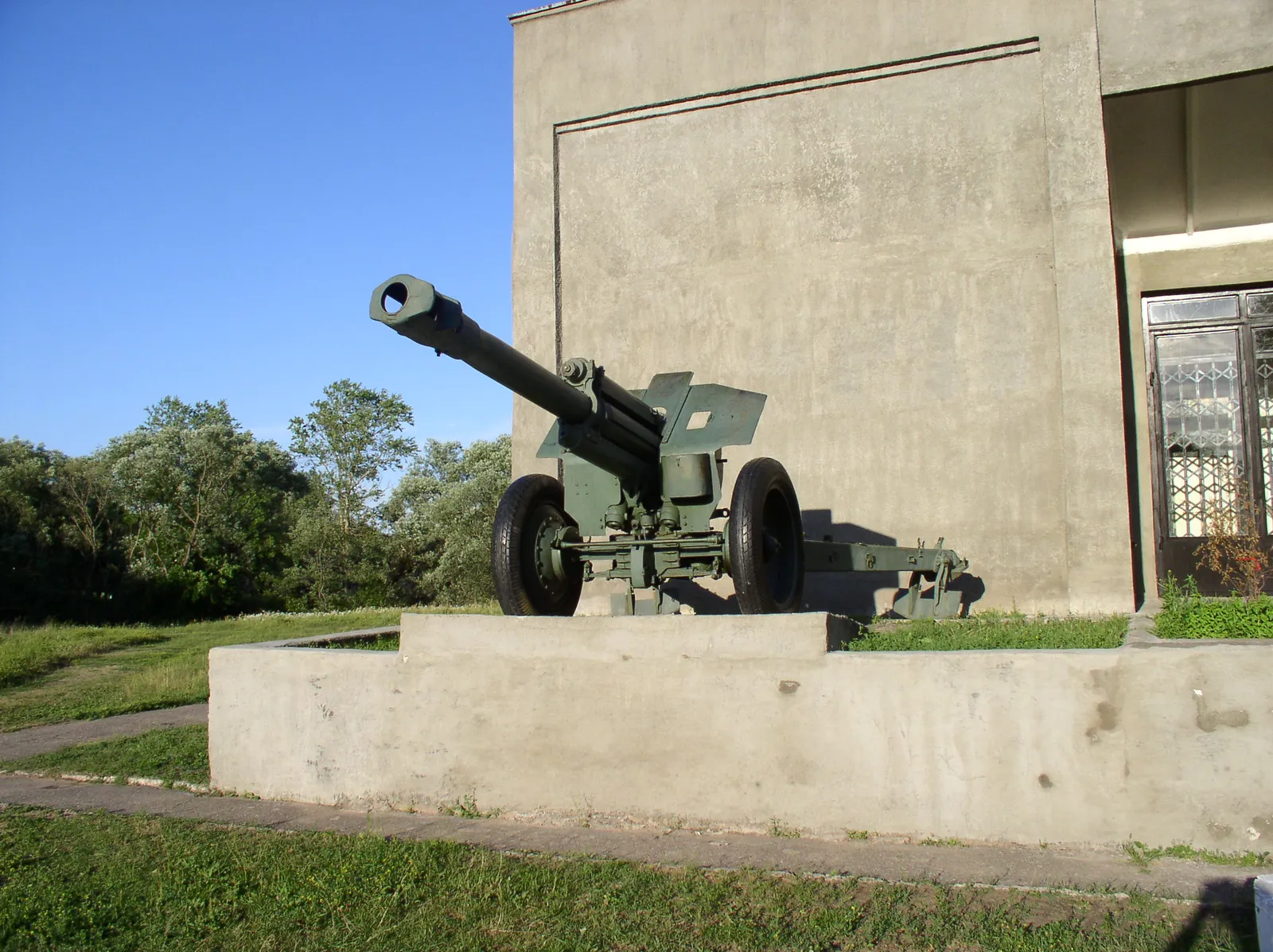
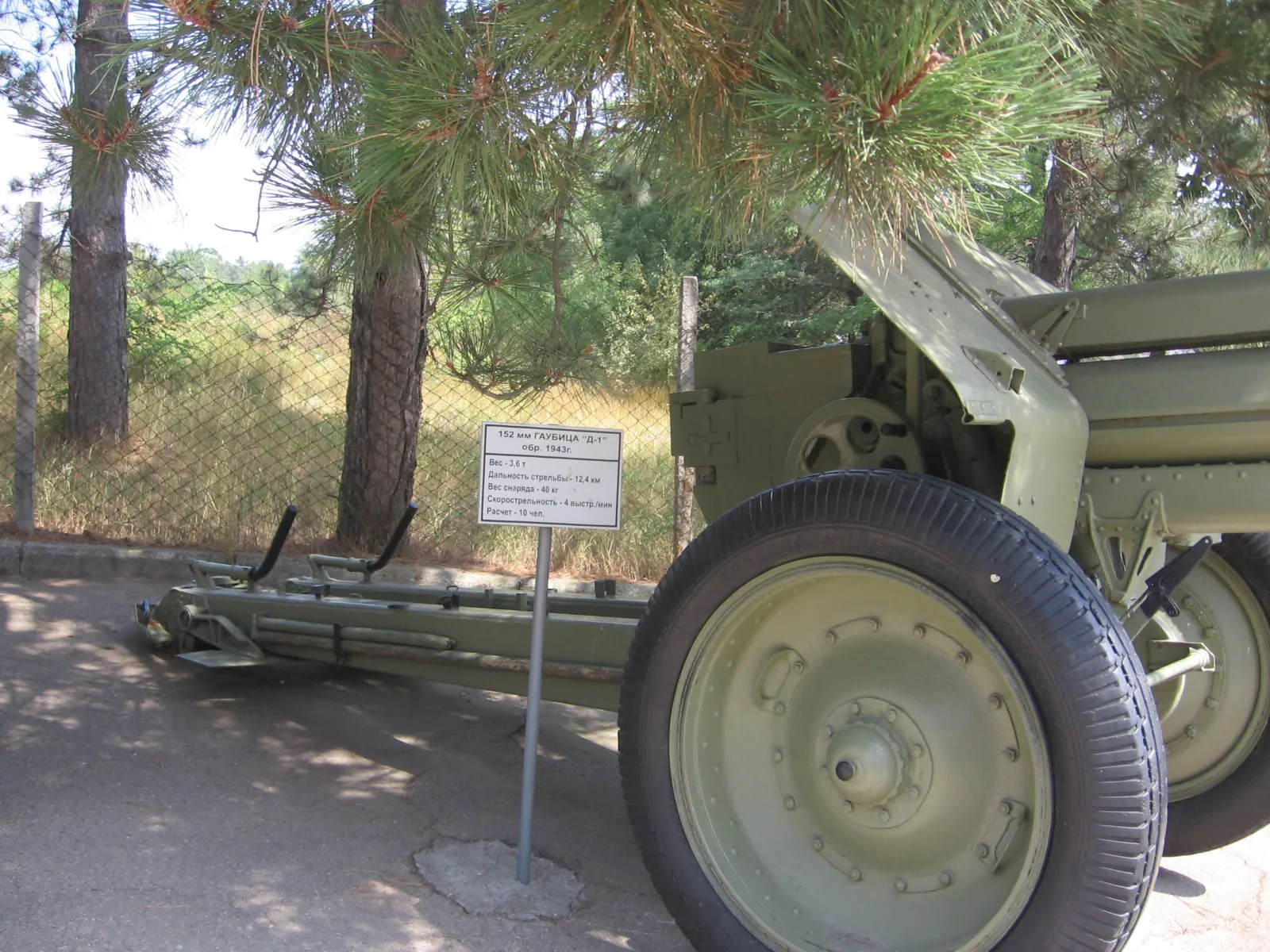
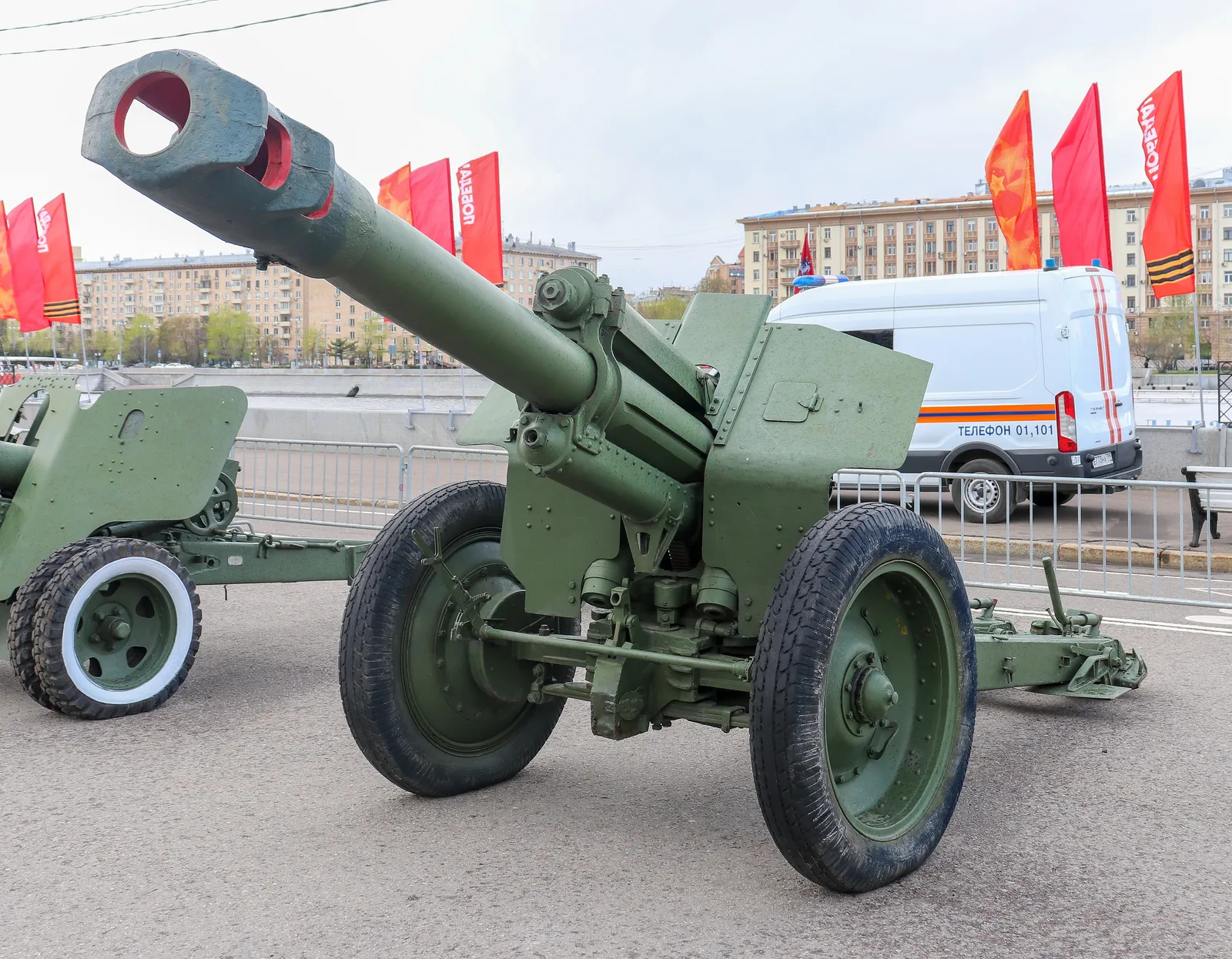
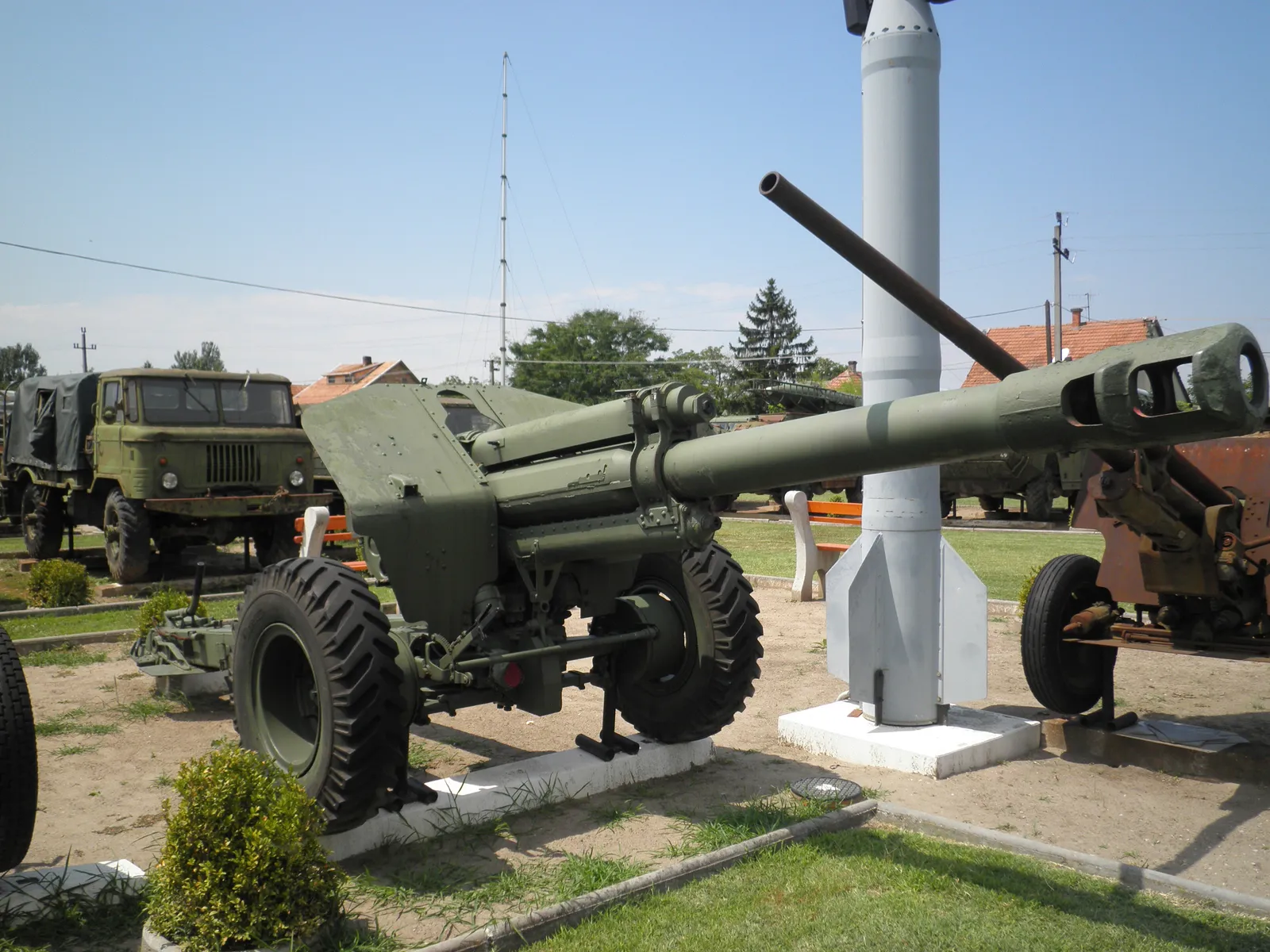
The D-1's catalog significance comes from a wartime compromise that remained useful long after Soviet corps-artillery service: a heavy 152 mm shell in a lighter towed package, with a short range compared with later 152 mm guns.
Design approachWeaponSystems.net describes the D-1 as a lighter 152 mm howitzer combining a two-wheel split-trail carriage with short 152 mm ordnance and a double-baffle muzzle brake.
Fire envelopeThe standard OF-530 shell range is about 12.4 km, below later Soviet 152 mm guns but still useful for close and rear-area fire support.
Modern appearanceRecent conflict records are residual-stock evidence rather than new production: The Insider, Newsweek, RBC-Ukraine, and Texty link D-1s to Russian or Russian-aligned artillery use in Ukraine, while Oryx documents D-1 losses in Syria and Nagorno-Karabakh.
Sources: 152mm D-1; The Insider Stalin-era equipment report; Newsweek Wagner ammunition appeal; RBC-Ukraine Russian ammo interview; A year of war; The Idlib Turkey Shoot; Oryx Nagorno-Karabakh Losses.