- Side
- Iraq

Iraqi forces fielded 2S3 Akatsiya self-propelled guns during the Gulf War; the Imperial War Museums collection identifies its example as captured from Iraqi forces during that conflict.
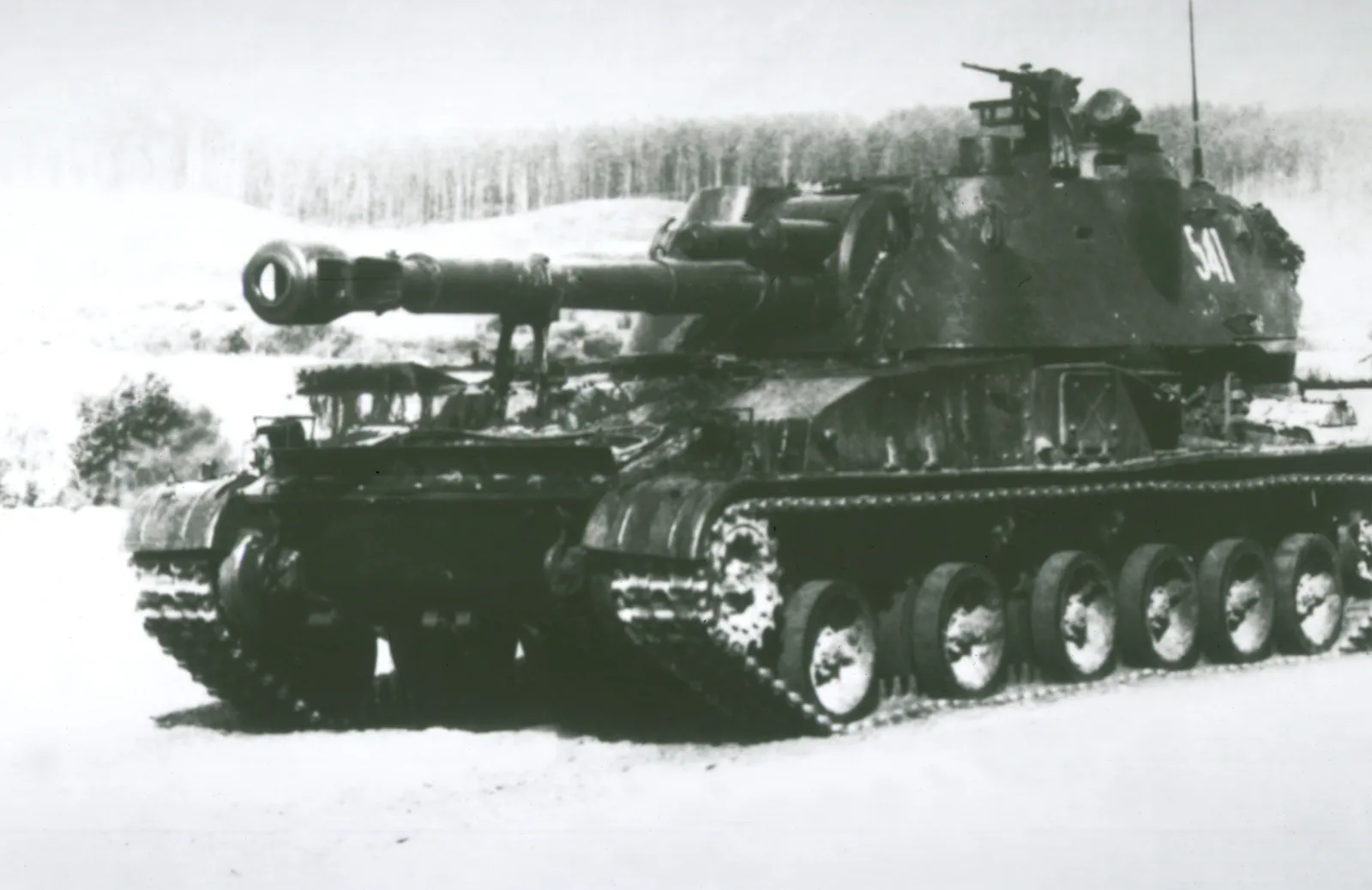
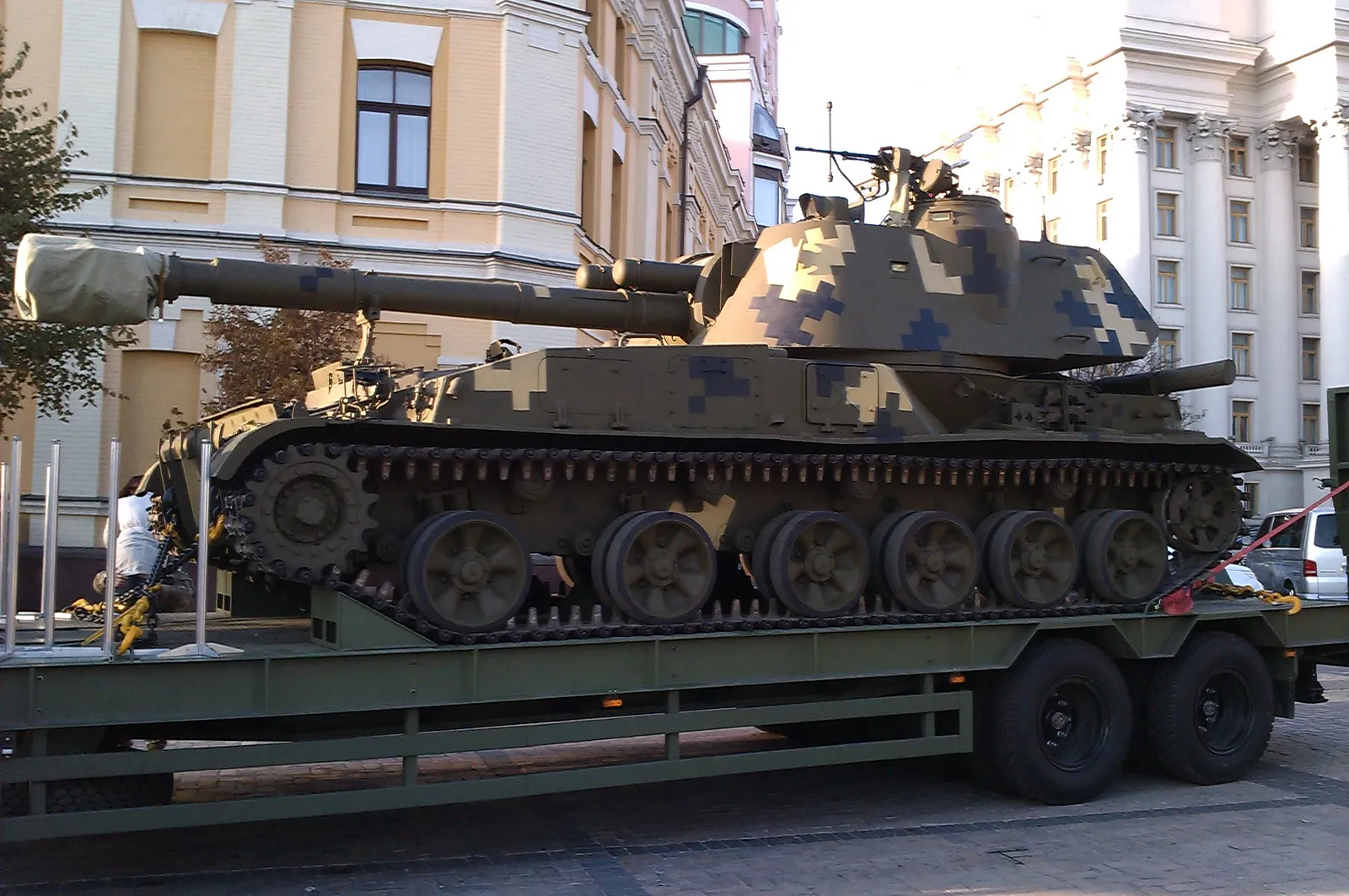
Role detailsThe 2S3 Akatsiya is a Soviet 152 mm tracked self-propelled howitzer built around the 2A33 gun and a turreted armored chassis. Designed for divisional fire support and accepted into service in 1971, it appears across Iraqi, Chechen, Syrian, Armenian, Libyan, Russian, and Ukrainian conflict records because large Cold War stocks remained in service long after newer self-propelled artillery entered use.
Iraqi forces fielded 2S3 Akatsiya self-propelled guns during the Gulf War; the Imperial War Museums collection identifies its example as captured from Iraqi forces during that conflict.
Role detailsOryx documents 2S3 Akatsiya losses during the First Chechen War and notes that Chechen forces initially relied on inherited 2S3 self-propelled howitzers while Russia also lost Akatsiya vehicles in the fighting.
Syrian government forces fielded 2S3 Akatsiya self-propelled guns during the Syrian Civil War; Bellingcat's vehicle-loss review lists the type among Syrian Arab Army systems actively used and lost from 2011 to 2017.
Role detailsArmenian and Artsakh forces fielded 152 mm 2S3 Akatsiya self-propelled howitzers during the 2020 Nagorno-Karabakh fighting; Oryx visually documented five Armenian 2S3 Akatsiya losses, and Azerbaijani Ministry of Defense reports claimed Armenian 2S3s were destroyed by Azerbaijani fire.
Both Russian and Ukrainian forces have fielded 2S3 Akatsiya tracked 152 mm self-propelled howitzers in the Russia-Ukraine War. Oryx visually documents losses on both sides, while RFE/RL reporting from May 2024 shows a Ukrainian 22nd Mechanized Brigade crew firing a 2S3 near Chasiv Yar.
Role detailsGNA-aligned forces captured three 152 mm 2S3 Akatsiya self-propelled guns at Tarhuna in June 2020 after the LNA withdrew from its last northwestern Libya stronghold; Oryx described the vehicles as rare in Libya and apparently operational.
The Akatsiya sits between towed 152 mm guns and newer long-range self-propelled artillery: it gives divisional formations armored tracked mobility and a turreted 2A33 gun, but its common range figures are shorter than modern 152/155 mm systems.
Suppression and destruction of personnel, artillery and mortar batteries, command posts, firing points, and other targets within divisional fire-support depth.
The 152 mm 2A33/D-22 howitzer is related to the D-20 ordnance family, which explains the catalog relationship to D-20 ammunition compatibility.
Later 2S3M-family standards focused on ammunition handling, communications, navigation, and automated fire-control improvements rather than turning the vehicle into a new artillery class.
The base 2S3 family was followed by Soviet/Russian modernization standards that improved ammunition handling, communications, and fire-control equipment while retaining the 152 mm 2A33 gun family.
| Variant | Configuration | Designation notes |
|---|---|---|
| 2S3 | Initial production model | Baseline Akatsiya accepted into service in the early 1970s as a 152 mm turreted self-propelled howitzer. Sources: 2S3 Akatsiya, 2S3 Akatsiya (M1973) Russian 152mm Self-Propelled Howitzer |
| 2S3M | Ammunition-handling modernization | Modernized production standard associated with increased onboard ammunition capacity and revised ammunition handling. Sources: 2S3 Akatsiya |
| 2S3M1 | Fire-control and communications modernization | Later modernization standard listed for improved command, communications, and fire-control equipment. Sources: 2S3 Akatsiya |
| 2S3M2 | Post-Soviet fire-control modernization | Further Russian modernization standard associated with updated fire-control and navigation equipment. Sources: 2S3 Akatsiya |
Army Recognition reports that the 2S3 Akatsiya can fire the 9K25 Krasnopol laser-guided projectile.
| Ammunition | Ammunition type | Firing evidence |
|---|---|---|
 | 152 mm laser-guided projectile | Army Recognition identifies the 2S3 Akatsiya as one of the self-propelled howitzers that can fire Krasnopol projectiles. Sources: Krasnopol guided shells |
| Compatible item | Item type | Compatibility evidence |
|---|---|---|
 | Towed 152 mm howitzer | Weaponsystems.net states that the 2S3 Akatsiya uses the same type of ordnance as the D-20, making the D-20 the explicit compatibility reference for the 2S3's gun family. Sources: 2S3 Akatsiya |
The 2S3 program began in the late 1960s as a Soviet tracked divisional self-propelled howitzer project centered on a 152 mm gun.
Sources: 2S3 Akatsiya, 152 mm self-propelled howitzer Akatsiya
Reference sources place the 2S3 Akatsiya's entry into Soviet service in 1971, before large-scale production of later 2S3M-family variants.
Sources: 2S3 Akatsiya, 152 mm self-propelled howitzer Akatsiya
Imperial War Museums identifies its Akatsiya as a Gulf War capture from Iraqi forces, directly tying the type to Iraqi self-propelled artillery stocks in 1990-1991.
Sources: IWM 2S3M Akatsiya collection record
Bellingcat lists the 2S3 among Syrian Arab Army armored fighting vehicles actively used and lost between 2011 and 2017.
Sources: Bellingcat SAA vehicle losses 2011-2017
RFE/RL reported from Ukrainian defensive positions near Chasiv Yar and photographed a 22nd Mechanized Brigade soldier firing a 2S3 Akatsiya.
Sources: RFE/RL Chasiv Yar defenses