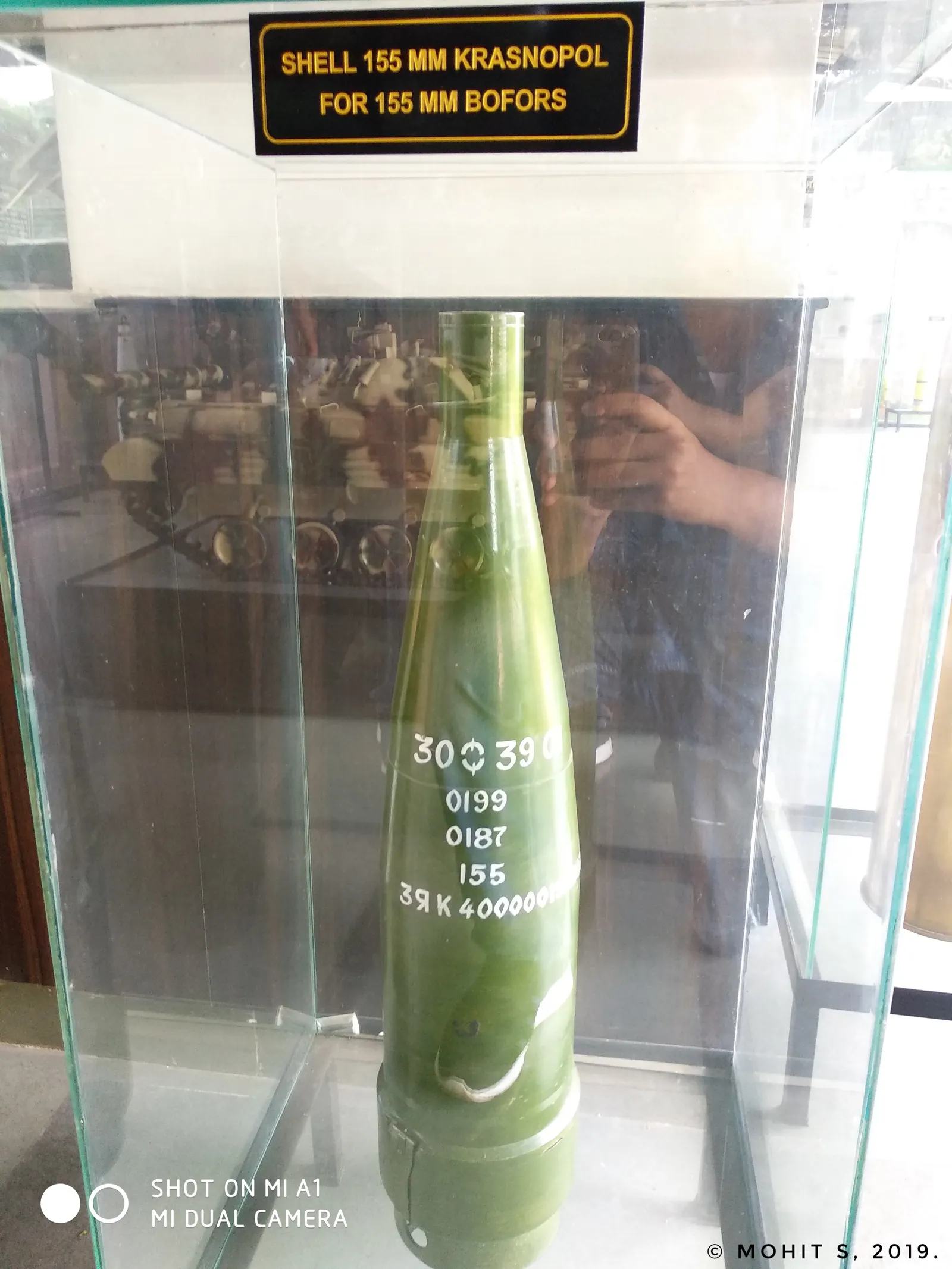
Russian forces have used Krasnopol-family laser-guided 152 mm artillery projectiles in Ukraine for precision strikes, with current reporting describing Krasnopol-M2 rounds fired from Russian artillery systems and Orlan-30 target-designation workflows for Krasnopol fires.
Role details9K25 Krasnopol laser-guided projectile
- 2K25 Krasnopol
- Krasnopol
- Krasnopol-M
- Krasnopol-M1
- Krasnopol-M2
- Krasnopol 9K25
- 152 mm Krasnopol
- 155 mm Krasnopol
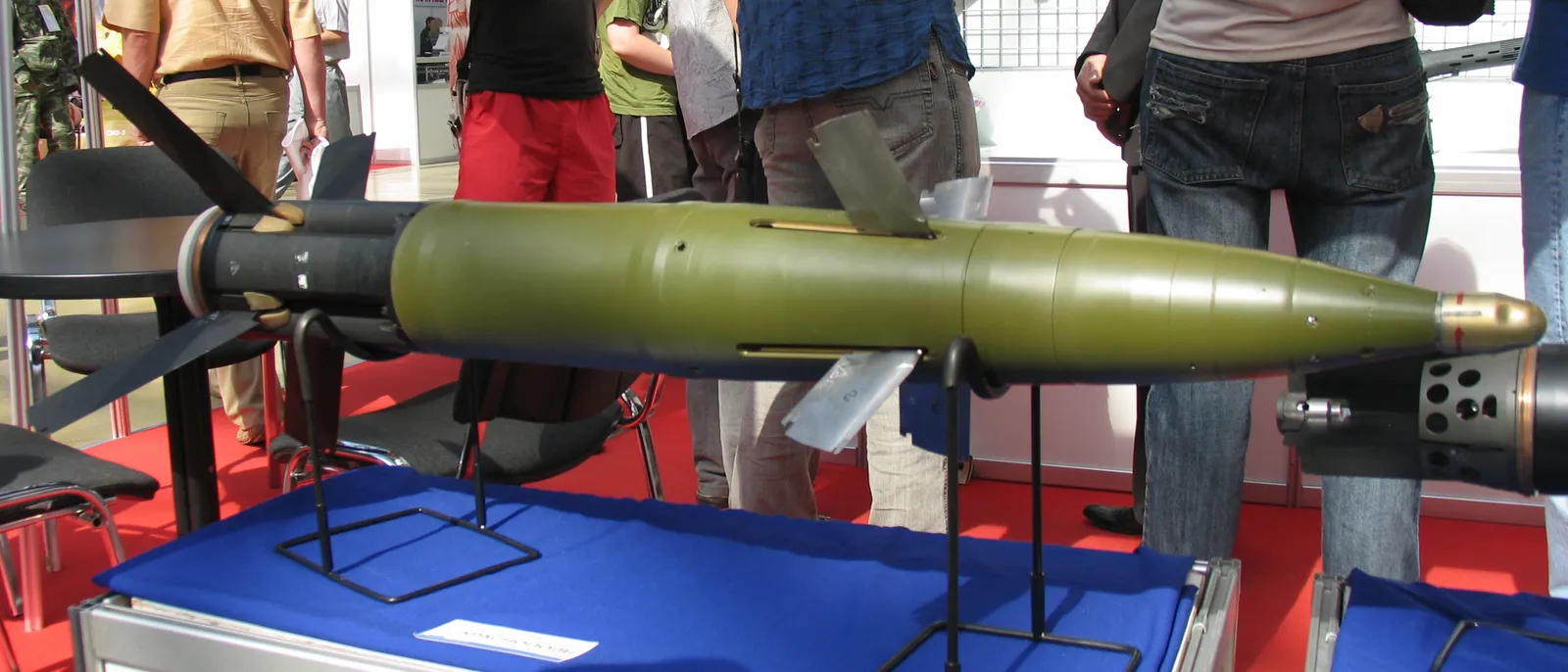
The 9K25 Krasnopol family is a Russian laser-guided artillery projectile line built around semi-active laser homing for precision tube-artillery fire. KBP-origin projectiles in the family include Soviet-era 152 mm rounds, shorter Krasnopol-M designs compatible with the 2S19 Msta-S autoloader, and Krasnopol-M2 rounds documented in Russian use in Ukraine. The projectile depends on a target being illuminated by ground or airborne laser designators, making Orlan-30 and similar target-acquisition systems part of the weapon's practical employment chain.
Role in Conflicts
Russian and Syrian government-aligned operations in Syria used Krasnopol laser-guided artillery; AIN reported Russian UAV-assisted target designation for laser-guided shells during the Idlib offensive, and Syrian Archive documented Krasnopol weapon-system use in Syria.
Role detailsProfile / Specs
Profile
- Origin
- Russia
- Built by
- KBP Instrument Design Bureau
- Type
- 152/155 mm laser-guided artillery projectile
- Service note
- Introduced in the Soviet era and later modernized for Russian 152 mm artillery systems
- Designer
- KBP Instrument Design Bureau / A. G. Shipunov team
- Designed
- 1970s-1980s
- Produced
- Mass production began in 1986; later variants were modernized for current Russian 152 mm artillery
Specifications
- Caliber
- 152 mm baseline; Krasnopol-M references describe 152/155 mm compatibility
- Guidance
- Semi-active laser homing with inertial mid-course guidance
- Target designation
- Requires an external laser-designated target in the terminal phase; Orlan-30 has been analyzed as a Krasnopol designator in Ukraine
- Range
- Up to 20 km reported for the 9K25/2K25 round
- Projectile weight
- About 50 kg reported for the original Krasnopol
- Warhead weight
- About 20.5 kg high-explosive fragmentation warhead reported for the original Krasnopol
- Compatibility
- Krasnopol-M is compatible with the 2S19 autoloader and western 155 mm howitzers; the baseline Krasnopol is used with Soviet and Russian 152 mm artillery systems.
- Stowage
- Krasnopol-M1 is described as having standard-projectile dimensions and weight for existing ammunition racks without sectioning
Designation Set
Open references use Krasnopol for both the baseline Soviet/Russian 152 mm guided projectile family and later Krasnopol-M/M1/M2 designations. The table below separates the recurring names and what each one usually signals.
| Designation | Configuration | Reader note |
|---|---|---|
| 2K25 / 9K25 Krasnopol | Baseline 152 mm guided projectile system | Original laser-guided projectile family for Soviet and Russian 152 mm tube artillery. |
| Krasnopol-M | Shorter follow-on | FMSO identifies the shorter Krasnopol-M follow-on as compatible with the 2S19 Msta-S autoloader and 155 mm howitzers. |
| Krasnopol-M1 | Export-compatible projectile variant | Army Guide identifies standard-projectile dimensions and weight intended to simplify stowage in existing ammunition racks. |
| Krasnopol-M2 | Modernized 152 mm precision-fire round | Army Recognition and TASS describe Krasnopol-M2 use by Russian forces in Ukraine with modern Russian artillery systems. |
Firing Weapons
FAS says the Krasnopol-M follow-on projectile is fully compatible with the 2S19 Msta-S autoloader, and Army Recognition reports that the family also fires from the 2S35 Koalitsiya-SV, 2S43 Malva, and 2A65 Msta-B.
| Firing weapon | Weapon type | Firing evidence |
|---|---|---|
![]() | 152 mm self-propelled howitzer | FAS says the Krasnopol-M follow-on projectile is fully compatible with the 2S19 autoloader. Sources: Threat Update Krasnopol--A Laser-Guided Projectile for Tube Artillery |
![]() | 152 mm self-propelled howitzer | Army Recognition identifies the 2S3 Akatsiya as one of the self-propelled howitzers that mainly fire Krasnopol projectiles. Sources: Krasnopol guided shells |
![]() | 152 mm wheeled self-propelled howitzer | Army Recognition identifies the 2S43M Malva as one of the artillery systems that can fire Krasnopol-M2 rounds. Sources: Army Recognition: Krasnopol-M2 precision strikes in Ukraine |
![]() | 152 mm self-propelled howitzer | Army Recognition identifies the 2S35 Koalitsiya-SV as able to fire the Krasnopol laser-guided round. Sources: Koalitsiya-SV fires Krasnopol |
![]() | 152 mm towed howitzer | FAS says the 152-mm Krasnopol projectile is designed to operate with the 2A65 Msta-B. Sources: Threat Update Krasnopol--A Laser-Guided Projectile for Tube Artillery |
![]() | 152 mm towed field gun | FAS lists Krasnopol semi-active laser-guided ammunition among the 2A36 Giatsint-B's ammunition types. Sources: FAS 2A36 Giatsint-B |
Target Designation And Fire Control
Krasnopol rounds require a laser-designated target in the terminal phase, so the projectile is operationally tied to ground or airborne target-acquisition systems rather than only to the gun that fires it.
| Compatible item | Item type | Compatibility evidence |
|---|---|---|
![]() | Laser target-designation UAV | U.S. Army operational-environment analysis identifies Orlan-30 UAVs in Ukraine as laser target designators for Krasnopol artillery rounds. Sources: Russia Struggling To Integrate Its Most Effective Unmanned System |
Guidance Chain
Krasnopol is best read as a projectile plus designation chain. The gun launches the round, inertial guidance carries it through most of the trajectory, and semi-active laser homing takes over when a forward observer, ground designator, or airborne sensor illuminates the target.
| Stage | Function | Employment relevance |
|---|---|---|
| Firing weapon | 152 mm or compatible 155 mm tube artillery fires the projectile. | Msta-family and other compatible howitzers define launch options. |
| Target designation | A laser designator marks the target for the terminal seeker. | Orlan-30 matters because U.S. Army analysis ties it to Krasnopol target designation in Ukraine. |
| Terminal homing | The projectile homes on reflected laser energy near the end of flight. | This separates Krasnopol from unguided 152 mm ammunition in conflict-use analysis. |
Timeline
9K25 Krasnopol laser-guided projectile Key Events
Mass production begins
The Soviet-era Krasnopol projectile entered mass production in 1986 before later Russian modernization work extended the family.
Sources: Krasnopol guided shells
Krasnopol-M short-body follow-on emerges
FMSO describes Krasnopol-M as a shorter follow-on intended to fit the 2S19 Msta-S autoloader and broaden compatibility to 155 mm howitzers.
Sources: Threat Update Krasnopol--A Laser-Guided Projectile for Tube Artillery
UAV-supported Krasnopol fires reported in Idlib
AIN reported Russian Orlan-30 and Forpost UAV support for Krasnopol laser-guided artillery during the Syrian government offensive in Idlib.
Sources: Innovative UAV Technology Helps Syrian Army Offensive in Idlib
Orlan-30 target-designation workflow analyzed in Ukraine
U.S. Army operational-environment analysis identified Orlan-30 UAVs in Ukraine as laser target designators for Krasnopol artillery rounds.
Sources: Russia Struggling To Integrate Its Most Effective Unmanned System
Krasnopol-M2 use in Ukraine reported
Russian and defense-industry reporting in 2026 described Krasnopol-M2 precision fires by Russian forces in Ukraine, including use against reinforced positions.
Sources: TASS: Russian troops use Krasnopol munitions against Ukrainian reinforced concrete strongholds, Army Recognition: Krasnopol-M2 precision strikes in Ukraine
Media
9K25 Krasnopol laser-guided projectile Videos
9K25 Krasnopol laser-guided projectile Images
Related Weapon Systems