- Side
- Coalition forces

U.S. forces employed Copperhead during Operation Desert Storm, including attacks on Iraqi observation posts, border-guard posts, and forward radar installations in the first week of artillery attacks.
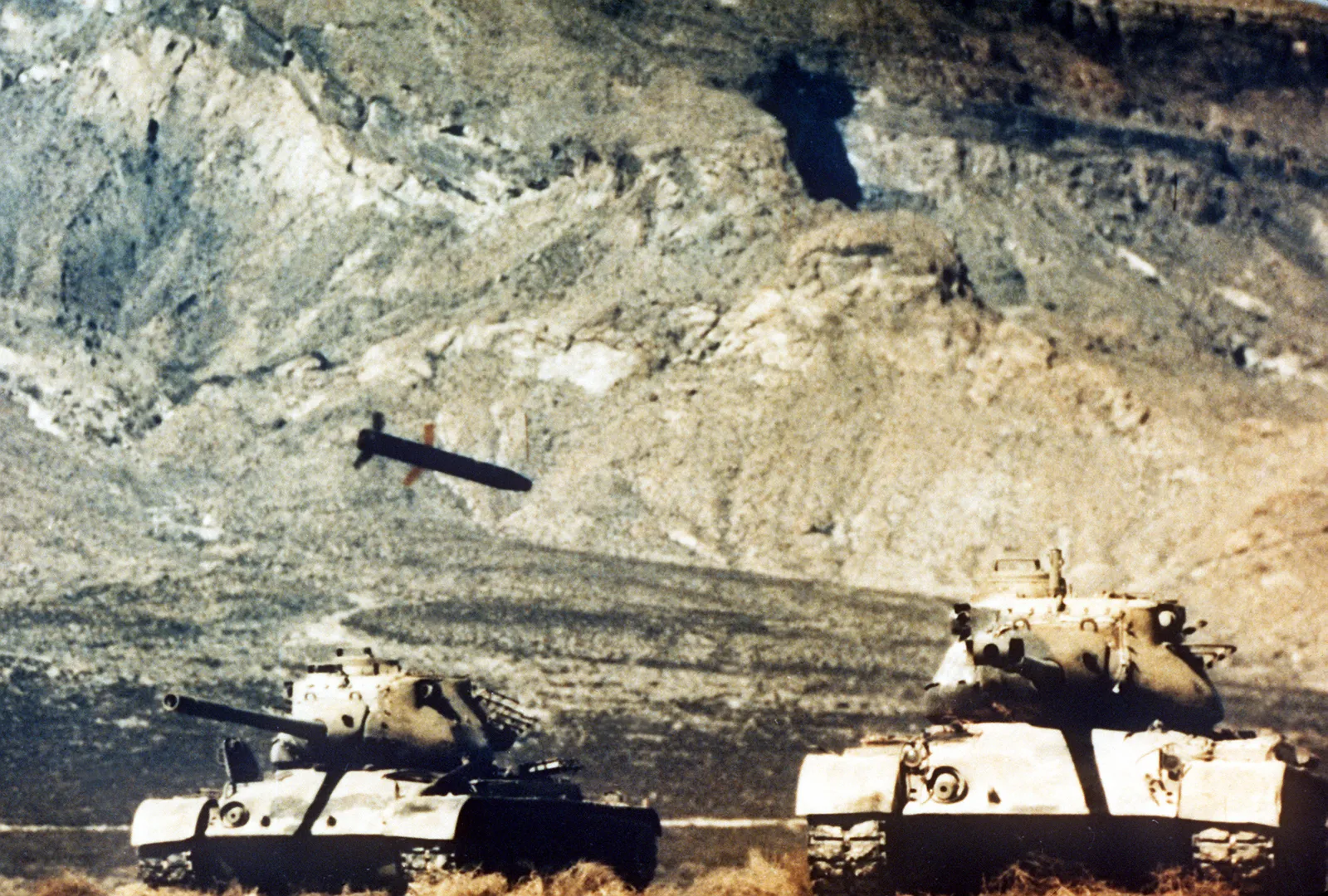
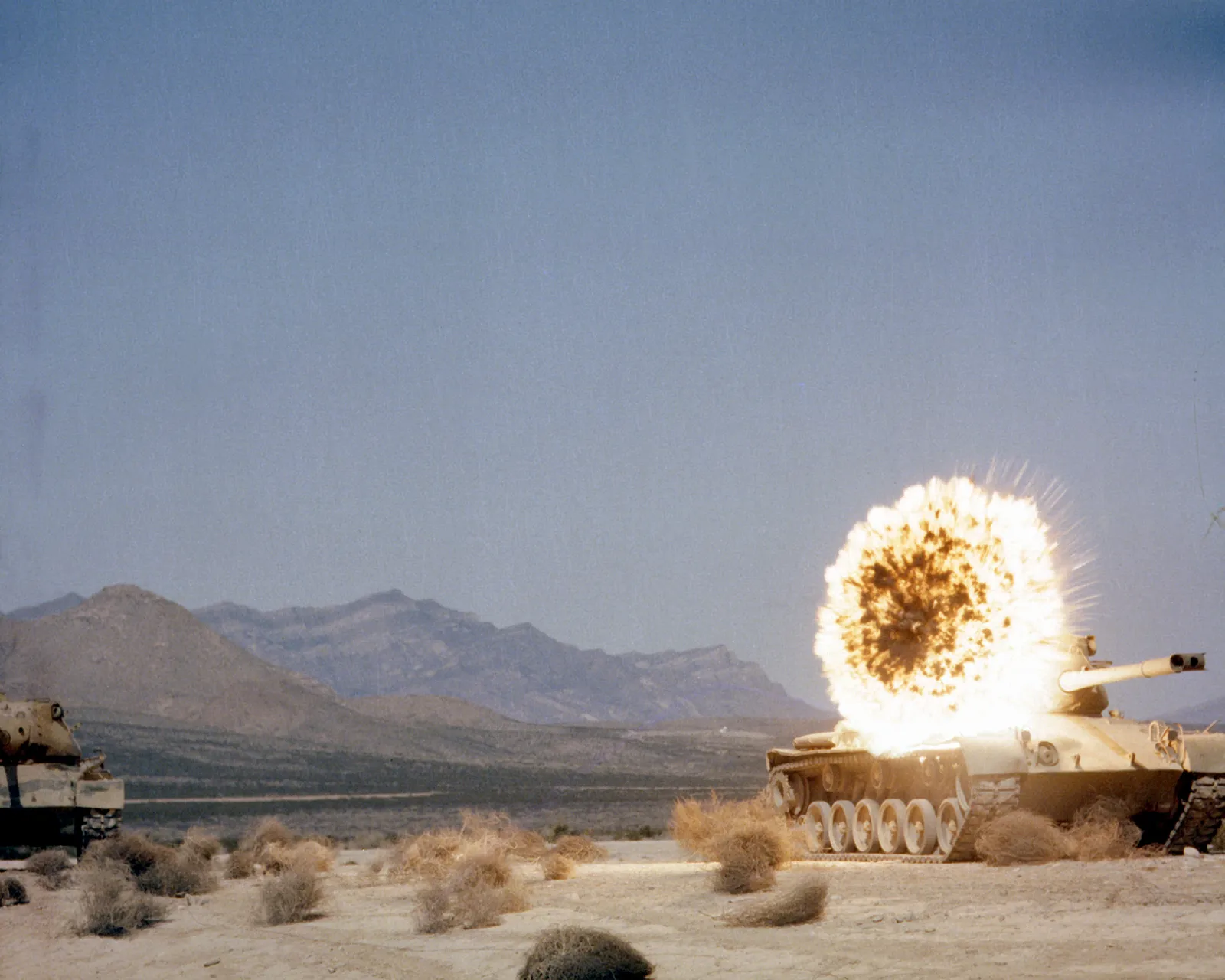
Role detailsThe M712 Copperhead is a U.S. 155 mm cannon-launched guided projectile that gave standard howitzers a semi-active-laser precision round for tanks, fortifications, radar sites, and other point targets. Developed through Martin Marietta from early 1970s Army work, it saw documented combat use from Desert Storm to Ukraine, but its employment depends on laser designation, visibility, trajectory geometry, and compatible 155 mm firing weapons.
U.S. forces employed Copperhead during Operation Desert Storm, including attacks on Iraqi observation posts, border-guard posts, and forward radar installations in the first week of artillery attacks.
Role detailsWhite Sands Missile Range Museum describes Copperhead use in Operation Iraqi Freedom against enemy artillery, radar, and observation positions.
Role detailsUkrainian forces used U.S.-supplied M712 Copperhead rounds in 2024-2025 strikes, including reported Kursk-region, Kherson-region, and M109A6 Paladin-fired engagements guided by laser designation.
Role detailsCopperhead is not a fire-and-forget artillery round. Army gunnery doctrine ties the projectile setting to a compatible laser pulse-repetition-frequency code, while White Sands describes a forward observer keeping a laser target designator trained on the target as the round homes on reflected energy.
G/VLLD and MULE are documented Copperhead mission designator contexts, with airborne designators also appearing in Army reference material.
Army gunnery procedures treat insufficient target cloud height and angle-T above 800 mils as reasons to reject or shift a Copperhead mission.
GAO highlighted degraded performance under obstructive conditions, line-of-sight dependence, response-time pressure against moving targets, and unresolved reliability concerns during early procurement.
Copperhead-related designations include the XM712 development designation, the standardized M712 service projectile, and the M823 inert training projectile used to train crews in handling the CLGP.
| Variant | Configuration | Designation notes |
|---|---|---|
| XM712 | Development designation | Used for the Copperhead cannon-launched guided projectile before standardization as M712. Sources: Martin Marietta Copperhead (155 mm Projectile M712) |
| M823 | Inert crew-training projectile | Training projectile for 155 mm howitzer crews handling the M712 Copperhead; not a fired operational munition. Sources: Projectile, 155mm Training, M823 |
Copperhead is a 155 mm cannon-launched guided projectile for compatible howitzers; the entries below are limited to existing catalog weapons with direct source support.
| Firing weapon | Weapon type | Firing evidence |
|---|---|---|
 | 155 mm towed howitzer | Royal Armouries states that the FH70 can also fire the US Army's laser-guided M712 Copperhead cannon-launched guided projectile. Sources: Royal Armouries FH70 object 85309 |
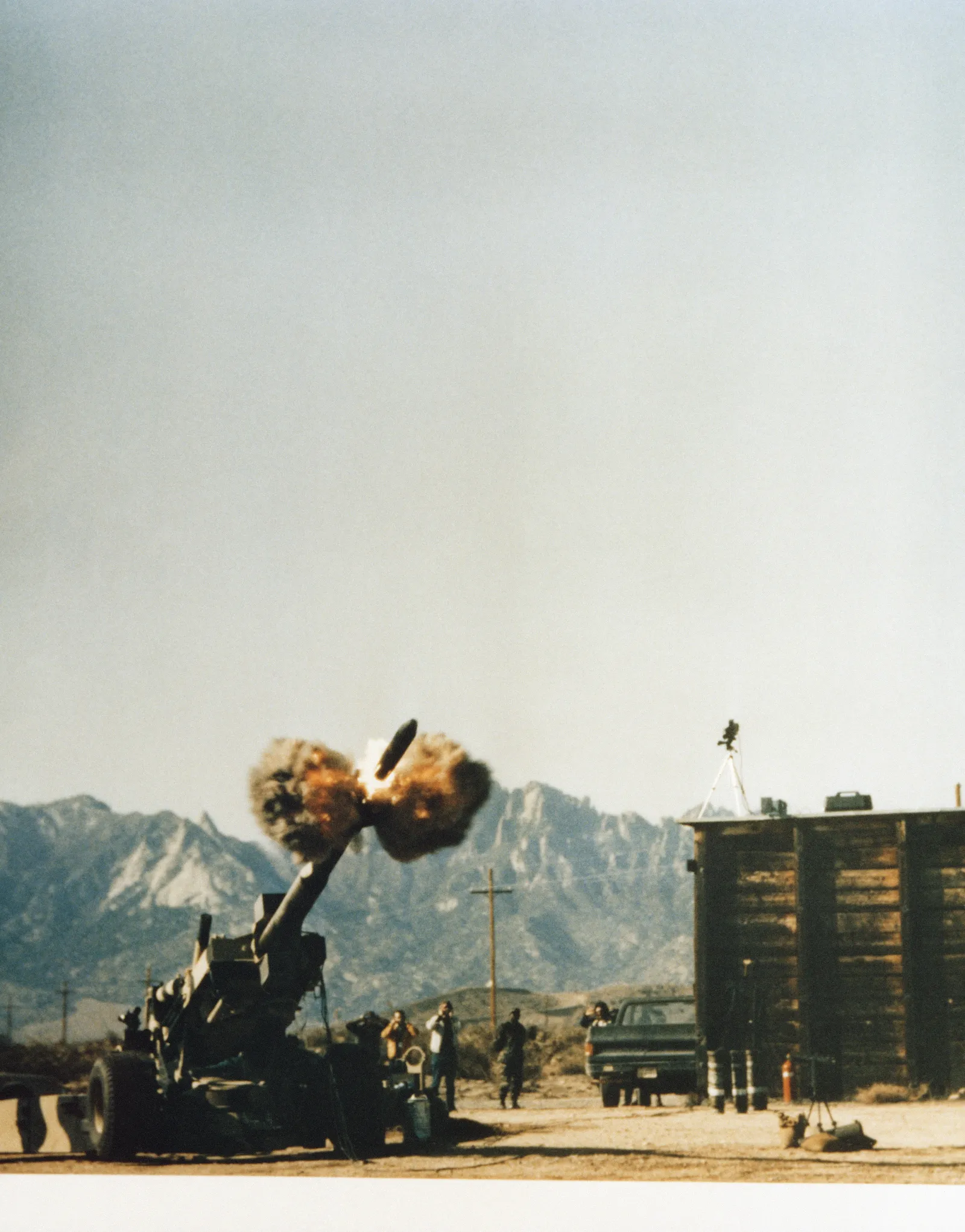
 | 155 mm towed howitzer | White Sands Missile Range Museum describes M198 crews loading Copperhead rounds, and the existing Copperhead image source identifies an M712 fired from a modified 155 mm M198 howitzer. Sources: White Sands Missile Range Museum M712 Copperhead, File: M712 Copperhead is fired |
 | 155 mm self-propelled howitzer family | Designation-Systems and White Sands Missile Range Museum identify the M109 as one of the 155 mm howitzers from which M712 Copperhead could be fired. Sources: Martin Marietta Copperhead (155 mm Projectile M712), White Sands Missile Range Museum M712 Copperhead |
 | 155 mm self-propelled howitzer | Defense Express reported a Ukrainian M712 Copperhead strike in which the shot was fired from an M109A6 Paladin self-propelled howitzer. |
 | 155 mm towed howitzer | Designation-Systems and White Sands Missile Range Museum identify M777 as one of the 155 mm howitzers capable of firing M712 Copperhead. Sources: Martin Marietta Copperhead (155 mm Projectile M712), White Sands Missile Range Museum M712 Copperhead |
 | 155 mm towed howitzer | White Sands Missile Range Museum identifies the M114 among the standard 155 mm howitzers from which M712 Copperhead was fired. |
Copperhead concept work began around 1970-1971, development contracts followed in 1972, and White Sands Missile Range Museum dates the first firing to 1972.
Sources: Martin Marietta Copperhead (155 mm Projectile M712), White Sands Missile Range Museum M712 Copperhead
GAO reported that Copperhead had entered limited production, with initial procurement constrained while reliability concerns were addressed.
Sources: GAO Copperhead procurement report
FAS and White Sands Missile Range Museum document Copperhead employment during Operation Desert Storm against Iraqi observation, border, artillery, radar, and other positions.
Sources: FAS M712 Copperhead, White Sands Missile Range Museum M712 Copperhead
GAO reported the Army inventory for 155 mm M712 projectiles was below objective, while Army officials had no current procurement plans because of funding constraints and broader artillery-round inventories.
Sources: GAO Artillery Projectile Inventory Report
Defense Express reported Ukrainian M712 Copperhead employment near Sudzha in Kursk region, including a three-projectile M777-fired strike on a communications tower.
Sources: Defense Express M712 Copperhead Kursk strike
Defense Express reported a Ukrainian Copperhead strike fired from an M109A6 Paladin self-propelled howitzer and guided by drone laser designation.
Sources: Defense Express M712 Copperhead Paladin strike