Artillery

M109A6 Paladin

Also known as
  • M109A6
  • Paladin
  • M109A6 howitzer
  • M109A6 self-propelled howitzer
  • M109A6 155 mm self-propelled howitzer
  • M109A6 Paladin self-propelled howitzer

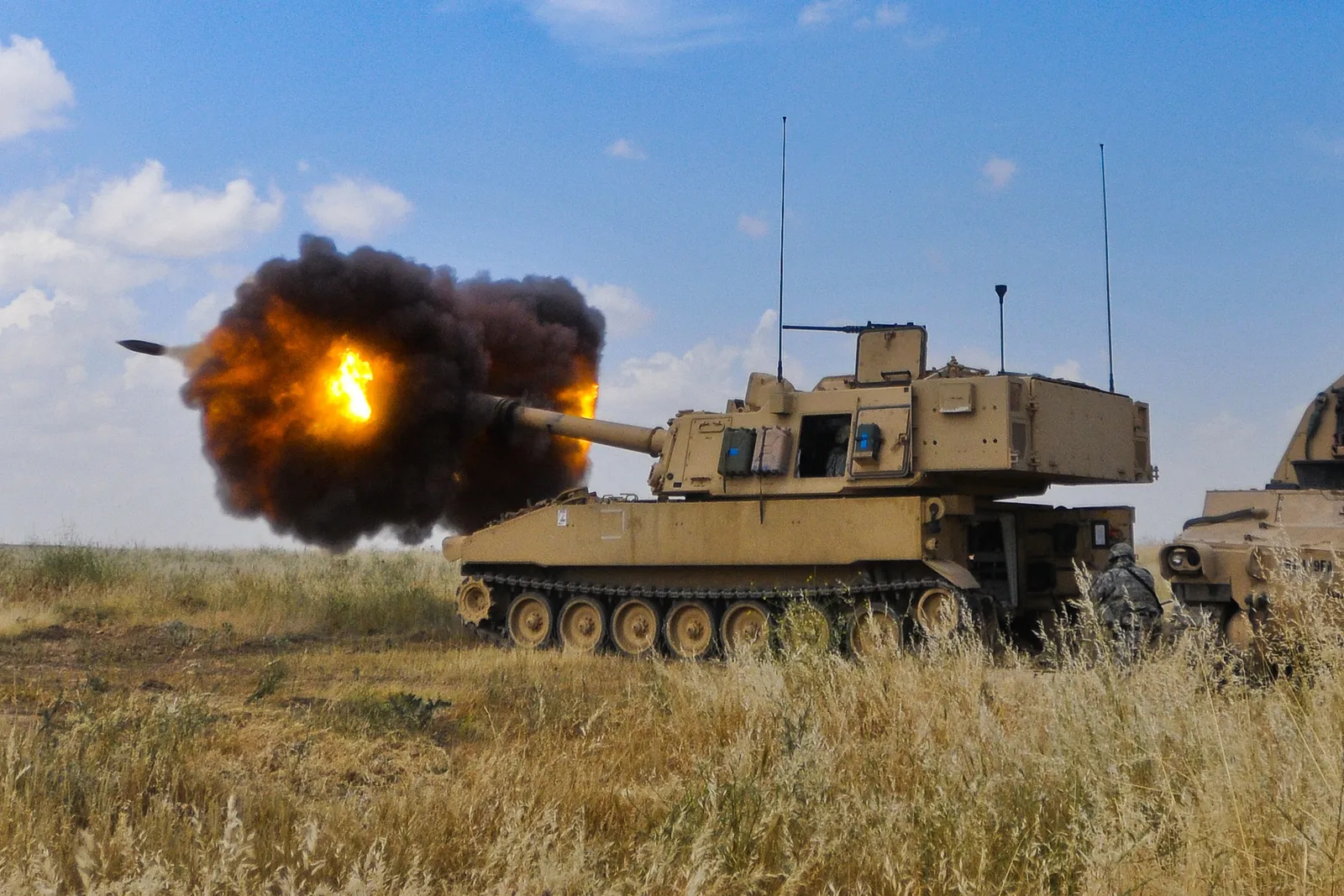
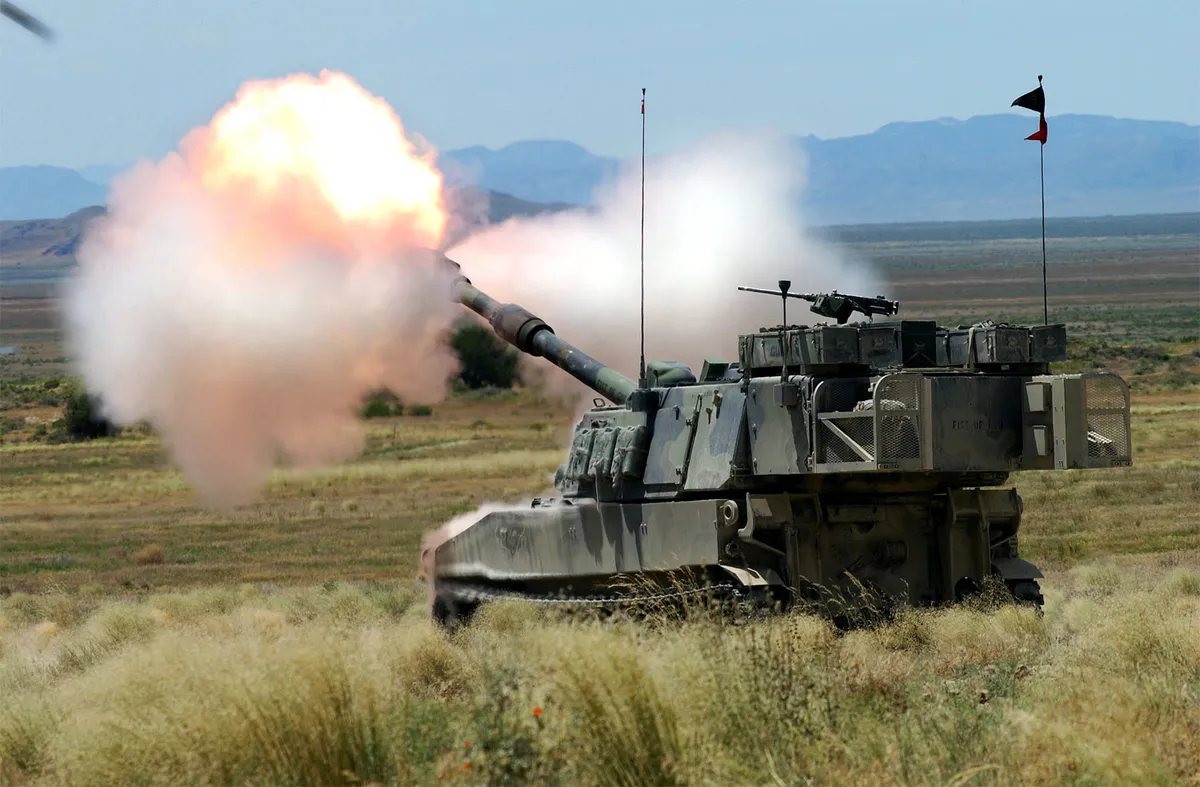
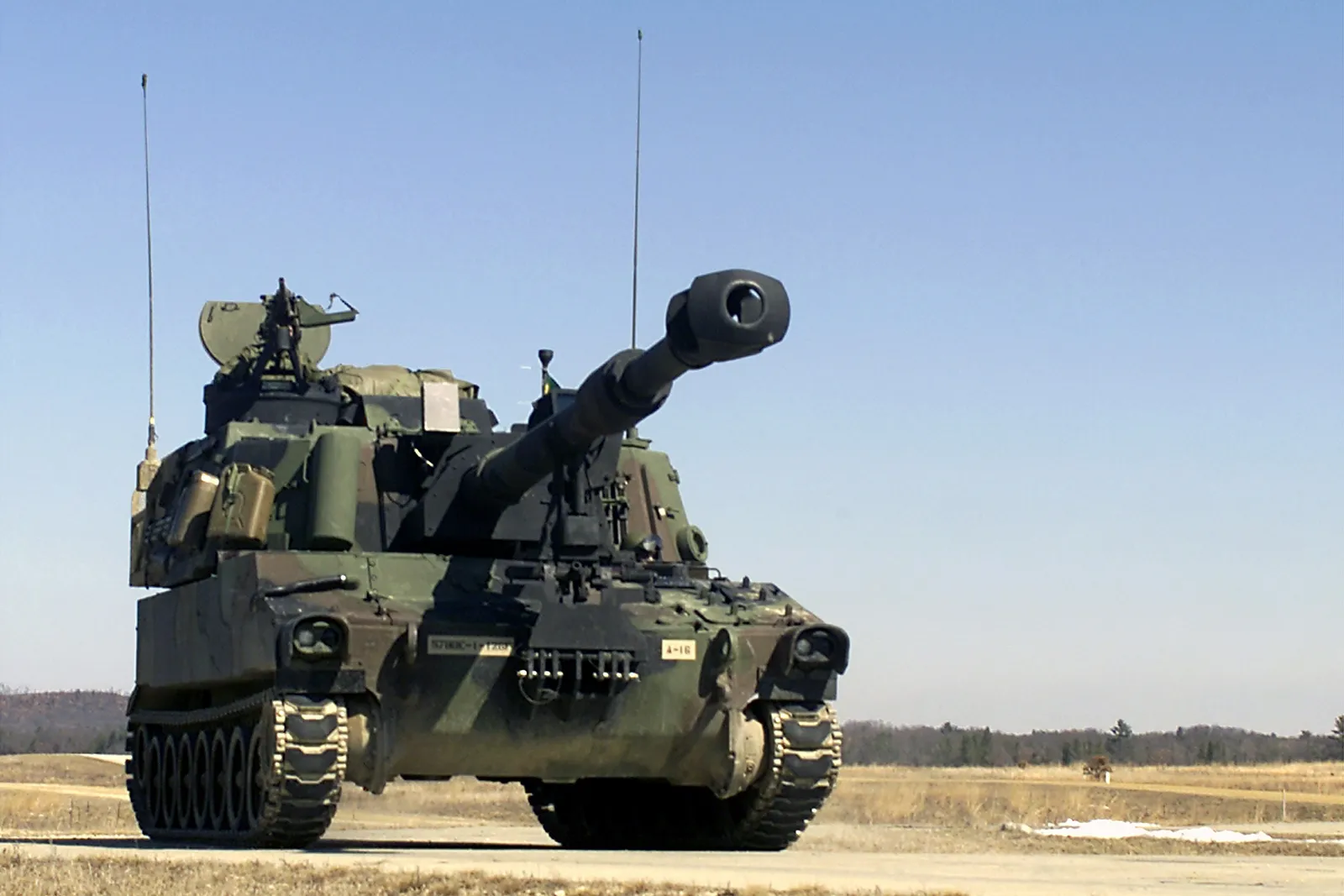
The M109A6 Paladin is a U.S. 155 mm tracked self-propelled howitzer that modernized the M109 family with onboard navigation, automatic fire-control, digital communications, and improved crew protection. The variant is documented in U.S. artillery missions in Iraq and later as a U.S.-supplied NATO-standard system in Ukrainian service, where it was paired with ammunition support vehicles for sustained mobile gun-line operations.

Role in Conflicts

Profile / Specs

Profile

Origin
United States
Type
155 mm tracked self-propelled howitzer
Service note
Modern NATO artillery
Designer
United Defense
Designed
Paladin/FAASV product improvement and re-engineering effort begun in 1979
Produced
1990s M109A6 production and rebuild program
Developed from
M109 family of 155 mm self-propelled howitzers
Developed into
M109A7 Paladin Integrated Management modernization

Specifications

Crew
4
Caliber
155 mm M284 cannon on M182A1 mount
Range
Up to about 30 km with rocket-assisted projectiles
Rate of fire
Up to 4 rounds per minute
Combat weight
About 62,000 lb / 32 tons
Mobility
Tracked chassis; about 35 mph maximum road speed and 186 mile cruising range
Ammunition support
U.S. Army Paladin packages pair the howitzer with FAASV-type ammunition support vehicles for protected resupply
Protection
Kevlar-lined chassis, pressurized crew compartment, NBC protection, and secure voice/digital communications
Battlefield role
Primary tracked indirect-fire support for armored brigade combat teams with the M992A2 FAASV ammunition support vehicle
Paladin Modernization Focus

The M109A6 upgrade changed the M109 from a conventionally laid self-propelled gun into a more self-contained artillery system able to receive missions, locate itself, and reposition with less outside survey and command-post setup.

Upgrade areaWhat changedWhy it mattered
Fire controlAutomatic fire-control equipment and secure digital communications.Reduced the time between mission receipt and firing while keeping the crew inside the vehicle.
NavigationOnboard navigation and positioning equipment.Allowed the howitzer to operate with less dependence on external survey before a fire mission.
MobilityTracked armored movement with shoot-and-scoot employment supported by onboard fire-processing equipment.Let Paladin units displace after missions and reduce exposure to counterbattery fire.
SurvivabilityKevlar lining, pressurized crew compartment, NBC protection, and climate control.Improved crew protection during counterbattery-threat and contaminated-environment operations.
Variants

The M109A6 is the digitized Paladin branch of the broader M109 155 mm self-propelled howitzer family, with the later M109A7 modernization carrying the Paladin line forward.

VariantConfigurationDesignation notes
M109, 155 mm tracked self-propelled howitzer family, ArtilleryM109 familyParent 155 mm self-propelled howitzer family

The M109A6 Paladin was developed as a major product-improvement and re-engineering effort for the Army's M109 series, adding navigation, automatic fire-control, communications, and protection improvements.

Sources: M109A6 Paladin Self Propelled Howitzer

M109A7Follow-on Paladin modernization

BAE Systems describes the M109A7 as the current Paladin-family howitzer, using major chassis and powertrain commonality with the Bradley Fighting Vehicle while retaining the 155 mm artillery mission.

Sources: M109A7

Ammunition Fired

The Paladin is a 155 mm howitzer, so its combat value depends on the separate-loading ammunition ecosystem and the fire-control integrations available to the battery.

AmmunitionAmmunition typeFiring evidence
155 mm NATO ammunition, 155 mm NATO-standard artillery ammunition family for 39-, 45-, and 52-caliber howitzers, Munitions155 mm NATO ammunition155 mm artillery ammunition family

The M109A6 fires 155 mm artillery ammunition from the M284 cannon, and the U.S. Ukraine package paired the howitzers with 155 mm artillery rounds.

Sources: M109A6 Paladin Self Propelled Howitzer, Fact Sheet on U.S. Security Assistance to Ukraine - January 6, 2023

M982 Excalibur guided artillery projectile, 155 mm GPS/INS-guided artillery projectile, MunitionsM982 Excalibur guided artillery projectile155 mm precision-guided projectile

Raytheon lists the M109 family among artillery systems compatible with Excalibur precision-guided 155 mm projectiles; Paladin compatibility still depends on the relevant fire-control and ammunition integration.

Sources: Raytheon Excalibur Projectile

Ammunition Support Vehicle

Paladin batteries normally require armored ammunition handling vehicles to sustain firing positions without exposing crews and ammunition in the open.

Compatible itemItem typeCompatibility evidence
M992A2 FAASV, Tracked field artillery ammunition support vehicle, Support EquipmentM992A2 FAASVTracked ammunition support vehicle

The Paladin/FAASV program links the M109A6 howitzer with the field artillery ammunition support vehicle mission, and the 2023 U.S. Ukraine package paired each 155 mm self-propelled howitzer with an ammunition support vehicle.

Sources: M109A6 Paladin Self Propelled Howitzer, Fact Sheet on U.S. Security Assistance to Ukraine - January 6, 2023

Timeline

M109A6 Paladin Key Events

  1. Paladin/FAASV improvement effort begins

    The Paladin/FAASV program began as a product-improvement and re-engineering effort for the M109 family and its ammunition support vehicle.

    Sources: M109A6 Paladin Self Propelled Howitzer

  2. M109A6 Paladin fielding

    The M109A6 fielding program rebuilt and upgraded M109-family howitzers with automatic fire-control, navigation, digital communications, and survivability improvements.

    Sources: M109A6 Paladin Self Propelled Howitzer

  3. Dragon Fires battery noted in Iraq

    U.S. Army reporting described the Dragon Fires battery at Camp Taji using M109A6 Paladins during a 2006-2007 Iraq War rotation.

    Sources: Stryker Brigade Shows Appreciation for Dragon Fires

  4. Paladin fire mission at Al Taqaddum

    Defense imagery documented U.S. soldiers firing an M109A6 Paladin during an 2014 Operation Inherent Resolve fire mission at Al Taqaddum Air Base, Iraq.

    Sources: TFTQ Soldiers Conduct Artillery Strikes

  5. U.S. commits Paladin package to Ukraine

    The U.S. Department of Defense announced 18 155 mm self-propelled howitzers and 18 ammunition support vehicles for Ukraine.

    Sources: Fact Sheet on U.S. Security Assistance to Ukraine - January 6, 2023

  6. M109A6 Paladins identified with Ukraine's 118th Brigade

    Defense reporting identified the U.S.-supplied howitzers as M109A6 Paladins delivered to Ukraine's 118th Mechanized Brigade.

    Sources: US Delivers M109A6 155mm Self-Propelled Howitzers to Ukraine's 118th Mechanized Brigade

Media
Related Weapon Systems
M109, 155 mm tracked self-propelled howitzer family, ArtilleryArtilleryM109155 mm tracked self-propelled howitzer familyThe M109 is a U.S.-origin 155 mm tracked self-propelled howitzer family built for mobile indirect fire with armored and mechanized forces. The family spans the original short-tube vehicle, M109A1 to M109A4 rebuild and export lines, the M109A5 M284-cannon upgrade, the digitally modernized M109A6 Paladin, current M109A7 production, and the longer-barrel M109-52 concept; catalog evidence here centers on direct conflict use by U.S., Ukrainian, U.S.-led coalition, and Israeli forces.
AHS Krab, 155 mm tracked self-propelled howitzer, ArtilleryArtilleryAHS Krab155 mm tracked self-propelled howitzerThe AHS Krab is a Polish 155 mm tracked self-propelled howitzer built by Huta Stalowa Wola around a NATO-standard 52-caliber gun, an AS-90 Braveheart turret lineage, a K9-derived tracked chassis, and the TOPAZ fire-control ecosystem. In Ukrainian service it gives artillery units a mobile Western-caliber gun able to fire standard and precision 155 mm ammunition, displace after missions, and operate in counter-battery-threatened sectors of the 2014 Russia-Ukraine War.
M198 155 mm howitzer, 155 mm towed howitzer, ArtilleryArtilleryM198 155 mm howitzer155 mm towed howitzerThe M198 is a U.S.-designed 155 mm towed howitzer developed at Rock Island Arsenal to replace older M114-series guns. Its split-trail carriage, nine-person crew, air-transportable layout, and 22-30 km range made it a standard U.S. Army and Marine Corps fire-support weapon before the lighter M777 replaced it in U.S. service. Direct conflict sourcing now traces M198 fielding from Desert Storm through U.S. use in Afghanistan and Iraq, Islamic State capture and cross-border use in Iraq and Syria, Iraq-aligned militia firing, and coalition-backed Iraqi Army live-fire training.
G6 Rhino 155 mm self-propelled howitzer, 155 mm wheeled self-propelled gun-howitzer, ArtilleryArtilleryG6 Rhino 155 mm self-propelled howitzer155 mm wheeled self-propelled gun-howitzerThe G6 Rhino is a South African 155 mm wheeled self-propelled gun-howitzer related to the G5 artillery family. Public sources identify Denel with the turret, OMC with the hull, and Lyttelton Engineering Works/Denel lineage with the system's development and production background, while conflict-use reporting places South African pre-production G6s in Angola in 1987 and UAE G6 howitzers in Yemen in 2015. Later G6-52 work paired the G6 concept with 52-caliber ordnance, automated ammunition handling, and longer-range V-LAP ammunition.

Sources