Artillery

AHS Krab

Also known as
  • 155 mm Self-Propelled Howitzer KRAB
  • AHS Krab 155 mm
  • Krab 155 mm self-propelled howitzer
  • AHS Crab

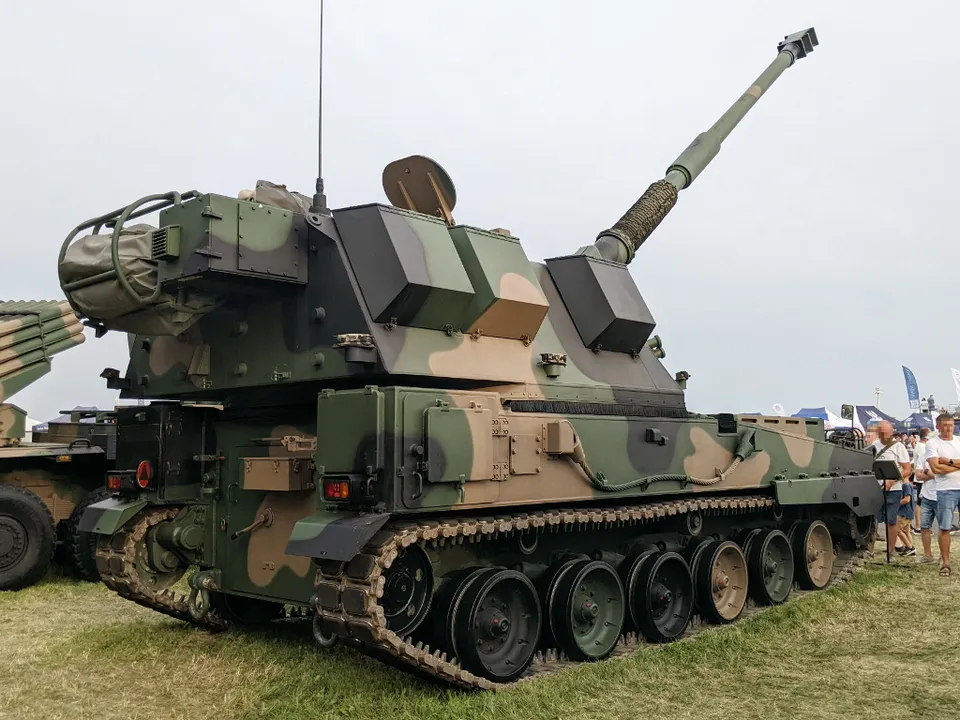
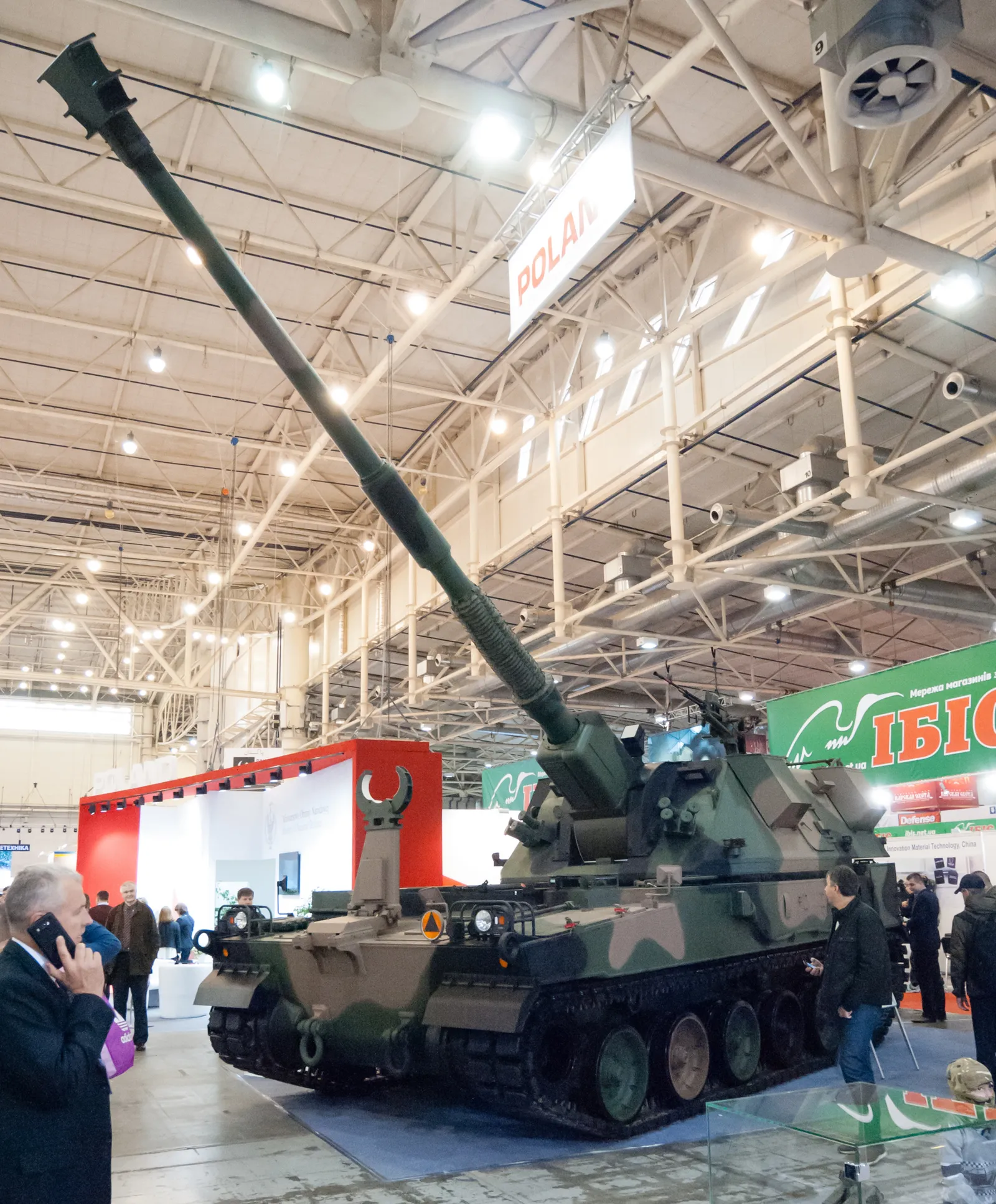
The AHS Krab is a Polish 155 mm tracked self-propelled howitzer built by Huta Stalowa Wola around a NATO-standard 52-caliber gun, an AS-90 Braveheart turret lineage, a K9-derived tracked chassis, and the TOPAZ fire-control ecosystem. In Ukrainian service it gives artillery units a mobile Western-caliber gun able to fire standard and precision 155 mm ammunition, displace after missions, and operate in counter-battery-threatened sectors of the 2014 Russia-Ukraine War.

Role in Conflicts

Profile / Specs

Profile

Origin
Poland
Type
155 mm tracked self-propelled howitzer
Service note
Modern NATO-compatible artillery
Designer
Huta Stalowa Wola with BAE Systems AS-90 Braveheart turret lineage, OBRUM early chassis work, and Samsung Techwin/Hanwha Land Systems K9 chassis technology-transfer path
Designed
1997-2017 development path: AS-90M/Braveheart turret selection in the late 1990s, first Krab prototype in 2001, and K9-family chassis technology transfer underway by 2017
Produced
First serial Krab howitzers handed over on 2019-03-25; serial production and deliveries continued under Regina module contracts

Specifications

Crew
5
Caliber
155 mm / 52 caliber
Range
4.7 to 40 km with standard supported ammunition types
Rate of fire
Up to 6 rounds/min for intense fire; 2 rounds/min sustained
Ammunition
40 shells and 48 charges carried on vehicle
Mobility
Tracked armored chassis; about 67 km/h road speed and 650 km cruising range
Protection
Armored protection against small-arms fire and artillery shell splinters
Secondary armament
12.7 mm machine gun and smoke grenade launchers
Fire-control and navigation
Advanced fire-control system, inertial navigation assisted by military GPS with SAASM, direct-fire sight, ballistic radar, and digital communications
Regina fire module
Polish Regina division fire module structure includes 24 Krab 155 mm howitzers plus command, ammunition, and armament/electronics repair vehicles
Design Lineage

Krab's public design history is a hybrid artillery story rather than a single clean-origin vehicle. The record combines Polish integration work, British AS-90 Braveheart turret lineage, a 155 mm / 52-caliber NATO gun standard, and the later K9-derived chassis path used for production vehicles.

ElementSource-backed context
IntegratorHuta Stalowa Wola is the Polish manufacturer and official product owner for the Krab howitzer.
Turret and gun lineageArmy Recognition and Forecast International describe the system around AS-90 Braveheart turret lineage and a 155 mm / 52-caliber gun.
Tracked chassis pathArmy Recognition and Forecast International tie the later production configuration to the South Korean K9 chassis family rather than the earliest Polish prototype chassis.
Fire-control ecosystemArmy Recognition identifies the TOPAZ artillery fire-control system as part of the Krab configuration.

Sources: 155 mm Self-Propelled Howitzer KRAB; Krab 155mm Howitzer; Forecast International AS90.

Variants

Krab is best treated as a Polish production family rather than a long list of separate marks: public sources mainly distinguish the early Polish chassis prototypes from the later production configuration using a K9-derived chassis and AS-90 Braveheart turret lineage.

VariantConfigurationDesignation notes
Krab production howitzerK9-chassis 155 mm / 52-caliber tracked self-propelled howitzer

Army Recognition and Forecast International describe the current Krab configuration as an AS-90 Braveheart turret lineage integrated with a South Korean K9-derived tracked chassis and 52-caliber 155 mm gun.

Sources: Krab 155mm Howitzer, Forecast International AS90

Ammunition Fired

Krab is a NATO-standard 155 mm / 52-caliber howitzer; the linked ammunition entries below are cataloged because sources directly tie them to Krab compatibility or Ukrainian 155 mm precision-fire context.

AmmunitionAmmunition typeFiring evidence
M982 Excalibur guided artillery projectile, 155 mm GPS/INS-guided artillery projectile, MunitionsM982 Excalibur guided artillery projectile155 mm GPS-guided artillery projectile

Army Recognition lists the Polish Krab among the modern self-propelled howitzers that can fire M982 Excalibur, and its 2023 Ukraine report says Ukrainian artillery used Excalibur with Krab systems in service.

Sources: Ukraine gains unmatched battlefield precision with M982 Excalibur GPS guided munition

OFd MKM-DV, 155 mm high-explosive extended-range artillery projectile with base bleed, MunitionsOFd MKM-DV155 mm artillery shell

Defence24 says the OFd MKM-DV variant was adapted and certified for the Polish Krab, and MSM Group says the round uses a base-bleed unit for extended range up to 40,000 meters from a 52-caliber gun.

Sources: Artillery Ammunition, Czechoslovak Group: "Współpraca z Polską może być szersza"

Timeline

AHS Krab Key Events

  1. Prototype phase

    Army Recognition identifies 2001 as the year of the first Krab prototype, before the later K9-chassis production configuration.

  2. Korean chassis path adopted

    HSW says it concluded a December 2014 contract with Samsung Techwin, later Hanwha Land Systems, for chassis and technology transfer tied to the Regina program.

  3. Polish Regina module contract

    HSW says its 2016 contract with Poland covered four Regina division fire modules totaling 96 Krab howitzers with command and logistic vehicles.

  4. First serial Krab handover

    HSW reported that the Polish Armed Forces received the first serial Krab howitzers at Sulechow, starting series production for the first Regina division fire module under the 2016 agreement.

  5. First Polish division fire module completed

    HSW reported the handover of another eight Krab howitzers and accompanying vehicles, completing the first Polish Regina division fire module.

  6. Polish defence minister says Krabs are used by Ukrainian troops

    During a Kyiv visit, Poland's defence minister said Krabs were being used by Ukrainian troops and linked Polish Krab support to Ukraine's security.

  7. Reuters documents Ukrainian firing near Donetsk

    RFE/RL's Reuters photo report documented a Ukrainian Krab unit firing against Russian forces in the Donetsk region.

  8. Polish MOD cites HSW supply contract for Ukraine

    Poland's Ministry of National Defence described Huta Stalowa Wola's ongoing contract with Ukrainian authorities for Krab cannon howitzer supply as part of support for Ukraine.

  9. Excalibur compatibility reported in Ukraine context

    Army Recognition reported Ukrainian use of M982 Excalibur guided 155 mm ammunition and named Krab among the modern howitzers able to fire it.

Polish And Ukrainian Service Context

Open sources place the Krab in two main service contexts. HSW documents Polish Regina division fire modules built around Krab batteries, command vehicles, ammunition vehicles, and repair support. RFE/RL and Reuters document Ukrainian Krab combat use near Donetsk after Polish transfers during Russia's full-scale invasion, and Poland's defence ministry later described Krabs as used by Ukrainian troops.

  • Polish module structure: HSW says one Regina division fire module includes 24 Krab howitzers plus command, ammunition, and repair vehicles.
  • Ukrainian conflict use: RFE/RL's Reuters gallery documents a Ukrainian Krab unit after engaging Russian forces in the Donetsk region on August 23, 2022.
  • Support and sustainment lane: Polish Ministry of Defence statements connect Krab support to Ukraine and describe an HSW contract with Ukrainian authorities for Krab cannon howitzers.
  • 155 mm ammunition lane: the linked Excalibur and OFd MKM-DV entries cover sourced precision and extended-range ammunition relationships without implying every Krab battery uses every projectile type.

Sources: Polish Armed Forces Have Received Self-Propelled Howitzers KRAB; Ukrainian Forces Use Poland's AHS Krab Howitzer Against Russian Invaders; Poland Among Leaders of Military Aid for Ukraine; Poland Will Train And Equip A Ukrainian Brigade-Level Unit; Ukraine gains unmatched battlefield precision with M982 Excalibur GPS guided munition; Czechoslovak Group: "Współpraca z Polską może być szersza".
Media
Related Weapon Systems
LPG WDSz command-staff vehicle, Tracked artillery command-staff vehicle, Support EquipmentSupport EquipmentLPG WDSz command-staff vehicleTracked artillery command-staff vehicleThe LPG WDSz is a Polish tracked command-staff vehicle built by Huta Stalowa Wola for the Regina fire module that fields AHS Krab 155 mm self-propelled howitzers. It uses the LPG light tracked chassis as a protected command, communications, and fire-control node rather than as a primary weapon, and Ukrainian reporting documented the type in service with Krab batteries after Poland supplied Krab-related equipment during the full-scale phase of the 2014 Russia-Ukraine War.
K9 Thunder, 155 mm tracked self-propelled howitzer, ArtilleryArtilleryK9 Thunder155 mm tracked self-propelled howitzerThe K9 Thunder is a South Korean 155 mm / 52-caliber tracked self-propelled howitzer built around protected mobility, rapid displacement, and high-rate indirect fire. Hanwha markets the family through K9A1 and K9A2 modernization paths, while Finnish Army data, Hanwha material, and U.S. Army Yuma Proving Ground reporting document its 47-ton tracked chassis, five-person baseline crew, 40 km-plus range class, burst-fire capability, K10 resupply link, and U.S. 155 mm munition compatibility work. Its directly sourced combat-use row here is the South Korean K9 response during the 2010 Yeonpyeongdo artillery exchange; Russia-Ukraine War links are treated as export and backfill context, not as Ukrainian K9 fielding.
2S35 Koalitsiya-SV, 152 mm tracked self-propelled howitzer, ArtilleryArtillery2S35 Koalitsiya-SV152 mm tracked self-propelled howitzerThe 2S35 Koalitsiya-SV is a Russian 152 mm tracked self-propelled howitzer developed as a highly automated successor to the 2S19 Msta-S, pairing a 2A88 gun, automated loading, digital fire-control features, and a T-90-derived chassis for long-range tube-artillery missions. Russian and specialist reporting placed small numbers near the 2014 Russia-Ukraine War front from late 2023, but the direct conflict record remains source-limited and centered on counter-battery claims rather than verified large-scale fielding.

Sources