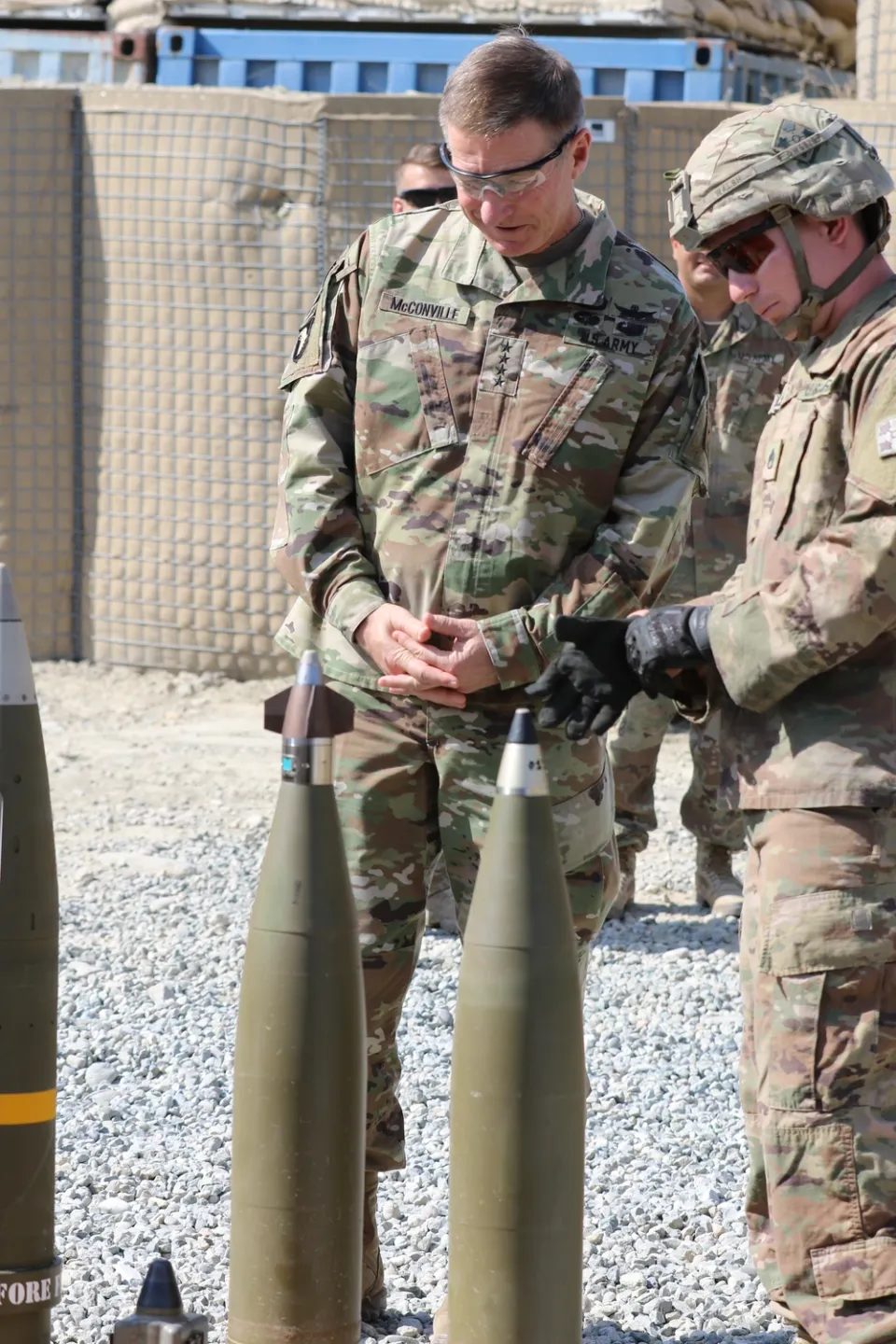
Munitions

M982 Excalibur guided artillery projectile

Also known as
  • M982 Excalibur
  • XM982 Excalibur
  • Excalibur 155 mm projectile
  • Excalibur precision-guided projectile
  • M982 Excalibur GPS-guided munition
  • Excalibur Ib
  • Excalibur 1B
  • MX 982A1

M982 Excalibur is a co-developed U.S.-Swedish 155 mm precision artillery projectile that gives compatible howitzers first-round guided effects at extended range. Documented use runs from its 2007 Iraq War combat debut through U.S. fire missions in Afghanistan and Operation Inherent Resolve, plus U.S.-supplied and battlefield-reported Ukrainian use in the 2014 Russia-Ukraine War.

Role in Conflicts

Ukrainian forces used M982 Excalibur GPS-guided 155 mm projectiles with Western-supplied artillery for precision fires during the full-scale war; public reporting also tied Excalibur to NATO-standard howitzers such as Krab and Bohdana.

Role details
Profile / Specs

Profile

Origin
United States and Sweden
Type
155 mm GPS/INS-guided artillery projectile
Service note
Entered combat service in 2007 and remained in U.S. and allied service through post-2015 operations
Designer
Raytheon and BAE Systems Bofors
Designed
1990s-2000s development program
Unit cost
Raytheon cited a 2016 U.S. Army order for 464 Excalibur Ib projectiles under a $31.8 million contract
Produced
Low-rate production from the mid-2000s; Excalibur Ib full-rate production from 2014
Number built
Raytheon said nearly 800 rounds had been fired in combat by February 2016

Specifications

Caliber
155 mm artillery projectile
Guidance
GPS and inertial navigation guidance
Maximum range
About 40 km from 39-caliber artillery, 50 km from 52-caliber artillery, and 70 km from 58-caliber artillery according to Raytheon
Accuracy
Raytheon describes a radial miss distance of less than two meters; BAE Systems lists circular error probability of less than 10 meters
Warhead and fuze
Unitary warhead with programmable air-burst, point-detonation, and delay/penetration modes
Compatible launchers
Compatible with M777, M109-family, Archer, PzH 2000, CAESAR, AS-90, G6, and other integrated 155 mm artillery systems
Guidance And Variant Split

Excalibur's core 155 mm projectile combines GPS and inertial guidance with a programmable fuze, while newer family branches adapt the same precision-fire role for alternate target sets and launch environments.

BranchRoleDistinction
Excalibur 1BLand-service 155 mm roundFull-rate-production Ib projectile with terminal-angle software described by Raytheon.
Excalibur SLaser-assisted precision firesDigital semi-active laser seeker for moving or imprecisely located targets.
Excalibur N55-inch naval gun projectileNaval 127 mm branch reusing much of the Ib guidance, navigation, and software baseline.
Excalibur HTKArmor-penetrating seeker variantHit-to-kill branch using an all-weather seeker and StormBreaker-derived design elements.
Variants

Raytheon presents Excalibur as a modular projectile family rather than a single fixed round, with land-service, laser-guided, naval, hit-to-kill, and extended-range branches.

VariantConfigurationDesignation notes
Excalibur SSemi-active laser-guided variant

Raytheon identifies Excalibur S as a laser-guided version with a digital semi-active laser seeker intended for moving or imprecisely located targets and reduced dependence on GPS-only targeting.

Sources: Raytheon Excalibur Projectile

Excalibur N55-inch/127 mm naval variant

Raytheon describes Excalibur N5 as a naval 5-inch variant that reuses much of the Excalibur Ib guidance, navigation, and software baseline while extending naval gun range and precision.

Sources: Raytheon Excalibur Projectile, U.S. Army awards Raytheon continued Excalibur production contract

Excalibur HTKArmor-penetrating hit-to-kill branch

Raytheon describes Excalibur HTK as an armor-penetrating variant that uses an all-weather seeker and StormBreaker-derived design elements for moving or imprecisely located targets.

Sources: Raytheon Excalibur Projectile

Extended Range Artillery Projectile (ERAP)Extended-range Excalibur branch

Raytheon lists ERAP as an Excalibur variant intended to fly longer ranges and strike moving targets on land and sea.

Sources: Raytheon Excalibur Projectile

Firing Weapons

These artillery systems are documented as compatible launch platforms for Excalibur rounds.

Firing weaponWeapon typeFiring evidence
M109A6 Paladin, 155 mm tracked self-propelled howitzer, ArtilleryM109A6 Paladin155 mm tracked self-propelled howitzer

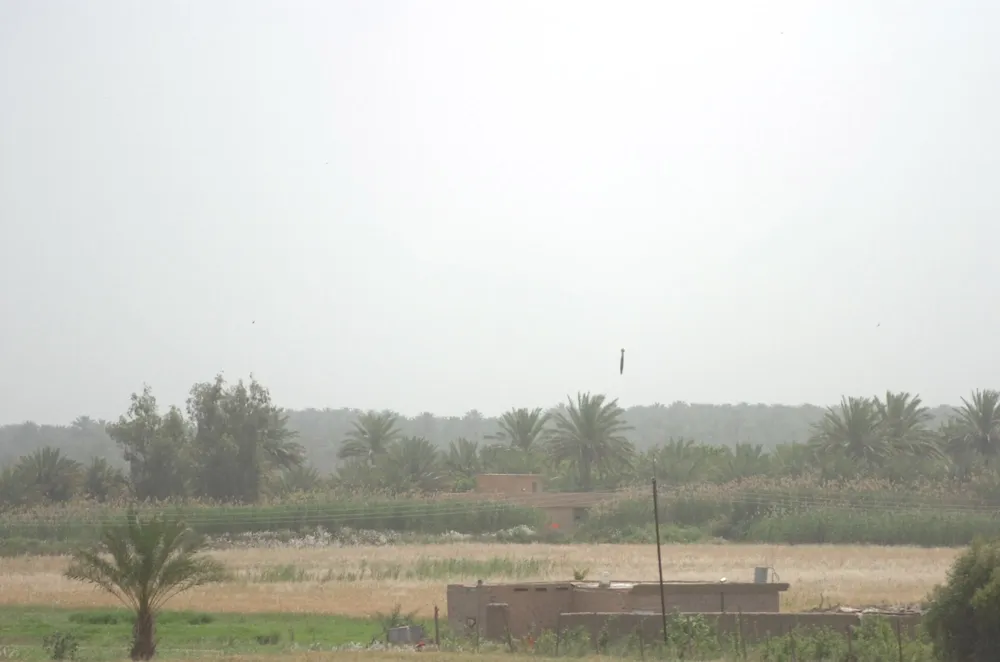
DVIDS documents the first operational XM982 Excalibur firing from an M109A6 Paladin at Camp Taji, Iraq, in May 2007.

Sources: 1st Cavalry Division first operational Excalibur firing

M777, 155 mm towed howitzer, ArtilleryM777155 mm towed howitzer

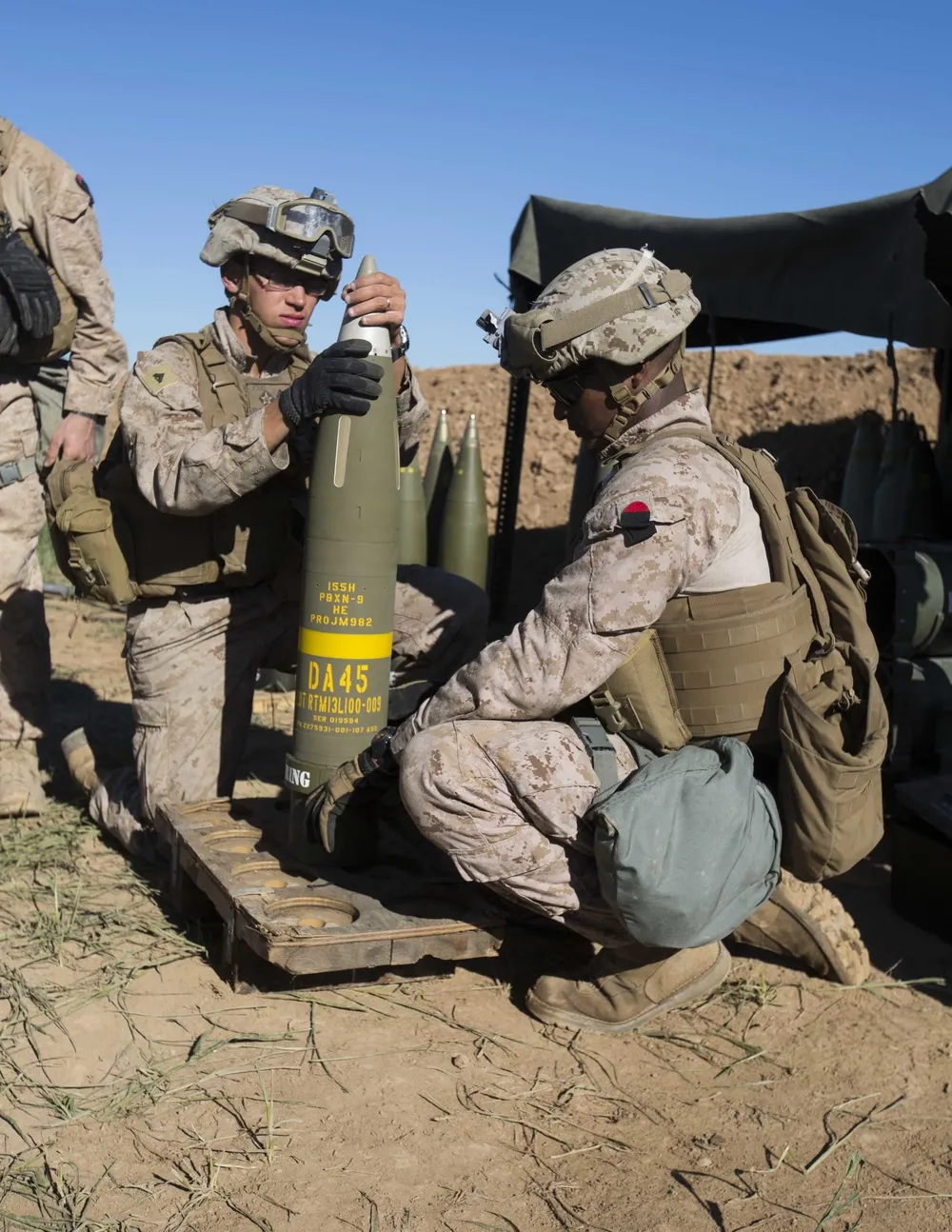
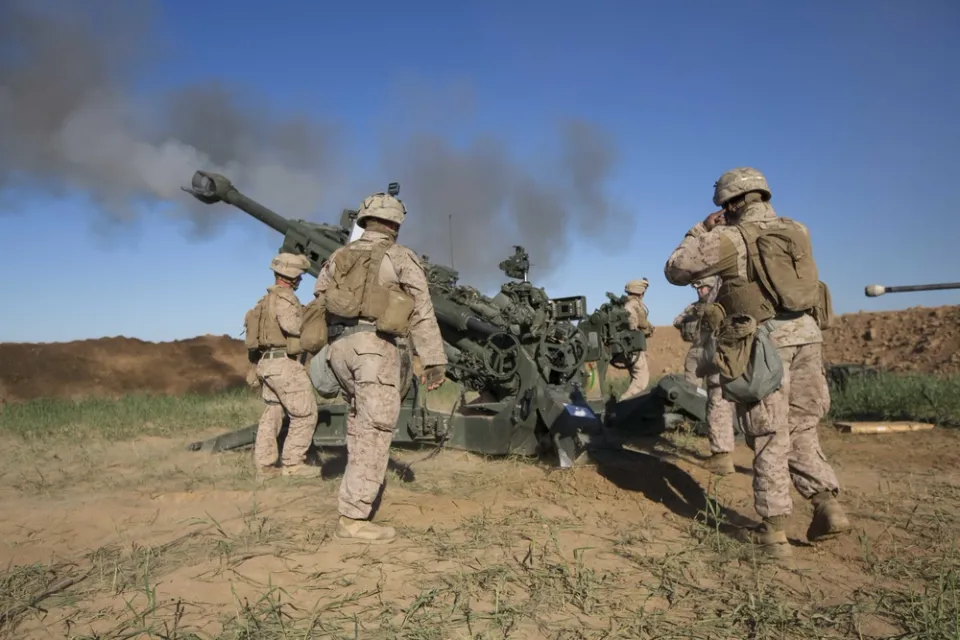
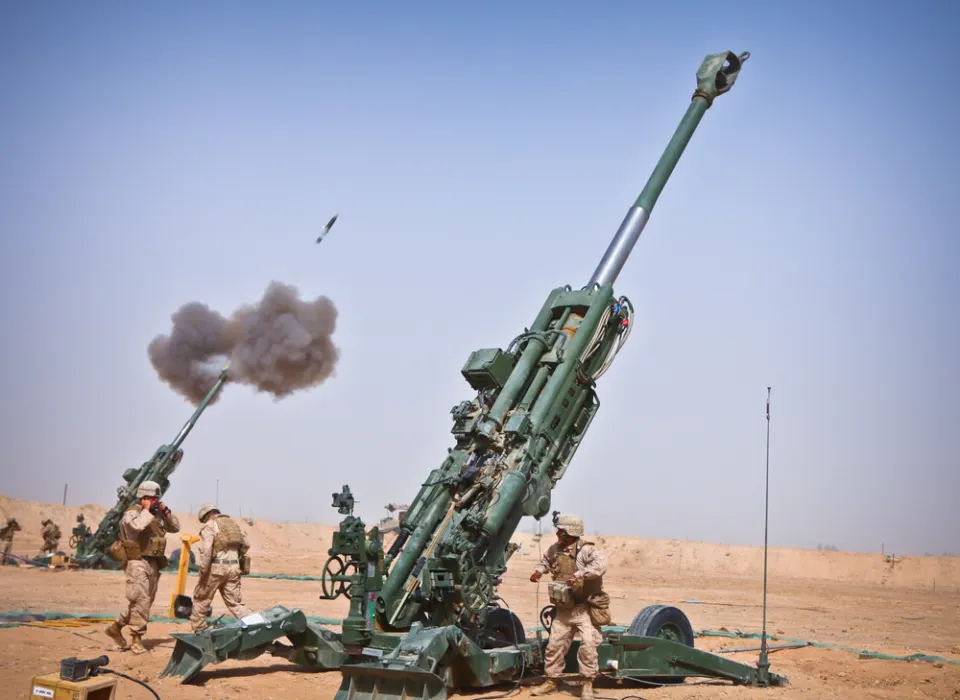
DVIDS documents U.S. Marines firing an M982 Excalibur round from an M777 howitzer in Helmand Province, Afghanistan, and later preparing Excalibur 155 mm rounds at Fire Base Bell in Iraq.

Sources: M982 Excalibur fired from M777 in Helmand, Task Force Spartan prepares Excalibur at Fire Base Bell

Archer, 155 mm wheeled self-propelled howitzer, ArtilleryArcher155 mm wheeled self-propelled howitzer

BAE Systems identifies ARCHER as one of the artillery systems that can fire Excalibur precision guided munitions, and the ARCHER product page names Excalibur among the munitions it can fire.

Sources: ARCHER Wheeled Artillery System & Mobile Howitzer

AHS Krab, 155 mm tracked self-propelled howitzer, ArtilleryAHS Krab155 mm self-propelled howitzer

Army Recognition names the Polish Krab among the modern self-propelled howitzers that can fire M982 Excalibur.

Sources: Ukraine gains unmatched battlefield precision with M982 Excalibur GPS guided munition

2S22 Bohdana, 155 mm wheeled self-propelled howitzer, Artillery2S22 Bohdana155 mm wheeled self-propelled howitzer

Army Recognition names M982 Excalibur GPS-guided projectiles among the NATO-standard rounds compatible with Bohdana.

Sources: Army Recognition Bohdana M107 and Excalibur compatibility

CAESAR, 155 mm truck-mounted howitzer, ArtilleryCAESAR155 mm truck-mounted howitzer

RTX lists CAESAR among the mobile 155 mm artillery systems compatible with Excalibur projectiles.

Sources: Raytheon Excalibur Projectile

PzH 2000, 155 mm self-propelled howitzer, ArtilleryPzH 2000155 mm self-propelled howitzer

RTX lists PzH 2000 among the mobile 155 mm artillery systems compatible with Excalibur projectiles.

Sources: Raytheon Excalibur Projectile

AS-90, 155 mm tracked self-propelled howitzer, ArtilleryAS-90155 mm tracked self-propelled howitzer

RTX identifies Excalibur as compatible with mobile 155 mm artillery systems, and the AS-90 source lists Excalibur among the gun's compatible ammunition types.

Sources: Raytheon Excalibur Projectile, AS90

Timeline

M982 Excalibur guided artillery projectile Key Events

  1. First operational firing in Iraq

    DVIDS reported that 1st Brigade Combat Team, 1st Cavalry Division soldiers fired an XM982 Excalibur from an M109A6 Paladin at Camp Taji during combat operations north of Baghdad.

    Sources: 1st Cavalry Division first operational Excalibur firing

  2. M777 Excalibur fire mission in Helmand

    A DVIDS Afghanistan image documents U.S. Marines firing an M982 Excalibur round from an M777 howitzer during a fire support mission in Helmand Province.

    Sources: M982 Excalibur fired from M777 in Helmand

  3. Excalibur Ib full-rate production

    Raytheon's 2016 production notice states that Excalibur Ib had been in full-rate production since mid-2014.

    Sources: U.S. Army awards Raytheon continued Excalibur production contract

  4. Fire Base Bell Excalibur mission

    DVIDS documented U.S. Marines preparing an Excalibur 155 mm round at Fire Base Bell, Iraq, during Operation Inherent Resolve fire missions against an ISIL infiltration route.

    Sources: Task Force Spartan prepares Excalibur at Fire Base Bell

  5. U.S. announces Excalibur rounds for Ukraine

    The U.S. Defense Department announced 500 M982 Excalibur precision-guided rounds in a $625 million security-assistance package for Ukraine.

    Sources: Defense Department Ukraine Excalibur security assistance package

Media
Related Weapon Systems
155 mm artillery round, 155 mm artillery ammunition family, MunitionsMunitions155 mm artillery round155 mm artillery ammunition familyThe 155 mm artillery round is a family-level label for complete 155 mm howitzer shots rather than one projectile model. U.S. Army sources define a complete shot as fuze, primer, projectile, and propelling charge, while manufacturer and conflict records show high-explosive, extended-range, inert, precision-guided, smoke, illumination, cluster, white-phosphorus, and charge-system variants across NATO and NATO-compatible artillery use.
155 mm NATO ammunition, 155 mm NATO-standard artillery ammunition family for 39-, 45-, and 52-caliber howitzers, MunitionsMunitions155 mm NATO ammunition155 mm NATO-standard artillery ammunition family for 39-, 45-, and 52-caliber howitzers155 mm NATO ammunition is a family of separately loaded artillery projectiles, fuzes, primers, and propelling charges built around NATO and JBMoU interoperability standards rather than a single shell. Official records document 155 mm artillery rounds in Ukraine's wartime ammunition supply and in coalition M777A2 fire missions against ISIS, while manufacturer lines show high-explosive, extended-range, training, modular-charge, and specialty projectile examples.
155 mm NATO-standard ammunition, 155 mm NATO-standard artillery ammunition family, MunitionsMunitions155 mm NATO-standard ammunition155 mm NATO-standard artillery ammunition family155 mm NATO-standard ammunition is the shared Western artillery ammunition family organized around NATO JBMOU and STANAG requirements, with separate projectile, fuze, primer, and propelling-charge elements depending on the round. The family matters in conflict records because official sources document 155 mm rounds in Ukrainian artillery supply and coalition M777A2 fire missions during Operation Inherent Resolve.

Sources