- Side
- Ukraine

German government records list PzH 2000 deliveries to Ukraine, and Ukrainian reporting said Ukrainian forces were already using the howitzers to strike Russian positions in eastern Ukraine.
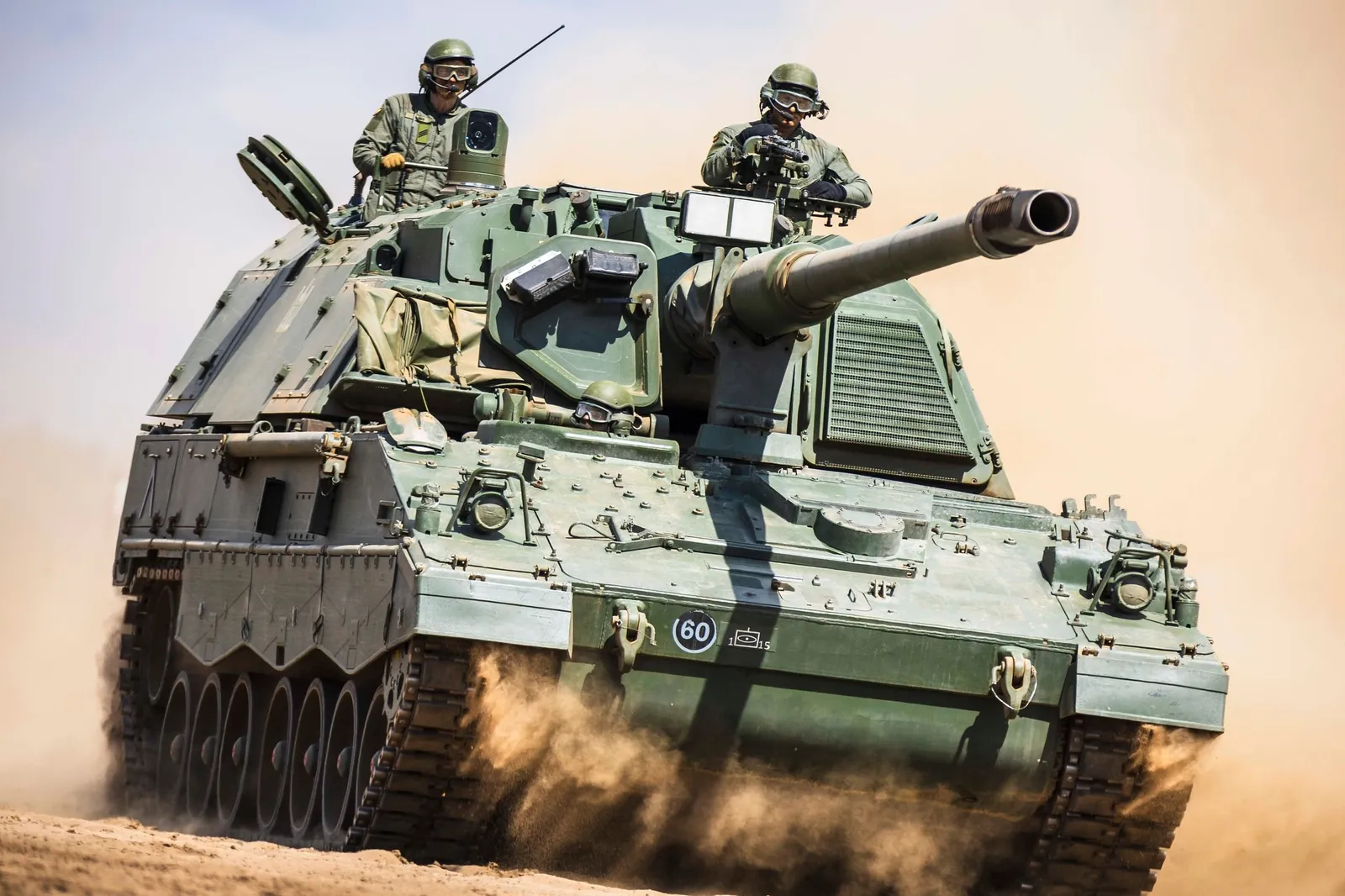
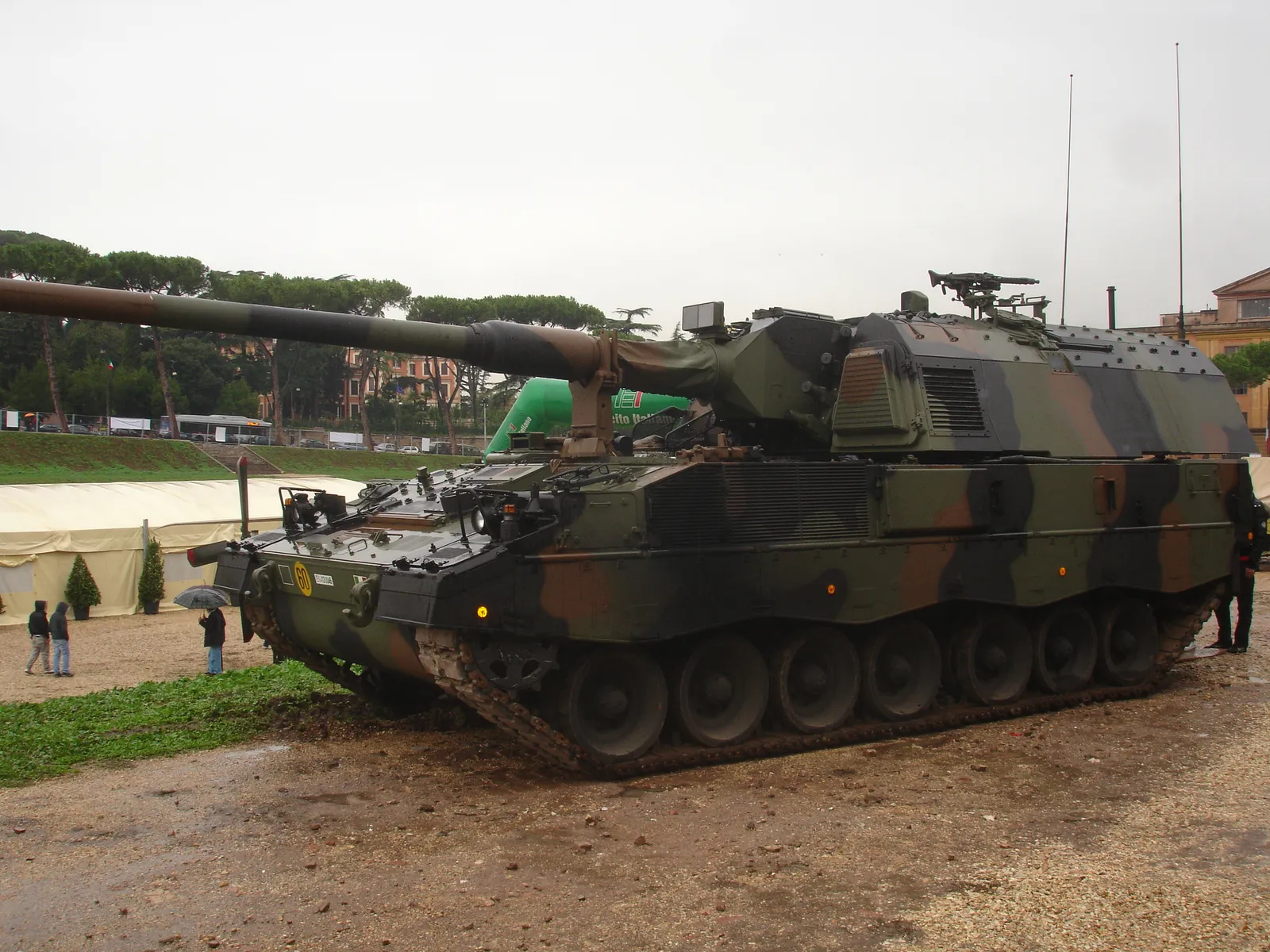
Role detailsThe PzH 2000 is a German 155 mm/L52 self-propelled howitzer built around an automated loader, digital fire control, and a 60-projectile ready magazine. Its documented combat use spans Dutch and German coalition fire missions in Afghanistan and Ukrainian fire support after German deliveries in the Russia-Ukraine War.
German government records list PzH 2000 deliveries to Ukraine, and Ukrainian reporting said Ukrainian forces were already using the howitzers to strike Russian positions in eastern Ukraine.
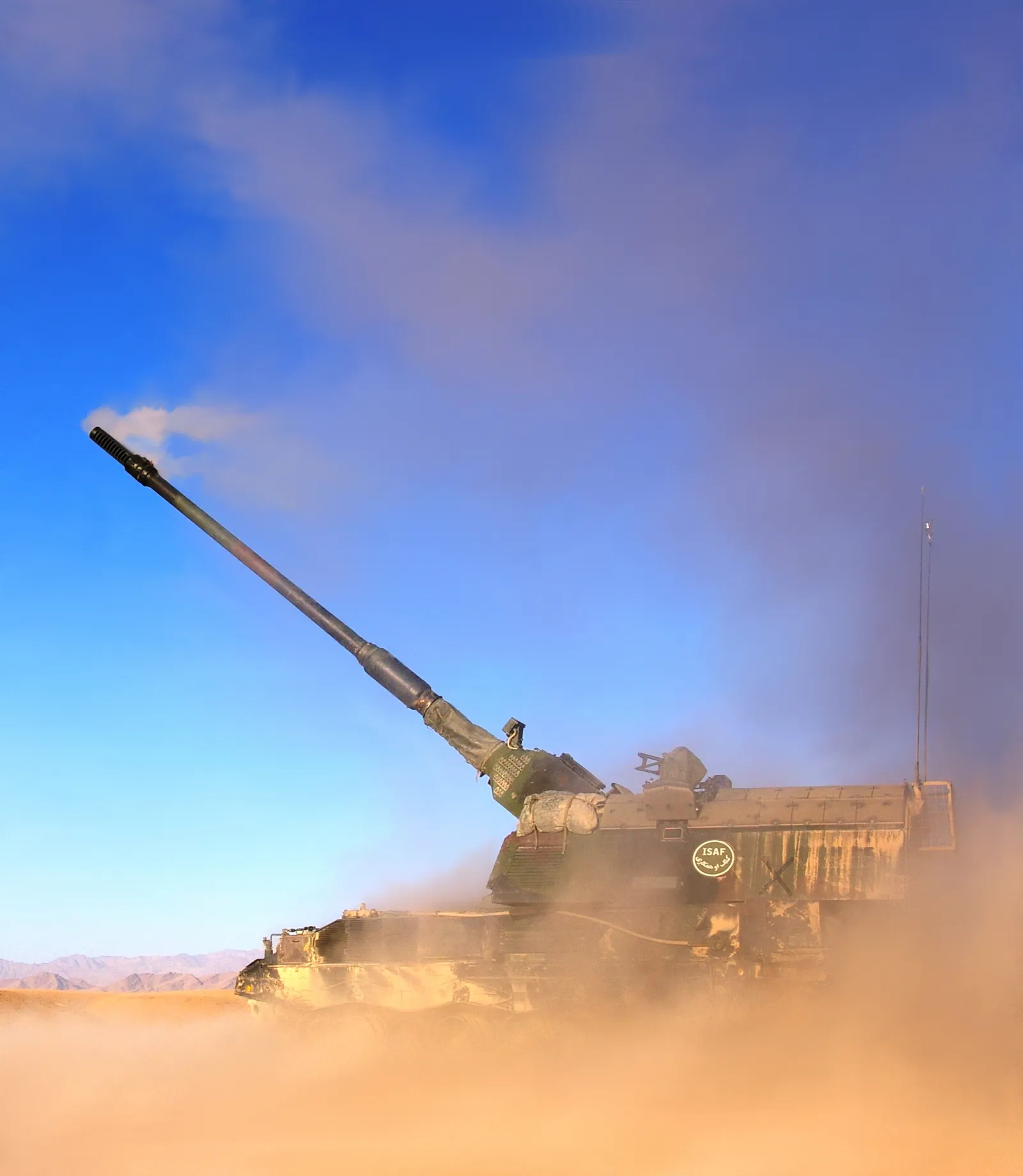
Role detailsDutch PzH-2000NL howitzers fired combat missions during Operation Medusa in 2006 and at Chora in 2007, while Bundeswehr PzH 2000s fired live rounds near Kunduz in July 2010.
Role detailsKNDS describes the PzH 2000 as an automated, autonomous artillery system built for indirect fire support with a large ready ammunition supply and digital fire-control links. Its combat record in this entry is anchored by Dutch and German fire missions in Afghanistan and Ukrainian employment after 2022 deliveries.
A fully automated projectile loading system and inductive fuse programming support high burst and sustained rates of fire.
The turret stores 60 primed projectiles and 288 modular charges or equivalent bagged and cased charges.
The fire-control system is built around NATO-standard 155 mm ammunition, including extended-range and precision rounds such as V-LAP, VULCANO, and EXCALIBUR.
PzH 2000 designations mostly distinguish production standards, upgrade packages, and national service configurations rather than separate weapon families.
| Variant | Configuration | Designation notes |
|---|---|---|
| PzH 2000 A1 | German service standard | Bundeswehr lists A1 as a Panzerhaubitze 2000 variant; published upgrade reporting treats A1 as the baseline production standard delivered in quantity. Sources: Bundeswehr Panzerhaubitze 2000 equipment page, EDR Magazine PzH 2000 upgrade overview |
| PzH 2000 A2 | Combat-value improved standard | Bundeswehr describes A2 as a combat-value improved version with charge cooling in the turret and generator cooling in the hull. |
| PzH 2000NL | Royal Netherlands Army designation | Dutch Defence identifies Pantserhouwitser 2000NL / PzH2000NL as the Dutch Army's 155 mm tracked howitzer and says its midlife update is intended to keep it usable to 2040. |
| PzH 2000 A3 | Unadopted proposed upgrade | EDR reports that A3 focused on additional mine protection but remained a proposed configuration rather than an in-service standard. |
| PzH 2000 A4 | Current new-build electronics standard | EDR describes A4 as a new-build standard for German and Ukrainian production centered mainly on electronics improvements, while KNDS says PzH 2000 manufacturing continues for Ukraine. Sources: EDR Magazine PzH 2000 upgrade overview, KNDS PzH 2000 rollout press release |
The PzH 2000's ammunition matrix is built for NATO 155 mm rounds, including precision and extended-range projectiles used for long-range engagements.
| Ammunition | Ammunition type | Firing evidence |
|---|---|---|
 | 155 mm NATO ammunition family | KNDS describes the howitzer as compatible with current and future NATO-standard 155 mm ammunition, making the cataloged NATO ammunition family the system's baseline ammunition relationship. Sources: KNDS PzH 2000 overview |
 | 155 mm precision projectile | KNDS lists EXCALIBUR among ammunition types the PzH 2000 can use, so the round is a documented compatibility match for the system. Sources: KNDS PzH 2000 overview |
 | Extended-range 155 mm projectile | KNDS lists V-LAP among supported ammunition types and gives a 54 km range figure for the PzH 2000 with V-LAP ammunition. Sources: KNDS PzH 2000 overview |
WeaponSystems.net says two consortia started PzH 2000 prototype development in 1986 after the German military canceled the SP-70 program.
Sources: Weaponsystems PzH 2000 profile
WeaponSystems.net lists 1998 as the PzH 2000's entered-service date and describes the system as still in service.
Sources: Weaponsystems PzH 2000 profile
Dutch Defence Press reported that Dutch PzH-2000NL howitzers made their combat debut in Afghanistan during Operation Medusa.
Sources: Dutch Defence Press Operation Medusa report
Suddeutsche Zeitung reported that Bundeswehr PzH 2000s fired live rounds during fighting in Afghanistan's Char Darah district near Kunduz.
Sources: Suddeutsche Zeitung Kunduz artillery report
Ukrinform reported that Germany had delivered the first batch of Panzerhaubitze 2000 systems to Ukraine and that Ukrainian forces were already using them against Russian positions in eastern Ukraine.
Sources: Military Support for Ukraine, Panzerhaubitze 2000 Already Used Against Russian Invaders in Eastern Ukraine
The Dutch Defence newspaper reported that Dutch instructors had trained Ukrainian crews on the Pantserhouwitser-2000NL at the German artillery school since May 2022 under EUMAM Ukraine.
Sources: Dutch Defence Ukraine PzH training article
KNDS rolled out new PzH 2000 systems for the Bundeswehr, said they replace artillery delivered to Ukraine, and stated that PzH 2000 manufacturing would continue for Ukraine.
Sources: KNDS PzH 2000 rollout press release