Artillery

M109

Also known as
  • M109 howitzer
  • M109 self-propelled howitzer
  • M109 SPH
  • M109 155 mm howitzer
  • M109 Paladin
  • M109A1
  • M109A2
  • M109A3
  • M109A4
  • M109A5
  • M109A6
  • M109A7
  • M109A3GN

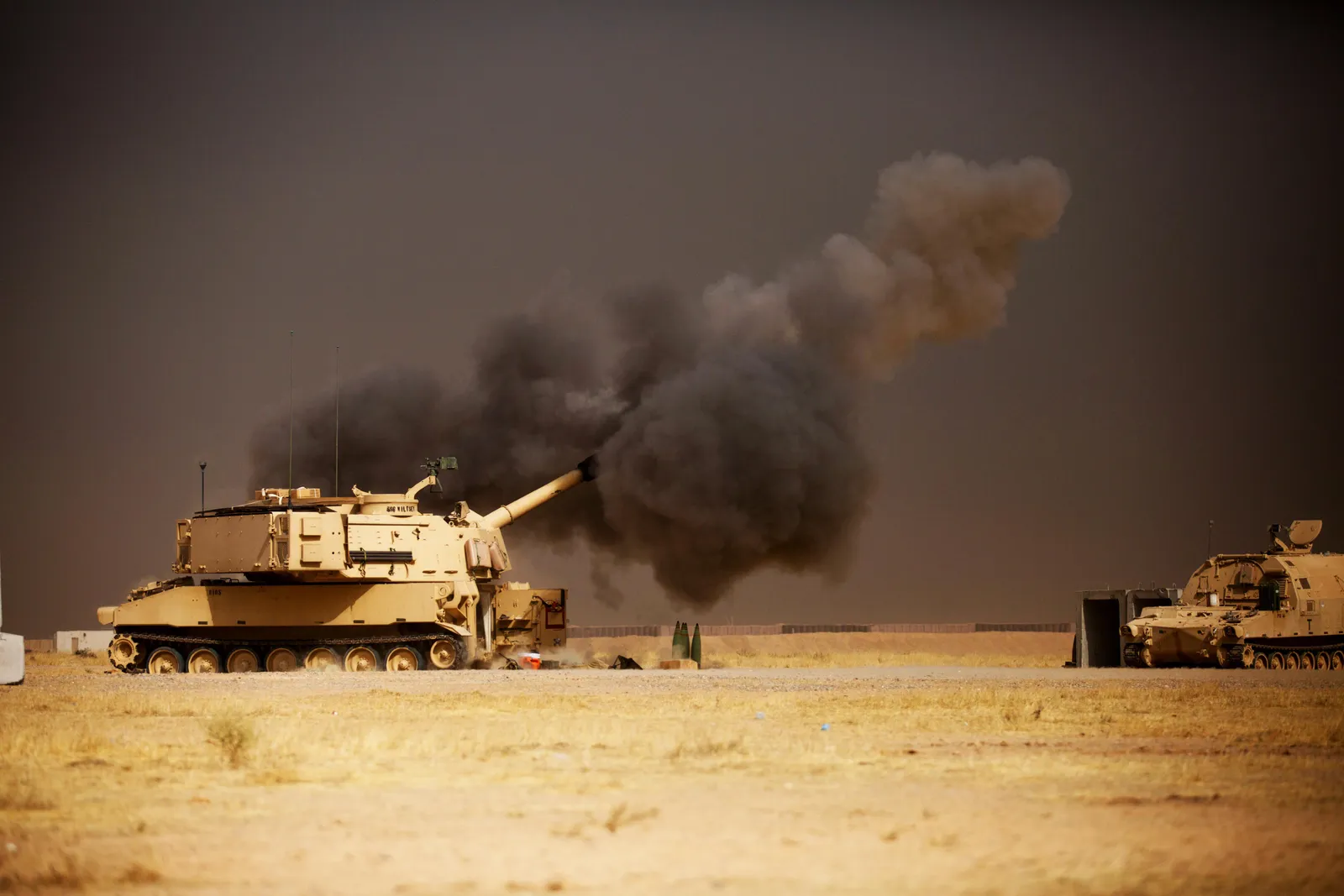
The M109 is a U.S.-origin 155 mm tracked self-propelled howitzer family built for mobile indirect fire with armored and mechanized forces. The family spans early Vietnam-era vehicles, M109A2/A3 export and upgrade lines, the digitally modernized M109A6 Paladin, and the current M109A7 program; catalog evidence here centers on direct conflict use by Ukraine, U.S.-led coalition forces, and Israel.

Use in Conflicts

Role
Mobile 155 mm fire support

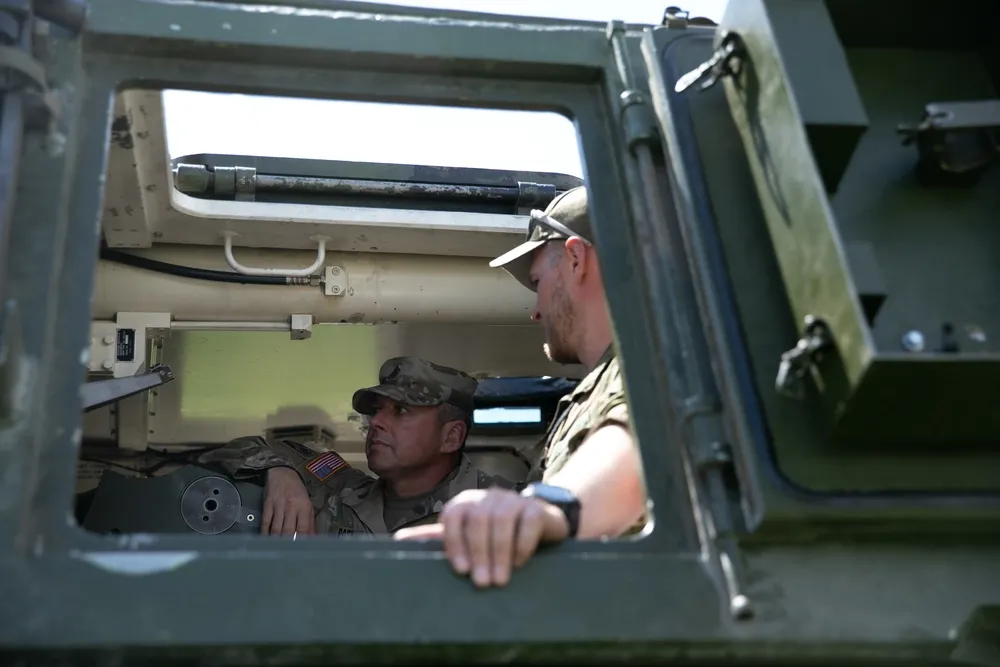
Norway publicly announced the donation of 22 M109 155 mm self-propelled howitzers to Ukraine in 2022, and DVIDS documented Ukrainian personnel training with U.S. and Norwegian M109 howitzers in Germany before battlefield employment.

Role
155 mm field artillery support

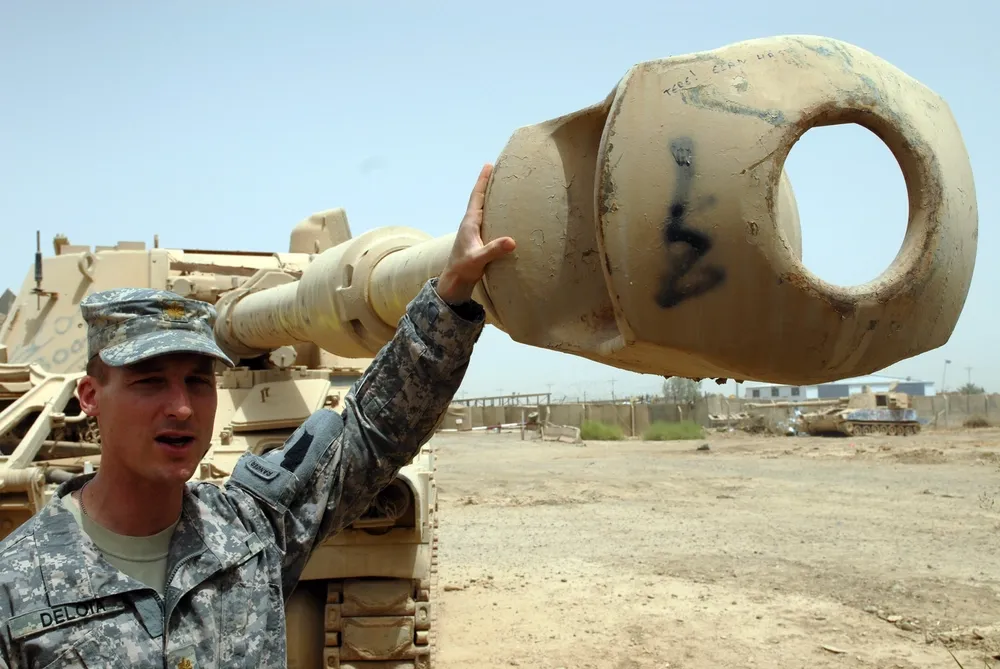
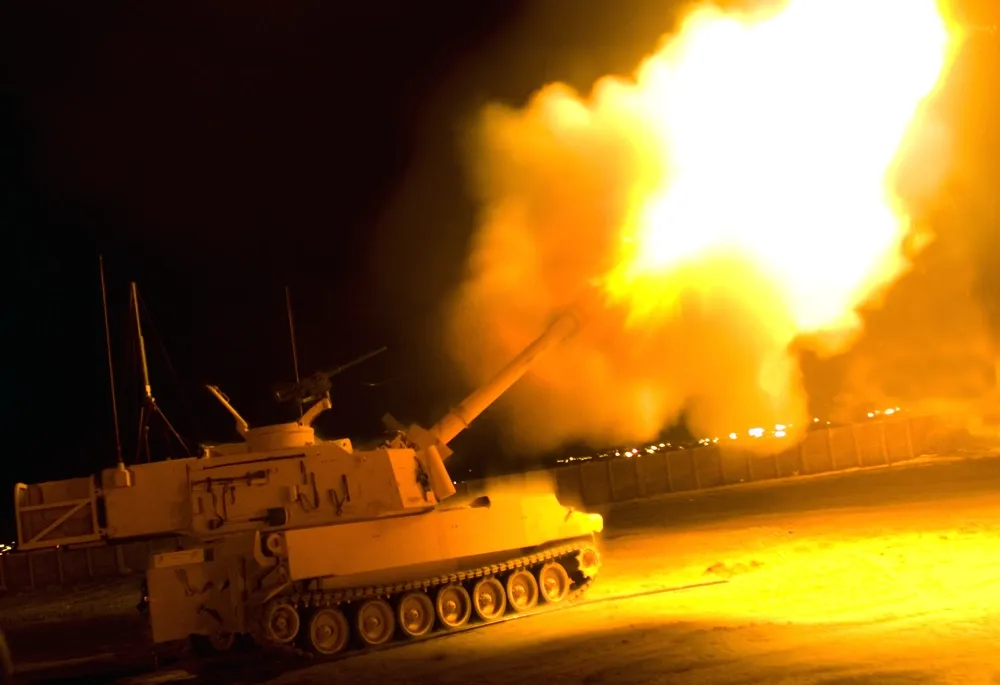
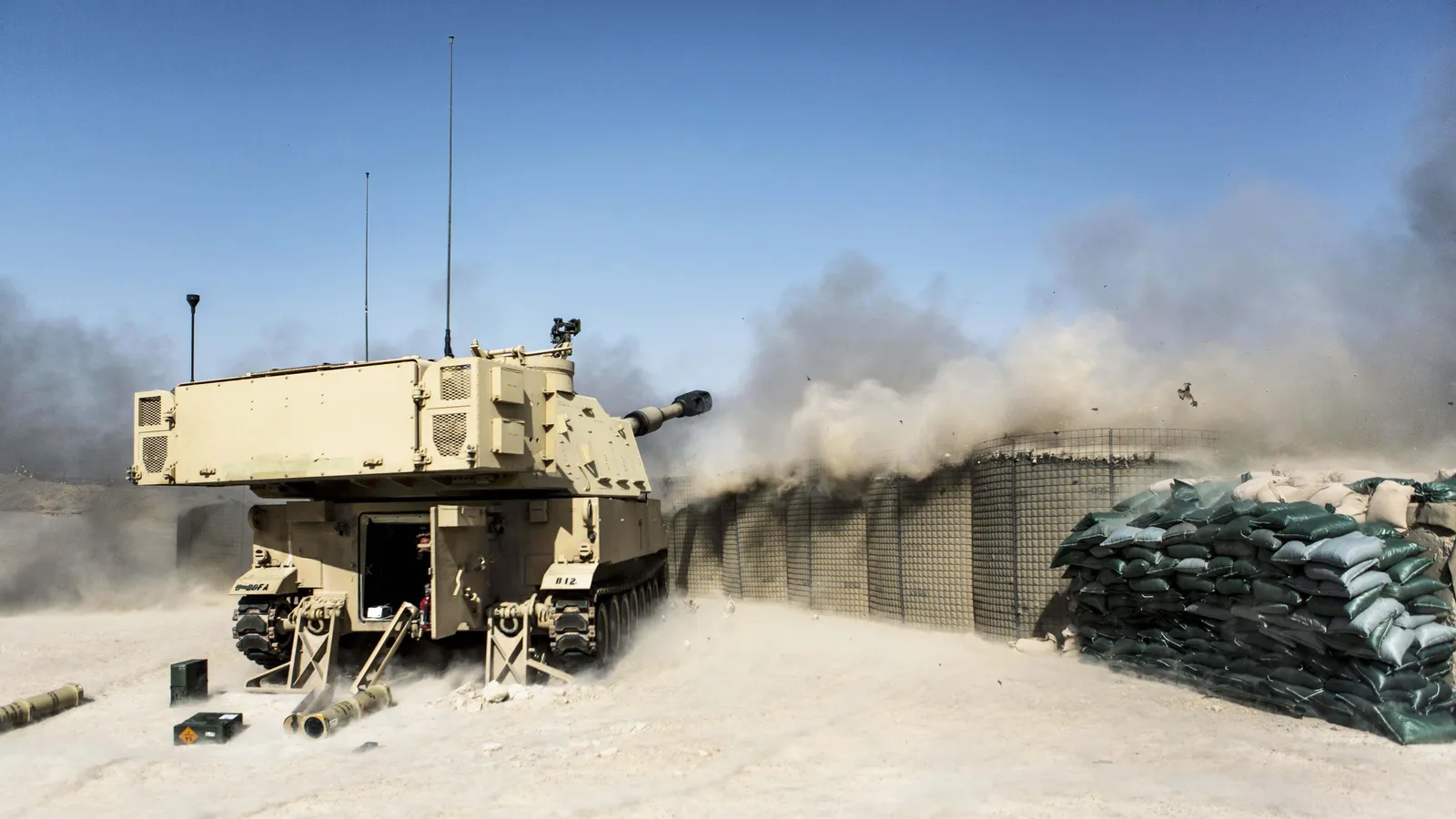
U.S. Army M109A6 Paladins fired support missions during Operation Iraqi Freedom, including 2008 illumination fire from Badoush prison outside Mosul and a Camp Taji Paladin battery reported to have fired thousands of rounds during the 2006-2008 rotation.

Role
Armored-formation artillery

U.S. Army M109 howitzers deployed with armored units for Operations Desert Shield and Desert Storm; DVIDS records an M109 crewman in the initial push to liberate Kuwait, and a National Archives image documents 24th Infantry Division M109s loaded for Saudi Arabia.

Side
Israel
Role
155 mm artillery fire support

Israeli M109 howitzers were documented in the 2023 war, including IDF 405th Battalion M109s used on the northern front after earlier Gaza fighting and open-source verification of M109 155 mm howitzers positioned near Sderot in October 2023.

Conflict Evidence Boundaries

The conflict rows use direct transfer, fielding, firing, deployment, or verified-position evidence. Broader operator lists and unsourced war lists were not used as conflict-use rows unless a source connected the M109 family to that exact conflict.

Evidence typeHow it is used here
Ukraine transfer and trainingNorwegian government and DVIDS sources support Ukrainian M109 fielding and preparation during the Russia-Ukraine War 2014-present.
U.S. coalition firing recordsDVIDS, DLA, and CENTCOM imagery support M109A6 firing rows for the Iraq War 2003-2011 and Operation Inherent Resolve 2014-present.
Verified positioningFor the Israel-Hamas War 2023-present, the entry distinguishes verified M109 positioning and documented battalion use from claims about individual rounds fired by a named vehicle.
Profile / Specs

Profile

Origin
United States
Built by
BAE Systems
Type
155 mm tracked self-propelled howitzer family
Service note
Cold War to modern service
Designer
United States Army / U.S. defense industry
Designed
1950s-1960s development program
Produced
1960s-present family production, rebuild, and modernization programs
Developed from
U.S. common self-propelled artillery chassis program that also produced the 105 mm M108
Developed into
M109A6 Paladin and M109A7 modernization programs

Specifications

Caliber
155 mm
Configuration
Tracked, turreted self-propelled howitzer
Crew
Four on M109A6/A7; earlier variants commonly carried larger crews
Primary armament
M126, M185, or M284 155 mm cannon depending on variant
Ammunition
Separate-loading 155 mm projectiles and propelling charges
Range
Variant and projectile dependent; original M109 about 14.6 km, later M109A1-A4 about 18.1 km with M107 HE and longer with rocket-assisted projectiles, Paladin-class sources cite about 30 km with rocket-assisted rounds
Rate of fire
Maximum about 4 rounds per minute for short bursts; sustained about 1 round per minute
Mobility
Tracked diesel chassis; Paladin-class references cite about 35 mph maximum road speed
Protection
Armored self-propelled chassis; Paladin added improved crew protection, NBC protection, and digital communications
Family Scope

The M109 record is a family page rather than a single production block. It covers the original M109, A1 through A5 upgrades, the linked M109A6 Paladin, and the current M109A7 modernization line.

Family branchReader-facing distinctionCatalog handling
Original M109 to A5Tracked 155 mm howitzers with successive gun, stowage, and reliability upgrades.Covered in this family record.
M109A6 PaladinDigitized U.S. variant with automatic fire-control, navigation, communications, and protection changes.Linked to the separate Paladin record.
M109A7Current U.S. modernization using substantial Bradley-family chassis and powertrain commonality.Covered as an unlinked family variant until a separate sourced page is needed.
Variants

This page covers the M109 family as a long-running 155 mm self-propelled howitzer line. The separate M109A6 Paladin record is linked for the digitally modernized U.S. variant.

VariantConfigurationDesignation notes
A1Longer-barrel early upgrade

The M109A1 introduced a longer 155 mm cannon and greater range than the original short-barrel M109.

Sources: M109 howitzer - Wikipedia, M109 155mm Self-Propelled Medium Howitzer

A2 / A3New-production and rebuilt improved models

The A2/A3 line represents improved late-Cold-War vehicles, with A3 conversions rebuilt from earlier M109A1 vehicles.

Sources: M109 howitzer - Wikipedia, M109 155mm Self-Propelled Medium Howitzer

A5M284-cannon upgrade

The M109A5 brought the M284 155 mm cannon into the pre-Paladin family and forms part of the bridge to later Paladin armament.

Sources: M109 howitzer - Wikipedia, M109 155mm Self-Propelled Medium Howitzer

M109A6 Paladin, 155 mm tracked self-propelled howitzer, ArtilleryM109A6 PaladinDigitized U.S. Paladin variant

The Paladin added onboard navigation, automatic fire-control, digital communications, and improved protection to the M109 family.

Sources: M109A6 Paladin Self Propelled Howitzer

A7Current U.S. modernization

BAE Systems describes the M109A7 as the latest M109 family howitzer, using major chassis and powertrain commonality with the Bradley Fighting Vehicle while retaining a 155 mm cannon mission.

Sources: BAE Systems M109A7

A3GNNorwegian upgraded variant supplied to Ukraine

Norway's 2022 transfer to Ukraine involved 22 M109 howitzers from Norwegian stocks; battlefield reporting and training imagery identify the Ukrainian lane with Norwegian M109-family vehicles.

Sources: Norway has donated artillery to Ukraine, Armed Forces of Ukraine train with U.S. and Norway M109 howitzer

Ammunition Fired

M109-family howitzers fire separate-loading 155 mm ammunition, with compatibility depending on variant, fire-control integration, and projectile type.

AmmunitionAmmunition typeFiring evidence
155 mm NATO ammunition, 155 mm NATO-standard artillery ammunition family for 39-, 45-, and 52-caliber howitzers, Munitions155 mm NATO ammunition155 mm artillery ammunition family

The M109 is a 155 mm self-propelled howitzer family using separate-loading 155 mm ammunition; later variants remain part of the NATO-standard 155 mm artillery ecosystem.

Sources: M109 155mm Self-Propelled Medium Howitzer, BAE Systems M109A7

M107 155 mm high-explosive projectile, 155 mm high-explosive projectile, ArtilleryM107 155 mm high-explosive projectile155 mm high-explosive projectile

The family range tables identify M107 high-explosive projectiles as a standard range reference for M109A1-A4 howitzers.

Sources: M109 howitzer - Wikipedia

M982 Excalibur guided artillery projectile, 155 mm GPS/INS-guided artillery projectile, MunitionsM982 Excalibur guided artillery projectile155 mm guided projectile

Raytheon identifies the M109 family among artillery systems compatible with the Excalibur precision-guided 155 mm projectile.

Sources: Raytheon Excalibur Projectile

M825A1 155 mm White-Phosphorus Smoke Projectile, 155 mm white-phosphorus smoke projectile, ArtilleryM825A1 155 mm White-Phosphorus Smoke Projectile155 mm smoke and marking projectile

Amnesty International's evidence review placed M825/M825A1-series 155 mm white-phosphorus shells with IDF M109 155 mm howitzers near Sderot in October 2023; this supports observed artillery-shell compatibility and co-location, not a named-gun firing event.

Sources: Amnesty Citizen Evidence Lab Israeli White Phosphorus Verification

Timeline

M109 Key Events

  1. Original M109 production begins

    The original short-barrel M109 entered production and service as a U.S. 155 mm self-propelled howitzer for armored and mechanized formations.

  2. M109A1 upgrade enters service

    The M109A1 introduced a longer 155 mm cannon and extended range compared with the original M109.

  3. M109A6 Paladin service era

    The M109A6 Paladin brought digital fire-control, navigation, communications, and protection improvements into U.S. service.

  4. M109A7 modernization enters service

    The M109A7 modernization line entered the current U.S. family, with BAE Systems describing it as the latest M109 variant.

  5. Norway announces M109 donation to Ukraine

    Norway announced that it had donated 22 M109 self-propelled howitzers to Ukraine.

  6. Israeli M109s documented near Gaza border

    Open-source evidence reviewed by Amnesty International placed IDF M109 155 mm howitzers near Sderot shortly after the October 2023 Hamas attack.

Media
Related Weapon Systems
AHS Krab, 155 mm tracked self-propelled howitzer, ArtilleryArtilleryAHS Krab155 mm tracked self-propelled howitzerThe AHS Krab is a Polish 155 mm tracked self-propelled howitzer built by Huta Stalowa Wola around a NATO-standard 52-caliber gun, an AS-90 Braveheart turret lineage, a K9-derived tracked chassis, and the TOPAZ fire-control ecosystem. In Ukrainian service it gives artillery units a mobile Western-caliber gun able to fire standard and precision 155 mm ammunition, displace after missions, and operate in counter-battery-threatened sectors of the Russia-Ukraine War 2014-present.

Sources