Armored Vehicles

M106 mortar carrier

Also known as
  • Carrier, Mortar, 107 mm, Self-propelled, M106
  • M106A1 mortar carrier
  • M106A2 mortar carrier
  • M106 107 mm mortar carrier
  • M106 4.2-inch mortar carrier

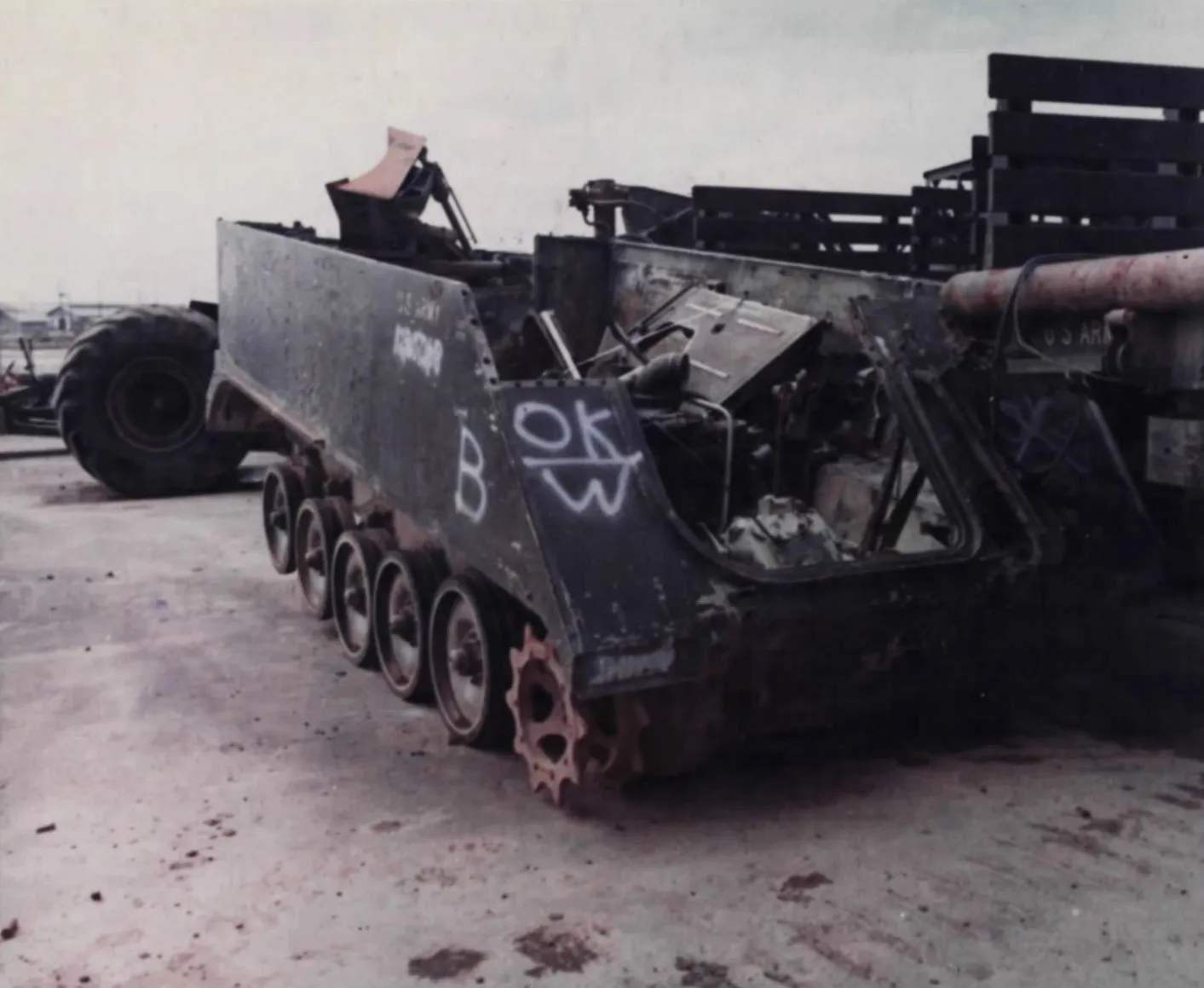
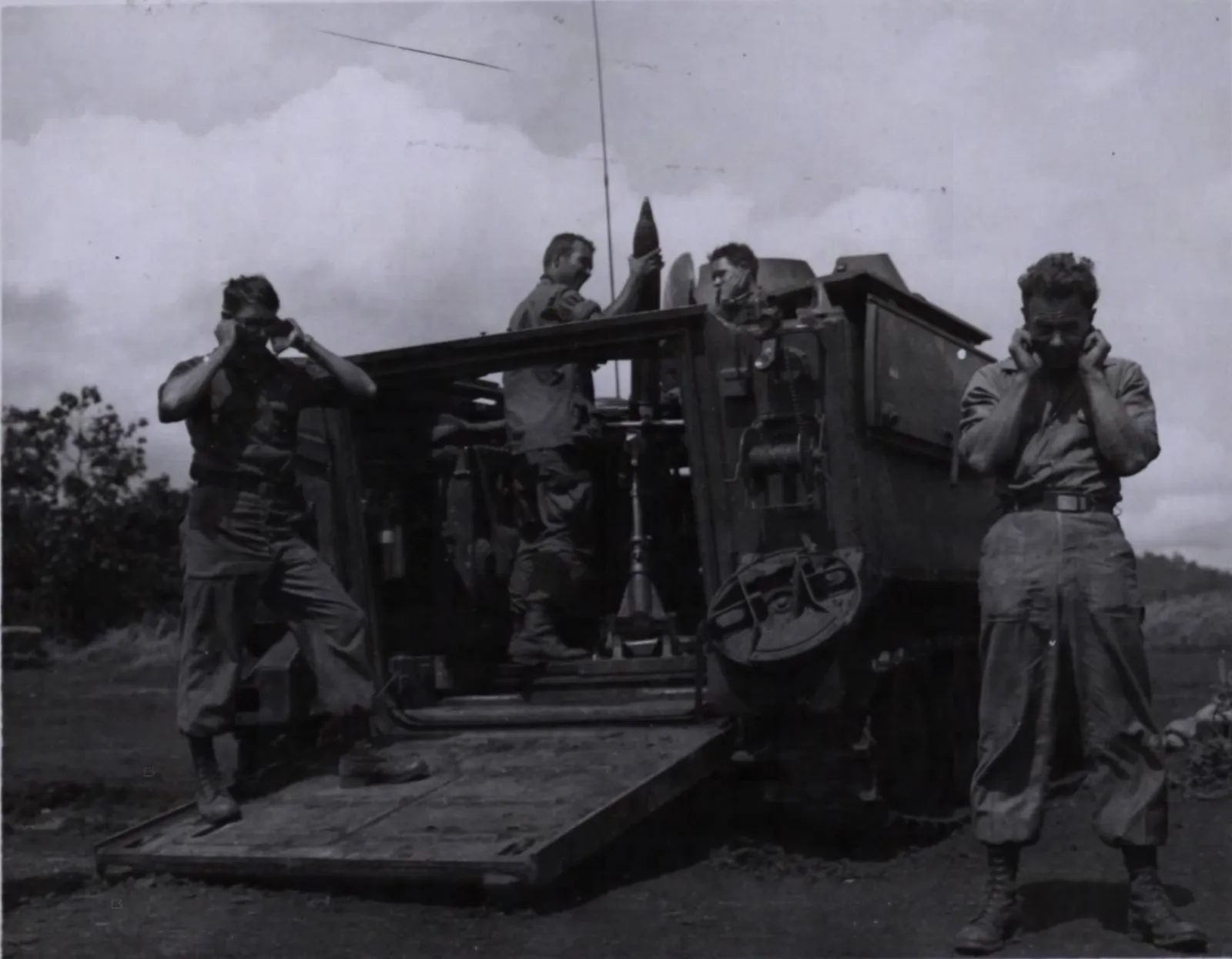
The M106 is a U.S. M113-family tracked mortar carrier built around the 4.2-inch / 107 mm M30 mortar. Technical-manual material describes the M106A2 as carrying the M30 on a turntable that could fire from inside the vehicle or be removed for off-vehicle ground-baseplate firing, while a public-domain U.S. Army image directly documents an M106 mortar carrier firing in Vietnam.

Role in Conflicts

Side
United States and South Vietnam

A U.S. Army public-domain photograph identifies members of the 11th Armored Cavalry Regiment firing a 4.2-inch mortar mounted on an M106 mortar carrier during operations around their base camp at Long Giao in August 1967.

Profile / Specs

Profile

Origin
United States
Built by
FMC
Type
Tracked 107 mm self-propelled mortar carrier
Service note
Cold War M113-family mortar-carrier service
Designer
FMC Corporation and U.S. Army M113-family vehicle program
Designed
Late 1950s development; 1960s service introduction
Produced
1960s to 1970s M106-family production
Number built
Weaponsystems.net lists 862 M106, 1,409 M106A1, and 350 M106A2 vehicles

Specifications

Configuration
M113-family tracked self-propelled mortar carrier
Primary armament
4.2-inch / 107 mm M30 mortar on a rear-compartment turntable
Secondary armament
.50-caliber M2HB machine gun in reference data
Crew
Six personnel including the driver in M106A2 manual text
Ammunition stowage
Weaponsystems.net lists 93 mortar shells for M106 and 88 shells for M106A1/M106A2
Mobility
Tracked amphibious M113-family carrier; manual text notes rough-terrain movement and water fording
Variants
M106, M106A1, and M106A2 production versions
Variants

The M106 family kept the same M30 mortar role while following M113 chassis updates from the original gasoline-powered carrier through diesel and improved-suspension versions.

VariantConfigurationDesignation notes
M106Initial M113-based 107 mm mortar carrier

Weaponsystems.net describes the original M106 as the first operational version, based on the original M113 chassis.

Sources: Weaponsystems.net M106

M106A1Diesel M113A1-based carrier

Weaponsystems.net describes the M106A1 as the second production model, based on the M113A1 chassis with Detroit Diesel 6V-53 power.

Sources: Weaponsystems.net M106

M106A2Improved M113A2-based carrier

The M106A2 technical manual states that the carrier was designed to carry the 4.2-inch / 107 mm M30 mortar, with firing from the turntable or from a ground baseplate.

Sources: TM 9-2350-261-10 M106A2 carrier

Mortar Armament

The M106 page is linked as support context for the M30 mortar rather than as a separate conflict-use claim.

AmmunitionAmmunition typeFiring evidence
M30 107 mm mortar, Rifled 107 mm heavy mortar, ArtilleryM30 107 mm mortar107 mm rifled mortar

The M106A2 manual identifies the 4.2-inch / 107 mm M30 as the carrier's mortar and says it could be fired from the turntable in the carrier or removed for ground-baseplate firing.

Sources: TM 9-2350-261-10 M106A2 carrier

Carrier Layout

The M106 adapted the M113 armored personnel carrier hull for indirect fire by placing the M30 mortar in the rear compartment under roof hatches. Manual and reference sources describe a vehicle that could move with mechanized units, fire through the carrier hatch arc, and still carry the mortar baseplate and mount hardware needed for dismounted firing.

Primary weapon

4.2-inch / 107 mm M30 mortar on a turntable mount.

Off-vehicle firing

The technical manual states that the mortar could be removed and fired from a ground baseplate.

Crew

M106A2 operator-manual text gives a six-person crew including the driver.

Secondary weapon

Reference data lists a .50-caliber M2HB machine gun on the commander's cupola.
Media

M106 mortar carrier Images

Related Weapon Systems
M113, Armored personnel carrier, Armored VehiclesArmored VehiclesM113Armored personnel carrierA lightweight tracked armored personnel carrier that became a long-lived family of troop, command, mortar, medical, missile, and field-conversion vehicles. Its use spans Vietnam-era ACAV combat adaptations, Desert Storm coalition service, U.S. and partner-supplied Ukrainian evacuation and mobility vehicles, Israeli remote explosive conversions in Gaza, Egyptian M113s under IED threat in Sinai, Yemen service, and captured Iraqi Army vehicles used by Islamic State.
Composition B, RDX/TNT melt-cast explosive filler, MunitionsMunitionsComposition BRDX/TNT melt-cast explosive fillerComposition B is a castable RDX/TNT military explosive mixture used as a high-explosive filler rather than as a standalone weapon. U.S. Army technical material describes a British formula transferred to the United States in 1940, then documents melt-cast processing, grade distinctions, density, and detonation data. Cataloged munitions such as the M107 projectile, M933A1 mortar cartridge, M888 mortar cartridge, M106 projectile, and 76mm HE-T M330 show how the filler appears inside shells, mortar rounds, and fixed ammunition.
M224, 60 mm lightweight company mortar, ArtilleryArtilleryM22460 mm lightweight company mortarThe M224 is a U.S. 60 mm lightweight company mortar built for infantry close-support fires from either a conventional bipod/baseplate setup or a lighter handheld mode. Its 70- to 3,490-meter conventional-mode range, high-angle fire, and mix of high-explosive, smoke, illumination, and training cartridges make it useful for small-unit suppression, screening, marking, and illumination; documented uses include Ukrainian front-line employment, U.S. coalition advise-and-assist fires during 2014 Operation Inherent Resolve, and U.S. Army field use in Afghanistan.
M106 203 mm high-explosive fragmentation projectile, 203 mm high-explosive fragmentation projectile, MunitionsMunitionsM106 203 mm high-explosive fragmentation projectile203 mm high-explosive fragmentation projectileThe M106 is a U.S. 8-inch, or roughly 203 mm, high-explosive fragmentation projectile built for American heavy artillery such as the M110. Open munition references describe a nose-fuzed, boat-tailed steel shell with TNT or Composition B filling, while Ukrainian and defense-reporting sources document M106 projectiles being adapted to Ukrainian 2S7 Pion guns during the 2014 Russia-Ukraine War as Soviet-pattern 203 mm stocks became scarce.

Sources