- Side
- United States and South Vietnam


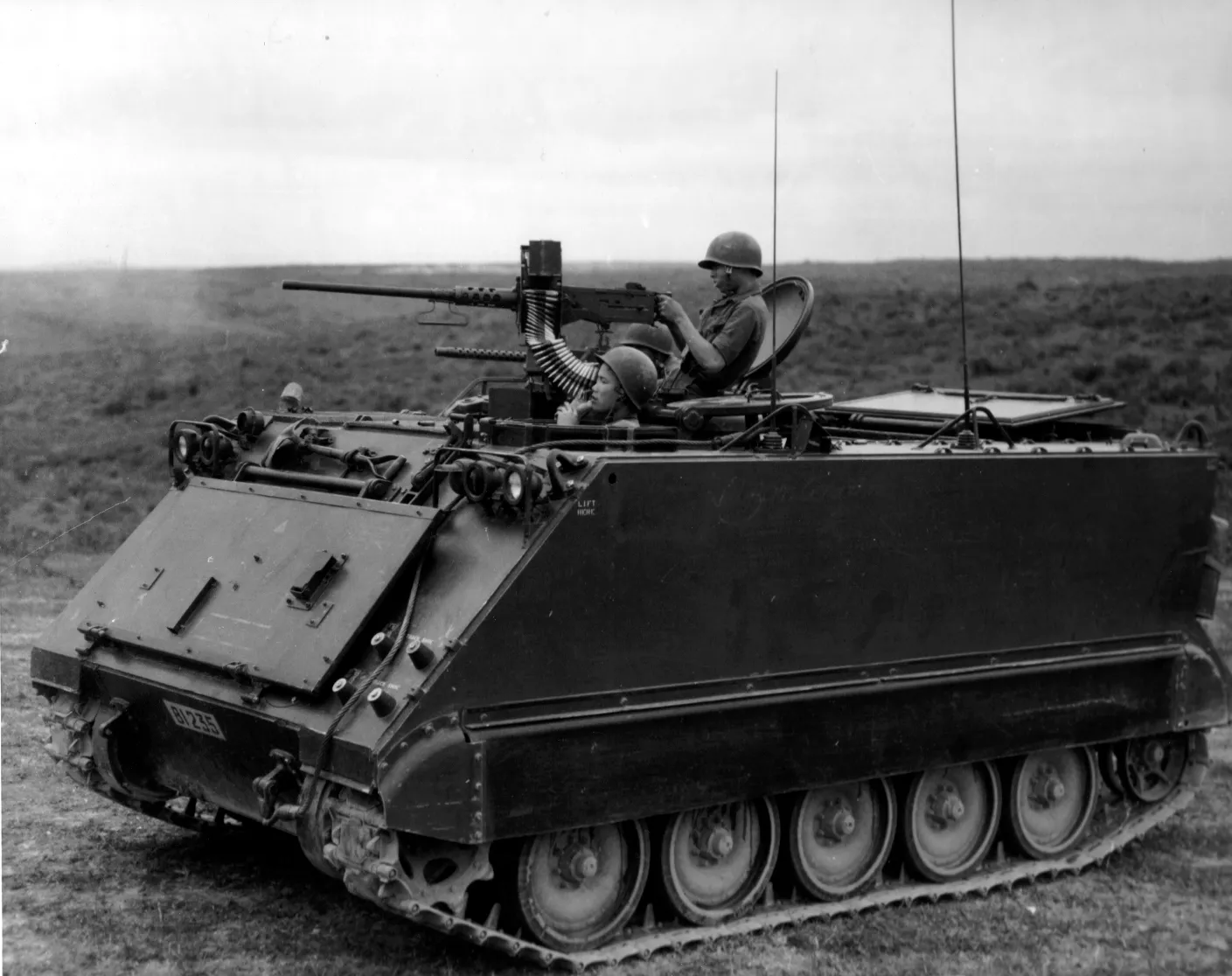
ARVN received M113s in 1962 and used them in combat against Viet Cong forces, while U.S. forces later deployed large numbers of mostly M113A1 carriers and ACAV conversions with extra machine guns and gun shields.
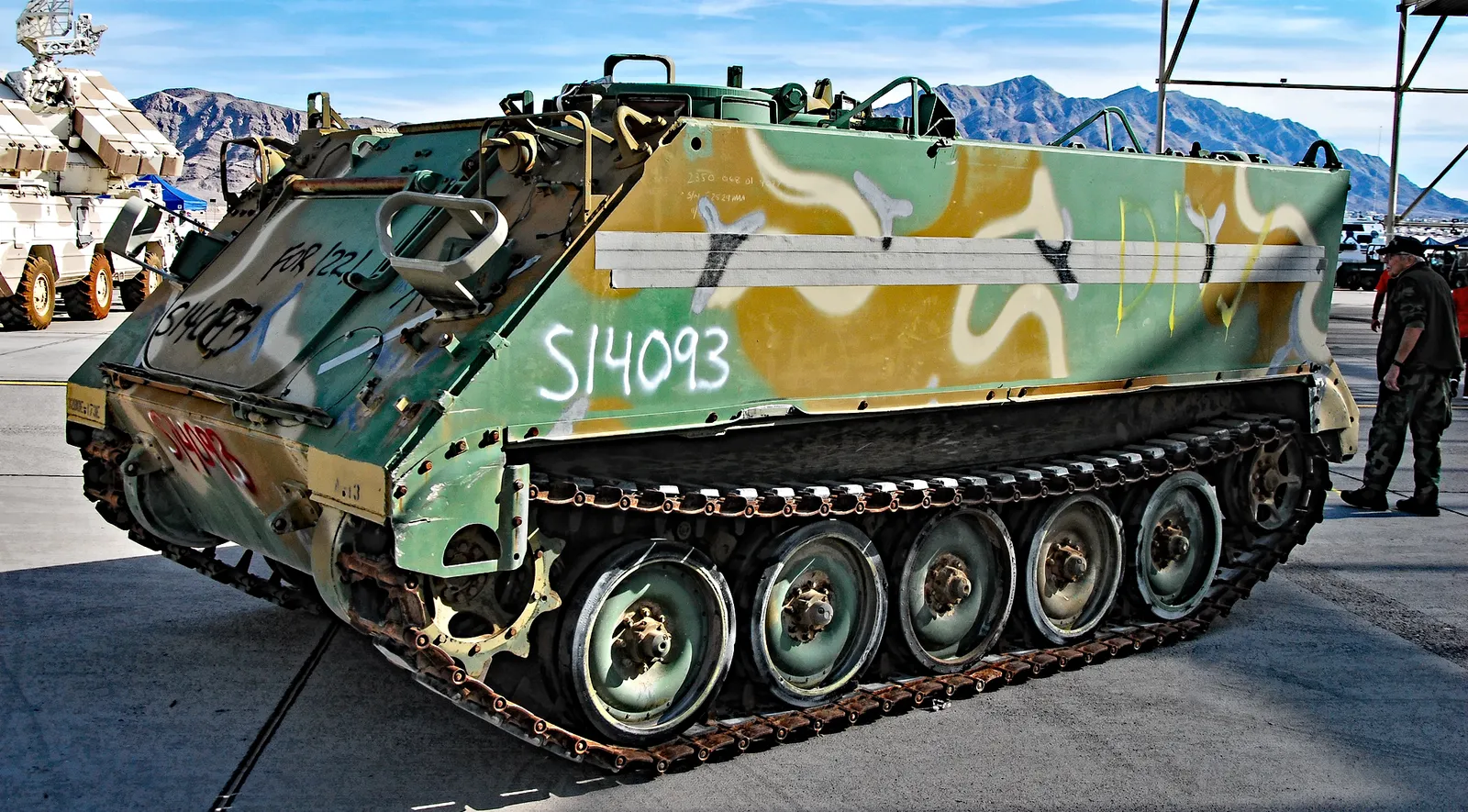
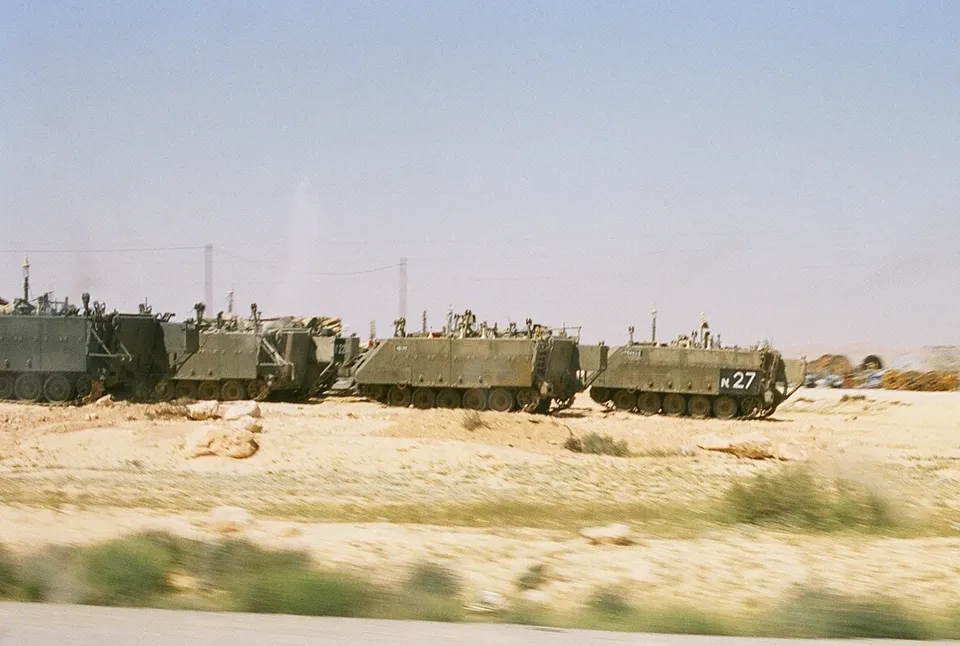
A lightweight tracked armored personnel carrier that became a long-lived family of troop, command, mortar, medical, missile, and field-conversion vehicles. Its use spans Vietnam-era ACAV combat adaptations, Desert Storm coalition service, U.S. and partner-supplied Ukrainian evacuation and mobility vehicles, Israeli remote explosive conversions in Gaza, Egyptian M113s under IED threat in Sinai, Yemen service, and captured Iraqi Army vehicles used by Islamic State.
ARVN received M113s in 1962 and used them in combat against Viet Cong forces, while U.S. forces later deployed large numbers of mostly M113A1 carriers and ACAV conversions with extra machine guns and gun shields.
During Operation Desert Storm, large numbers of M113s and M113-family variants deployed with U.S.-led coalition forces across the Kuwait-Iraq theater.
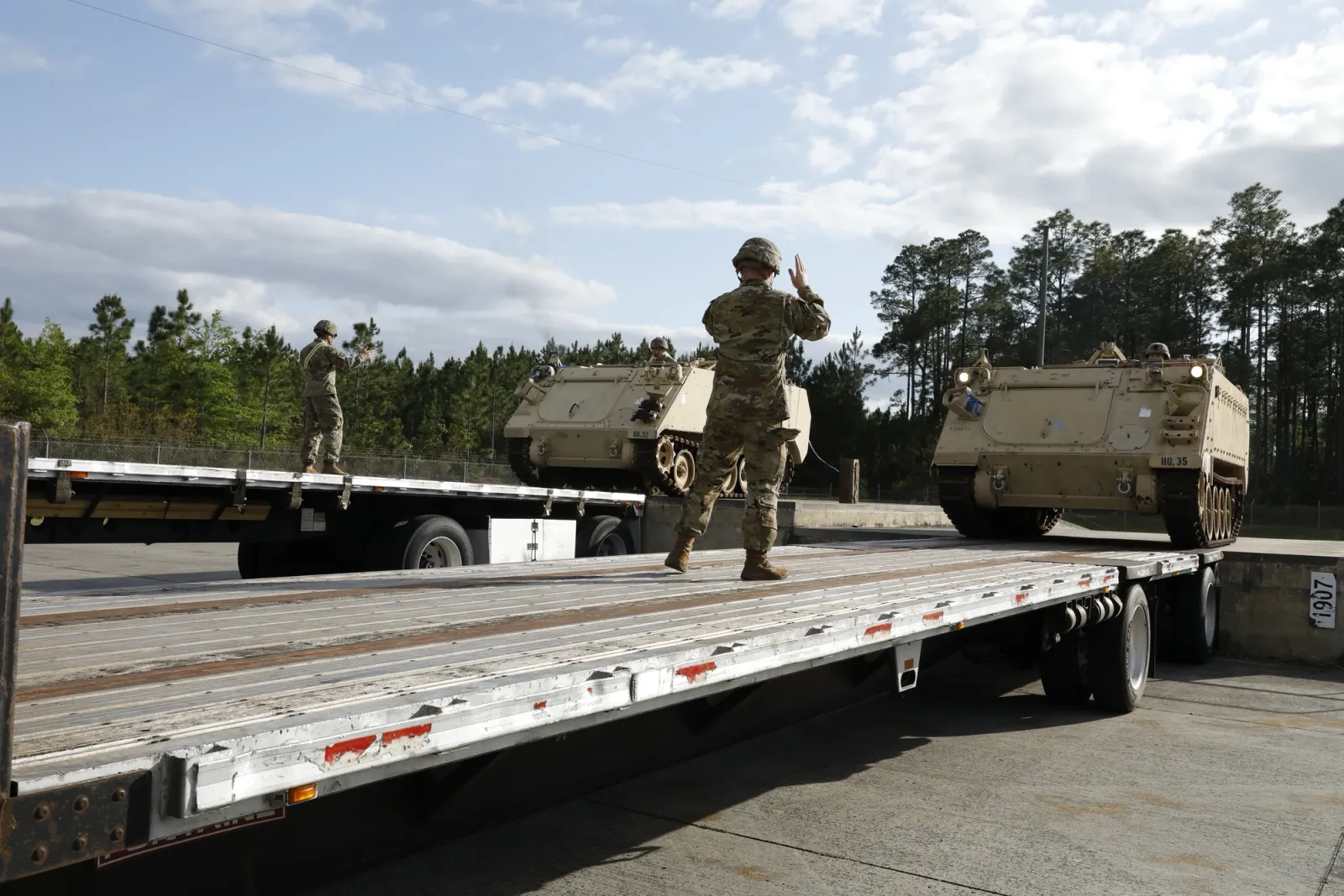
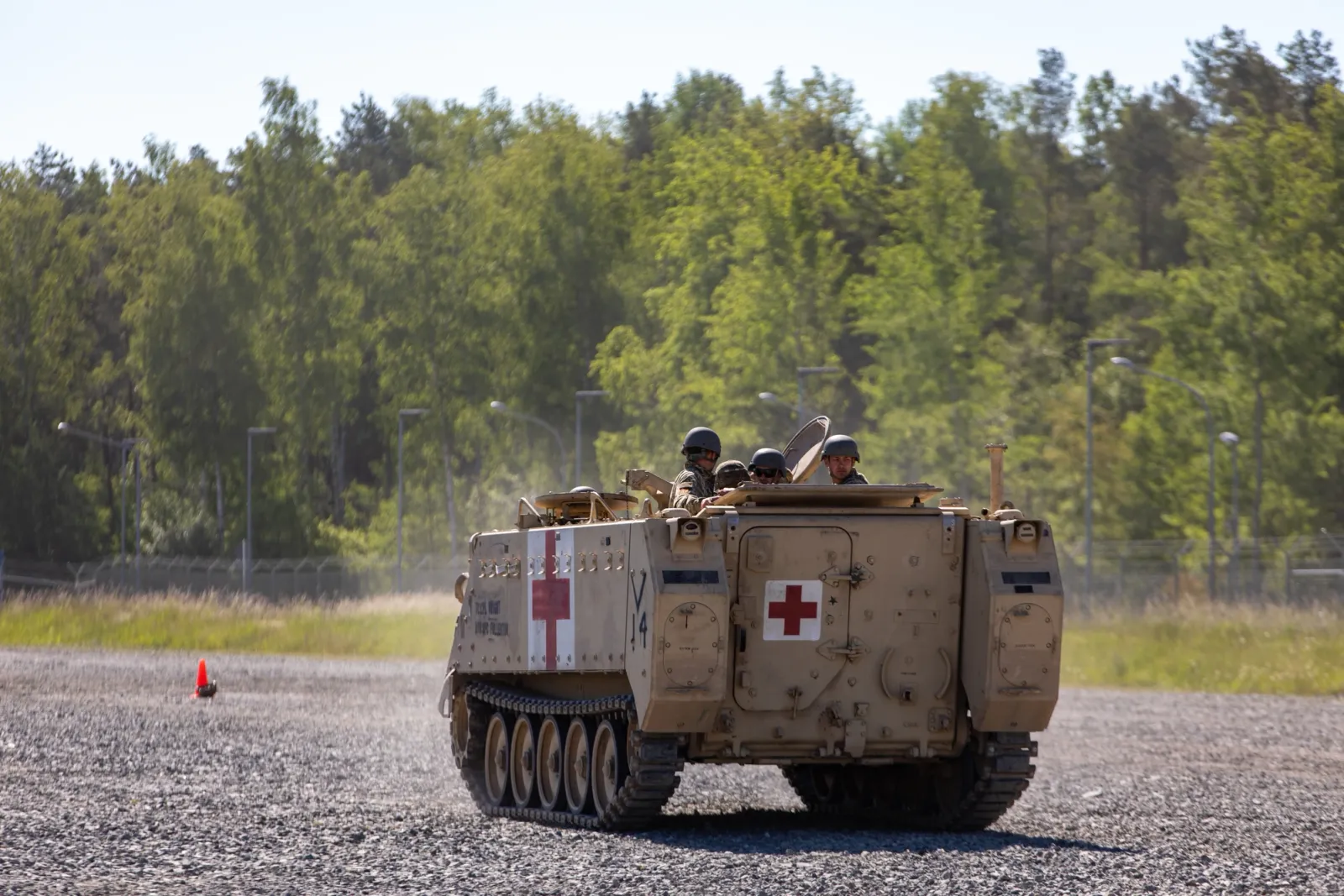
Role detailsUkraine received M113-family vehicles from the United States and partner governments for protected infantry movement, battlefield casualty evacuation, demining support, and other armored mobility roles.
Role detailsIn the 2023 Israel-Hamas War, the IDF used old M113 APCs as remote explosive demolition vehicles in Gaza, packing them with explosives to clear booby-trapped areas and destroy Hamas infrastructure.
Role detailsYemeni Army M113 and M113M APCs were documented in the pre-war inventory available to Yemeni parties as the war began, while M113 armored infantry vehicles were also spotted in Saudi Army operations in Yemen; the sources support M113-family use but do not give a detailed M113M combat employment record.
Role detailsEgyptian forces used M113 armored vehicles in North Sinai security operations; 2015 and 2016 reporting documents Wilayat Sinai IED attacks against Egyptian M113s around Rafah, Sheikh Zuweid, and the Al-Arish-Rafah road.
During the anti-ISIS campaign in Iraq, Islamic State seized or destroyed Iraqi Army M113 armored personnel carriers at Camp Saqlawiya near Fallujah, with open-source imagery assessed as showing at least one fighter driving a captured M113.
In the 2013 War in Iraq, Islamic State seized or destroyed Iraqi Army M113 armored personnel carriers during the September 2014 Camp Saqlawiya rout north of Fallujah; at least three appeared operational in the published imagery.
The M113 is less a single fixed troop carrier than a reusable tracked hull adapted to different battlefield jobs. The same family appears as a baseline APC, Vietnam-era ACAV, command and medical vehicle, mortar or missile carrier, Israeli remote explosive vehicle, and Iranian ATGM launch platform.
| Adaptation | Documented role | Conflict or service context |
|---|---|---|
| Baseline APC | Protected movement for infantry and support troops | U.S. Army design adopted in 1960 and later exported widely |
| ACAV-style carrier | Added machine guns and gun shields for direct fire support | ARVN and U.S. adaptations in the Vietnam War |
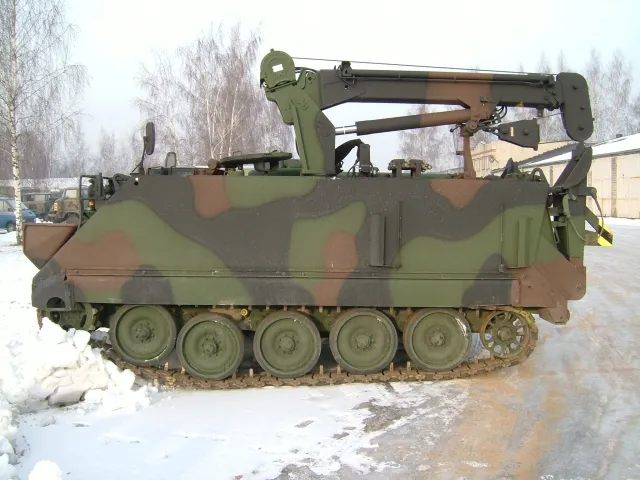
| Mission carrier family | Command, cargo, medical evacuation, mortar, TOW, and other specialist roles | Post-Vietnam M113 family expansion |
| Improvised or remote demolition vehicle | Explosive-laden armored vehicle used for clearing or striking built-up positions | IDF employment in Gaza during the 2023 Israel-Hamas War |
| Missile launch platform | Vehicle mount for Dehlaviyeh twin-arm laser-guided ATGM launcher | Iranian Army Ground Force drill reporting |
The A3 standard is the most relevant factory upgrade for many late-service M113-family vehicles. It retained the compact tracked carrier layout but changed the driver controls and powertrain, moved fuel storage outside the troop compartment, and added survivability provisions that made the hull more useful for later support roles.
275 hp Detroit Diesel 6V53T turbocharged engine with Allison X200-series cross-drive transmission.
Steering-yoke controls, power brakes, hydrostatic steering, and pivot-in-place turning replaced the earlier lateral-control feel.
External fuel tanks, spall liners, and armor mounting provisions are listed in A3 configuration data.
Sources: M113A3 Armored Personnel Carrier; TM 9-2350-277-10 M113A3 Operator's Manual; M113 | WeaponSystems.net.
Local and separately documented conversions sit alongside factory A-series upgrades in the wider M113 family.
| Variant | Configuration | Designation notes |
|---|---|---|
| M113A1 | Diesel-engine APC upgrade | The A1 replaced the original gasoline engine with a diesel powerpack and entered U.S. Army service in 1964. |
| M113A2 | Suspension and cooling upgrade | The A2 entered service in 1979 with suspension and engine-cooling improvements for the carrier family. Sources: M113 armored personnel carrier history, M113 | WeaponSystems.net |
| M113A3 | RISE powertrain, driver-control, and survivability upgrade | Introduced in 1987, the A3 upgraded the M113A2 with a 275 hp Detroit Diesel 6V53T engine, Allison X200-series transmission, steering-yoke and power-brake controls, external fuel tanks, spall liners, and provisions for bolt-on armor. Sources: M113 armored personnel carrier history, M113 | WeaponSystems.net, M113A3 Armored Personnel Carrier |
 | M113-family TOW missile carrier | Department of the Army transport guidance lists the M901A1 inside the M113 Family of Vehicles; the catalog covers the TOW carrier separately. |
| M113M | Yemeni upgraded APC | Oryx documents M113M APCs in Yemen's pre-war inventory and notes at least one M113M field modification with a BRDM-2 turret. |
 | Yemeni fire-support conversion | Yemeni M113 hull fitted with an AML-90-family 90 mm turret; covered separately as a field-conversion record. |
Weapons documented as launched from the M113 when fitted with the Dehlaviyeh twin-arm system.
| Launched item | Item type | Launch evidence |
|---|---|---|
 | Laser-guided anti-tank missile | IRNA reports that a Dehlaviyeh twin-arm laser-guided missile launcher was installed on M113 armored personnel carriers of the Army Ground Force, so the vehicle served as the launch platform. Sources: Iranian army unveils 3 upgraded missiles during drills |
After T113 prototype work, FMC's aluminum-hulled carrier moved into U.S. Army acceptance as the M113.
M113s arrived in Vietnam for ARVN service and quickly drove field changes that led to ACAV-style gun shields and added weapons.
The M113A1 replaced the gasoline powerpack with a safer diesel engine and increased operating range.
The M113A2 added suspension and engine-cooling improvements while the family continued to expand into mission variants.
The U.S. Army introduced the M113A3 with the RISE powertrain, improved driver controls, external fuel tanks, spall liners, and armor-kit provisions.
The M113 family deployed with U.S.-led coalition units during Operation Desert Storm.
Ukraine reported receiving M113 armored evacuation vehicles, with more expected for combat-unit handover.
The U.S. Department of Defense listed M113 armored personnel carriers among security assistance supplied to Ukraine.