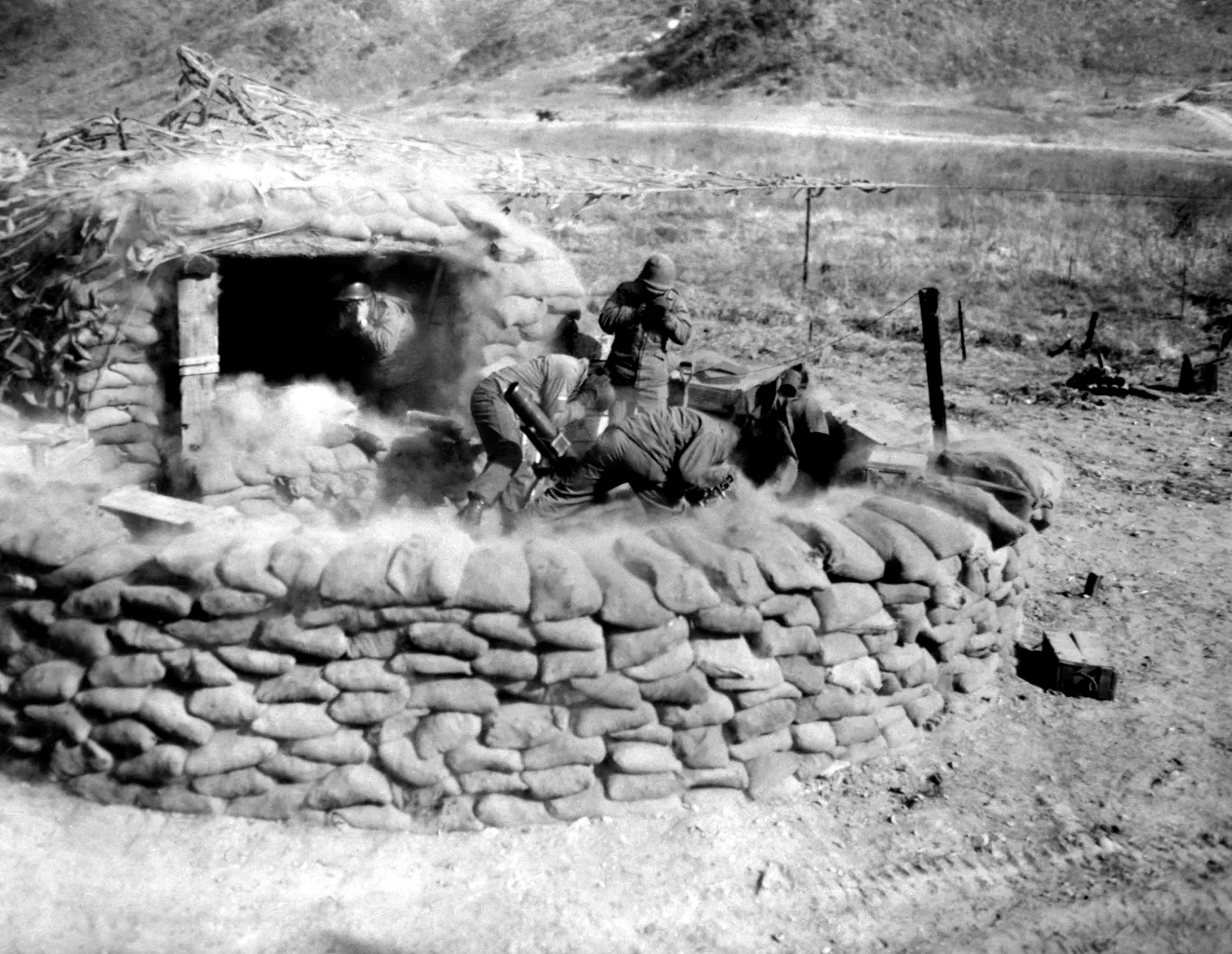
U.S. Army chemical mortar battalions used 4.2-inch mortars in Allied service from the 1943 Sicily campaign through Normandy and later European operations, including Utah Beach missions where the weapons delivered heavy ground fire support.
Artillery
107 mm M2 Chemical Mortar
Also known as
- M2 4.2-inch mortar
- M2 107 mm heavy mortar
- 4.2-inch Chemical Mortar M2
- Four-Deuce
- Goon Gun
The 107 mm M2 Chemical Mortar was a U.S. rifled heavy mortar that turned a Chemical Warfare Service smoke-and-gas weapon lineage into a high-explosive, white-phosphorus, and pyrotechnic fire-support system. Direct conflict evidence now covers Allied Second World War fire support, U.S. and allied Korean War service, and Marine Corps base-defense use at Khe Sanh during the Vietnam War.
Role in Conflicts
The U.S. Army's 2d Chemical Mortar Battalion operated M2 4.2-inch mortars in Korea, supporting U.S., South Korean, and British/Commonwealth formations with close-support fires despite range, mobility, ammunition, and spare-parts limits.
- Side
- United States and South Vietnam


A U.S. Marine Corps history of Khe Sanh lists five 4.2-inch M2 mortars employed at Khe Sanh Combat Base, identifying them as U.S.-built 107 mm rifled muzzle-loaded weapons with high-explosive and pyrotechnic ammunition.
Profile / Specs
Profile
- Origin
- United States
- Built by
- U.S. government production
- Type
- Rifled heavy mortar
- Service note
- Second World War to Cold War service
- Designer
- U.S. Army Chemical Warfare Service
- Designed
- 1920s lineage; M2 wartime strengthening before 1943 service
- Produced
- World War II procurement; introduced in 1943
- Number built
- More than 8,000 M2 chemical mortars procured during the Second World War
Specifications
- Caliber
- 107 mm (4.2 in)
- Weight
- 151 kg (about 333 lb)
- Component weights
- Tube about 105 lb; standard about 53 lb; baseplate about 175 lb
- Barrel length
- 1.22 m (4 ft)
- Maximum range
- 4,020-4,032 m in cited Vietnam and UDC data
- Rate of fire
- 5 rpm for 20 minutes or 1 rpm sustained in UDC data; Khe Sanh appendix lists up to 20 rpm
- Ammunition
- High-explosive, white-phosphorus/smoke, pyrotechnic, and chemical-shell family
- Configuration
- Rifled, muzzle-loaded, drop-fired mortar with tube, standard, and baseplate
Design And Ammunition
The M2 kept the unusual rifled 4.2-inch mortar layout and broke down into tube, standard, and baseplate loads for crew movement. Its Chemical Warfare Service origins remained visible in the ammunition family, but wartime and postwar use centered on heavy high-angle fire support with high-explosive, white-phosphorus, smoke, and pyrotechnic rounds.
Rifled bore
The weapon is described as a rifled 107 mm muzzle-loaded mortar rather than a conventional smoothbore infantry mortar.
Crew-portable loads
UDC describes separate tube, standard, and baseplate components: about 105 lb for the tube, 53 lb for the standard, and 175 lb for the baseplate.
Ammunition family
Sources identify high-explosive and pyrotechnic ammunition in Vietnam-era service, while the wider 4.2-inch chemical mortar family included smoke, white-phosphorus, and chemical-shell types.
Production attribution
The manufacturer facet uses the catalog's U.S. government production profile because the strongest source credits Chemical Warfare Service procurement rather than a single commercial plant.
Variants
The M2 followed the earlier M1 chemical mortar and kept the 4.2-inch rifled-bore concept while strengthening the weapon for longer-range, higher-charge firing.
| Variant | Configuration | Designation notes |
|---|---|---|
| M1 Chemical Mortar | Earlier 4.2-inch chemical mortar | The M1 was the preceding U.S. 4.2-inch chemical mortar; the M2 designation followed range and strength improvements for wartime high-explosive use. Sources: Ultra Defense M2 107mm Heavy Mortar |
| M1A1 4.2-inch Chemical Mortar | Intermediate redesigned mortar | The M1A1 was the first redesigned U.S. 4.2-inch chemical mortar before the M2, with a cited range of 3,200 yards. Sources: DoD RCWM Chemical Warfare History |
Timeline
107 mm M2 Chemical Mortar Key Events
M2 enters service
UDC describes the M2 107 mm heavy mortar as entering service in 1943 after the U.S. Army strengthened the earlier chemical-mortar design and extended its range.
Sources: Ultra Defense M2 107mm Heavy Mortar
Chemical mortar battalions land in Normandy
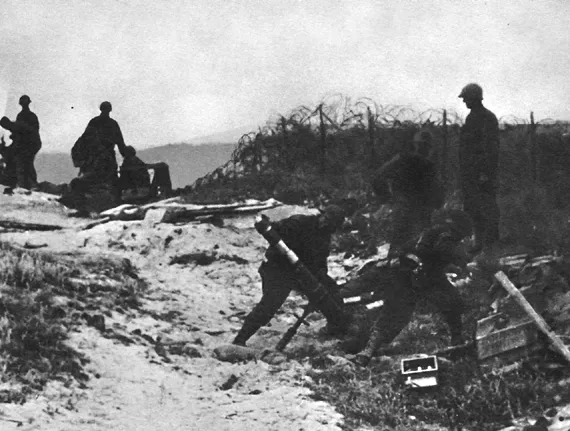
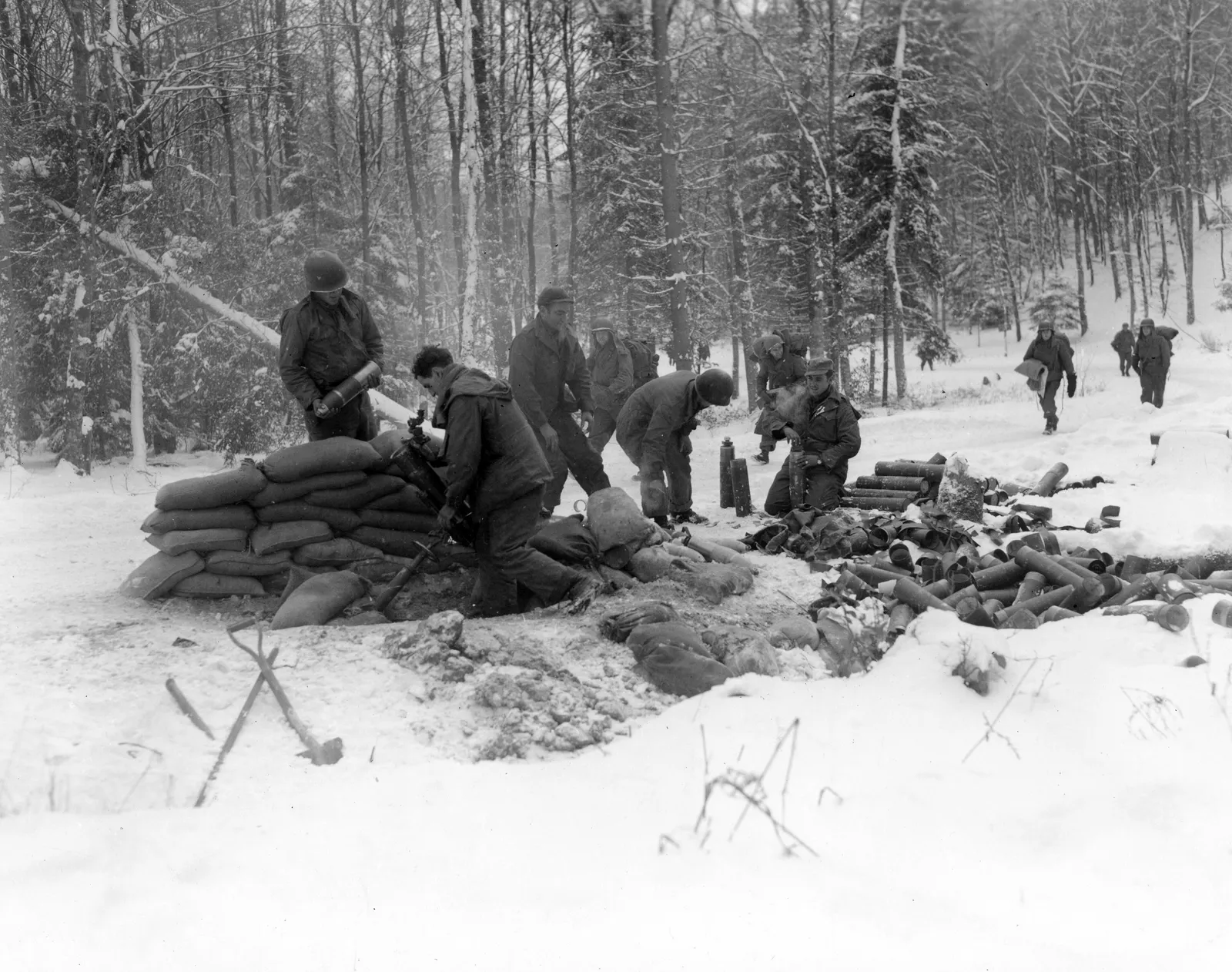
The Army CMH history records 81st and 87th Chemical Mortar Battalion landings on Omaha and Utah beaches, with 4.2-inch mortars supplying early heavy ground fire support at Utah Beach.
Sources: CMH Chemicals in Combat chapter 12
2d Chemical Mortar Battalion fights in Korea
The CMH Combat Support in Korea volume describes the 2d Chemical Mortar Battalion's Korean War companies as equipped with M2 4.2-inch mortars and attached across U.S., South Korean, and British/Commonwealth formations.
Sources: CMH Combat Support in Korea
M2 mortars documented at Khe Sanh
The Marine Corps Khe Sanh monograph lists five 4.2-inch M2 mortars at Khe Sanh Combat Base during the Vietnam War.
Sources: USMC Battle for Khe Sanh
Media
107 mm M2 Chemical Mortar Videos
107 mm M2 Chemical Mortar Images
Related Weapon Systems


Sources
USMC Battle for Khe SanhPublisher: History and Museums Division, Headquarters, U.S. Marine Corps | Note: Supports 1955 Vietnam War direct use at Khe Sanh Combat Base and provides M2 4.2-inch mortar configuration, weight, range, rate-of-fire, and ammunition context. | Accessed: 2026-07-13Ultra Defense M2 107mm Heavy MortarPublisher: Ultra Defense Corp | Note: Supports M2 identity, 1943 service entry, Chemical Warfare Service design lineage, disassembled component weights, ammunition capability, core specifications, and broad Second World War and Korean War service statements. | Accessed: 2026-07-13DoD RCWM Chemical Warfare HistoryPublisher: Defense Environmental Restoration Program / DENIX | Note: Supports Chemical Warfare Service procurement context, M1A1 lineage, more than 8,000 M2 chemical mortars procured during the Second World War, and the statement that U.S. forces did not use H-filled shells in combat. | Accessed: 2026-07-13MilitaryFactory M2 4.2-inch mortarPublisher: MilitaryFactory.com | Note: Supports state-arsenal contractor attribution, M2 identity, broad service chronology, and supplementary specifications. | Accessed: 2026-07-13CMH Chemicals in Combat chapter 12Publisher: Office of the Chief of Military History, Department of the Army / HyperWar Foundation | Note: Supports U.S. Chemical Warfare Service chemical mortar battalion organization and direct Second World War use, including Normandy employment by 4.2-inch mortar battalions. | Accessed: 2026-07-13CMH Combat Support in KoreaPublisher: Center of Military History, United States Army | Note: Supports direct Korean War use by the U.S. 2d Chemical Mortar Battalion, including M2 4.2-inch mortar equipment, supported formations, close-support role, and logistical limits in Korea. | Accessed: 2026-07-13Warfare History Network M2 chemical mortarPublisher: Warfare History Network | Note: Supports development background, Chemical Warfare Service control, and the mortar's close-support role with high-explosive and smoke/fire missions. | Accessed: 2026-07-13Wikimedia Commons M2 Korea imagePublisher: Wikimedia Commons | Note: Supports primary image provenance: Wikimedia Commons describes a U.S. Army public-domain photograph of a 4.2-inch mortar crew firing west of Chorwon, Korea, on February 7, 1953. | Accessed: 2026-07-13Wikimedia Commons Utah Beach M2 imagePublisher: Wikimedia Commons | Note: Supports gallery image provenance for a public-domain U.S. Army Center of Military History photograph of M2 4.2-inch mortars at Utah Beach. | Accessed: 2026-07-13Wikimedia Commons M2 mortar categoryPublisher: Wikimedia Commons | Note: Supports gallery image selection and the Commons category identity for 4.2-inch Mortar M2 media. | Accessed: 2026-07-13