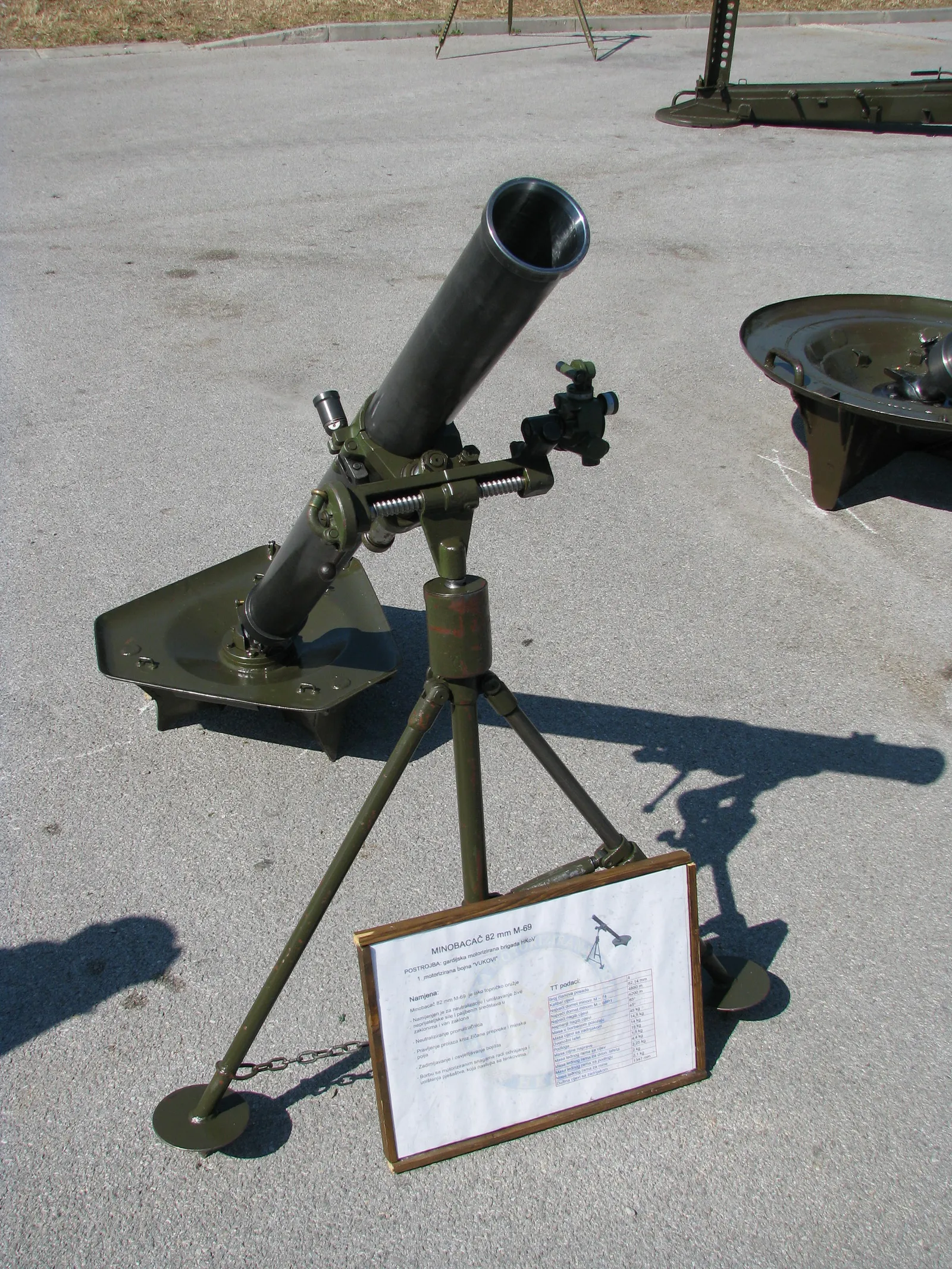


Oryx listed two 82 mm M69 mortars among Afghan National Army and Afghan National Police equipment visually documented as captured by the Taliban during the 2021 offensive.
Role detailsArtillery
82 mm M69 mortar
Also known as
- M69
- M69A
- M69A mortar
- 82 mm M69A
- M69B
- M69B mortar
- 81 mm M69B
- M69BK
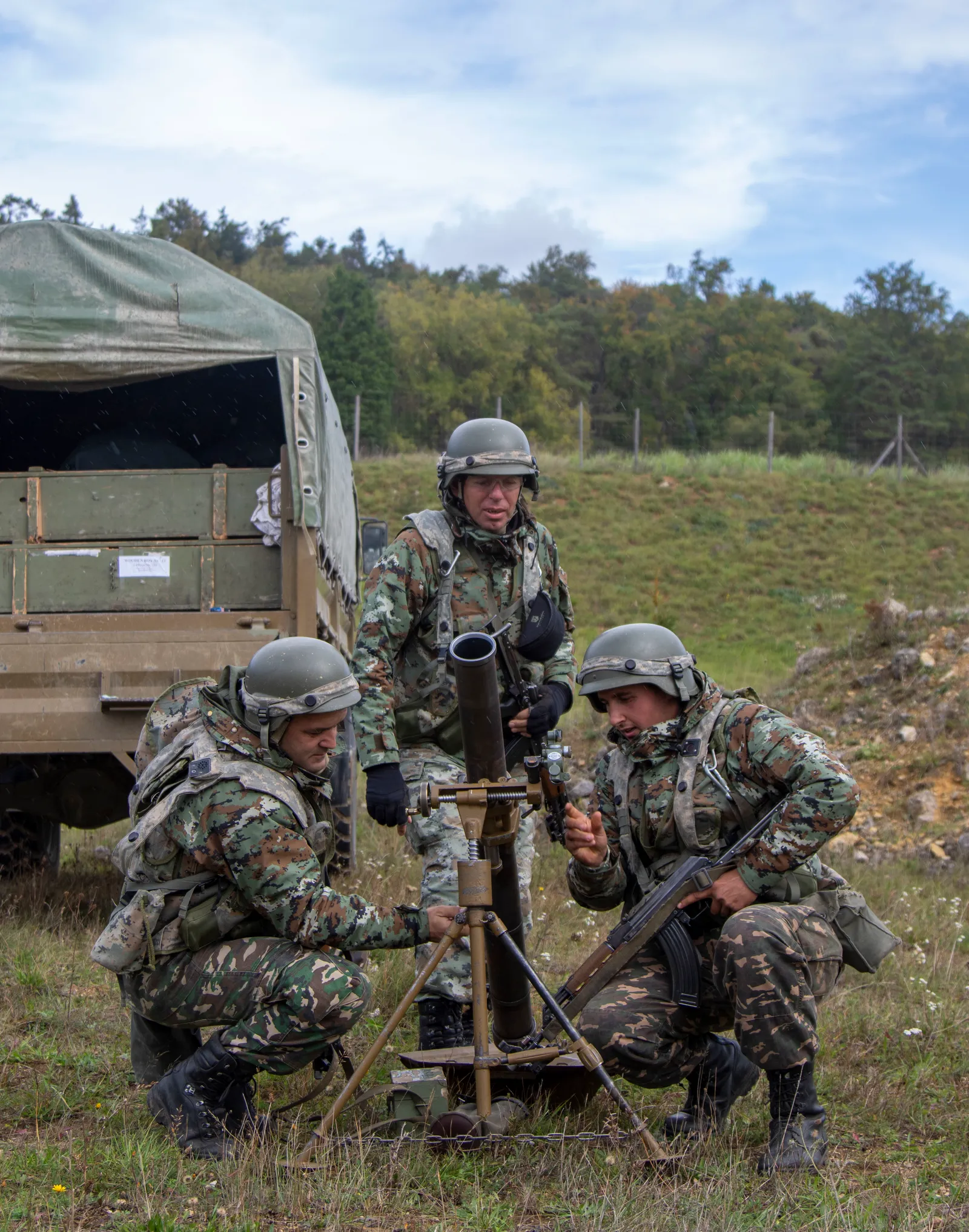
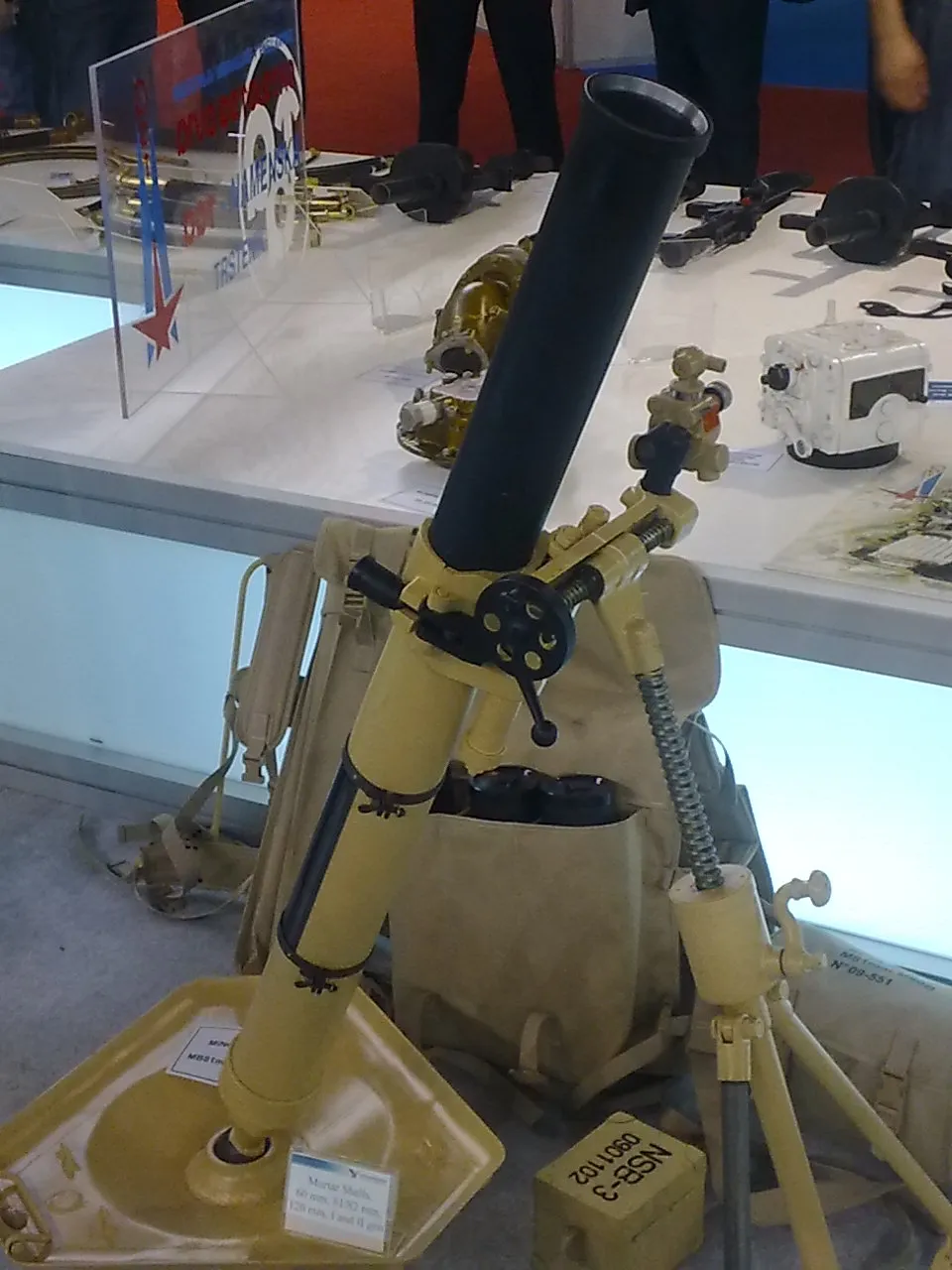
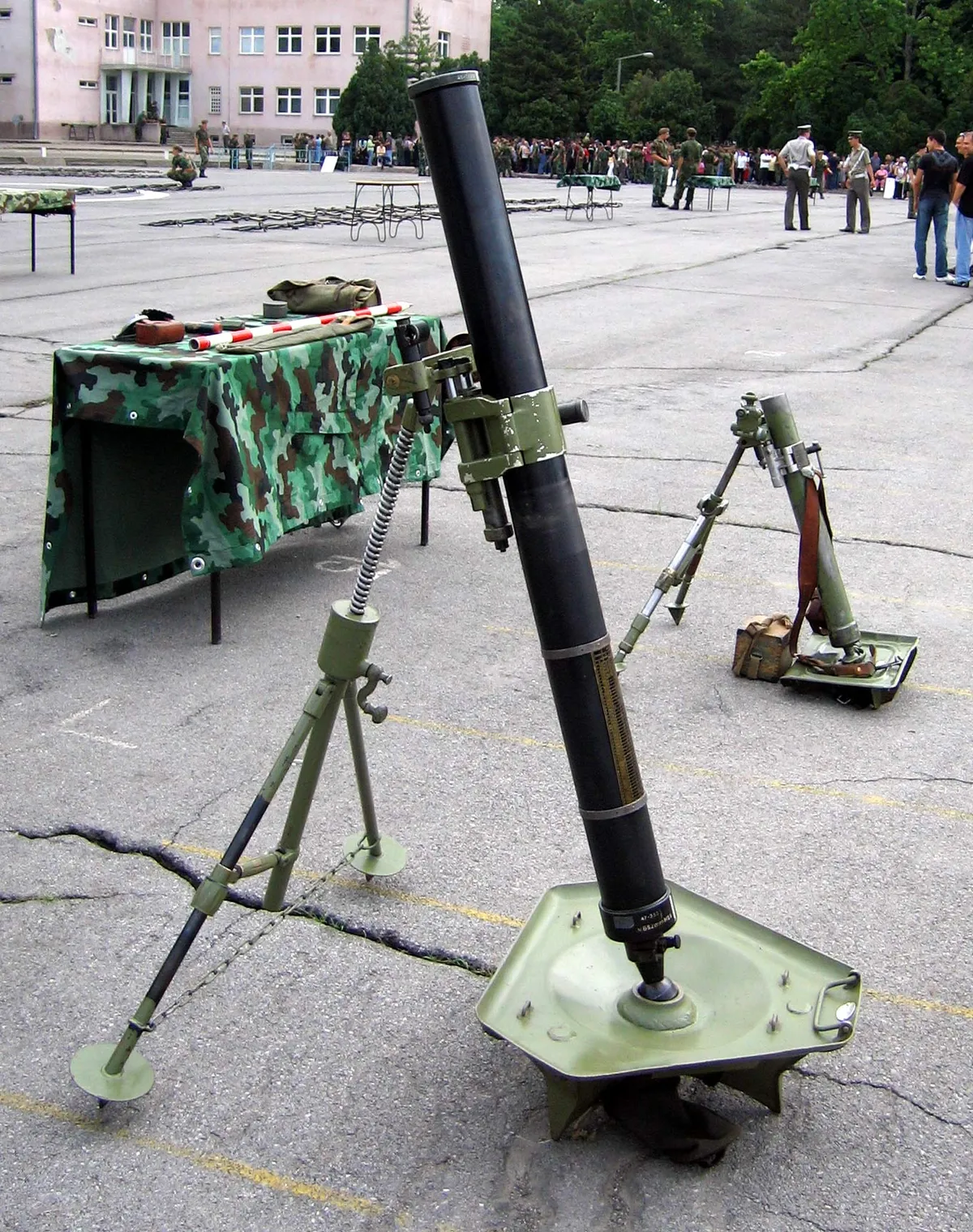
The 82 mm M69 is a Yugoslav-designed smoothbore infantry mortar family that remains in Serbian and former Yugoslav production and service channels, with the M69A variant using a four-person crew, NSB-3 sight, and high-angle fire out to roughly 4.9-6.25 km depending on ammunition. Direct open-source documentation links the family to Afghan government losses in 2021, Syrian opposition use near Aleppo, Armenian and Artsakh losses in Nagorno-Karabakh, and Ukrainian wartime receipt of BNT-marked M69A mortars.
Role in Conflicts

Armament Research Services identified an M69A mortar being operated by Division 13 fighters near Aleppo in 2016, noting visible Serbian markings and the NSB-3 sight.
Role details- Role in conflict
- Infantry indirect fire support

Fielded by Armenian and Artsakh forces during the 2020 Nagorno-Karabakh fighting; Oryx visually documented fourteen 82 mm M69 mortars among Armenian-side equipment losses, including destroyed and captured examples.
- Side
- Ukraine

Ukrainian forces were documented receiving and unpacking several 82 mm M69A mortars during the full-scale war, with reporting identifying BNT Novi Travnik markings on the systems.
Role detailsProfile / Specs
Profile
- Origin
- Yugoslavia / Serbia
- Type
- 82 mm smoothbore infantry mortar
- Service note
- Cold War-origin Yugoslav mortar family; M69A remains in Serbian and former Yugoslav inventories
- Designer
- Military Technical Institute, Belgrade
- Designed
- Cold War period
- Unit cost
- Not publicly available
- Produced
- Cold War period to present production or support for later variants
- Number built
- Not publicly available
Specifications
- Caliber
- 82.14 mm
- Crew
- 4 operators
- Weight
- 45 kg in combat position; 52 kg in travelling position for M69A
- Maximum range
- 4,943 m with HE M74 shell; 6,250 m with HE M91 shell
- Rate of fire
- 20-25 rounds per minute
- Elevation
- +45 to +85 degrees
- Sighting device
- NSB-3
- Mobility
- Breaks down into barrel, baseplate, bipod, sight, tools, spares, and accessories
Family And Ammunition Notes
The M69 family spans the original Yugoslav 82 mm pattern, later Serbian M69A documentation, and 81 mm derivative designations marketed for users standardized around NATO mortar ammunition.
| Designation | Configuration | Documented details |
|---|---|---|
| M69A | 82.14 mm mortar | Yugoimport lists a four-person crew, NSB-3 sight, 20-25 rpm rate of fire, and maximum range of 4,943 m with HE M74 or 6,250 m with HE M91 ammunition. |
| M69B | 81 mm derivative | ARES describes the M69B as an 81 mm member of the same VTI-designed mortar family. |
| BNT-marked M69A | Bosnian-produced 82 mm mortar | DSIAC identifies a Bosnian M69 82 mm mortar produced by Bosnia-Novitravca, and N1 reported BNT markings on examples delivered to Ukraine. |
Timeline
82 mm M69 mortar Key Events
M69A documented near Aleppo
ARES identified a Serbian-marked M69A mortar operated by Division 13 fighters in the 2011 Syrian Civil War.
Sources: Serbian M69A Mortar Documented in Syria
Nagorno-Karabakh loss count closes
Oryx's 2020 Nagorno-Karabakh loss list recorded fourteen Armenian-side 82 mm M69 mortars as destroyed or captured by the end of the forty-four-day war.
Sources: The Fight For Nagorno-Karabakh
Afghan government losses recorded
Oryx's Afghan government loss documentation listed two 82 mm M69 mortars captured during the Taliban offensive before the fall of Kabul.
Sources: Disaster At Hand
M69A mortars reported in Ukrainian hands
Reporting from N1 and Militarnyi documented Ukrainian soldiers unpacking several BNT-marked 82 mm M69A mortars during the full-scale Russian invasion.
Sources: Alleged Bosnian Weapons Delivered to Ukraine, Ukrainian Defense Forces Received 82 mm M69A Mortars
Related Weapon Systems


Sources
The Fight For Nagorno-KarabakhPublisher: Oryx | Note: Supports 2020 Nagorno-Karabakh Conflict direct use: 82 mm M69 mortars were fielded by Armenia / Artsakh and visually documented among Armenian-side destroyed and captured equipment in 2020. | Accessed: 2026-06-29Disaster At HandPublisher: Oryx | Note: Supports 2001 War in Afghanistan direct use: 82 mm M69 mortars were visually documented among Afghan National Army and Afghan National Police equipment captured by the Taliban during the 2021 offensive. | Accessed: 2026-06-2982 mm M69A MortarPublisher: Yugoimport-SDPR | Note: Supports M69A system description, components, crew, sight, range, elevation, weight, rate of fire, and other technical specifications. | Accessed: 2026-06-2981 mm M69B Light Mortar FamilyPublisher: Yugoimport-SDPR | Note: Supports M69B(K) and M69B(D) 81 mm light mortar family designation context. | Accessed: 2026-06-29MortarsPublisher: PPT Namenska | Note: Supports current Serbian manufacturer context and M69A technical specifications including caliber, combat weight, rate of fire, range, sight, and crew. | Accessed: 2026-06-29Serbian M69A Mortar Documented in SyriaPublisher: Armament Research Services | Note: Supports 2011 Syrian Civil War direct use by Division 13 fighters near Aleppo and supports designer, M69A/M69B family background, NSB-3 sight context, and general M69A technical data. | Accessed: 2026-06-29Alleged Bosnian Weapons Delivered to UkrainePublisher: N1 | Note: Supports 2014 Russia-Ukraine War direct transfer and receipt context: reporting described Ukrainian soldiers unpacking several M69A 82 mm mortars and noted BNT markings. | Accessed: 2026-06-29Ukrainian Defense Forces Received 82 mm M69A MortarsPublisher: Militarnyi | Note: Supports 2014 Russia-Ukraine War direct receipt context for Ukrainian forces receiving 82 mm M69A mortars. | Accessed: 2026-06-29Technical Information on a Foreign Mortar SystemPublisher: Defense Systems Information Analysis Center | Note: Supports Bosnian M69 82 mm mortar identification and Bosnia-Novitravca production context. | Accessed: 2026-06-29Mortar 82 mm M69Publisher: Imperial War Museums | Note: Supports Yugoslav-state creator context and basic object identification for the 82 mm M69 mortar. | Accessed: 2026-06-29Mortar 82 mm M-69 Croatian ArmyPublisher: Wikimedia Commons | Note: Supports primary image provenance; the file page identifies the photographed Croatian Army M-69 mortar and lists CC BY-SA 3.0 licensing. | Accessed: 2026-06-29North Macedonia Participates in Saber Junction 19Publisher: Wikimedia Commons | Note: Supports gallery image provenance; the file page identifies a North Macedonian mortar setup image and lists U.S. National Guard public-domain status. | Accessed: 2026-06-29M69 82 mm Mortar at ExhibitionPublisher: Wikimedia Commons | Note: Supports gallery image provenance; the file page identifies an M69 82 mm mortar display image and lists CC BY-SA 3.0 Serbia licensing. | Accessed: 2026-06-29M69 82 mm MortarPublisher: Wikimedia Commons | Note: Supports gallery image provenance; the file page identifies an M69 82 mm mortar image released into the public domain by its author. | Accessed: 2026-06-29