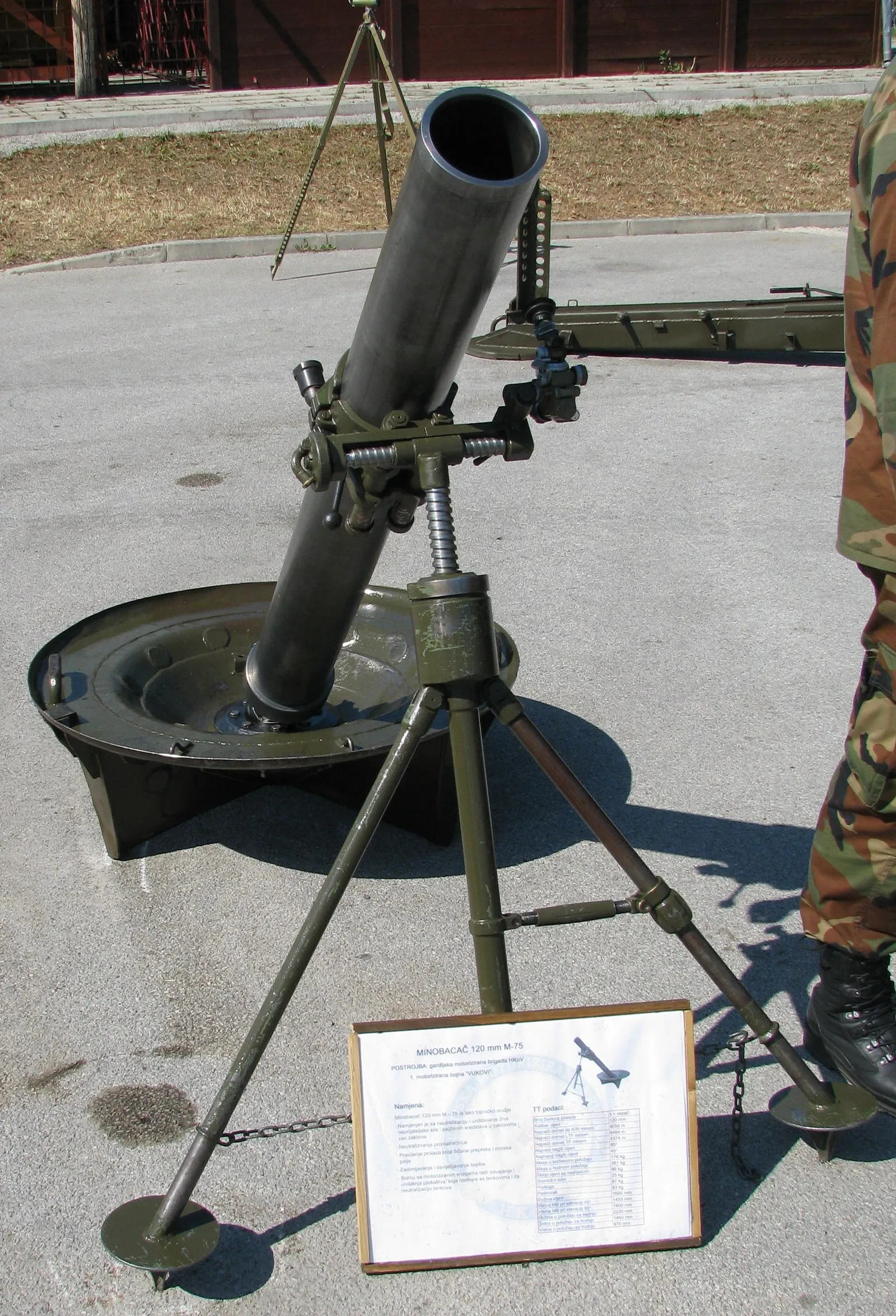
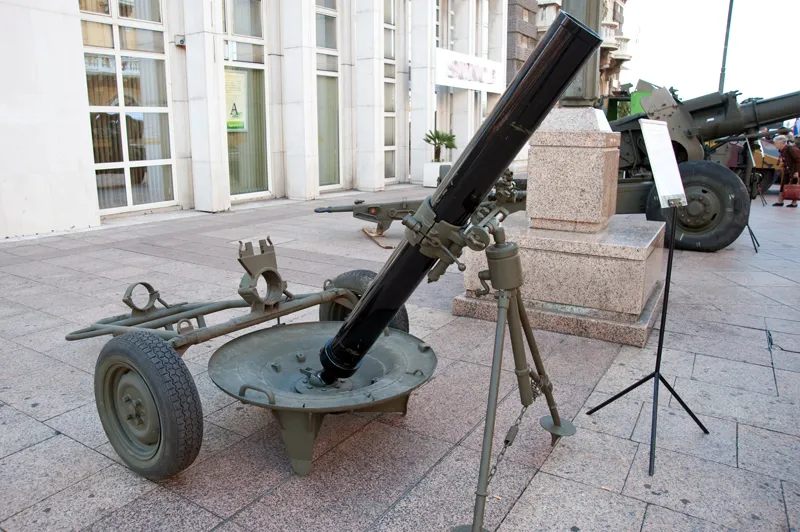
- Caliber
- 120 mm
- Range
- Ammunition and source dependent: Yugoimport lists 6,340 m with light HE, 5,551 m with heavy HE, and 7,200 m with a new HE shell; UnisGroup separately lists 9,056 m with an HE projectile
- Minimum range
- 275-300 m in Yugoimport data by shell type; UnisGroup separately lists 271 m
- Elevation
- 45 degrees to 85 degrees
- Traverse
- 3 degrees left/right with fixed bipod; 360 degrees by bipod displacement
- Mass
- About 190 kg in firing position and 270 kg in travelling position
- Barrel length
- About 1,695 mm in Yugoimport mortar data; UnisGroup lists 1,690 mm, while some Yugoimport ammunition sheets use a 1,500 mm M75 ballistic-table reference
- Crew
- 4
- Maximum rate of fire
- 15 shells per minute
- Modernization context
- Serbian demonstrations and Partner 2025 reporting associate the M75 with modern fire-control sets and a digital upgrade path alongside the 82 mm M69
- Transition time
- 30 seconds from firing position to travelling position
- Service role
- Serbian Armed Forces material describes fire support, smoke, illumination, obstacle breaching, and demolition of light fortifications
- Transport
- Can be towed by vehicle, moved by animal pack or sled, helicopter-lifted, parachuted on a pallet, or man-carried in sections over short distances