- Side
- Ukraine

2014 Russia-Ukraine War: Reuters documented Ukrainian 24th Mechanized Brigade servicemen firing a 120-mm mortar toward Russian troops near Chasiv Yar in Donetsk region on 27 May 2025.
Role detailsThe 120 mm mortar is a heavy indirect-fire weapon class used in towed, dismounted, carrier-mounted, recoil-mounted, and turreted forms. Cataloged use spans Ukrainian fire missions near Chasiv Yar, MAT-120 projectiles fired into Misrata, PKK cross-border attacks from Syria, Pakistani Line of Control shelling, and jihadist 120 mm mortar rounds documented in Mali.
2014 Russia-Ukraine War: Reuters documented Ukrainian 24th Mechanized Brigade servicemen firing a 120-mm mortar toward Russian troops near Chasiv Yar in Donetsk region on 27 May 2025.
Role details2011 First Libyan Civil War: Human Rights Watch documented Gaddafi-aligned government forces firing Spanish-produced MAT-120 120 mm mortar projectiles into residential areas of Misrata in April 2011.
1984 Kurdish-Turkish Conflict: SETA says the PKK used mortars against Turkish security facilities and border posts, and specifically says PKK use of 81 mm and 120 mm mortar tools increased after deliveries to PKK/PYD elements in Syria.
2019 India-Pakistan Border Skirmishes: reporting from Nowshera/Kalal described nine 120 mm mortar rounds hitting a house, and The Indian Express separately reported Pakistani 120 mm mortar fire against civilian areas in Rajouri and Poonch.
2012 Mali War: Small Arms Survey documents extremist use of 120 mm mortar rounds in Mali, including Soviet-produced rounds from looted northern stockpiles used by 2014 and Serbian-produced 2019 rounds recovered after a 22 January 2022 Gao Airport attack.
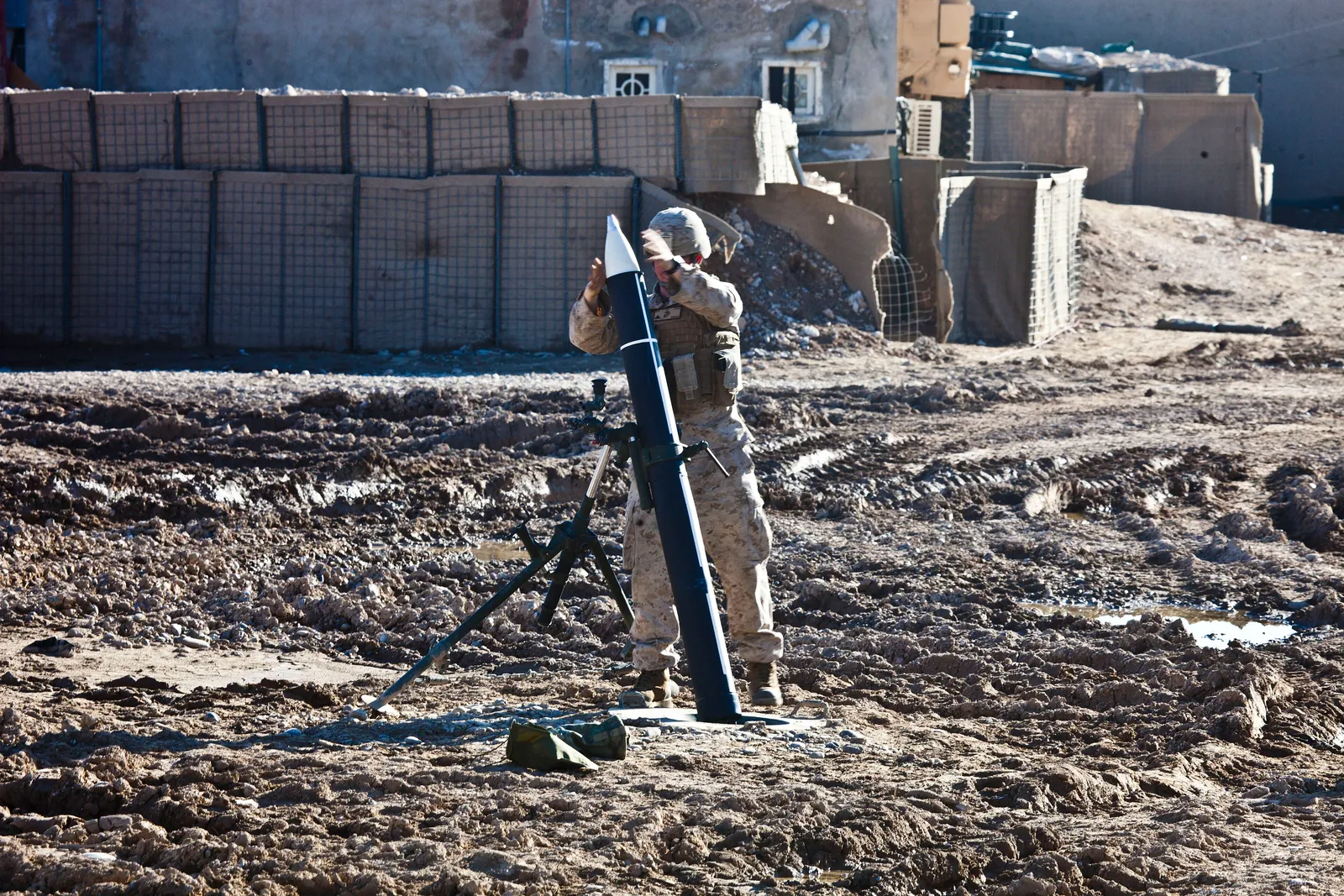
120 mm mortar pages often mix several architectures under one caliber. The U.S. M120A1 and M121 share the M298 cannon with baseplate, bipod, sights, plotting tools, firing tables, and digital fire-control options, while systems such as CARDOM, Patria NEMO, and Rheinmetall's MWS120 show how the same caliber can be integrated into vehicle-mounted recoil, turreted, and automatic-laying packages.
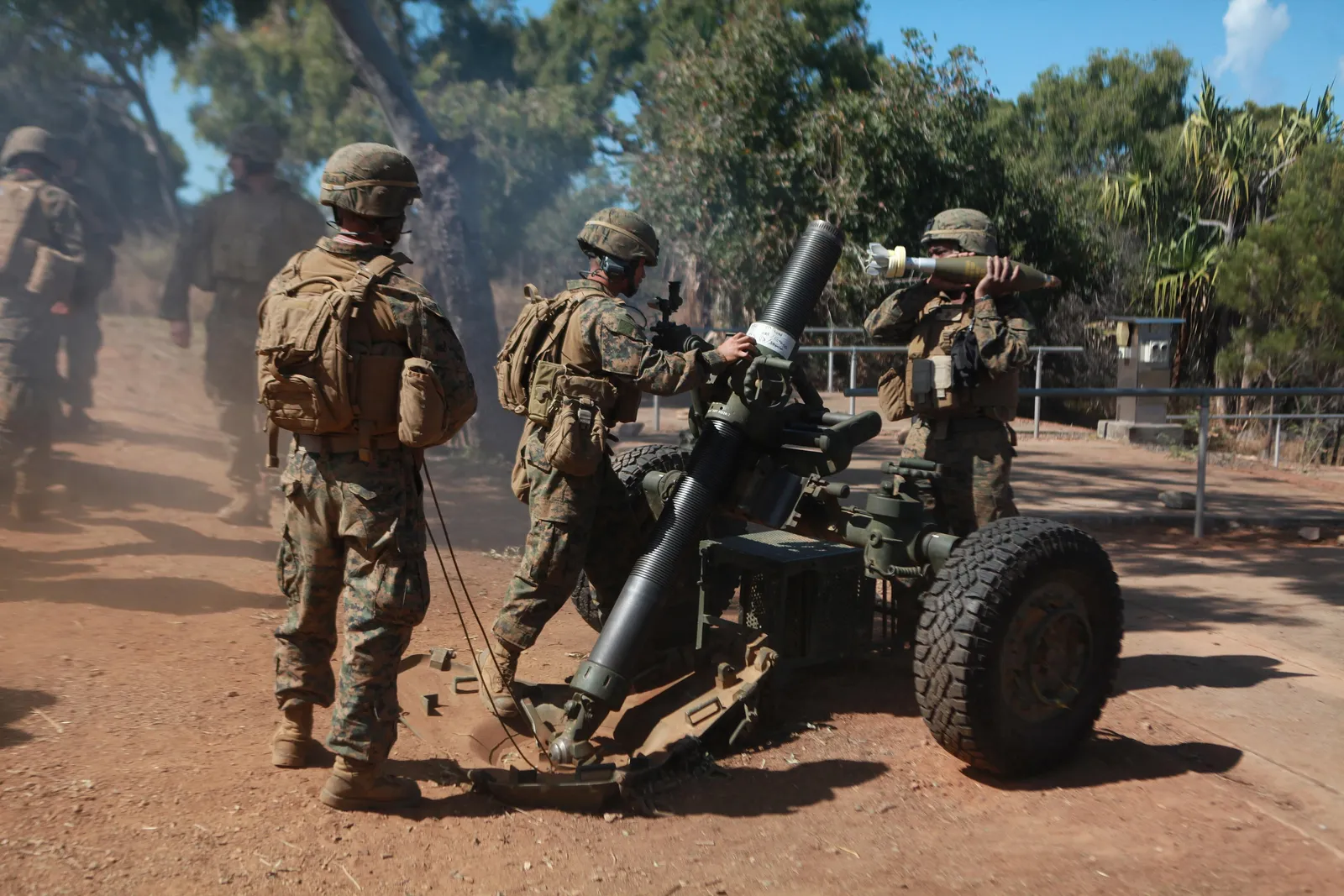
The Army lists the M120A1 as a towed system using the M298 cannon, M191 bipod, M9A1 baseplate, and M67 sight, with HMMWV towing through the M326 stowage kit.
The M121 adapts the same 120 mm mortar family to tracked mortar carriers and has also been qualified for the AMPV mortar carrier.
CARDOM, NEMO, and MWS120 examples combine 120 mm firepower with recoil management, remote or automatic laying, and digital fire-control features for wheeled, tracked, or protected platforms.
The 120 mm mortar caliber covers several national families rather than one standardized launcher, so representative rows distinguish smoothbore, rifled, carrier-mounted, recoil-mounted, and turreted approaches.
| Variant | Configuration | Designation notes |
|---|---|---|
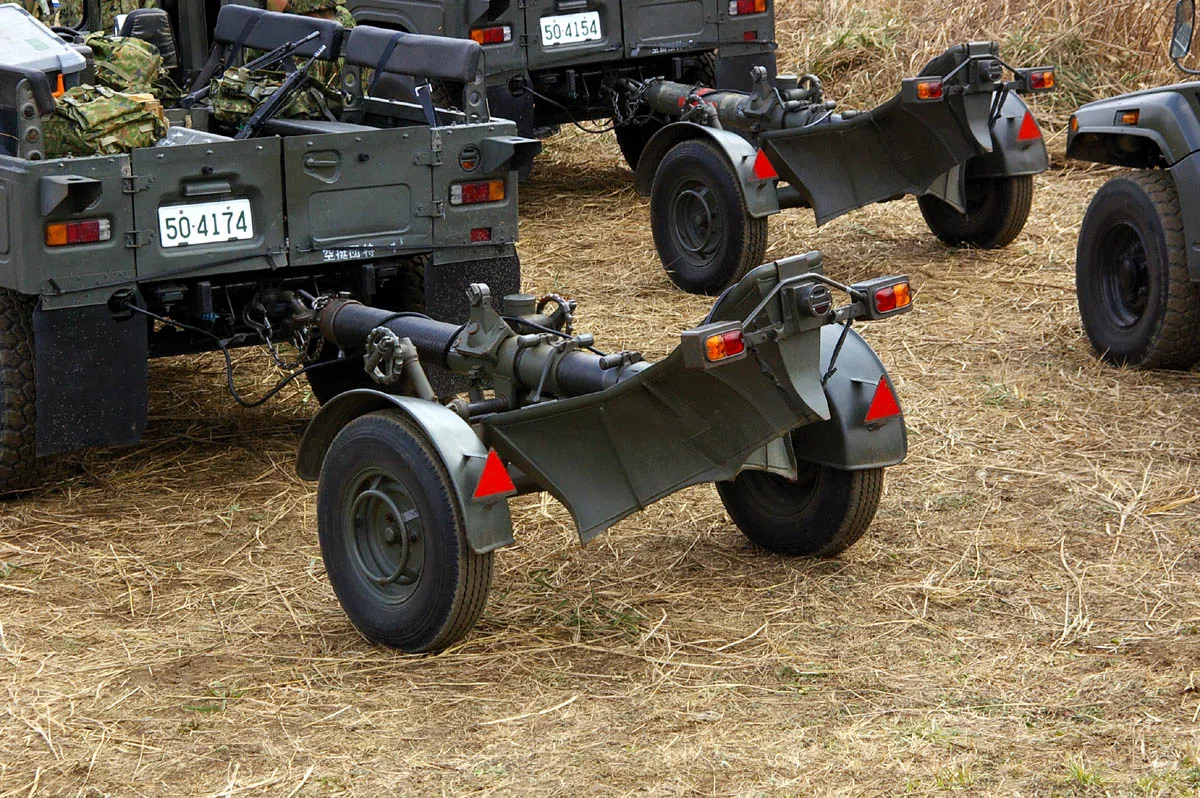
 | Soviet smoothbore heavy mortar family | The PM-38 and PM-43 branch represents the early Soviet 120 mm smoothbore towed pattern, with barrel, baseplate, bipod, and two-wheel transport architecture. Sources: Weaponsystems.net 120mm PM-43 |
 | French rifled towed 120 mm mortar family | The MO-120 RT branch uses a rifled 120 mm tube and two-wheel carriage, with the U.S. Marine Corps M327 EFSS appearing as a related designation. Sources: Weaponsystems.net 120mm MO-120-RT, Marine Corps Principles of Fire Support |
 | Yugoslav towed 120 mm mortar | The M75 is a Yugoslav-origin towed smoothbore 120 mm mortar represented by an existing catalog page for the post-Yugoslav design branch. Sources: Yugoimport 120 mm Mortars |
 | Serbian/Yugoslav light towed 120 mm mortar | The M74 is a lighter towed 120 mm mortar branch with Serbian industry sources listing combat weight, range, crew, and rate-of-fire figures. Sources: PPT Namenska Mortars |
| CARDOM | Recoiling vehicle-mounted mortar system | Elbit describes CARDOM as an autonomous 120/81 mm recoiling mortar system for tracked and wheeled armored platforms, with automatic laying and digital fire-control integration. Sources: Elbit Systems CARDOM |
| Patria NEMO | Turreted remote-controlled mortar system | Patria describes NEMO as a compact remote-controlled 120 mm smoothbore turret with direct, indirect, and MRSI fire capabilities. Sources: Patria NEMO |
Army and Marine Corps sources identify the M933-series round as ammunition for the M120 and M121 120 mm mortar systems. Army materials list the M929 smoke cartridge, M930 visible-light illumination cartridge, M931 full-range practice cartridge, and M983 infrared illumination cartridge for 120 mm mortar systems.
| Ammunition | Ammunition type | Firing evidence |
|---|---|---|
 | 120 mm high-explosive mortar projectile family | The Army mortar ammunition page lists 120 mm HE mortar ammunition, and Marine Corps doctrine says the M933 HE and M934 HE cartridges are authorized for the M120 towed 120-mm mortar and the M121 carrier-mounted 120-mm mortar. Sources: Mortar Ammunition, FM 23-90 W CH 1 MORTARS |
 | 120 mm smoke cartridge | The Army mortar ammunition page lists M929 under 120 mm smoke mortar ammunition, and Marine Corps doctrine says the M929 smoke cartridge is authorized for the M120 and M121 mortar systems. Sources: Mortar Ammunition, FM 23-90 W CH 1 MORTARS |
 | Visible-light illuminating cartridge | The Army mortar ammunition page lists the M930 under 120 mm visible-light illumination ammunition, and the Army portfolio book says it is fired from the M120A1 towed and M121 carrier-mounted mortar systems. Sources: Mortar Ammunition, PEO Ammunition 2017 Portfolio Book |
 | 120 mm practice cartridge | The Army portfolio book says the M931 is a full-range practice round for use in the M120A1 and M121 Battalion Mortar Systems, with ballistics similar to the M934A1 and M933A1 high-explosive cartridges. Sources: PEO Ammunition 2017 Portfolio Book |
 | 120 mm infrared illuminating cartridge | The Army portfolio book says the M983 infrared illumination cartridge was developed for use in the M120A1 and M121 Battalion Mortar Systems. Sources: PEO Ammunition 2017 Portfolio Book |
Army reporting says XM395 APMI is a 120 mm GPS-guided mortar cartridge compatible with ground-mounted and Stryker-mounted 120 mm mortar systems.
| Compatible item | Item type | Compatibility evidence |
|---|---|---|
 | GPS-guided mortar cartridge | The Army APMI page says XM395 is compatible with ground-mounted and Stryker-mounted 120 mm mortar systems. Sources: XM395 Accelerated Precision Mortar Initiative (APMI) |
The PM-38/M1938 branch became an early influential Soviet 120 mm heavy mortar pattern with a smoothbore tube and towed carriage.
Sources: Weaponsystems.net 120mm PM-43
The MO-120 RT family established a rifled, towed 120 mm mortar branch later associated with RT F1 and M327 EFSS designations.
Sources: Weaponsystems.net 120mm MO-120-RT
The Soviet 2B11 mortar and 2S12 transport system represented a later 120 mm smoothbore family with improved mobility and range over earlier patterns.
Sources: Weaponsystems.net 120mm 2B11 Sani
Systems such as CARDOM, Patria NEMO, and Rheinmetall MWS120 show 120 mm mortars moving into vehicle recoil mounts, remote turrets, automatic laying, and digital fire-control architectures.
Sources: Elbit Systems CARDOM, Patria NEMO, Rheinmetall mortars