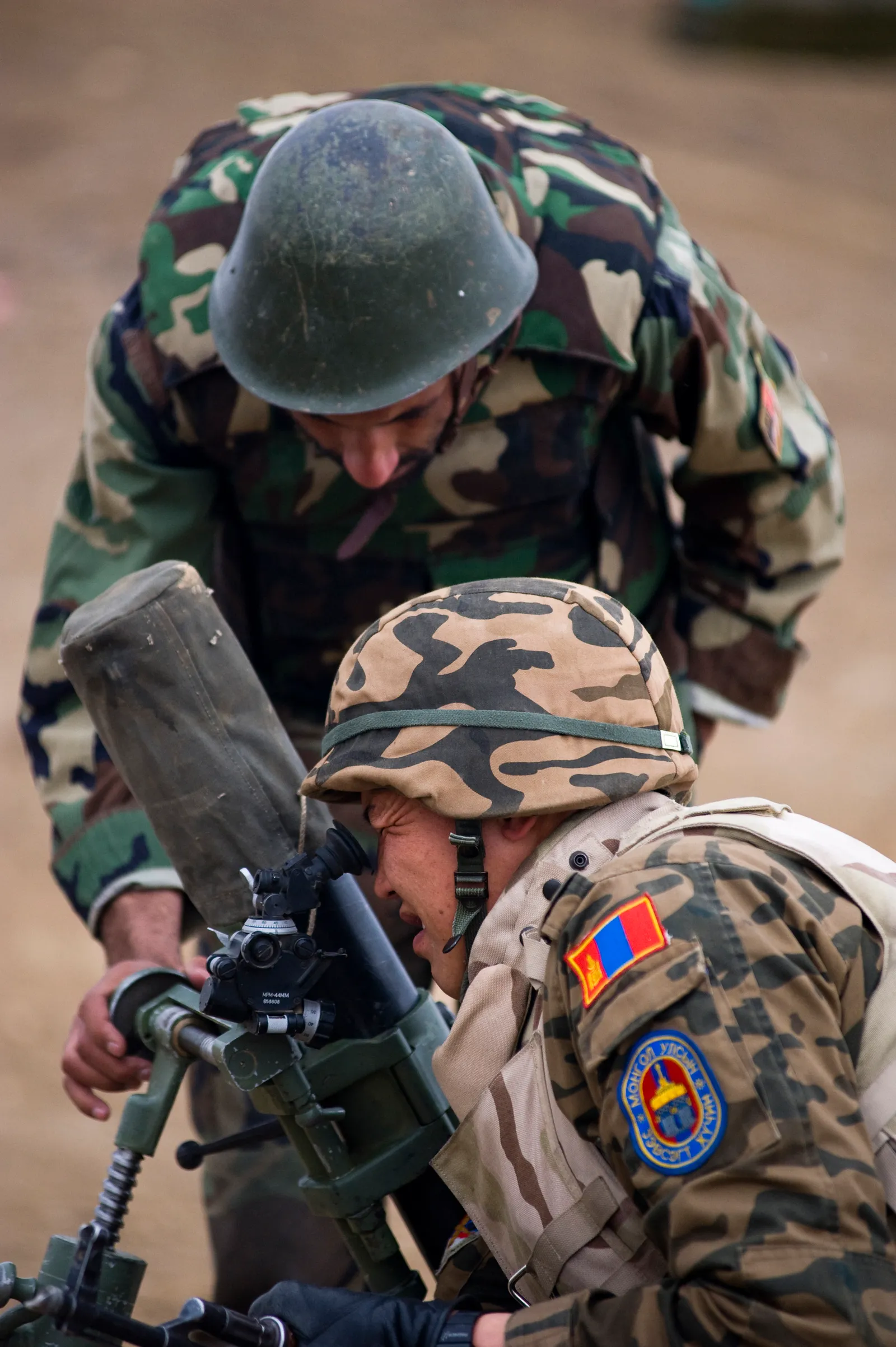

UN-supported Lake Chad Basin research lists mortar launchers among the main manufactured light weapons used by Boko Haram, alongside 60, 81, and 82 mm mortar bombs; Nigerian defence reporting in May 2023 also recorded 82 mm mortar fuzes and mortar base plates recovered during Operation Hadin Kai clearance operations.
Artillery
Mortar launcher, 82mm
This entry covers the 82 mm mortar-launcher caliber class rather than a single factory model, spanning Soviet-pattern BM/PM designs, later 2B14/2B24 systems, and national derivatives. Direct conflict-use sources tie 82 mm launcher or mortar-system evidence to Boko Haram/ISWAP materiel in the Lake Chad basin, rebel footage in Mali, Iraqi forces around Mosul, and Houthi fire-support reporting in Yemen.
Role in Conflicts
- Side
- Rebel and jihadist armed groups
Conflict Armament Research and Small Arms Survey documented an 81/82 mm mortar in Ansar ed-Din-released footage from the January 2012 rebel assault on Aguelhok, while noting that image quality prevented more precise identification beyond caliber.

Human Rights Watch reported that Reuters photographs from May 2017 showed Iraqi Emergency Response Division forces loading and firing an Al-Jaleel 82 mm mortar system on the outskirts of Mosul during the west Mosul operation against ISIS.

A January 2019 UN Security Council letter annex on Hodeidah ceasefire violations lists Houthi indirect-fire incidents in which 82 mm mortar shells targeted resistance forces, including Jabaliyah on 12 January 2019; Yemeni Archive also assessed a February 2022 Taiz hospital strike as an 81/82 mm mortar shell fired by government forces.
Role detailsProfile / Specs
Profile
- Origin
- Multiple countries; commonly Soviet-pattern and derivative 82 mm mortar designs
- Built by
- Various manufacturersBurevestnik
- Built in
- Multiple countries
- Type
- Portable smoothbore mortar launcher
- Service note
- Cold War to present 82 mm mortar family
- Designer
- Multiple national ordnance design bureaus
- Designed
- 1930s onward for Soviet-pattern 82 mm mortars; 1980s for the 2B14 Podnos reference design
- Produced
- 1930s-present, depending on model and manufacturer
- Number built
- Not publicly aggregated across 82 mm mortar families
Specifications
- Caliber
- 82 mm; Soviet-pattern and derivative smoothbore mortar launchers in this class
- Launcher type
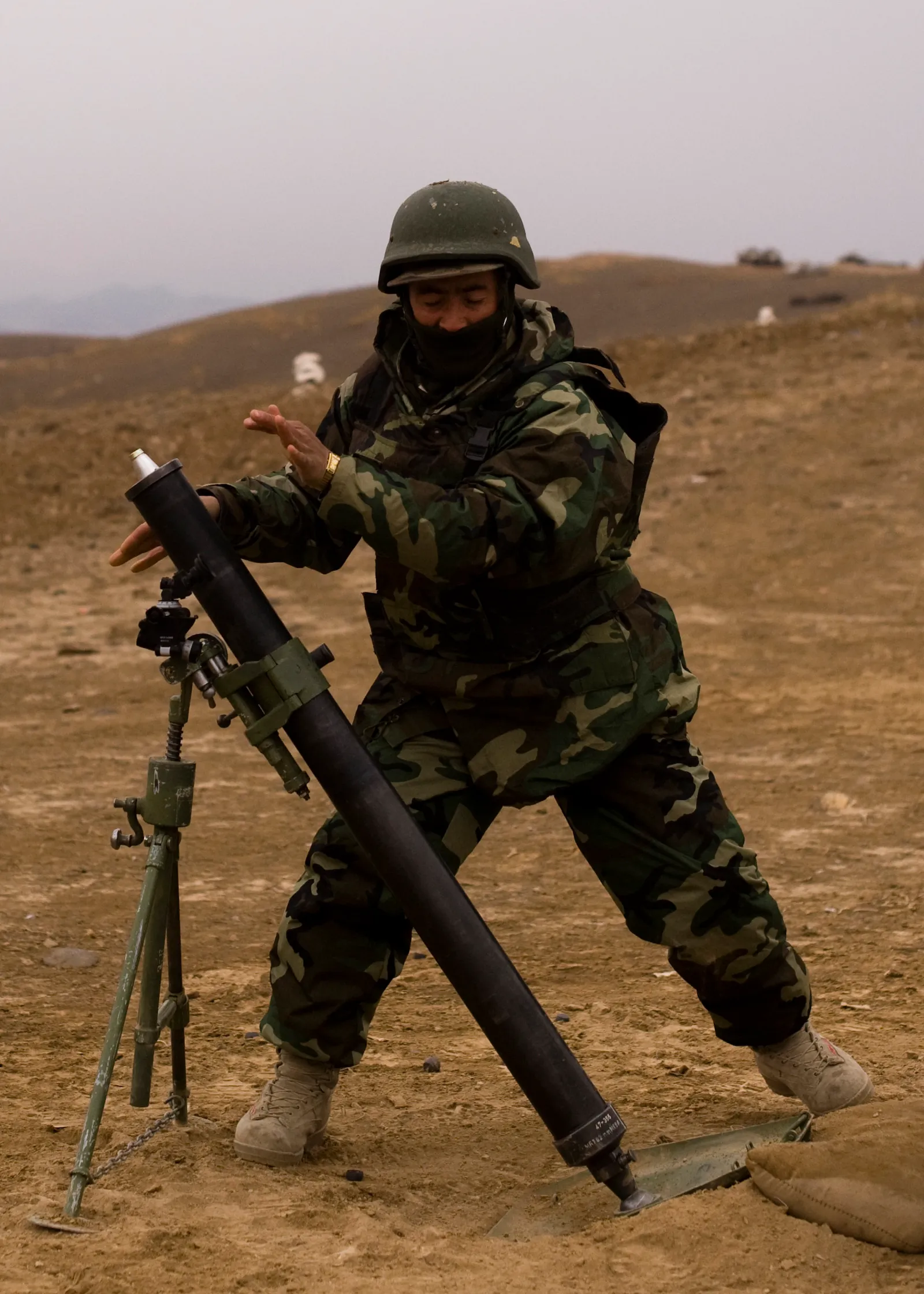
- Usually muzzle-loaded, drop-fired smoothbore mortar with tube or barrel, bipod, sight, and base plate
- Crew
- Representative 82 mm systems range around 4-5 personnel: 2B14 sources often list four, while Rosoboronexport lists five for the 2B24
- Representative weight
- About 42 kg in firing position for the 2B14 Podnos; 45 kg plus or minus 4 percent in action for Rosoboronexport's 2B24; older BM-37-family examples are commonly about 56-57 kg
- Representative range
- Older BM-37-family mortars are about 3.0-3.1 km maximum; 2B14 references are about 4.0-4.27 km; Rosoboronexport lists 2B24 at 100 m to at least 6,000 m
- Representative rate of fire
- BM-37-family references commonly list 15-25 rounds per minute or up to 30; 2B14 references list about 24-30 maximum; Rosoboronexport lists at least 20 rounds per minute for 2B24
- Ammunition
- Unguided fin-stabilized 82 mm mortar bombs; compatibility and ballistic performance vary by launcher and bomb
- Representative barrel length
- 1,220 mm on ROMARM's 1977-model 82 mm mortar launcher
- Representative firing arc
- 45 to 85 degrees elevation on representative Romanian and Soviet-pattern 82 mm launchers
Designation Boundary
This entry is a broad 82 mm launcher-class page, not a single factory model. BM-37, PM-37, M-37, Type 53, 2B14 Podnos, 2B24, and M69 identify related but not interchangeable launchers with different production histories and performance figures.
Older Soviet pattern
BM/PM/M-37-family mortars anchor the wartime Soviet lineage and many later copies.
Later Russian pattern
2B14 and 2B24 figures are model-specific examples, not class-wide limits.
Conflict rows
Conflict-use notes stay attached only where a source directly documents 82 mm mortar launchers, related systems, or recovered launcher components in that conflict.
Sources: 82mm BM-37; Finnish Army 82 mm Mortars; 82mm 2B14 Podnos; Rosoboronexport 2B24 Mortar; Rostec 2B24 Light Mortars; 82 mm M69A Mortar.
Variants
This page treats 82 mm mortar launchers as a caliber-class record. Variant rows separate the Soviet BM/PM lineage, Chinese copies, later Russian 2B14/2B24 designs, and Balkan 82 mm members; model-specific specifications stay source-bounded.
| Variant | Configuration | Designation notes |
|---|---|---|
| 82-BM-37 / PM-37 / M-37 | Soviet baseline battalion mortar family | WeaponSystems.net treats BM-36, BM-37, BM-41, BM-43, and M-37M as related Soviet 82 mm mortar family members; Jaeger Platoon gives separate Finnish-service data for 82-BM-37 and 82-BM-41 examples. Sources: 82mm BM-37, Finnish Army 82 mm Mortars |
| Chinese Type 53 82 mm mortar | Chinese production copy | WeaponSystems.net lists Type 53 as Chinese production of the BM-37/M-37M family, and Jaeger Platoon describes the Type 53 as a copy of the Soviet 82-BM-37. Sources: 82mm BM-37, Finnish Army 82 mm Mortars |
 | Later Soviet/Russian portable 82 mm mortar | WeaponSystems.net frames the 2B14 Podnos as the improved 82 mm mortar that replaced older PM-37-family production in Eastern European service. Sources: 82mm 2B14 Podnos |
| 2B24 82 mm mortar | Modern Russian 82 mm mortar | Rosoboronexport lists the 2B24 with a five-person crew, 45 kg action weight, at least 6,000 m maximum range with the 3-0-26 bomb, and 30-second changeover. Sources: Rosoboronexport 2B24 Mortar |
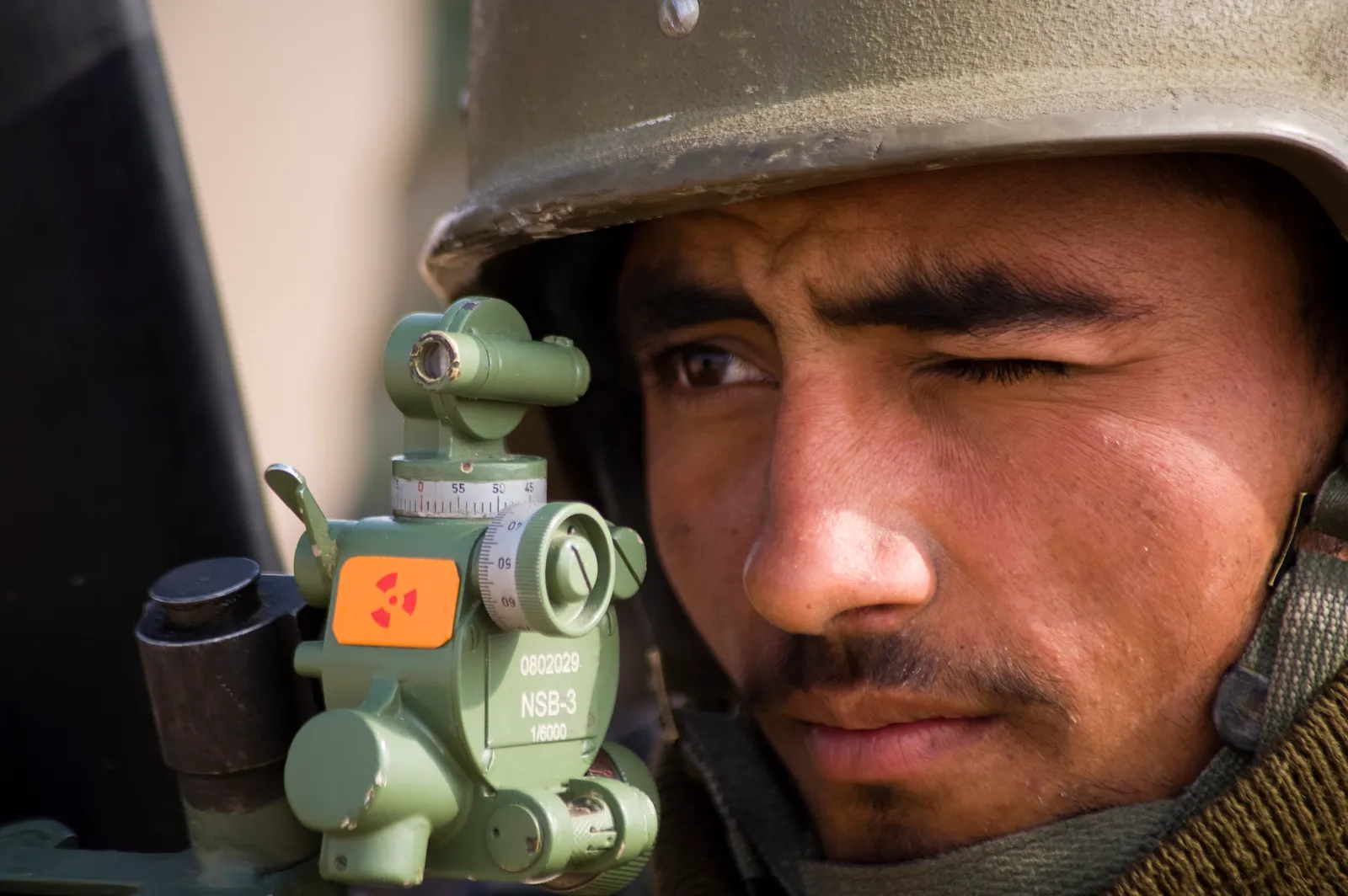
 | Yugoslav/Serbian 82 mm infantry mortar | Yugoimport describes the M69A as an 82 mm mortar with four-person crew, NSB-3 sight, and high-angle fire-support role. Sources: 82 mm M69A Mortar |
Ammunition Fired
Representative 82 mm smoothbore mortar launchers fire fin-stabilized mortar bombs; the linked VO-832DU record documents one cataloged high-explosive round in that family.
| Ammunition | Ammunition type | Firing evidence |
|---|---|---|
 | 82 mm high-explosive mortar bomb | Arcus and BULCOMERS list the VO-832DU as ammunition for compatible 82 mm smooth-bore mortars, including the 2B14 Podnos and other 82 mm mortar models. Sources: 82mm HE Mortar Bomb VO-832DU, 82mm Mortar Round VO-832DU |
Timeline
Mortar launcher, 82mm Key Events
BM-37 family enters Soviet service
WeaponSystems.net identifies the BM-37 family as the standard Soviet 82 mm mortar line developed before the Second World War, while Jaeger Platoon gives 82-BM-37 as the Soviet 82 mm mortar model 1937.
Sources: 82mm BM-37, Finnish Army 82 mm Mortars
Wartime mobility variants appear
Specialist references describe BM-41 and BM-43 as wartime attempts to improve the mobility of the BM-37 family by adding wheeled or carriage-like bipod arrangements.
Sources: 82mm BM-37, Finnish Army 82 mm Mortars
Type 53 copy spreads the M-37 pattern
WeaponSystems.net and Jaeger Platoon both identify Type 53 as Chinese production or copying of the Soviet BM-37/M-37M family.
Sources: 82mm BM-37, Finnish Army 82 mm Mortars
2B14 Podnos becomes a later reference design
WeaponSystems.net describes the 2B14 Podnos as a later Soviet/Russian 82 mm mortar that replaced older PM-37-family production in many Eastern European inventories.
Sources: 82mm 2B14 Podnos
Rostec reports 2B24 delivery
Rostec reported a new batch of 2B24 light 82 mm mortars supplied to the Russian Armed Forces, showing continued production and fielding of modern 82 mm systems.
Sources: Rostec 2B24 Light Mortars
Media
Mortar launcher, 82mm Videos
Mortar launcher, 82mm Images
Related Weapon Systems


Sources
Weapons and Ammunition Dynamics in the Lake Chad BasinPublisher: United Nations Department of Peace Operations / United Nations Office for Disarmament Affairs / Lake Chad Basin Commission | Note: Supports 2009 Boko Haram Insurgency direct conflict use: mortar launchers used by Boko Haram are listed among main manufactured light weapons, with 82 mm mortar bombs listed in the same Boko Haram typology. | Accessed: 2026-06-21511 Boko Haram Terrorists Surrender, Troops Rescue Chibok Girl - DHQPublisher: Channels Television | Note: Supports 2009 Boko Haram Insurgency direct-use context: 82 mm mortar fuzes and mortar base plates fielded by Boko Haram/ISWAP were reported recovered during Operation Hadin Kai clearance operations. | Accessed: 2026-06-21Weapon Supplies Fuelling Terrorism in the Lake Chad CrisisPublisher: Conflict Armament Research | Note: Supports background on field documentation of arms and ammunition seized from JAS/Boko Haram and ISWAP-linked groups around Lake Chad. | Accessed: 2026-06-2182mm 2B14 PodnosPublisher: Weaponsystems.net | Note: Supports representative 82 mm mortar background, manufacturer context, caliber, crew, weight, range, rate of fire, and portability specifications for the 2B14 Podnos. | Accessed: 2026-07-0282mm BM-37Publisher: WeaponSystems.net | Note: Supports BM-37-family designation structure, BM-36/BM-37/BM-41/BM-43/M-37M variant distinctions, Type 53 production context, general design, and older-family representative specifications. | Accessed: 2026-07-02Finnish Army 82 mm MortarsPublisher: Jaeger Platoon | Note: Supports specialist historical detail for captured Soviet 82 mm mortar models, BM-37/BM-41/BM-43 design notes, Type 53 copy context, 82 mm and 81 mm ammunition caveats, and representative BM-family specifications. | Accessed: 2026-07-02ROMARM 82 mm Mortar Launcher DatasheetPublisher: ROMARM | Note: Supports official manufacturer context for a representative 82 mm smoothbore mortar launcher, including role, caliber, barrel length, range, elevation, rate of fire, combat weight, component weights, and packaging. | Accessed: 2026-07-02Rosoboronexport 2B24 MortarPublisher: Rosoboronexport | Note: Supports official 2B24 role and specifications: 82 mm caliber, 45 kg action weight, five-person crew, 100-6,000 m range, at least 20 rounds per minute, traverse, elevation, and 30-second changeover. | Accessed: 2026-07-02Rostec 2B24 Light MortarsPublisher: Rostec | Note: Supports 2024 Russian Armed Forces delivery context for 2B24 light 82 mm mortars and their 30-second deployment claim. | Accessed: 2026-07-0282 mm M69A MortarPublisher: Yugoimport-SDPR | Note: Supports M69A family context, crew, sight, range, elevation, rate of fire, and 82 mm mortar-launcher variant coverage. | Accessed: 2026-07-0282mm HE Mortar Bomb VO-832DUPublisher: Arcus JSC | Note: Supports 82 mm smooth-bore mortar ammunition compatibility, including the 2B14 Podnos and related 82 mm mortar models. | Accessed: 2026-07-0282mm Mortar Round VO-832DUPublisher: BULCOMERS KS Ltd. | Note: Supports 82 mm smooth-bore mortar compatibility and VO-832DU ammunition specifications for the linked ammunition relationship. | Accessed: 2026-07-02Rebel Forces in Northern MaliPublisher: Small Arms Survey / Conflict Armament Research | Note: Supports 2012 Mali War direct-use context: an 81/82 mm mortar appeared in Ansar ed-Din-released footage from the January 2012 Aguelhok assault, with source caveat that exact model identification beyond caliber was not possible. | Accessed: 2026-07-02US-Led Coalition Weapons Choice Endangers Mosul CiviliansPublisher: Human Rights Watch | Note: Supports 2014 War Against the Islamic State direct-use context: Reuters photographs cited by Human Rights Watch showed Iraqi Emergency Response Division forces loading and firing an Al-Jaleel 82 mm mortar system outside Mosul in May 2017. | Accessed: 2026-07-02UN Security Council Yemen Hodeidah Ceasefire LetterPublisher: United Nations Security Council | Note: Supports 2014 Yemen Civil War direct-use context: the annex records Houthi indirect-fire incidents involving 82 mm mortar shells during Hodeidah ceasefire violations in January 2019. | Accessed: 2026-07-02Yemeni Archive Al Wahda HospitalPublisher: Yemeni Archive | Note: Supports 2014 Yemen Civil War direct-use context: Yemeni Archive concluded that an 81/82 mm mortar shell fired by government forces struck Al Wahda Maternity and Children Hospital in Taiz on 25 February 2022. | Accessed: 2026-07-0482mm mortar training imagePublisher: Wikimedia Commons | Note: Supports image provenance and public-domain U.S. Navy licensing for the primary 82 mm mortar launcher image. | Accessed: 2026-06-21Afghan soldiers and police fire heavy weaponsPublisher: Wikimedia Commons | Note: Supports image provenance and public-domain U.S. Navy licensing for the 82 mm mortar firing gallery image. | Accessed: 2026-06-21110130-N-9584H-093 82mm mortar imagePublisher: Wikimedia Commons | Note: Supports image provenance and public-domain U.S. Navy licensing for the 82 mm mortar sighting gallery image. | Accessed: 2026-06-21