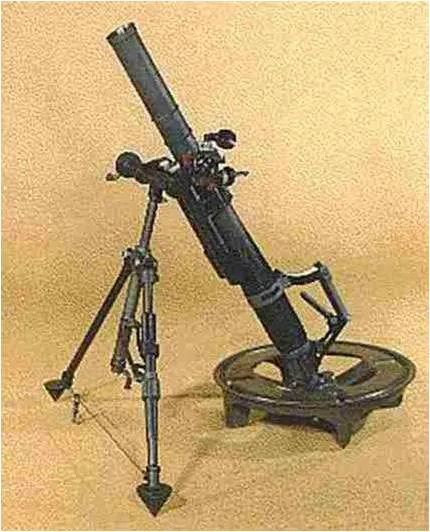

Nigerian reporting in 2021 and 2022 documented 60 mm mortar tubes recovered from ISWAP fighters around Marte, Gajiram, Mandara Mountain, and the Timbuktu Triangle; the public reports did not identify the tube models or manufacturers.
Artillery
Mortar launcher, 60mm
Also known as
- 60 mm mortar launcher
- 60mm mortar launcher
- 60 mm mortar tube
- 60mm mortar tube
- 60 mm light mortar
- 60 mm commando mortar
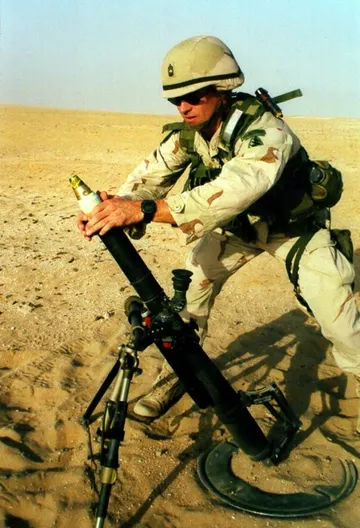
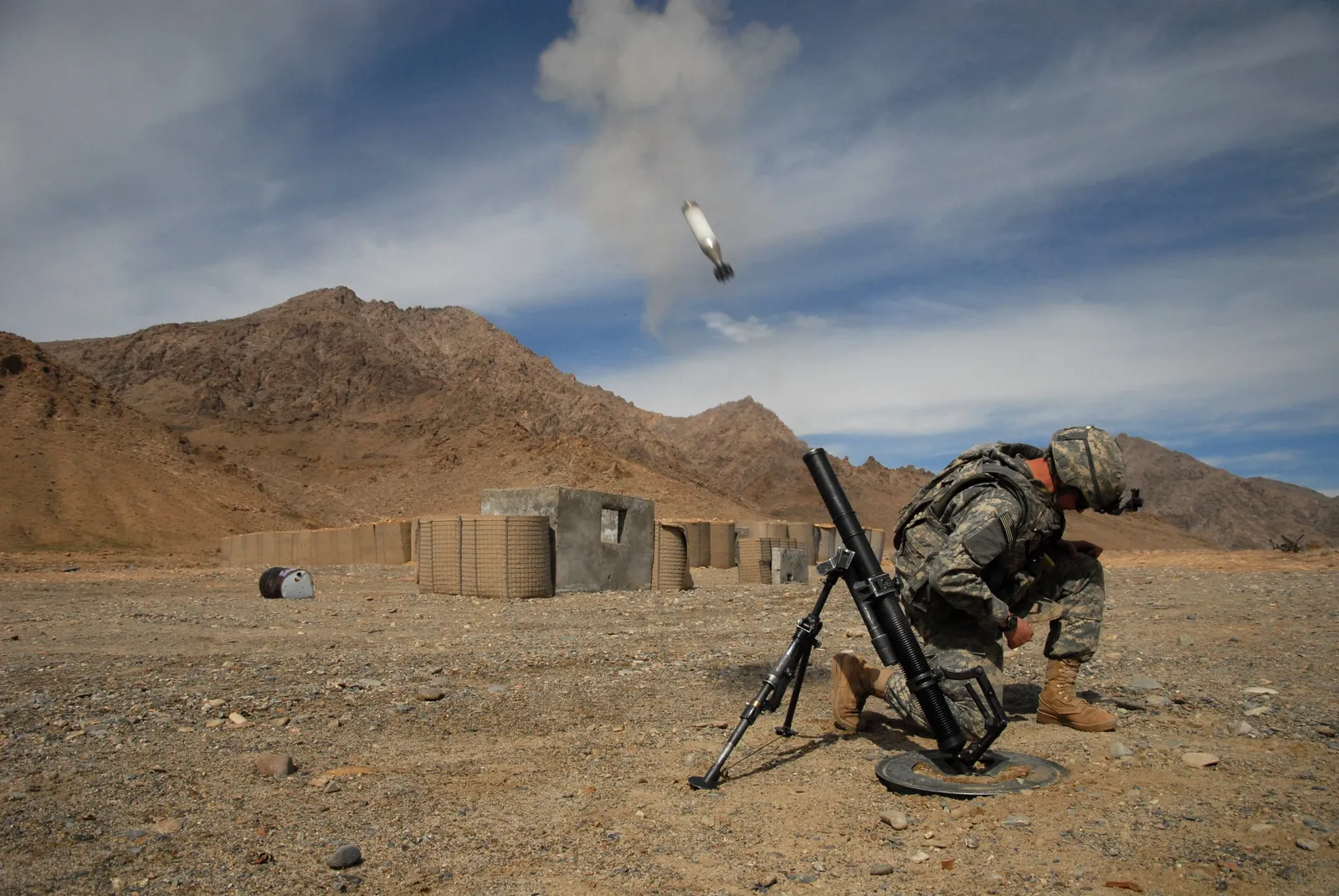
A 60 mm mortar launcher is a light infantry indirect-fire system built around a smoothbore, muzzle-loaded tube that can be used in conventional bipod-and-baseplate form or, on some modern systems, in reduced handheld or commando configurations. In the 2009 Boko Haram Insurgency, Nigerian reporting has documented 60 mm mortar tubes recovered from ISWAP fighters around Marte, Gajiram, Mandara Mountain, and the Timbuktu Triangle, while Conflict Armament Research has separately documented mortar materiel and captured 60 mm rounds among JAS/Boko Haram and ISWAP-linked seizures around Lake Chad. The recovered launcher models are not publicly identified, so this entry treats the item as a caliber-class system rather than a specific national model.
Role in Conflicts
Profile / Specs
Profile
- Origin
- Multiple countries; conflict-use sources do not identify the recovered tube models
- Built by
- Various manufacturers
- Type
- 60 mm light mortar launcher
- Service note
- Modern infantry support weapon documented in Boko Haram/ISWAP recoveries since 2016
- Designer
- Not identified in conflict-use sources
- Designed
- Varies by model
- Unit cost
- Varies by model and fire-control package
- Produced
- Varies by model and manufacturer
- Number built
- Not applicable to a caliber-class entry
Specifications
- Caliber
- 60 mm
- Operating principle
- Smoothbore, muzzle-loaded, high-angle mortar; reference systems may be gravity-fired in conventional mode or trigger-fired in handheld mode
- Firing configurations
- Conventional bipod/baseplate mode; selected modern systems also support handheld, commando, or small-baseplate modes
- Range class
- Modern reference systems cluster around the 3.5 km class; the U.S. M224A1 lists 70-3,490 m and Ukrainian MP-60 literature states up to 3.5 km
- Weight class
- Light infantry mortar class; the U.S. M224A1 reference system lists 37.9 lb in conventional firing position and 19.6 lb in handheld mode
- Ammunition
- 60 mm mortar bombs or rounds, including high-explosive, smoke, illumination, infrared illumination, practice, and training types depending on system and supply
- Fire-control and sights
- Legacy optical sights remain common, while newer manufacturer packages advertise electronic sights, fire-control computers, or range-table aids
60 mm Configuration Split
Modern 60 mm mortars are best treated as a configuration family rather than a single launcher pattern. Reference systems range from conventional bipod-and-baseplate mortars for stable indirect fire to lighter handheld or commando arrangements intended for rapid response and dismounted movement.
Conventional mode
A bipod, sight, and larger baseplate give the gunner stable elevation and traverse control for the longest-range firing setup.
Handheld mode
Some systems remove the bipod and use a small baseplate or trigger-fired arrangement for lighter carriage and shorter-notice missions.
Modern sighting
Manufacturer packages increasingly pair 60 mm launchers with electronic sights, fire-control computers, or range-table aids.
Variants
For this caliber-class entry, variants describe common 60 mm launcher configurations rather than imply that the recovered Boko Haram/ISWAP tubes were a specific national model.
| Variant | Configuration | Designation notes |
|---|---|---|
| Conventional 60 mm mortar | Bipod and larger baseplate configuration | A conventional 60 mm mortar uses a tube, bipod, sight, and baseplate for stable high-angle fire; the U.S. M224A1 reference system lists a 37.9 lb conventional firing-position weight. Sources: 60mm M224A1 |
| Handheld or commando 60 mm mortar | Small-baseplate or no-bipod configuration | Some modern 60 mm systems support a lighter handheld or small-baseplate mode; the U.S. M224A1 lists a handheld mode and the Ukrainian MP-60 literature describes firing with a small baseplate without a bipod. Sources: 60mm M224A1, 60MM Mortar Launcher MP-60 |
| Digital-sighted 60 mm mortar system | Modern sight and fire-control configuration | Elbit and Hirtenberger describe 60 mm mortar packages with sighting or fire-control aids intended to simplify range setting, aiming, and fire planning. Sources: 60mm Mortars, 60mm System |
Ammunition Fired
Official U.S. mortar ammunition listings identify 60 mm high-explosive, illumination, smoke, and training cartridges in the M224/M224A1 ammunition family; those records are reference-system context and do not identify the Boko Haram/ISWAP recovered tubes.
| Ammunition | Ammunition type | Firing evidence |
|---|---|---|
 | 60 mm high-explosive cartridge | The Army mortar ammunition listing places M720A1 under 60 mm high-explosive mortar ammunition. Sources: Mortar Ammunition - Army.mil |
 | 60 mm high-explosive cartridge | The Army mortar ammunition listing places M768 under 60 mm high-explosive mortar ammunition. Sources: Mortar Ammunition - Army.mil |
 | 60 mm smoke cartridge | The Army mortar ammunition listing identifies M722A1 as a 60 mm white-phosphorus smoke cartridge. Sources: Mortar Ammunition - Army.mil |
 | 60 mm practice cartridge | The Army mortar ammunition listing identifies M769 as a 60 mm training cartridge. Sources: Mortar Ammunition - Army.mil |
Timeline
Mortar launcher, 60mm Key Events
U.S. M224A1 fielding highlights weight reduction
U.S. Army reporting said the first M224A1 60 mm Lightweight Company Mortar Systems had been fielded to 1st Special Forces Group and kept legacy range and rate-of-fire capability while reducing carried weight.
Sources: Soldiers Benefit from Lighter, Easier to Maintain Mortar Systems
Marte-area ISWAP clearance recovers 60 mm tubes
HumAngle reported a Nigerian Army statement that troops recovered two 60 mm mortar tubes during clearance operations against ISWAP around Marte, Borno State.
Sources: Nigerian Troops Kill 25 ISWAP Insurgents In The Northeast
Gajiram attack leaves one 60 mm tube recovered
ICIR reported that Nigerian troops recovered one 60 mm mortar tube after an ISWAP attack on the Forward Operating Base at Gajiram in Nganzai, Borno State.
Sources: Two soldiers killed in gun battle with ISWAP terrorists in Borno
Mandara Mountain and Timbuktu Triangle recovery
Channels Television reported a Nigerian Defence Headquarters briefing that troops recovered one 60 mm mortar tube with five bombs after engagements with ISWAP in Borno State.
Sources: Troops Neutralize 18 Terrorists, 115 Bandits In Two Weeks
Media
Mortar launcher, 60mm Images
Related Weapon Systems


Sources
Nigerian Troops Kill 25 ISWAP Insurgents In The NortheastPublisher: HumAngle | Note: Supports 2009 Boko Haram Insurgency direct-use context: 60 mm mortar tubes fielded by ISWAP were recovered by Nigerian troops around Marte, Borno State. | Accessed: 2026-07-02Two soldiers killed in gun battle with ISWAP terrorists in BornoPublisher: International Centre for Investigative Reporting | Note: Supports 2009 Boko Haram Insurgency direct-use context: a 60 mm mortar tube fielded by ISWAP attackers was recovered by Nigerian troops at Gajiram. | Accessed: 2026-07-02Troops Neutralize 18 Terrorists, 115 Bandits In Two WeeksPublisher: Channels Television | Note: Supports 2009 Boko Haram Insurgency direct-use context: Nigerian military reporting said troops recovered one 60 mm mortar tube with five bombs after engagements with ISWAP in Borno State. | Accessed: 2026-07-02Weapon Supplies Fuelling Terrorism in the Lake Chad CrisisPublisher: Conflict Armament Research | Note: Supports background on mortar materiel and captured 60 mm mortar rounds documented among JAS/Boko Haram and ISWAP-linked seizures around Lake Chad. | Accessed: 2026-07-0260mm M224A1Publisher: U.S. Army Capability Program Executive Office Ammunition and Energetics | Note: Supports specifications for a reference 60 mm lightweight mortar system; the conflict-use sources do not identify the recovered Boko Haram/ISWAP tubes as M224A1. | Accessed: 2026-07-02Soldiers Benefit from Lighter, Easier to Maintain Mortar SystemsPublisher: U.S. Army | Note: Supports background on M224A1 fielding, 60 mm mortar crew burden, system components, ammunition family, and weight-reduction context. | Accessed: 2026-07-02Mortar Ammunition - Army.milPublisher: U.S. Army Capability Program Executive Ammunition and Energetics | Note: Supports reference ammunition-family context for 60 mm high-explosive, illumination, smoke, and training mortar ammunition. | Accessed: 2026-07-0260mm MortarsPublisher: Elbit Systems | Note: Supports current manufacturer/product background for 60 mm mortars, including lightweight infantry use, dismounted and vehicle-mounted configurations, and qualified 60 mm ammunition. | Accessed: 2026-07-0260mm SystemPublisher: Hirtenberger Defence Systems | Note: Supports manufacturer/product background for 60 mm mortar barrels, baseplates, sights, ammunition families, and handheld fire-control computer context. | Accessed: 2026-07-0260MM Mortar Launcher MP-60Publisher: National Association of Ukrainian Defense Industries | Note: Supports manufacturer/product background for a modern 60 mm mortar launcher class and the approximately 3.5 km range class. | Accessed: 2026-07-02M224 60mm Mortar.jpgPublisher: Wikimedia Commons | Note: Image provenance and public-domain licensing page for the primary representative 60 mm mortar image. | Accessed: 2026-07-02Soldier firing M224 60mm mortar.jpgPublisher: Wikimedia Commons | Note: Image provenance and public-domain licensing page for a representative 60 mm mortar firing image. | Accessed: 2026-07-0260mm mortar round being launch.JPGPublisher: Wikimedia Commons | Note: Image provenance and public-domain licensing page for a representative 60 mm mortar launch image. | Accessed: 2026-07-02