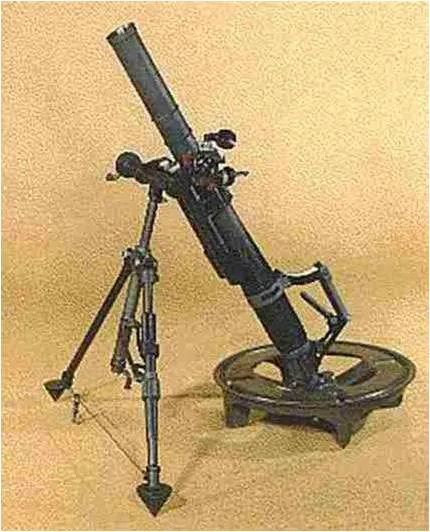

In the 1984 Kurdish-Turkish Conflict, SETAV says the PKK used the 60 mm mortar in small-unit tactics against Turkish operation units in mountain operations, and Turkish reporting later described 60-mm mortar shells seized from PKK caches in northern Iraq.
Artillery
60 mm mortar
Also known as
- 60mm mortar
- 60-mm mortar
- 60 mm light mortar
- 60 mm infantry mortar
- 60 mm company mortar
- 60 mm commando mortar
- 60 mm mortar launcher
- 60mm mortar launcher
- 60 mm mortar tube
- 60mm mortar tube
The 60 mm mortar is a portable light-infantry indirect-fire class used for close support where crews need high-angle fire from a weapon lighter than larger battalion mortars. The caliber family spans many national models: direct conflict sourcing documents PKK 60 mm mortar use and recovered ammunition in the Kurdish-Turkish conflict, disputed Thai 60 mm mortar fire claims in the 2025 Thailand-Cambodia border fighting, and Yemen-linked interdiction of 60 mm mortar tubes assessed by the United States as intended for Houthi forces rather than confirmed battlefield firing.
Role in Conflicts
- Side
- Thailand

In the 2025 Thailand-Cambodia Border Conflict, Cambodian Defense Ministry statements reported by The Diplomat and Khaosod English said Thai troops fired 60 mm mortars during the December 7, 2025 border clash; Thailand disputed responsibility and said Cambodian forces opened fire first.

U.S. Fifth Fleet reporting on 2015-2016 maritime interdictions said HMAS Darwin seized 20 60 mm mortar tubes in February 2016, and that U.S. analysis concluded the interdicted arms caches originated in Iran and were intended for delivery to the Houthis in Yemen; this documents attempted supply rather than confirmed battlefield firing.
Role detailsProfile / Specs
Profile
- Origin
- Multiple countries; Yemen-linked interdicted shipment assessed by the United States as Iran-origin
- Built by
- Various manufacturers
- Built in
- Multiple countries
- Type
- Light infantry mortar
- Service note
- Modern service, with Yemen-linked interdiction documented in 2016
- Designer
- Varies by model
- Designed
- Varies by model; modern 60 mm light mortars derive from early 20th-century infantry mortar designs, with current systems such as the M224A1 and commercial commando mortars retaining the same caliber class.
- Unit cost
- Varies by model and procurement package
- Produced
- Varies by model and manufacturer
- Number built
- Unknown; produced by many national arsenals and defense manufacturers
Specifications
- Caliber
- 60 mm
- Operating principle
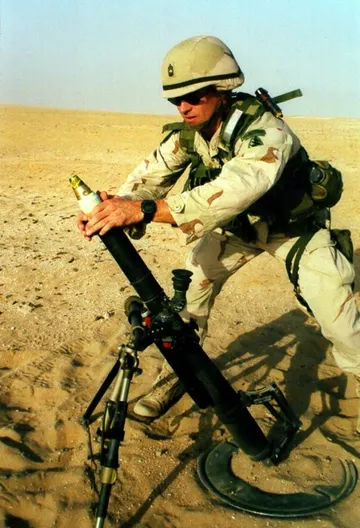
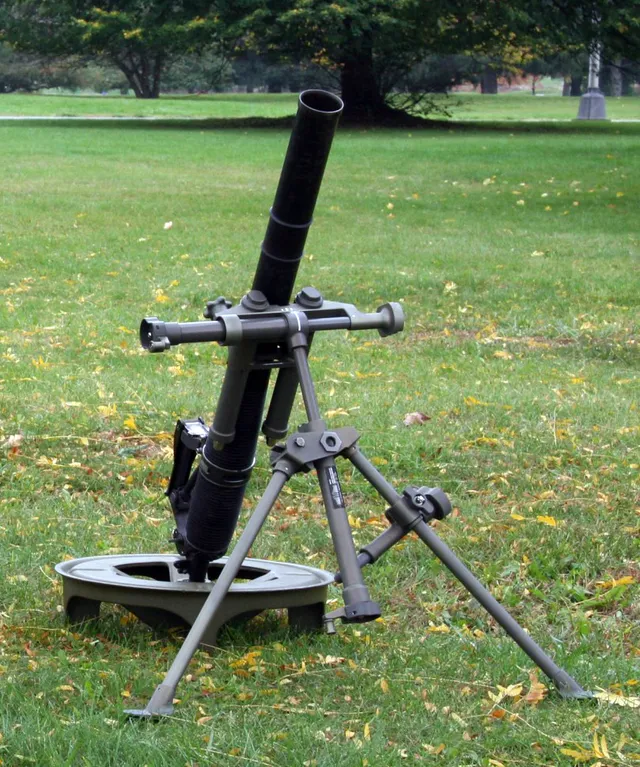
- Smoothbore, muzzle-loaded, high-angle-fire mortar; representative systems can be fired in conventional bipod/baseplate mode or handheld/commando mode
- Representative legacy system
- U.S. M224: 46.5 lb conventional mode, 18.0 lb handheld mode, 70-3,490 m with M720/M888 high-explosive rounds
- Representative lightweight system
- U.S. M224A1: 37.9 lb conventional firing-position weight, 19.6 lb handheld firing-position weight, 70-3,490 m range
- Typical crew
- Small crew; FM 23-90 describes squad leader, gunner, assistant gunner, and ammunition bearer duties for the 60 mm mortar section
- Representative rate of fire
- U.S. M224: up to 30 rounds per minute for short periods and 20 rounds per minute sustained with M720/M888 rounds
- Modern configurations
- Manufacturer material describes dismounted, vehicle-mounted, bipod, commando, and digital fire-control-aided 60 mm mortar packages
- Ammunition types
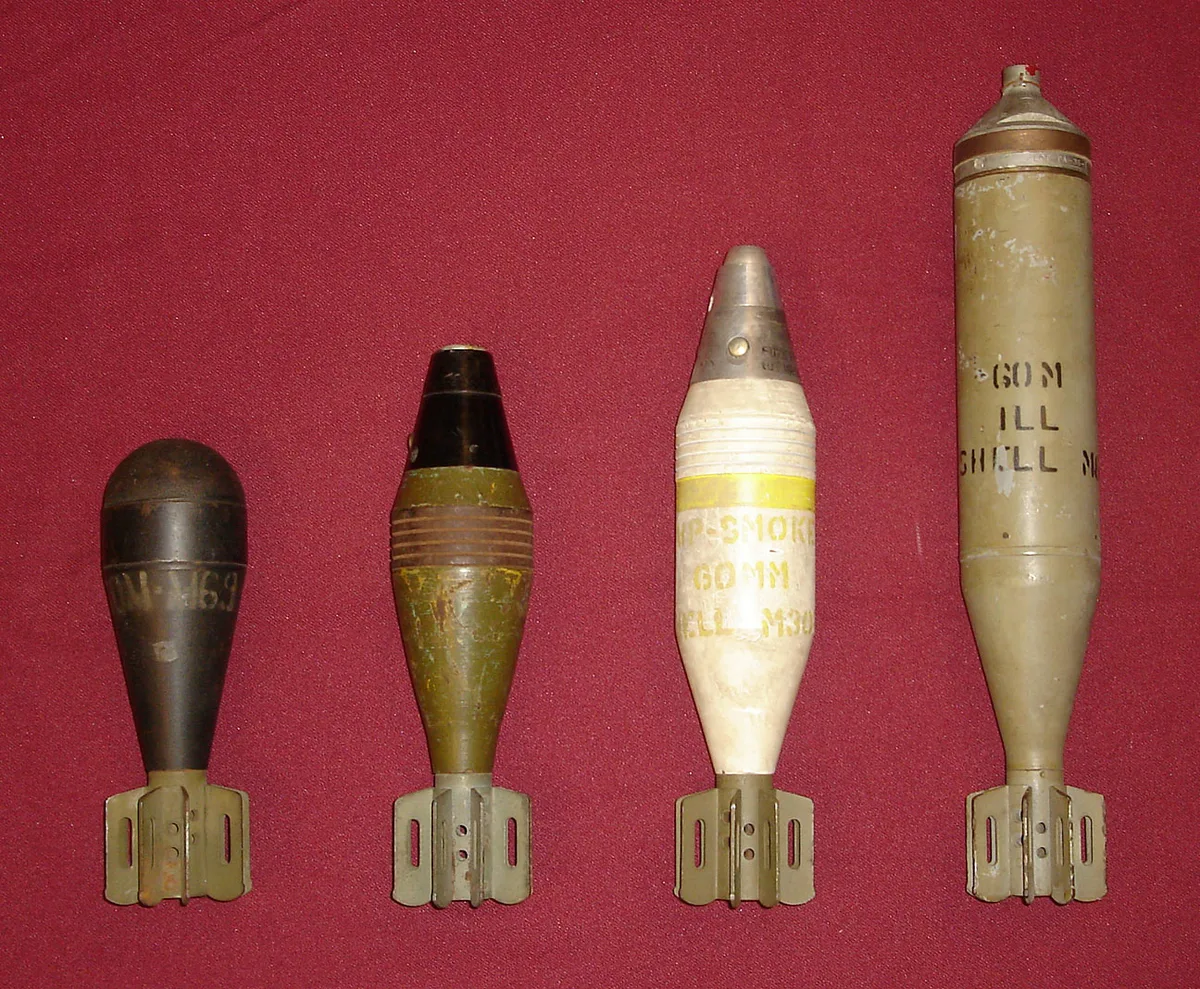
- High-explosive, smoke, illumination, infrared illumination, and practice/training cartridges are common 60 mm mortar ammunition categories
Class Scope
The 60 mm mortar category refers to portable smoothbore light mortars used for close infantry fire support. The related 60 mm mortar launcher record preserves conflict-specific recovered-tube reporting where no model was identified, while 60 mm mortar bombs covers the ammunition class. Model-specific records such as M224, 20N6M, and 60 mm M57 mortar carry their own sourced service and manufacturer details.
Yemen sourcing
The Yemen row documents attempted supply through a maritime seizure, not confirmed battlefield firing.
Representative model
The U.S. M224/M224A1 data anchors many specifications because official manuals publish detailed weights, range, rate-of-fire, and ammunition compatibility.
Variants
This page treats 60 mm mortar as a caliber and role class. Linked rows are existing catalog records for representative 60 mm mortar systems, while unlinked rows describe common configuration types.
| Variant | Configuration | Designation notes |
|---|---|---|
 | U.S. 60 mm lightweight company mortar | FM 23-90 identifies the M224 as a 60 mm mortar that can be fired in conventional or handheld mode; the M224A1 later reduced system weight while keeping the legacy range and rate-of-fire envelope. Sources: FM 23-90 Mortars, 60MM M224A1, Soldiers Benefit from Lighter, Easier to Maintain Mortar Systems |
 | Dual-purpose 60 mm mortar | Azersilah presents the 20N6M with bipod and commando-style firing configurations, making it a useful modern example of the dual-mode class. Sources: 20N6M 60 mm Dual-Purpose Mortar |
 | Serbian/Yugoslav-pattern 60 mm light mortar | Yugoimport and PPT Namenska material document the M57 as a 60 mm light mortar with its own HE, practice, illumination, and smoke ammunition set. Sources: 60 mm M57 Mortar Export Sheet, PPT Namenska Mortars |
| Conventional bipod-and-baseplate 60 mm mortars | Stabilized indirect-fire configuration | FM 23-90 describes the M224 conventional mode, while current manufacturer material keeps bipod/baseplate and dismounted 60 mm configurations in service. Sources: FM 23-90 Mortars, 60mm Mortars |
| Handheld or commando 60 mm mortars | Small-baseplate rapid-response configuration | FM 23-90 describes handheld M224 firing, and Hirtenberger material presents a dedicated lightweight 60 mm commando mortar package for infantry-group fire support. Sources: FM 23-90 Mortars, 60 MM Commando System |
Ammunition Fired
The Army mortar ammunition listing and supporting product sheets identify these cartridges for the U.S. M224/M224A1 60 mm mortar family, used here as a well-documented reference system inside the wider 60 mm class.
| Ammunition | Ammunition type | Firing evidence |
|---|---|---|
 | 60 mm high-explosive cartridge | Army mortar ammunition listings place the M720A1 under 60 mm high-explosive cartridges, and Day & Zimmermann describes it as a cartridge for the M224-series 60 mm Mortar System. Sources: Mortar Ammunition - Army.mil, M720A1 / M720A2 / M768 |
 | 60 mm high-explosive cartridge | Army mortar ammunition listings place the M888 under 60 mm high-explosive cartridges, and the portfolio book says it is designed for the M224/M224A1 Lightweight Company Mortar System. Sources: Mortar Ammunition - Army.mil, Capability Program Executive - JPEO A&A Portfolio Book |
 | 60 mm high-explosive cartridge | The Army lists M768 under 60 mm high-explosive ammunition, and the Day & Zimmermann datasheet covers the M720A1/M720A2/M768 cartridge family for M224-series mortars. Sources: Mortar Ammunition - Army.mil, M720A1 / M720A2 / M768 |
 | 60 mm smoke cartridge | The Army mortar ammunition page identifies the M722A1 WP SMK as the 60 mm white phosphorous smoke cartridge for the M224/M224A1 system. Sources: Mortar Ammunition - Army.mil |
 | 60 mm practice cartridge | The Army portfolio book says the M769 FRPC is designed for use with the M224/M224A1 Lightweight Company Mortar System and is a low-cost practice round for 60 mm mortar training. Sources: M769 Full Range Practice Cartridge |
 | Visible-light illumination cartridge | The Army portfolio book lists the M721 Visible Light cartridge for use with the M224/M224A1 Lightweight Company Mortar System in light infantry battalions. Sources: Mortar Ammunition - Army.mil, Capability Program Executive - JPEO A&A Portfolio Book |
Additional 60 mm Ammunition Records
Other cataloged 60 mm rounds are documented against the wider 60 mm mortar class or named non-U.S. 60 mm launchers, so they sit separately from the M224-series cartridge group.
| Ammunition | Ammunition type | Firing evidence |
|---|---|---|
 | 60 mm illumination projectile | Elbit material identifies the M824 as compatible with smoothbore 60 mm mortar barrels, linking it to the broader 60 mm mortar class. |
 | 60 mm long-range high-explosive projectile | Iranian catalog material lists the HE LR round as ammunition for 60 mm mortars, so the relationship belongs at the class level rather than to a specific tube model. Sources: Mindex Iran Defence Products catalog |
 | 60 mm high-explosive mortar bomb | Azersilah identifies the HE bomb as ammunition for the 20N6M and other NATO-standard 60 mm smooth-bore mortars. |
 | 60 mm practice mortar bomb | Azersilah identifies the practice bomb as designed for the 20N6M and other NATO-standard 60 mm smooth-bore mortars. Sources: 60 mm practice mortar bomb |
 | 60 mm high-explosive shell | Yugoimport publishes M73 ballistic data for the 60 mm M57 mortar, giving the class page a Serbian/Yugoslav-pattern ammunition example. Sources: 60 mm, M73 - Yugoimport |
Timeline
60 mm mortar Key Events
FM 23-90 baseline covers the M224
U.S. Army / Marine Corps FM 23-90 documented the 60 mm M224 mortar chapter, including conventional and handheld modes, components, range, ammunition, and rate-of-fire data.
Sources: FM 23-90 Mortars
M224A1 lightweight fielding reported
The U.S. Army reported that mortar crews had begun receiving M224A1 60 mm lightweight mortar systems, reducing overall weight while retaining the former system range, rate of fire, and tube-life envelope.
Sources: Soldiers Benefit from Lighter, Easier to Maintain Mortar Systems
Yemen-linked 60 mm mortar tubes interdicted
U.S. Fifth Fleet reporting later identified 20 60 mm mortar tubes in the February 2016 HMAS Darwin seizure assessed as Iran-origin materiel intended for Houthi forces in Yemen.
Sources: Navy Destroyer Seizes 2,521 AK-47 Rifles in Gulf of Aden, Maritime Arms Seizures Point to Iran
U.S. mortar weapon systems contract announced
Elbit Systems of America announced a U.S. Army production contract covering 60 mm, 81 mm, and 120 mm mortar weapon systems, including M224 legacy and M224A1 lightweight systems.
Sources: U.S. Army Contract for Mortar Weapon Systems
Related Weapon Systems


Sources
Navy Destroyer Seizes 2,521 AK-47 Rifles in Gulf of AdenPublisher: U.S. Department of War | Note: Supports 2014 Yemen Civil War attempted supply context: U.S. reporting says HMAS Darwin seized 20 60 mm mortar tubes and that the 2015-2016 arms caches were intended to be delivered to the Houthis in Yemen. | Accessed: 2026-07-04When Strategy Collapses: The PKK's Urban Terrorist CampaignPublisher: SETAV | Note: In the 1984 Kurdish-Turkish Conflict, SETAV says the PKK used the 60 mm mortar in small-unit tactics against Turkish operation units in mountain operations. | Accessed: 2026-07-04Turkey: Huge terrorist PKK ammunition seized in N.IraqPublisher: Anadolu Ajansı | Note: In the 1984 Kurdish-Turkish Conflict, Turkey reported seizing five 60-mm mortar shells from PKK caches in northern Iraq during Operation Claw-Tiger. | Accessed: 2026-07-04Cambodia Confirms Border Shooting in Choam Ksan DistrictPublisher: Cambodianess | Note: In the 2025 Thailand-Cambodia Border Conflict, Cambodianess reported Cambodian Defense Ministry statements that Thai troops fired 60mm mortars at Cambodian forces in Prolean Thmar on December 7, 2025. | Accessed: 2026-07-04Thai and Cambodian Troops Again Clash Along Disputed BorderPublisher: The Diplomat | Note: In the 2025 Thailand-Cambodia Border Conflict, The Diplomat reported Cambodian Ministry of Defense claims that Thai troops opened fire using 60mm mortars during the December 7, 2025 border clash. | Accessed: 2026-07-04Maritime Arms Seizures Point to IranPublisher: Armament Research Services | Note: Supports 2014 Yemen Civil War attempted supply context: ARES identifies the HMAS Darwin seizure of 20 60 mm mortar tubes and assesses the shipment as likely bound for Yemen, where it was attempted to be supplied to Houthi-aligned forces. | Accessed: 2026-07-04FM 23-90 MortarsPublisher: U.S. Army / U.S. Marine Corps | Note: Supports background and representative 60 mm mortar specifications for the M224, including construction, crew duties, weight, range, rate of fire, and ammunition types. | Accessed: 2026-07-0460MM M224A1Publisher: U.S. Army Capability Program Executive Ammunition and Energetics | Note: Supports background on a current lightweight 60 mm mortar system and its reduced weight compared with the legacy M224. | Accessed: 2026-07-04Mortar Ammunition - Army.milPublisher: U.S. Army Capability Program Executive Ammunition & Energetics | Note: Supports the Army mortar ammunition family context and the listing of 60 mm mortar ammunition, including the M720A1, M722A1, and M768. | Accessed: 2026-07-04M769 Full Range Practice CartridgePublisher: U.S. Army Capability Program Executive Office Ammunition & Energetics | Note: Supports the M769 FRPC's 60 mm mortar compatibility, training-round role, and published performance characteristics in the Army portfolio book. | Accessed: 2026-07-04Capability Program Executive - JPEO A&A Portfolio BookPublisher: U.S. Army CPEAE | Note: Supports the M721 Visible Light cartridge's compatibility with the M224/M224A1 lightweight company mortar system and the wider 60 mm mortar ammunition family context. | Accessed: 2026-07-04M720A1 / M720A2 / M768Publisher: Day & Zimmermann | Note: Supports background and technical data for the M720A1/M720A2/M768 60 mm cartridge family, including M224-series compatibility. | Accessed: 2026-07-04M224 60mm Mortar ImagePublisher: Wikimedia Commons | Note: Supports image provenance for a public-domain U.S. Army image of a representative 60 mm mortar. | Accessed: 2026-07-04Soldier Firing M224 60mm Mortar ImagePublisher: Wikimedia Commons | Note: Supports image provenance for a public-domain U.S. government image showing a 60 mm mortar being fired. | Accessed: 2026-07-04M224A1 60mm Mortar ImagePublisher: Wikimedia Commons | Note: Supports image provenance for a public-domain U.S. Army image of the M224A1 60 mm mortar. | Accessed: 2026-07-0460mm Mortar Rounds ImagePublisher: Wikimedia Commons | Note: Supports image provenance for a reusable CC BY-SA/GFDL image of U.S. M2 60 mm mortar rounds used as representative 60 mm ammunition, not as M224-specific ammunition. | Accessed: 2026-07-04Thai-Cambodia Border Clash Injures Two Thai Troops, Triggers EvacuationPublisher: Khaosod English | Note: In the 2025 Thailand-Cambodia Border Conflict, Khaosod English reported Thai and Cambodian accounts of the December 7, 2025 clash, including Cambodia's claim that Thai troops used 60 mm mortars and Thailand's denial of responsibility. | Accessed: 2026-07-04Soldiers Benefit from Lighter, Easier to Maintain Mortar SystemsPublisher: U.S. Army | Note: Supports M224A1 lightweight fielding background and the reduced-weight system context compared with the legacy M224. | Accessed: 2026-07-0460mm MortarsPublisher: Elbit Systems | Note: Supports modern 60 mm mortar configuration context, including dismounted and vehicle-mounted configurations and qualified 60 mm ammunition compatibility. | Accessed: 2026-07-04U.S. Army Contract for Mortar Weapon SystemsPublisher: Elbit Systems of America | Note: Supports background on a U.S. Army production contract covering 60 mm, 81 mm, and 120 mm mortar weapon systems, including M224 and M224A1 systems. | Accessed: 2026-07-0460 MM Commando SystemPublisher: Hirtenberger Defence Systems | Note: Supports modern commando 60 mm mortar configuration context, including a lightweight infantry-group fire-support package and ammunition-family context. | Accessed: 2026-07-0420N6M 60 mm Dual-Purpose MortarPublisher: Azersilah | Note: Supports the linked 20N6M 60 mm mortar variant row and its bipod and commando-style firing configurations. | Accessed: 2026-07-04PPT Namenska MortarsPublisher: PPT Namenska | Note: Supports M57 60 mm mortar manufacturer listing and specifications, including caliber, weight, range, sight, and crew context. | Accessed: 2026-07-0460 mm M57 Mortar Export SheetPublisher: Yugoimport-SDPR | Note: Supports background and specifications for the 60 mm M57 mortar, including role, components, elevation, range, and combat weight. | Accessed: 2026-07-04Azersilah 60 mm High-Explosive Mortar BombPublisher: Azersilah | Note: Supports the relationship claim that the 60 mm high-explosive bomb is compatible with the 20N6M and other NATO-standard 60 mm smooth-bore mortars. | Accessed: 2026-07-0460 mm practice mortar bombPublisher: Azersilah | Note: Supports the practice-bomb compatibility statement naming the 20N6M and other NATO-standard 60 mm mortars. | Accessed: 2026-07-04Elbit Systems Land Mortar Ammunition PortfolioPublisher: Elbit Systems Land | Note: Supports the M824 60 mm illuminating mortar projectile relationship, including smoothbore 60 mm mortar barrel compatibility. | Accessed: 2026-07-04Mindex Iran Defence Products catalogPublisher: Mindex | Note: Supports the Iranian 60 mm HE LR mortar projectile relationship and its cataloged fit for 60 mm mortars. | Accessed: 2026-07-0460 mm, M73 - YugoimportPublisher: Yugoimport-SDPR | Note: Supports the 60 mm M73 shell relationship through ballistic data for use with the 60 mm Mortar M57. | Accessed: 2026-07-04