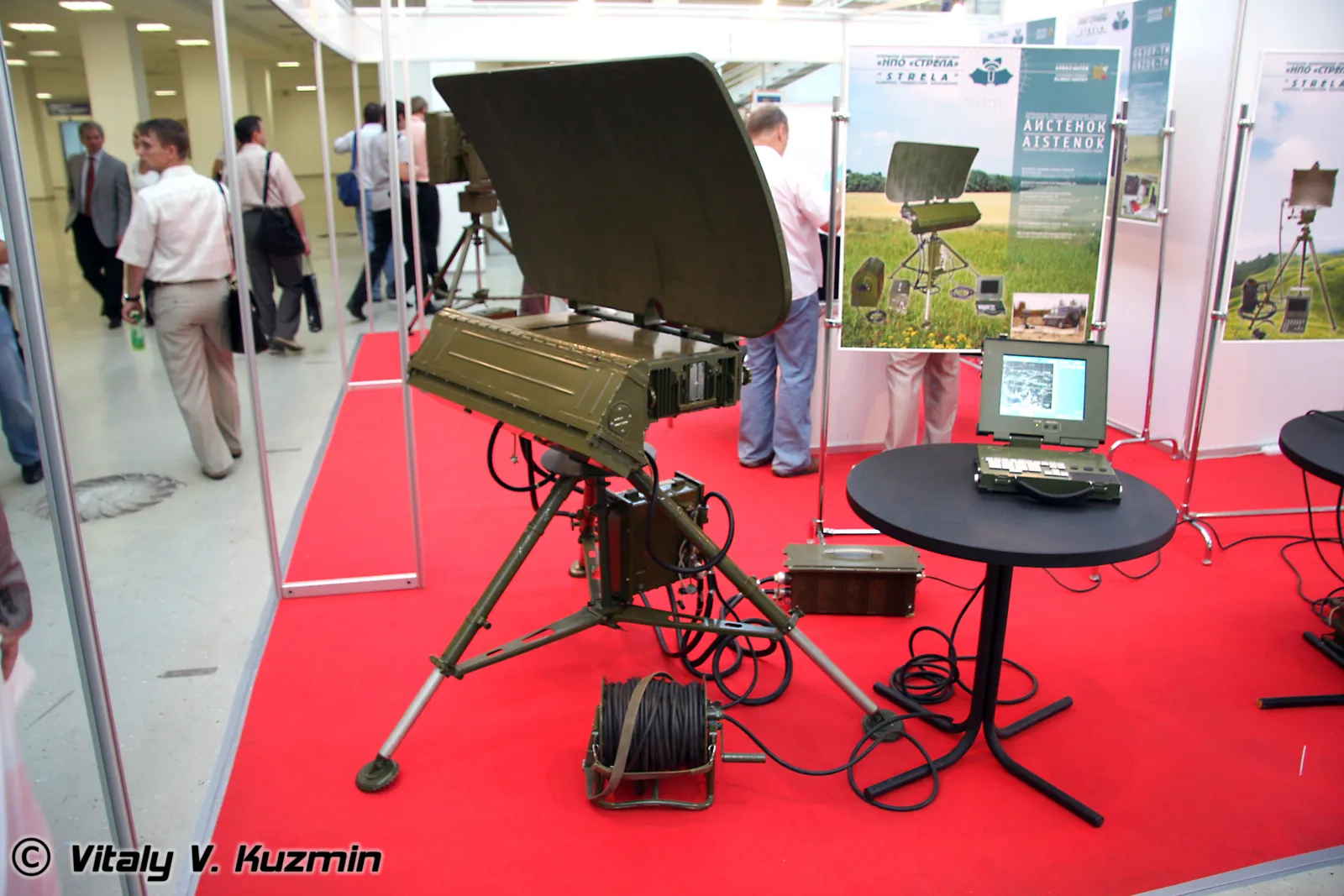
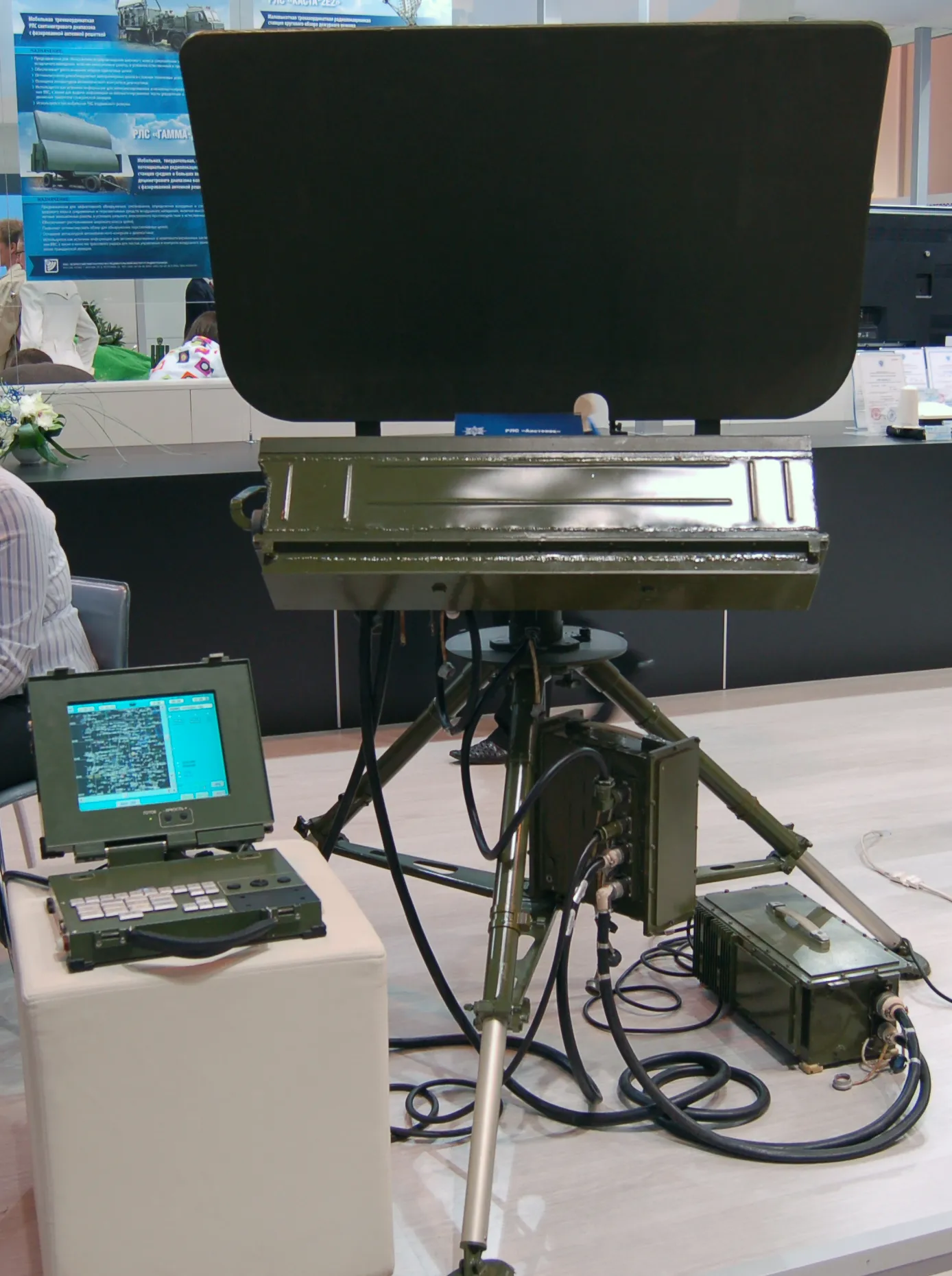
Russian and Russian-backed forces are documented with 1L271 Aistyonok radars in Ukraine, from InformNapalm's 2016 Donbas reporting to later Russian MoD-linked Kupiansk-axis counter-battery accounts; Ukrainian and open-source reporting also documents captured, destroyed, and drone-struck Russian Aistyonok systems.
Role details1L271 Aistyonok
- Aistyonok
- Aistenok
- Aistyenok
- 1L271
- 1L271 Aistenok
- 1L271 Aistyenok
- Aistyonok portable radar
The 1L271 Aistyonok is a Russian portable mortar-locating and artillery-reconnaissance radar built for battalion-to-brigade fire support. Rosoboronexport describes the export system as a modular radar for detecting 81-120 mm mortar positions, tracking shell bursts for artillery correction, and observing moving ground targets out to 20 km; specialist radar references describe a 135 kg J-band set, while open-source conflict reporting documents Russian-linked use in Syria and Ukraine plus Armenian/Artsakh wartime fielding problems in the 2020 Nagorno-Karabakh conflict.
Role in Conflicts
Russian MoD-attributed and Syrian government reporting described Aistenok systems being used around Aleppo for ceasefire monitoring and artillery reconnaissance, including Russian monitoring from the Al-Khalidiyah area and Syrian government acknowledgement of a provided Aistenok system.
Armenian prosecution-linked reporting says 15 Aistenok systems bought through Rosoboronexport were delivered to Armenian and Artsakh units before the war, but during the 2020 Nagorno-Karabakh fighting they were judged unsuitable for use and removed from service.
Combat Record
Open-source reporting ties Aistyonok use to three different operational settings: Russian or Russian-backed counter-battery work in Ukraine, Russian and Syrian government ceasefire-monitoring and artillery-reconnaissance activity around Aleppo, and Armenian/Artsakh wartime fielding problems during the 2020 Nagorno-Karabakh fighting.
Captured, destroyed, and drone-struck Russian examples show the radar as a battlefield sensor for locating Ukrainian artillery and mortar positions.
Russian and Syrian government reporting placed Aistenok systems in ceasefire-monitoring and artillery-reconnaissance roles around Aleppo.
Armenian prosecution-linked reporting says delivered Aistenok systems were removed during the 44-day war after being judged unsuitable for use.
Profile / Specs
Profile
- Origin
- Russia
- Built by
- Almaz-Antey
- Type
- Portable mortar locating reconnaissance radar
- Service note
- Displayed from 2008, reported in Russian service by the mid-2010s, and documented in Syria, Ukraine, and Armenian/Artsakh wartime service reporting
- Designer
- Almaz-Antey
- Designed
- Reported in Russian service by 2015
Specifications
- Maximum mortar position detection range
- 5 km
- Maximum mortar fire monitoring range
- 5 km
- Maximum artillery fire monitoring range
- 10 km by shell-burst data
- Maximum moving ground target detection range
- 20 km for tank-size targets
- Azimuth coverage sector
- 60 degrees
- Autonomous portable weight
- 135 kg
- Radar frequency band
- J band with eight selectable frequencies
- Reported setup time
- About 5 minutes
Reconnaissance Tasks
Rosoboronexport frames Aistenok as a ground-reconnaissance radar for mortar and artillery units rather than as a stand-alone weapon. Its published tasks center on detecting mortar launch positions from bomb trajectories, monitoring shell bursts for artillery correction, and tracking moving ground targets such as tanks.
Detects 81-120 mm mortar positions and monitors mortar fire to support counter-battery response.
Registers shell-burst data for 122-155 mm artillery fire monitoring and adjustment.
Detects moving ground targets, with the export sheet listing tank-size target detection out to 20 km.
Portable Radar Set
The portable configuration is built around separate field components rather than a vehicle-mounted radar cabin. Rosoboronexport lists a transceiver, antenna, preprocessing unit, control panel, power supply, data-transfer equipment, radio, generator, tripod, and artillery boussole; Radartutorial describes a 135 kg set operating in the J band with eight selectable frequencies.
Antenna, transceiver, control, power, communications, tripod, generator, and orientation equipment are carried as a deployable radar set.
Specialist radar data identifies J-band operation with multiple selectable frequencies.
At 135 kg in the autonomous version, the radar is portable in modules but still crew-served field equipment.
Timeline
1L271 Aistyonok Key Events
Public display period begins
Radartutorial describes 1L271 as having been presented at military fairs since 2008, aligning the radar's public appearance with late-2000s export and service promotion.
Russian Southern Command service reporting
Russia Beyond reported that Russia's Southern Command had received the Aistenok radar for reconnaissance and fire-control tasks.
Southern Military District rearmament listing
TASS listed Aistyonok radars among equipment being received by Russia's Southern Military District during its 2015 rearmament plan.
Nagorno-Karabakh exercise sighting
Nagorno Karabakh Observer reported that 1L271 Aistyonok radars appeared in official footage from 22-26 June exercises in Nagorno-Karabakh, and treated the sighting as Armenian/Artsakh operator context rather than direct combat-use evidence.
Captured near Rubtsi
Defense Express reported Ukrainian capture of a Russian 1L271 Aistyonok radar during the liberation of Rubtsi in Donetsk Oblast.
Army-2023 display image
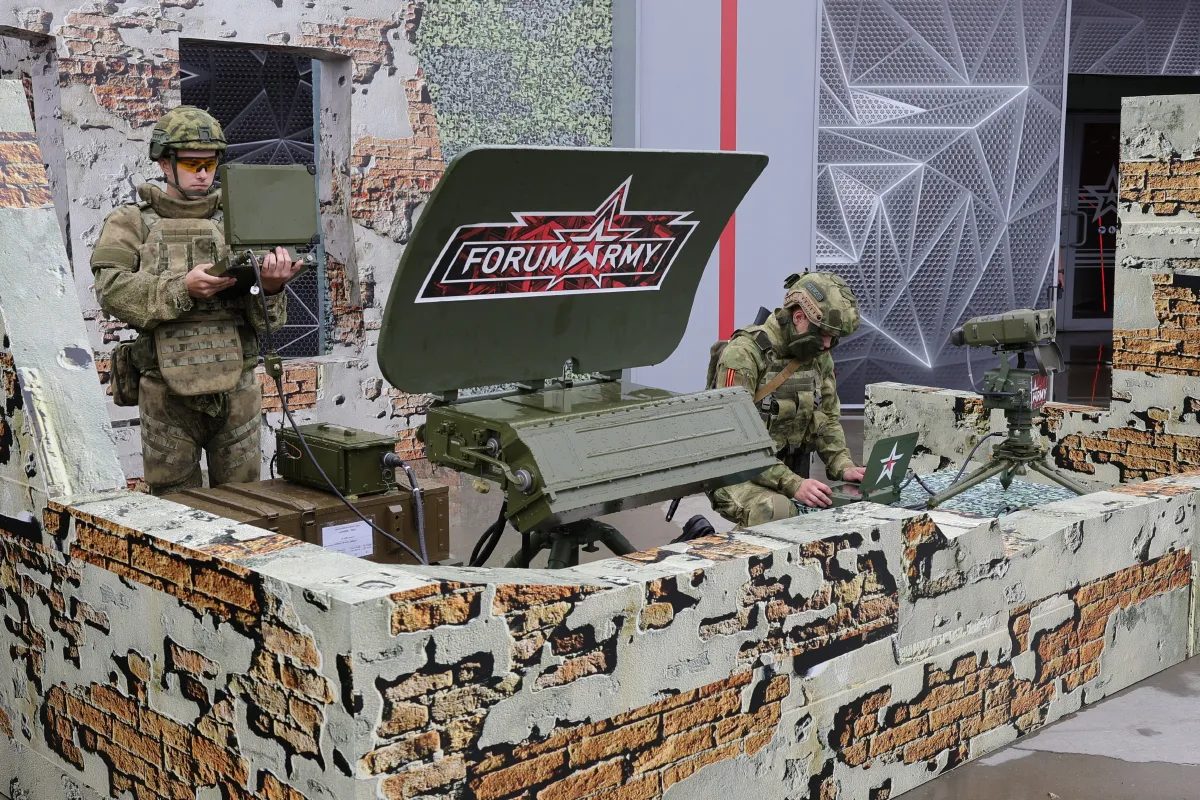
A Russian Ministry of Defence photograph on Wikimedia Commons shows a 1L271 Aistyonok radar displayed at Army-2023.
Kupiansk-axis counter-battery reporting
VPK.name republished TsAMTO reporting that Russian Western Grouping Aistyonok crews were being used for counter-battery reconnaissance on the Kupiansk axis.
Armenian prosecution case describes wartime removal
OC Media and ArmInfo reported Armenian prosecution allegations that Aistenok radars delivered to Armenian and Artsakh units were considered unsuitable during the 44-day war and removed from service.
FATUM unit strike report
Ukrinform reported that FATUM UAV operators from Ukraine's 60th Separate Mechanized Brigade destroyed a Russian Aistyonok radar station used to observe Ukrainian artillery and mortar positions.
Related Weapon Systems