Electronic Warfare

1L277 Sobolyatnik

Also known as
  • 1L277
  • Sobolyatnik
  • 1Л277 Соболятник
  • 1Л277
  • Соболятник
  • Sobolyatnik-O
  • Соболятник-О
  • 1L277 Sobolyatnik-O
  • 1Л277 Соболятник-О
  • 1L277 Sobolyatnik portable ground reconnaissance radar

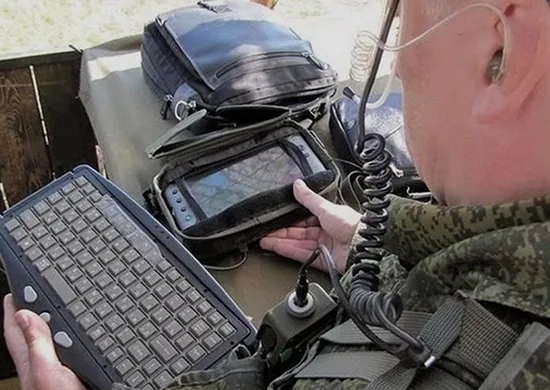
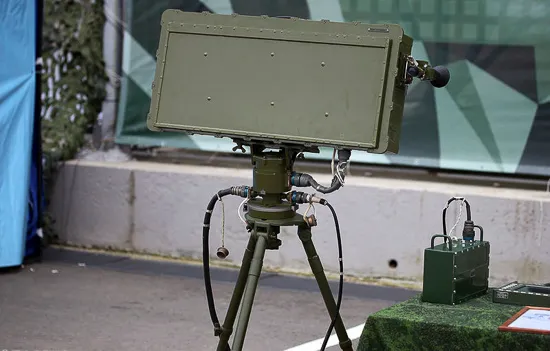
The 1L277 Sobolyatnik is a Russian man-portable ground reconnaissance radar built for small-unit surveillance, target classification, and artillery-fire adjustment. Sources describe a two-person, 36 kg system with an electronically scanned phased-array antenna, sector scanning without mechanical antenna movement, short setup time, and the ability to track up to 20 targets.

Role in Conflicts

Profile / Specs

Profile

Origin
Russia
Built by
Almaz-Antey
Type
Portable ground reconnaissance radar
Service note
Introduced in the 2010s and reported in Russian service during the 2020s
Designer
Tula NPO Strela
Designed
Publicly unveiled in 2013
Produced
2010s-present

Specifications

Radar role
Portable ground-target reconnaissance and artillery-observation radar
Antenna
Electronically scanned phased-array antenna
Frequency band
J band
Instrumented range
20 km
Reported detection range
Up to 7 km for a person, 17 km for a tank, and 20 km for a truck
Target tracking
Up to 20 targets simultaneously
Range resolution
10 m
Range accuracy
10 m
Azimuth accuracy
0.18 degrees
Scan sector
Adjustable 60 to 120 degree sector with 18 degree elevation coverage
Beamwidth
4.5 degrees
Artillery-burst detection range
Up to 6.5 km for shell or mortar bursts
Remote antenna placement
Receiver-transmitter can be placed up to 30 m from the operator position
Power consumption
Not more than 90 W
Continuous operation
Up to 6 hours on the standard battery
Emission and countermeasures note
Public radar reference data describes low radiated power and rapid frequency tuning for reduced detectability and deception resistance
System weight
36 kg
Reported deployment time
About five minutes or less to deploy or pack up
Reported service entry
February 2021 in Russian Army service
Sensor Role

The Sobolyatnik sits in the small-unit reconnaissance and artillery-observation layer rather than the air-defense radar layer. Public sources describe a portable radar that can classify ground targets, track multiple objects, support artillery adjustment, and work alongside UAV operators.

Crew and portability

The complete system is described as a 36 kg set transportable and operated by a two-person crew, with Russian military media describing setup or pack-up in about five minutes or less.

Target picture

Published specifications list simultaneous tracking of up to 20 targets with 10 m range resolution, including personnel and vehicle-size target classes.

Sector scan

Radar reference data describes an adjustable 60 to 120 degree scan sector, 18 degrees of elevation coverage, and a 4.5 degree beamwidth without mechanical antenna movement.

Artillery support

Defense reporting describes use for artillery reconnaissance, including spotting shell paths and bursts and passing coordinates for counter-battery fire.

Front-line mobility

Armeyskiy Standart describes crews operating the radar from prepared positions and, when needed, from vehicles or armored vehicles to improve mobility.
Electronics Component Context

Ukraine's GUR War & Sanctions database identifies a power-supply subsystem entry associated with the 1L277 Sobolyatnik. The record lists an MTC1528S15 power supply, names XP Power as the manufacturer, and gives the manufacturer's headquarters country as Great Britain.

Subsystem

Power supply subsystem for a portable solid-state ground-target reconnaissance radar.

Marked component

MTC1528S15 power supply, with partial serial and channel markings shown in the database entry.

Publication date

The War & Sanctions component entry is dated 2024-06-01.

Variants

Russian reference sources use Sobolyatnik and Sobolyatnik-O for the 1L277 portable ground-reconnaissance radar.

VariantConfigurationDesignation notes
1L277 Sobolyatnik-OAlternate designation

A Tula historical encyclopedia entry on NPO Strela lists RLS 1L277 (Sobolyatnik-O) among significant Strela products.

Sources: Tula Historical Cultural Encyclopedia NPO Strela

Timeline

1L277 Sobolyatnik Key Events

  1. Public unveiling

    Army Recognition reported that Almaz-Antey publicly unveiled the Sobolyatnik at the MAKS-2013 defense exhibition.

    Sources: Army Recognition 2020 Airborne Forces Sobolyatnik

  2. Airborne Forces deliveries reported

    Russian defense reporting cited by Army Recognition said close to ten Sobolyatnik sets were planned for Russian Airborne Forces formations in 2020.

    Sources: Army Recognition 2020 Airborne Forces Sobolyatnik, TASS 2020 Russian Army Deliveries

  3. Russian service entry reported

    A Russian equipment profile reports the 1L277 Sobolyatnik entering Russian Army service in February 2021.

    Sources: Vooryzhenie 1L277 Sobolyatnik Profile

  4. Front-line radar use shown by Russian media

    NTV described Russian forces demonstrating a Sobolyatnik radar in the war zone, including target classification, artillery-fire correction, and coordinate transfer to artillery units.

    Sources: NTV 2022 Sobolyatnik Frontline Report

  5. Ukraine deployment reported

    RIA Novosti cited Russia's Ministry of Defence saying Western Group UAV operators and Sobolyatnik radar crews identified Ukrainian positions on the Kupyansk axis and passed coordinates to artillery units.

    Sources: RIA 2024 West Group Sobolyatnik Kupyansk, Army Recognition 2024 Ukraine Sobolyatnik

  6. Front-line use described by Russian military media

    Armeyskiy Standart described Sobolyatnik use in Russia's war in Ukraine for front-line detection, counter-battery work, and relaying coordinates against UAV operators and other targets.

    Sources: Armeyskiy Standart 2024 Sobolyatnik

Media
Related Weapon Systems
1K148 Yastreb-AV, Self-propelled counter-battery artillery reconnaissance radar complex, Electronic WarfareElectronic Warfare1K148 Yastreb-AVSelf-propelled counter-battery artillery reconnaissance radar complexThe 1K148 Yastreb-AV is a Russian self-propelled counter-battery radar complex attributed to the Almaz-Antey industrial group and Tula-based NPO Strela. Open reporting describes it as a phased-array artillery reconnaissance system on a BAZ-6910-025 8x8 chassis, built to track incoming shells or rockets and calculate artillery firing positions for counter-battery fire. Russian state-linked reporting announced its use with Russian artillery units in Ukraine in January 2024, while Ukrainian military, government-linked, and independent news coverage later documented the destruction of multiple Russian Yastreb-AV systems.
1L271 Aistyonok, Portable mortar locating reconnaissance radar, Electronic WarfareElectronic Warfare1L271 AistyonokPortable mortar locating reconnaissance radarThe 1L271 Aistyonok is a Russian portable mortar-locating and artillery-reconnaissance radar built for battalion-to-brigade fire support. Rosoboronexport describes the export system as a modular radar for detecting 81-120 mm mortar positions, tracking shell bursts for artillery correction, and observing moving ground targets out to 20 km; specialist radar references describe a 135 kg J-band set, while open-source conflict reporting documents Russian-linked use in Syria and Ukraine plus Armenian/Artsakh wartime fielding problems in the 2020 Nagorno-Karabakh conflict.
1RL239/1RL239M ARK-1/ARK-1M Rys counter-battery radar, Tracked artillery-locating counter-battery radar, Electronic WarfareElectronic Warfare1RL239/1RL239M ARK-1/ARK-1M Rys counter-battery radarTracked artillery-locating counter-battery radarThe 1RL239/1RL239M ARK-1/ARK-1M Rys is a Soviet tracked artillery-locating radar family on the MT-LBu chassis, built to detect mortar, artillery, rocket-artillery, and tactical-missile firing positions for counter-battery work. The baseline ARK-1 entered Soviet service as the 1RL239, while the ARK-1M modernization added independent power and updated command equipment before late-Soviet production ended.
P-35/P-37 Bar Lock radar, Transportable 2D air-surveillance and GCI radar, Electronic WarfareElectronic WarfareP-35/P-37 Bar Lock radarTransportable 2D air-surveillance and GCI radarThe P-35/P-37 Bar Lock family is a Soviet transportable two-coordinate radar line used for air surveillance, fighter guidance, and target assignment to air-defense missile systems. The family links the 1RL110 P-35 Saturn and later 1RL139 P-37 Mech designations, with documented use from North Vietnam's air-defense network, Syria's T4 airbase, and Iraq's 1991 IADS to Russian and Ukrainian radar losses or targeting in the 2014 Russia-Ukraine War; open air-defense references also place P-35M/Bar Lock search radar in S-200/SA-5 site architecture.
1L125 Niobium-SV, Mobile VHF three-coordinate air-defense surveillance radar, Air DefenseAir Defense1L125 Niobium-SVMobile VHF three-coordinate air-defense surveillance radarThe 1L125 Niobium-SV is a Russian mobile VHF/meter-band, three-coordinate radar built for ground-forces air defense and developed by NNIIRT within the Almaz-Antey group. Rosoboronexport's 1L125E export profile describes a 5-500 km, 360-degree surveillance radar for detecting, tracking, identifying, and reporting aerodynamic and ballistic targets, including low-observable aircraft; Ukrainian and sanctions-derived records identify Niobium-SV radars in Russian service during the Russia-Ukraine war.

Sources