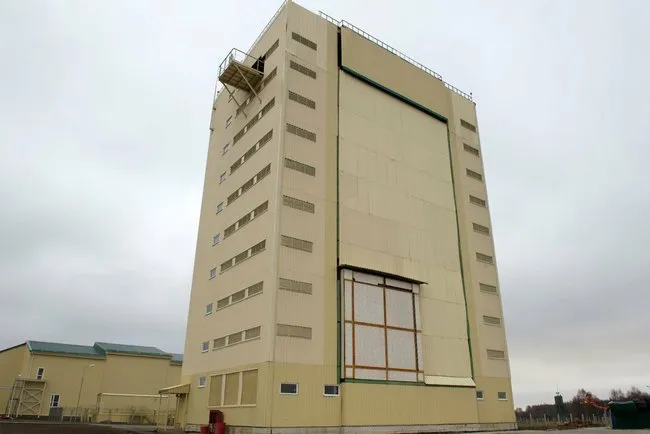
Air Defense

Voronezh-DM early-warning radar

Also known as
  • Voronezh-DM
  • 77Ya6-DM
  • 77Ya6 Voronezh
  • Voronezh DM radar
  • Early warning SHF radar Voronezh DM
  • Armavir Voronezh-DM radar

Voronezh-DM is the decimeter-band member of Russia's Voronezh family of prefabricated strategic early-warning radars, built to detect missile launches and other aerospace threats as part of the national missile-warning network. The Armavir site in Krasnodar Krai hosts two Voronezh-DM arrays and became conflict-relevant during the Russia-Ukraine war when Ukrainian drone attacks reportedly damaged at least one antenna structure in May 2024.

Role in Conflicts

Strategic Warning Role

Voronezh-DM is best treated as a fixed strategic sensor rather than a tactical battlefield radar. Open sources place the Armavir arrays inside Russia's missile-attack warning network and describe their job as long-range detection of ballistic missiles and other aerospace threats.

Conflict relevance

The Armavir site became part of the Russia-Ukraine war equipment record because it was reportedly struck by Ukrainian drones in May 2024.

Sourcing limit

Public reporting directly supports the strike and damage at Armavir; it is more cautious on whether the radars made a meaningful day-to-day contribution against Ukrainian weapons.

Profile / Specs

Profile

Origin
Russia
Built by
Vympel
Type
Fixed early-warning phased-array radar
Service note
Entered Russian early-warning service from 2009 onward
Designer
NPK NIIDAR in open references; Vympel missile-warning-system organization in later reporting
Designed
2000s
Produced
2000s-present

Specifications

System type
Fixed phased-array missile-attack early-warning radar in Russia's ground-based early-warning network
Family designation
77Ya6 Voronezh family; Voronezh-DM is reported as 77Ya6-DM
Radar band
Voronezh-DM: decimeter / UHF in open references; Voronezh-M and Voronezh-VP: meter / VHF
System role
Strategic missile-attack early warning and long-range aerospace surveillance
Antenna type
Fixed phased-array radar
Reported range
Up to 6,000 km in TASS and CSIS reporting; some open references describe greater vertical/near-space coverage
Reported track capacity
Up to 500 objects simultaneously in open reference reporting
Deployment model
High-factory-readiness modular radar assembled from factory-built modules at the deployment site
Reported deployment time
TASS reported 1-1.5 years for Voronezh stations, compared with 5-9 years for predecessor stations
Armavir configuration
Two Voronezh-DM radar arrays
Network role
Ground-based segment of Russia's missile-warning system
Variants

Voronezh designations distinguish radar-band and configuration changes inside Russia's modern prefabricated missile-warning radar family; rows are unlinked because no separate public sibling records exist in the catalog.

VariantConfigurationDesignation notes
Voronezh-M / 77Ya6-MMeter-band / VHF family member

Reported as the meter-band member of the family and used at sites such as Lekhtusi and Orsk.

Sources: Wikipedia Voronezh Radar, Bellingcat Russian Radars 2014

Voronezh-DM / 77Ya6-DMDecimeter-band / UHF family member

The Armavir and Kaliningrad installations are reported as Voronezh-DM radars; the Armavir station has two arrays.

Sources: Wikipedia Voronezh Radar, RFE/RL Armavir Satellite Photos, Russianforces Armavir Combat Duty, TASS Yeniseisk Voronezh-DM Trial Duty

Voronezh-VP / 77Ya6-VPHigher-potential VHF configuration

Open references describe Voronezh-VP as a related VHF configuration, including deployment at Irkutsk/Mishelevka.

Sources: Wikipedia Voronezh Radar, Bellingcat Russian Radars 2014

Voronezh-SMCentimeter-band family branch

Reported as a later centimeter-band Voronezh branch, but open support is thinner than for the M, DM, and VP rows.

Sources: Wikipedia Voronezh Radar

Timeline

Voronezh-DM early-warning radar Key Events

  1. Voronezh replacement program begins

    CSIS reported that Russia began replacing older missile-warning radars in 2005 with the new-generation Voronezh family.

    Sources: CSIS Missile Threat Voronezh 2017

  2. Armavir Voronezh-DM begins limited operations

    Open-source early-warning tracking reported that Armavir began providing data in February 2009 as Russia lost access to older Soviet-era radars in Ukraine.

    Sources: Russianforces Armavir Combat Duty, Arms Control Ukraine Strikes Radars

  3. Armavir radar reported on combat duty

    Russian Strategic Nuclear Forces reported that a new Voronezh-DM radar at Armavir had entered combat duty, likely referring to one of the site's two radars.

    Sources: Russianforces Armavir Combat Duty

  4. Yeniseysk Voronezh-DM trial-duty plan reported

    TASS reported that a high-factory-readiness Voronezh-DM at Yeniseysk was scheduled for experimental combat duty by the end of 2014.

    Sources: TASS Yeniseisk Voronezh-DM Trial Duty

  5. Additional Voronezh radars declared operational

    CSIS Missile Threat reported that Russia declared three new Voronezh radars operational and described the family as part of a continuous missile-warning coverage effort.

    Sources: CSIS Missile Threat Voronezh 2017

  6. Armavir site damaged in reported Ukrainian drone strike

    RFE/RL reported that satellite imagery after a Ukrainian drone strike showed serious damage at the Armavir radar station, which it identified as hosting two Voronezh-DM radars.

    Sources: RFE/RL Armavir Satellite Photos, Arms Control Ukraine Strikes Radars

Related Weapon Systems
1L125 Niobium-SV, Mobile VHF three-coordinate air-defense surveillance radar, Air DefenseAir Defense1L125 Niobium-SVMobile VHF three-coordinate air-defense surveillance radarThe 1L125 Niobium-SV is a Russian mobile VHF/meter-band, three-coordinate radar built for ground-forces air defense and developed by NNIIRT within the Almaz-Antey group. Rosoboronexport's 1L125E export profile describes a 5-500 km, 360-degree surveillance radar for detecting, tracking, identifying, and reporting aerodynamic and ballistic targets, including low-observable aircraft; Ukrainian and sanctions-derived records identify Niobium-SV radars in Russian service during the Russia-Ukraine war.
1L13-3 Nebo-SV, Mobile VHF two-coordinate air-surveillance radar, Air DefenseAir Defense1L13-3 Nebo-SVMobile VHF two-coordinate air-surveillance radarThe 1L13-3 Nebo-SV is a Soviet/Russian mobile meter-band radar for ground-forces air defense, built to search for aircraft, helicopters, UAVs, and other air targets and pass range-and-bearing data to command posts or missile batteries. It is a two-coordinate predecessor to the 1L119 Nebo-SVU: sources describe it with a 72-element VHF antenna array, separate IFF interrogator, six-person crew, and fighter-target detection figures reaching roughly 350 km at high altitude.
2K22 Tunguska, Tracked self-propelled gun-missile air defense system, Air DefenseAir Defense2K22 TunguskaTracked self-propelled gun-missile air defense systemThe 2K22 Tunguska is a Soviet-designed tracked short-range air defense system that combines twin 30 mm autocannons, 9M311-family surface-to-air missiles, search and tracking radars, and a protected self-propelled chassis. Built to cover maneuver formations against low-flying aircraft, helicopters, cruise missiles, and later unmanned threats, it appears in the 2014 Russia-Ukraine War on both Russian and Ukrainian sides, with Russian combat losses and Ukrainian missile firings documented in open sources.
35N6 Kasta surveillance radar, Mobile low-altitude air-surveillance radar, Air DefenseAir Defense35N6 Kasta surveillance radarMobile low-altitude air-surveillance radarThe 35N6 Kasta is a mobile UHF-band low-altitude surveillance radar associated with the Kasta-2-1/Kasta-2E1 branch of Russia's air-defense sensor network. Open radar references describe the 51U6/Kasta-2E1 as a two-coordinate low-altitude radar with separate antenna and operator or command-post elements; Janes identified a two-vehicle KamAZ-43114 system near Buhaivka, and Oryx plus WarSpotting list destroyed Russian Kasta command-post and antenna vehicles in the 2014 Russia-Ukraine War.
36D6 / ST-68U surveillance radar, Mobile three-coordinate air-surveillance radar, Air DefenseAir Defense36D6 / ST-68U surveillance radarMobile three-coordinate air-surveillance radarThe 36D6 / ST-68U Tin Shield family is a mobile Soviet-legacy three-coordinate surveillance radar used to detect and track low-, medium-, and high-altitude air targets for air-defense command posts, SAM units, and air-traffic-control tasks. Ukrainian sources identify Iskra as the enterprise behind ST-68U/19Zh6 development history and later 35D6/36D6M modernization, while open technical references describe the 36D6 as an S-band radar with 360-degree azimuth coverage, four beams, 350 kW peak transmitter power, and target-data output to automated air-defense users. In the 2014 Russia-Ukraine War, visually documented loss lists and General Staff-derived reporting place 36D6/ST-68U radars on both sides of the air-defense fight.

Sources