Air Defense

5N84A Oborona-14

Also known as
  • Oborona-14
  • 5N84A
  • 5N84A Oborona
  • 5N84AE2/AM
  • P-14 Oborona
  • P-14 Tall King C
  • Tall King C
  • 5Н84А Оборона-14
  • Оборона-14

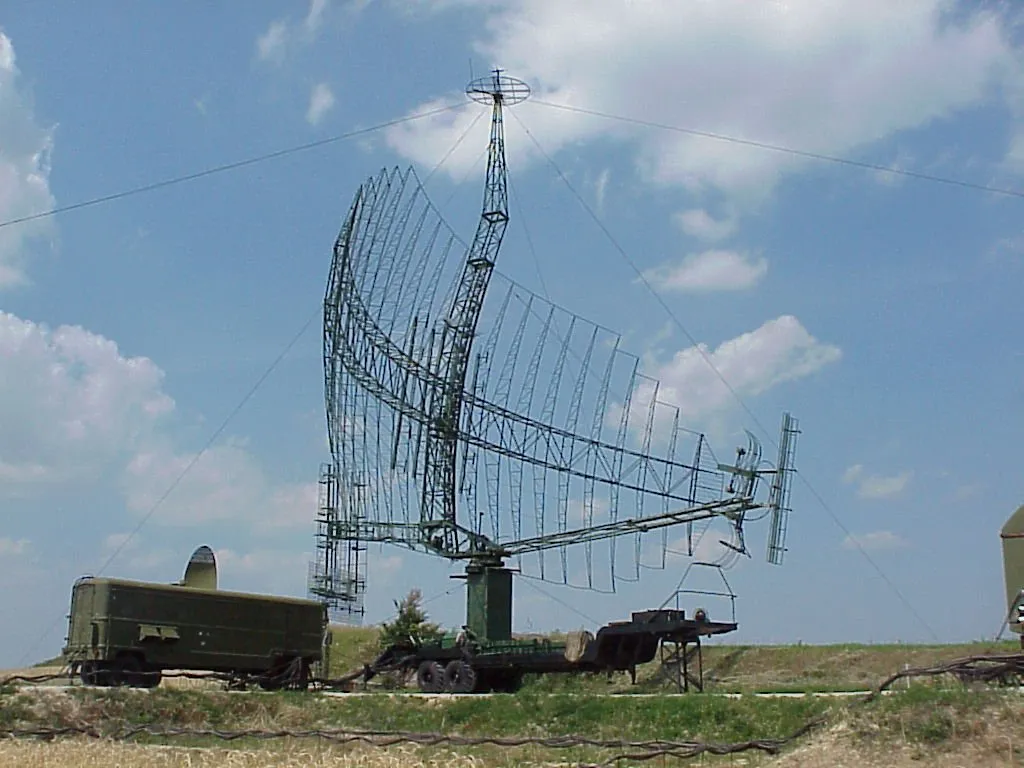
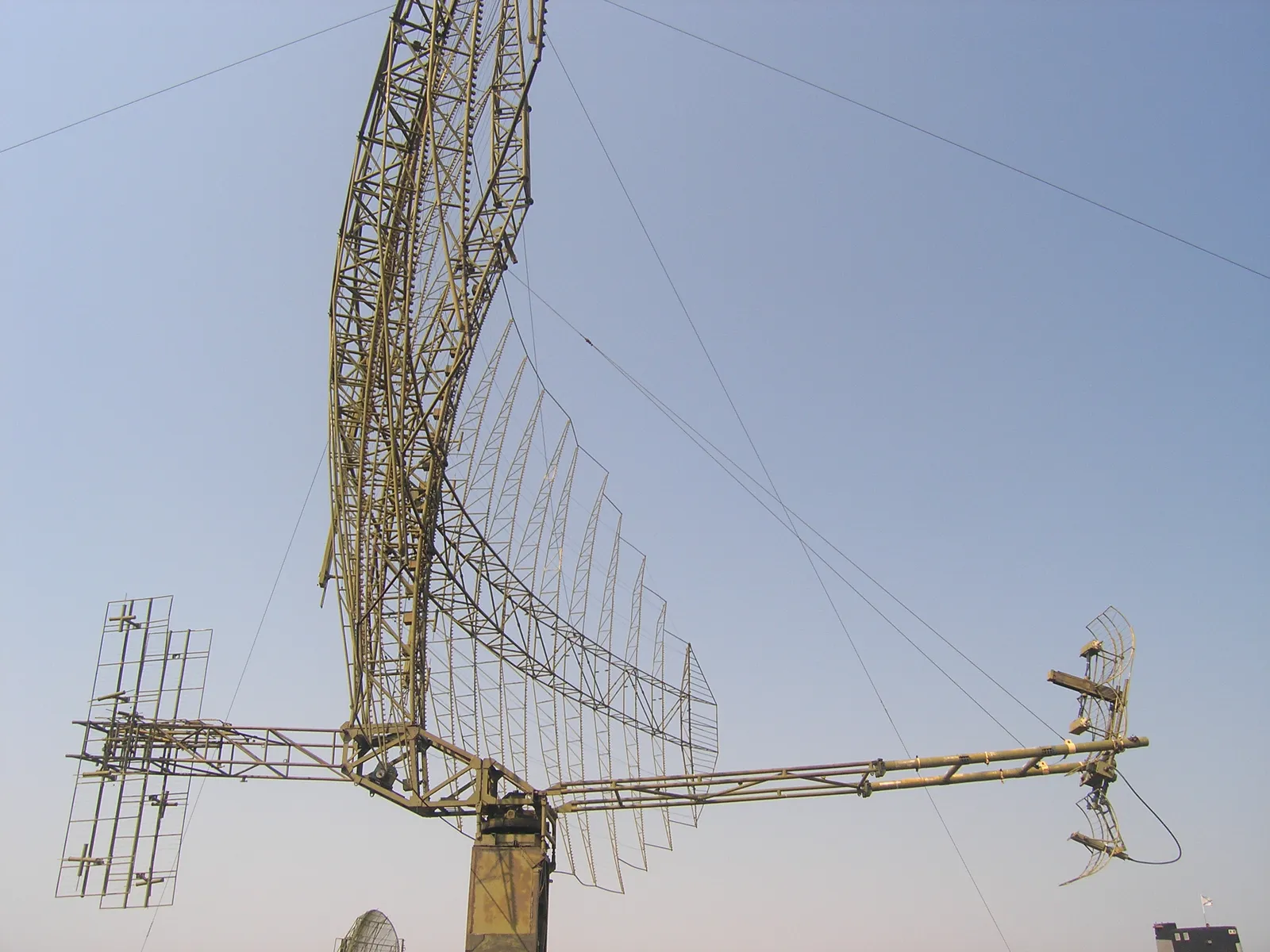
The 5N84A Oborona-14 is a Soviet/Russian VHF early-warning radar in the P-14 Tall King family, built around a very large folding antenna for long-range detection of airborne targets. Open technical references describe it as a two-coordinate station that measures range and azimuth for air-defense command systems or autonomous users, while 2026 reporting documented a Russian Oborona-14 radar destroyed by Ukrainian Special Operations Forces in occupied Crimea.

Role in Conflicts

Crimea Strike Context

March 2026 reporting placed the Russian Oborona-14 at Yevpatoriia inside the wider radar layer protecting occupied Crimea. Ukrainian SOF-sourced reports grouped it with a Nebo-U radar and two radars inside a radio-transparent dome, while WarSpotting lists the same Oborona-14 item as a Russian radar loss at Yevpatoriia.

Reported operator

Russia, in occupied Crimea during the Russia-Ukraine war.

Reported site

Yevpatoriia, Crimea, in Ukrainian SOF-sourced and WarSpotting reporting.

Reported function

Long-range air surveillance and early warning for Russian air-defense coverage.

Modernization caveat

Ukrainska Pravda attributes the 5N84AE2/AM modernization assessment to CyberBoroshno OSINT analysts.

Profile / Specs

Profile

Origin
Soviet Union / Russia
Type
Transportable VHF two-coordinate early-warning radar
Service note
1970s-present in legacy and modernized service
Designer
Nizhny Novgorod Research Institute of Radio Engineering (NNIIRT) lineage; P-14 family work is associated with V. I. Ovsyannikov in open references
Designed
P-14 family service entry in 1959; 5N84A Oborona-14 listed as a 1974 VHF radar development in open NNIIRT background
Produced
1970s Soviet production with later modernized 5N84A/P-14 upgrade packages advertised
Developed from
P-14 / 1RL113 Lena VHF early-warning radar family
Developed into
P-14ML and 5N84AE2/AM modernization paths

Specifications

Radar band
Meter band / VHF
Radar type
Transportable two-coordinate early-warning and air-surveillance radar
Primary function
Long-range detection of airborne targets and measurement of range and azimuth for autonomous use or automated air-defense command systems
Azimuth coverage
360 degrees
Elevation coverage
12 degrees in lower-beam mode; 17 degrees in upper-beam mode
Altitude coverage
Up to 45 km in lower-beam mode in RusArmy's table
Detection range
Fighter-type target at 10,000 m: 300 km in lower-beam mode and 280 km in upper-beam mode in RusArmy's table
Range accuracy
1,200 m
Azimuth accuracy
1.2 degrees
Update rate
10 or 20 seconds
Transport units
Six transport units: two equipment semitrailers, two antenna-mast units, and two power-supply trailers
Remote-control distance
Remote indicator post can be up to 1 km from the station
Crew
6 personnel per shift
Deployment time
24 hours
Power consumption
100 kW
Jamming protection
Frequency retuning, three-channel automatic compensation against active noise jamming, and coherent compensation equipment for passive interference
Legacy P-14ML baseline frequency range
170-190 MHz before P-14ML upgrade in Altimus-Tech's comparison table
Legacy P-14ML baseline pulse power
700 kW before P-14ML upgrade in Altimus-Tech's comparison table
Radar Role And Configuration

Oborona-14 is a sensor in the air-defense network rather than a missile launcher. RusArmy describes it as a long-range radar for detecting airborne targets and measuring range and azimuth when operating autonomously or with automated command systems.

Radar band

Meter-band / VHF surveillance radar.

Coordinate type

Two-coordinate radar: range and azimuth, with height information supplied by separate height-finding equipment when needed.

Deployment package

Six transport units: two equipment semitrailers, two antenna-mast units, and two power-supply trailers in the RusArmy description.

Remote post

A separate semitrailer control post with two indicators can be placed up to 1 km from the radar.

Scan modes

Lower-beam, upper-beam, and alternating scan modes trade low/mid-altitude range against upper-elevation coverage.

Variants

Oborona-14 sits in the P-14 / Tall King VHF radar family. Open sources distinguish the earlier 1RL113 Lena, the 44Zh6 Furgon stationary version, the 5N84A Oborona-14 transportable form, and later modernization packages that retain the basic P-14/5N84A lineage while replacing much of the electronics.

VariantConfigurationDesignation notes
1RL113 Lena / P-14Original P-14 Tall King family radar

Open NNIIRT background lists P-14 Lena as a 1959 VHF radar produced by NITEL, forming the family from which Oborona-14 developed.

Sources: Wikipedia NNIIRT Background

44Zh6 FurgonStationary P-14 family variant

Altimus-Tech lists 44Zh6 Furgon alongside 1RL113 Lena and 5N84A Oborona-14 as a P-14-family radar eligible for P-14ML modernization.

Sources: Altimus-Tech P-14ML Upgrade

P-14MLModernized P-14/5N84A package

Altimus-Tech describes P-14ML as an upgrade for legacy P-14, 44Zh6, and 5N84A Oborona-14 radars, preserving the VHF band while adding solid-state electronics, digital processing, electronic frequency agility, and automatic tracking.

Sources: Altimus-Tech P-14ML Upgrade

5N84AE2/AMModernized/export-associated Oborona-14 derivative

Ukrainska Pravda reported CyberBoroshno's assessment that the Yevpatoriia radar struck in March 2026 was a modernized 5N84AE2/AM-type system visually related to the older 5N84A Oborona-14.

Sources: Ukrainska Pravda CyberBoroshno 5N84AE2 Assessment

Timeline

5N84A Oborona-14 Key Events

  1. P-14 family enters Soviet service

    Open NNIIRT background lists P-14 Lena as a 1959 VHF air-surveillance radar in the same Tall King family that later included Oborona-14.

    Sources: Wikipedia NNIIRT Background

  2. 5N84A Oborona-14 listed in NNIIRT lineage

    The NNIIRT background table lists 5N84A Oborona-14 / Tall King C as a 1974 VHF radar with NITEL as production plant.

    Sources: Wikipedia NNIIRT Background

  3. Yevpatoriia site listed as operated

    WarSpotting lists a Russian 5N84A Oborona-14 radar at Yevpatoriia as operated on October 20, 2023.

    Sources: WarSpotting Yevpatoriia 5N84A Loss Record

  4. Ukrainian SOF reports radar destroyed

    Ukrainian state and military-linked reporting said Ukrainian Special Operations Forces destroyed a Russian 5N84A Oborona-14 radar during strikes on radar infrastructure in occupied Crimea.

    Sources: Ukrinform SOF Crimea Radar Strike, ArmyInform SOF Crimea Radar Strike, Ukrainska Pravda SOF Crimea Radar Strike

Media
Related Weapon Systems
1L125 Niobium-SV, Mobile VHF three-coordinate air-defense surveillance radar, Air DefenseAir Defense1L125 Niobium-SVMobile VHF three-coordinate air-defense surveillance radarThe 1L125 Niobium-SV is a Russian mobile VHF/meter-band, three-coordinate radar built for ground-forces air defense and developed by NNIIRT within the Almaz-Antey group. Rosoboronexport's 1L125E export profile describes a 5-500 km, 360-degree surveillance radar for detecting, tracking, identifying, and reporting aerodynamic and ballistic targets, including low-observable aircraft; Ukrainian and sanctions-derived records identify Niobium-SV radars in Russian service during the Russia-Ukraine war.
1L13-3 Nebo-SV, Mobile VHF two-coordinate air-surveillance radar, Air DefenseAir Defense1L13-3 Nebo-SVMobile VHF two-coordinate air-surveillance radarThe 1L13-3 Nebo-SV is a Soviet/Russian mobile meter-band radar for ground-forces air defense, built to search for aircraft, helicopters, UAVs, and other air targets and pass range-and-bearing data to command posts or missile batteries. It is a two-coordinate predecessor to the 1L119 Nebo-SVU: sources describe it with a 72-element VHF antenna array, separate IFF interrogator, six-person crew, and fighter-target detection figures reaching roughly 350 km at high altitude.
48Ya6-K1 Podlet-K1, Mobile three-coordinate low-altitude air-surveillance radar, Air DefenseAir Defense48Ya6-K1 Podlet-K1Mobile three-coordinate low-altitude air-surveillance radarThe 48Ya6-K1 Podlet-K1 is a Russian mobile three-coordinate radar complex built to detect and track low-altitude air targets for air-defense units. Public reporting describes the system as a multi-vehicle package with a radar/antenna vehicle, command or operator-control vehicle, and power-support vehicle on KamAZ chassis, while Rosoboronexport markets the export Podlet-K1KE for automated detection, tracking, identification, and flight-information tasks in air-defense and air-force radio-engineering units. Ukraine-war reporting documents Russian Podlet-K1 losses and strikes tied to the S-300 and S-400 air-defense network.
50N6A multifunction radar, Mobile multifunction radar for the S-350 Vityaz air-defense system, Air DefenseAir Defense50N6A multifunction radarMobile multifunction radar for the S-350 Vityaz air-defense systemThe 50N6A is a Russian mobile multifunction radar associated with the 50R6A/S-350 Vityaz air-defense system. It provides search, target tracking, fire-control, and missile-guidance support for Vityaz batteries, while official export data for the S-350E family gives the multifunction radar 150 km circular-scan and 230 km fixed-sector air-target detection modes. WarSpotting documented a Russian 50N6A radar destroyed in Donetsk oblast on January 1, 2026, making the component directly visible in the 2014 Russia-Ukraine War rather than only through its parent S-350 system.
55Zh6U Nebo-U, Transportable VHF three-coordinate air-surveillance radar, Air DefenseAir Defense55Zh6U Nebo-UTransportable VHF three-coordinate air-surveillance radarThe 55Zh6U Nebo-U is a Russian meter-band, three-coordinate radar for medium- and high-altitude air surveillance, target-coordinate reporting, and support to automated air-defense command systems. Developed by NNIIRT as a deep modernization of the earlier 55Zh6 Nebo, it uses a large cross-shaped phased-array antenna and has been documented in Russian service during the Russia-Ukraine war through reported Ukrainian strikes on Nebo-U radars in occupied Crimea.

Sources