Air Defense

1L119 Nebo-SVU

Also known as
  • Nebo-SVU
  • Nebo SVU
  • 1L119
  • 1L119 Nebo SVU
  • 1Л119 Небо-СВУ
  • РЛС 1Л119 Небо-СВУ
  • Радиолокационная станция Небо-СВУ
  • Sky-SVU

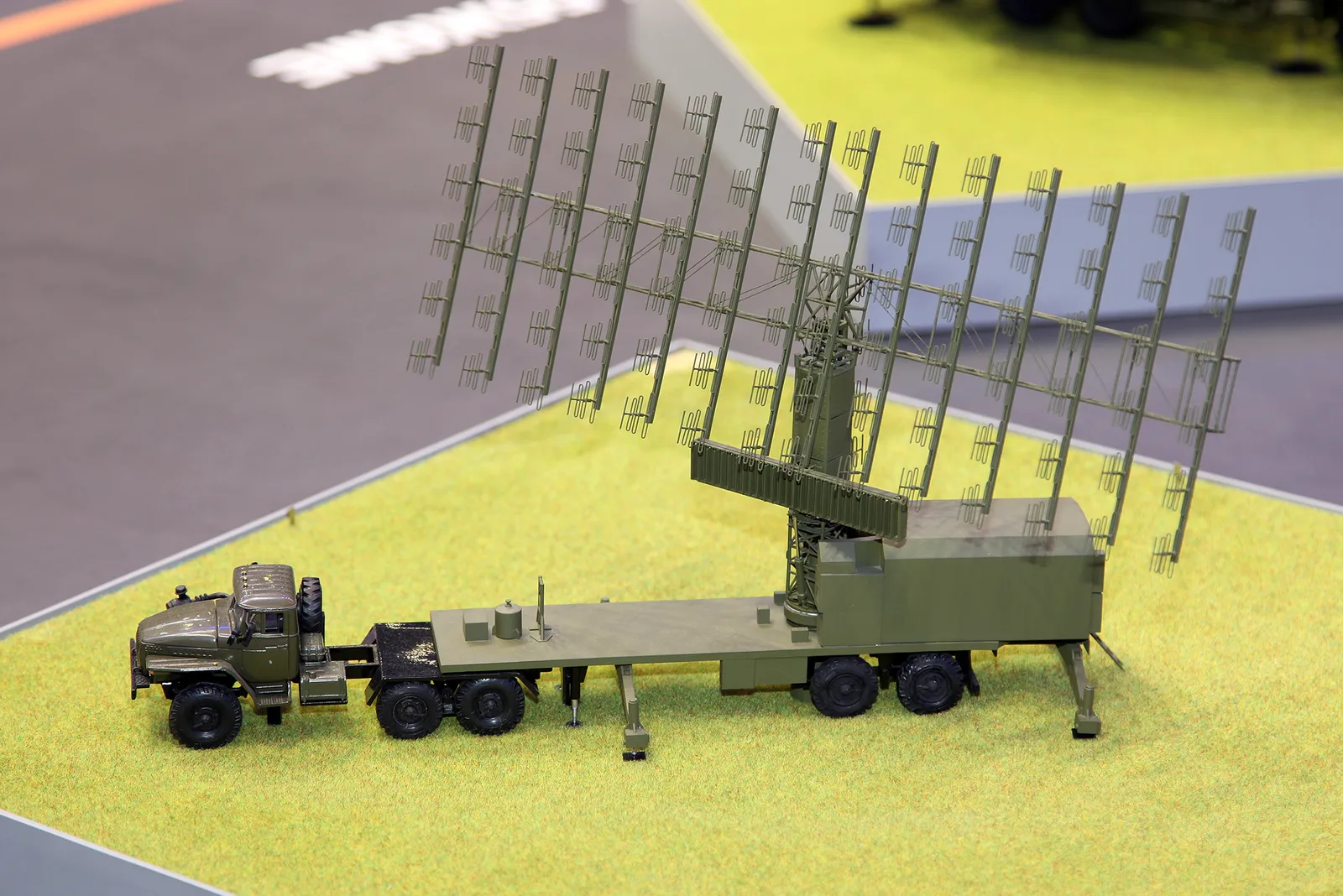
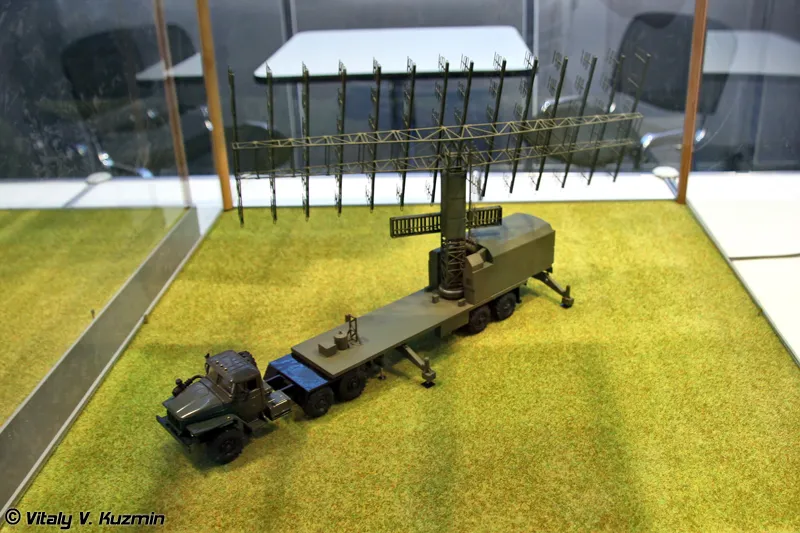
The 1L119 Nebo-SVU is a Russian meter-band VHF air-surveillance radar developed from the Nebo-SV line for detecting and tracking aircraft, ballistic targets, low-observable aircraft, and jammers. Rosoboronexport advertises it as a 360-degree radar with digital signal processing, while technical references describe it as a mobile active phased-array system intended to feed radar tracks into air-defense command-and-control networks.

Role in Conflicts

Side
Russia

Russian forces have fielded the 1L119 Nebo-SVU as a long-range air-surveillance and target-acquisition radar in their air-defense network during the war against Ukraine. Ukrainian official and established defense-reporting sources document Nebo-SVU strikes or destruction in occupied Crimea, Kherson, Zaporizhzhia, and Luhansk oblast territory, including an April 2026 General Staff-reported strike near Hvardiiske, while RFE/RL reported an SBU-source claim that a Bryansk-region Nebo-SVU monitored deep into Ukraine and supported bomber attacks.

Role details
Profile / Specs

Profile

Origin
Russia
Type
VHF air-surveillance radar
Service note
2000s-present
Designer
Nizhny Novgorod Research Institute of Radio Engineering (NNIIRT); chief designer I. G. Krylov
Designed
Publicly disclosed in 2001; accepted into service in 2003; operational certification trials reported complete in 2004
Unit cost
Ukrainian General Staff and Ukrainian media reports have cited an estimated value near $100 million per system
Produced
2000s-present

Specifications

Radar band
VHF / meter band
Instrumented range
Up to 360 km advertised by Rosoboronexport
Azimuth coverage
360 degrees
Altitude coverage
Up to 40 km in surveillance mode; up to 140 km in tracking mode
Elevation coverage
Up to 15 degrees in surveillance; up to 45 degrees in tracking
Surveillance period
5, 10, or 20 seconds
Detection range for 2.5 m2 target
60 km at 500 m altitude; 270 km at 10,000 m; 360 km at 20,000 m in the Great Russian Encyclopedia table
Coordinate accuracy
100 m range, 20 arcmin azimuth, 90 arcmin elevation in the Great Russian Encyclopedia table
Tracked targets
100 output tracks in the Great Russian Encyclopedia and Air Power Australia export tables
Transport elements
Antenna-hardware post on ChMZAP 9907.2 semitrailer, remote indicator post on Ural vehicle, and autonomous power system on Ural vehicle
Deployment/stow time
20 minutes in Air Power Australia's export-configuration table; 30 minutes in the Great Russian Encyclopedia table
Service adoption
Accepted into service in 2003 according to the Great Russian Encyclopedia
Crew
4 personnel in Air Power Australia's export-configuration table
Power consumption
30 kW in Air Power Australia's export-configuration table
Radar Role And Scan Envelope

The Nebo-SVU is a sensor and target-acquisition asset rather than a direct-fire weapon. Rosoboronexport describes it as a VHF radar for automatic detection, coordinate measurement, tracking, target-class recognition, national-affiliation determination, jammer direction finding, and output of radar information to automated control systems.

Frequency band

VHF / meter band.

Scan coverage

360 degrees in azimuth, with advertised range up to 360 km.

Altitude envelope

Up to 40 km in surveillance mode and up to 140 km in tracking mode.

Update period

5, 10, or 20 seconds.

Mobility And Data Output

Open technical references describe Nebo-SVU as a mobile radar set built around a towed antenna-hardware post, a remote operator element, and an autonomous power system. Its published data-output role is to produce radar tracks for automated air-defense control systems or linked missile batteries.

Transport elements

Antenna-hardware post on a ChMZAP semitrailer, plus remote indicator and power elements on Ural vehicles in Russian reference material.

Deployment window

20 minutes in Air Power Australia's export table; 30 minutes in the Great Russian Encyclopedia table.

Output capacity

100 output tracks, with coordinate accuracy sufficient for target-acquisition support in open technical analysis.

Variants

The 1L119 Nebo-SVU sits in the Russian meter-band Nebo radar lineage alongside the earlier 1L13 Nebo-SV and 55Zh6U Nebo-U branches, and before later Nebo-M/RLM-M and Niobium developments.

VariantConfigurationDesignation notes
1L13-3 Nebo-SV, Mobile VHF two-coordinate air-surveillance radar, Air Defense1L13 Nebo-SVEarlier VHF Nebo family radar

Air Power Australia describes Nebo-SVU as an improved derivative of the 1L13 Nebo-SV / Box Spring series.

Sources: Air Power Australia Nebo SVU Analysis

55Zh6U Nebo-U, Transportable VHF three-coordinate air-surveillance radar, Air Defense55Zh6U Nebo-URelated transportable Nebo-family radar

bmpd places Nebo-U in the same NNIIRT Nebo/Niobium development lineage as Nebo-SV and 1L119 Nebo-SVU, while the catalog treats it as a distinct transportable VHF radar branch.

Sources: bmpd Niobium-SV Procurement

RLM-M / Nebo-M VHF componentLater self-propelled derivative

Air Power Australia describes the Nebo-M RLM-M component as a later derivative based on the VHF-band Nebo-SVU design.

Sources: Air Power Australia Nebo SVU Analysis

1L125 Niobium-SV, Mobile VHF three-coordinate air-defense surveillance radar, Air Defense1L125 Niobium-SVLater Nebo/Niobium ground-forces radar lineage

bmpd places the 1L125 Niobium-SV after the Nebo, Nebo-U, Nebo-SV, and 1L119 Nebo-SVU family line in NNIIRT development.

Sources: bmpd Niobium-SV Procurement

Air-Defense Systems Supported

The Nebo-SVU is not a missile launcher; its value is in supplying search, track, and target-acquisition data to layered air-defense networks.

Compatible itemItem typeCompatibility evidence
S-300, Long-range surface-to-air missile system, Air DefenseS-300Long-range surface-to-air missile system

Air Power Australia states that the radar's published accuracy is sufficient for target acquisition by S-300PMU-1/2 family systems.

Sources: Air Power Australia Nebo SVU Analysis

S-400 Triumf, Long-range mobile surface-to-air missile system, Air DefenseS-400 TriumfLong-range surface-to-air missile system

Air Power Australia links the Nebo-SVU's target-acquisition role to S-400-class air-defense batteries.

Sources: Air Power Australia Nebo SVU Analysis

Timeline

1L119 Nebo-SVU Key Events

  1. System publicly disclosed

    Air Power Australia identifies 2001 as the public disclosure point for the 1L119 Nebo-SVU active phased-array radar.

    Sources: Air Power Australia Nebo SVU Analysis

  2. Certification trials completed

    The system completed operational certification trials, clearing it for low-rate initial production according to Air Power Australia.

    Sources: Air Power Australia Nebo SVU Analysis

  3. First destroyed Nebo-SVU documented

    Militarnyi reported video showing wreckage of a Russian 1L119 Nebo-SVU radar, describing it as the first documented destruction of this radar type while noting that the strike method and location were not confirmed.

    Sources: Militarnyi 2023 First Destroyed Nebo-SVU

  4. Bryansk-region radar strike reported

    RFE/RL reported an SBU-source claim that Ukrainian drones struck a Russian Nebo-SVU radar in Bryansk region that had monitored deep into Ukrainian airspace.

    Sources: RFE/RL Bryansk Nebo-SVU Strike

  5. Armiansk Crimea strike reported

    Ukrainska Pravda reported an SSU-source claim that Ukrainian drones struck a Russian Nebo-SVU near occupied Armiansk in Crimea.

    Sources: Ukrainska Pravda Armiansk Nebo-SVU Strike

  6. Kherson-region radar reportedly destroyed

    UNITED24 Media reported that Ukrainian forces destroyed a Russian 1L119 Nebo-SVU radar in occupied Kherson region after a January 18, 2025 strike.

    Sources: UNITED24 Kherson Nebo-SVU Strike

  7. Crimea radar-dome strike reported

    The War Zone reported GUR footage of Ukrainian FPV drones attacking Russian radar sites in Crimea, including a 1L119 Nebo-SVU in a protective dome.

    Sources: The War Zone Crimea Nebo-SVU Dome Strike

  8. GUR reports two Nebo-SVU radars destroyed

    Ukraine's military intelligence service reported that its active-operations department found and destroyed two Russian 1L119 Nebo-SVU radars on occupied territory.

    Sources: GUR October 2025 Nebo-SVU Strike Video

  9. Belbek airbase radar strike reported

    The War Zone reported an SBU claim that a Ukrainian drone strike at occupied Crimea's Belbek Air Base recorded damage to two Nebo-SVU long-range surveillance radars.

    Sources: The War Zone Belbek Nebo-SVU Strike

  10. Luhansk strike confirmed by Ukrainian General Staff

    ArmyInform and Ukrinform reported Ukraine's General Staff statement that Ukrainian forces struck a Russian 1L119 Nebo-SVU radar near occupied Lymarivka in Luhansk Oblast.

    Sources: ArmyInform Lymarivka Nebo-SVU Strike, Ukrinform Lymarivka Nebo-SVU Strike

  11. GUR lists Nebo-SVU among air-defense targets

    Ukraine's military intelligence service reported that its Prymary unit struck a Russian 1L119 Nebo-SVU along with Podlet-K1, Nebo-U, and Tor-M2DT air-defense assets.

    Sources: GUR February 2026 Nebo-SVU Strike Video

  12. Hvardiiske Crimea radar strike reported

    Ukrinform, citing Ukraine's General Staff, reported that Ukrainian Defense Forces hit a Russian Nebo-SVU radar station in Hvardiiske, occupied Crimea, during strikes on April 14 and overnight April 15.

    Sources: Ukrinform Hvardiiske Nebo-SVU Strike

Media
Related Weapon Systems
1L125 Niobium-SV, Mobile VHF three-coordinate air-defense surveillance radar, Air DefenseAir Defense1L125 Niobium-SVMobile VHF three-coordinate air-defense surveillance radarThe 1L125 Niobium-SV is a Russian mobile VHF/meter-band, three-coordinate radar built for ground-forces air defense and developed by NNIIRT within the Almaz-Antey group. Rosoboronexport's 1L125E export profile describes a 5-500 km, 360-degree surveillance radar for detecting, tracking, identifying, and reporting aerodynamic and ballistic targets, including low-observable aircraft; Ukrainian and sanctions-derived records identify Niobium-SV radars in Russian service during the Russia-Ukraine war.
1L13-3 Nebo-SV, Mobile VHF two-coordinate air-surveillance radar, Air DefenseAir Defense1L13-3 Nebo-SVMobile VHF two-coordinate air-surveillance radarThe 1L13-3 Nebo-SV is a Soviet/Russian mobile meter-band radar for ground-forces air defense, built to search for aircraft, helicopters, UAVs, and other air targets and pass range-and-bearing data to command posts or missile batteries. It is a two-coordinate predecessor to the 1L119 Nebo-SVU: sources describe it with a 72-element VHF antenna array, separate IFF interrogator, six-person crew, and fighter-target detection figures reaching roughly 350 km at high altitude.
48Ya6-K1 Podlet-K1, Mobile three-coordinate low-altitude air-surveillance radar, Air DefenseAir Defense48Ya6-K1 Podlet-K1Mobile three-coordinate low-altitude air-surveillance radarThe 48Ya6-K1 Podlet-K1 is a Russian mobile three-coordinate radar complex built to detect and track low-altitude air targets for air-defense units. Public reporting describes the system as a multi-vehicle package with a radar/antenna vehicle, command or operator-control vehicle, and power-support vehicle on KamAZ chassis, while Rosoboronexport markets the export Podlet-K1KE for automated detection, tracking, identification, and flight-information tasks in air-defense and air-force radio-engineering units. Ukraine-war reporting documents Russian Podlet-K1 losses and strikes tied to the S-300 and S-400 air-defense network.
50N6A multifunction radar, Mobile multifunction radar for the S-350 Vityaz air-defense system, Air DefenseAir Defense50N6A multifunction radarMobile multifunction radar for the S-350 Vityaz air-defense systemThe 50N6A is a Russian mobile multifunction radar associated with the 50R6A/S-350 Vityaz air-defense system. It provides search, target tracking, fire-control, and missile-guidance support for Vityaz batteries, while official export data for the S-350E family gives the multifunction radar 150 km circular-scan and 230 km fixed-sector air-target detection modes. WarSpotting documented a Russian 50N6A radar destroyed in Donetsk oblast on January 1, 2026, making the component directly visible in the 2014 Russia-Ukraine War rather than only through its parent S-350 system.
55Zh6U Nebo-U, Transportable VHF three-coordinate air-surveillance radar, Air DefenseAir Defense55Zh6U Nebo-UTransportable VHF three-coordinate air-surveillance radarThe 55Zh6U Nebo-U is a Russian meter-band, three-coordinate radar for medium- and high-altitude air surveillance, target-coordinate reporting, and support to automated air-defense command systems. Developed by NNIIRT as a deep modernization of the earlier 55Zh6 Nebo, it uses a large cross-shaped phased-array antenna and has been documented in Russian service during the Russia-Ukraine war through reported Ukrainian strikes on Nebo-U radars in occupied Crimea.
5N84A Oborona-14, Transportable VHF two-coordinate early-warning radar, Air DefenseAir Defense5N84A Oborona-14Transportable VHF two-coordinate early-warning radarThe 5N84A Oborona-14 is a Soviet/Russian VHF early-warning radar in the P-14 Tall King family, built around a very large folding antenna for long-range detection of airborne targets. Open technical references describe it as a two-coordinate station that measures range and azimuth for air-defense command systems or autonomous users, while 2026 reporting documented a Russian Oborona-14 radar destroyed by Ukrainian Special Operations Forces in occupied Crimea.

Sources