Air Defense

AMBER-1800

Also known as
  • AMBER 1800
  • Amber-1800
  • Burshtyn-1800
  • Yantar-1800

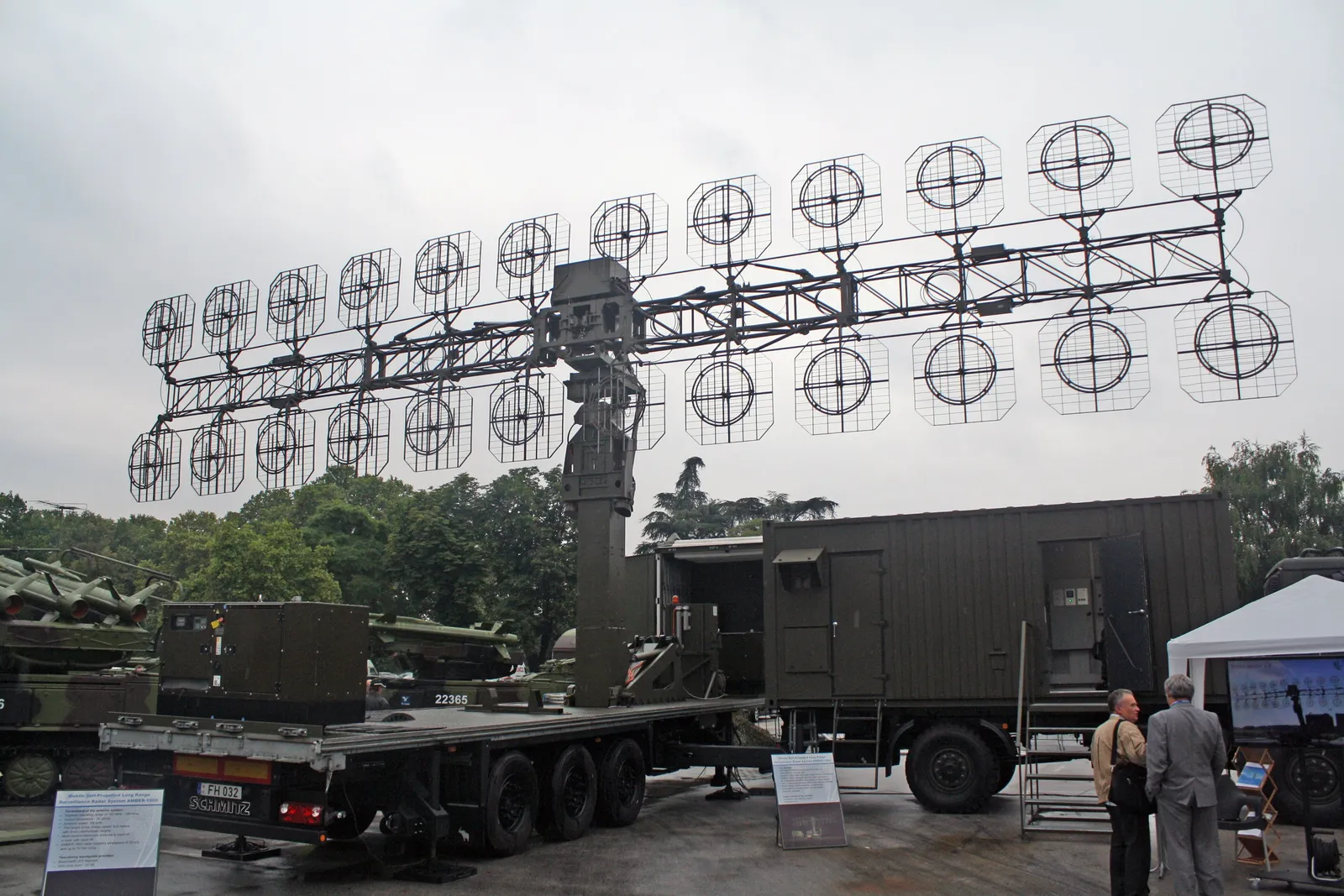
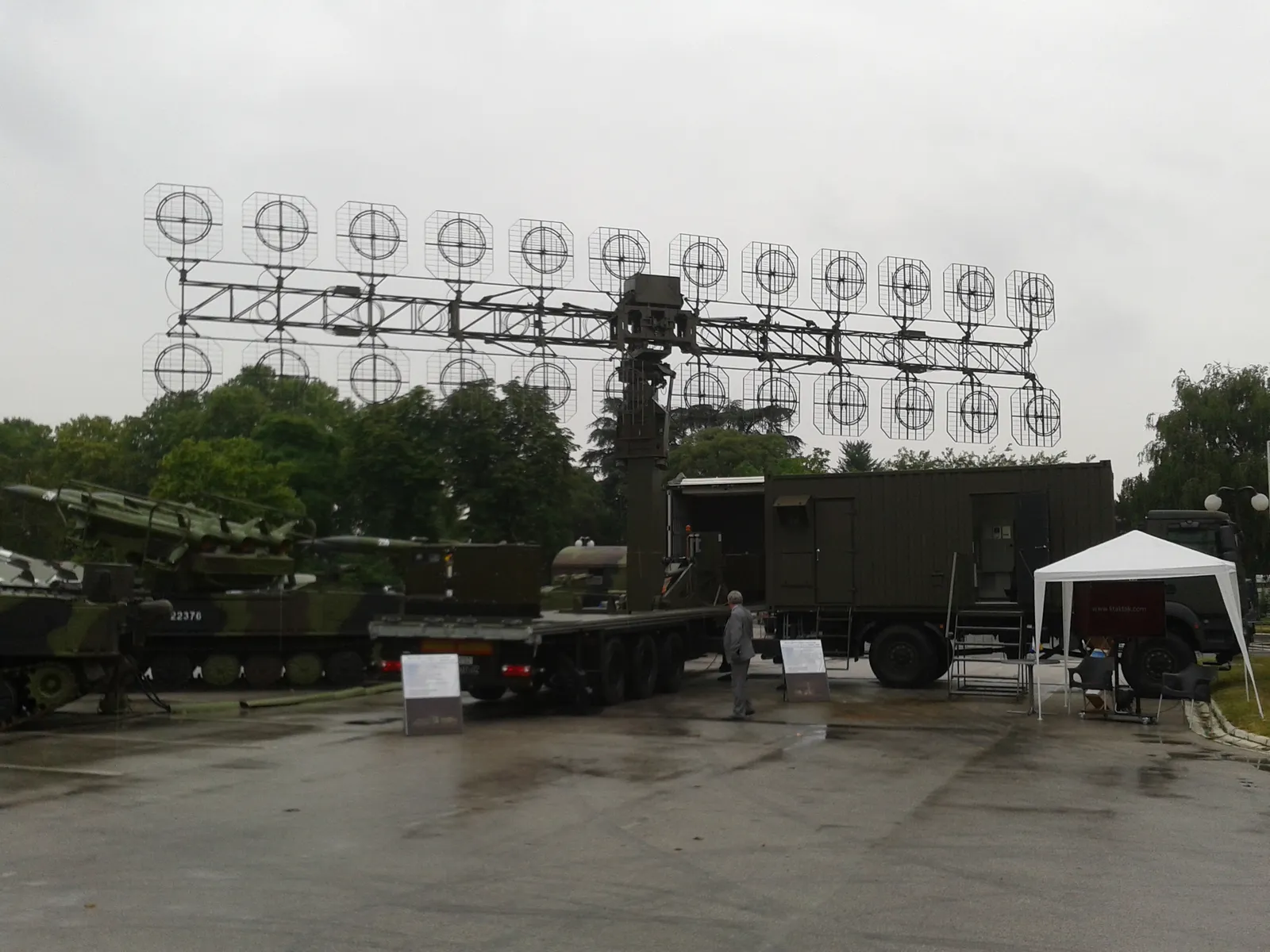
AMBER-1800 is a mobile VHF-band air surveillance radar associated with the LiTak-Tak and Altimus-Tech industrial lineage. The two-vehicle system uses a deployable antenna and solid-state transmitter/receiver equipment to detect and track air targets, then distribute radar data to air-defense users. RUSI identifies Ukraine's related Burshtyn-1800 radar in service during the 2022 full-scale phase, while Lithuania committed funding for six AMBER-1800-family mobile air-surveillance radars for Ukraine under Germany's Immediate Action on Air Defence initiative in 2024.

Role in Conflicts

Profile / Specs

Profile

Origin
Lithuania / Poland
Built by
Altimus-Tech
Type
Mobile VHF-band air surveillance radar
Service note
Displayed publicly by 2015, shown under LiTak-Tak/Altimus-Tech branding in 2017, and documented in Ukrainian air-defense context during the 2022 full-scale phase.
Designer
LiTak-Tak / Altimus-Tech radar engineering lineage
Designed
Publicly displayed by 2015

Specifications

Radar band
VHF band, 140-180 MHz working-frequency range
Frequency agility
Electronic frequency agility with 200 kHz discrete steps and +/-10 kHz frequency-setting accuracy
Mission
Automatic air-target detection, azimuth/range coordinate generation, tracking, display, recording, and radar-data distribution
System composition
Two vehicles: hardware cabin and antenna-mast vehicle with deployment equipment, antenna-feeder system, leveling system, and two power plants
Antenna architecture
Stacked dipole-slot antenna array with linear horizontal polarization
Probing signal types
Amplitude-modulated 6 microsecond signal plus PSK-13, PSK-42, and PSK-51 phase-shift keyed signals
Transmitter pulse power
8 / 10 / 30 kW settings listed by the manufacturer
Detection range
Against a 2.5 square meter target with antenna height of 6 m: 30-46 km at 100 m altitude and 300-400 km at 10,000 m altitude depending on transmitter power
Detection accuracy
270 m range accuracy and 0.4 degrees azimuth accuracy
Resolution
1100 m range resolution and 6 degrees azimuth resolution
MTI and clutter rejection
0-400 km MTI range, clutter suppression greater than 40 dB, and receiver/digital signal processor dynamic range greater than 100 dB
Height-finder integration
Manufacturer lists automatic control of upgraded height-finders and a 3D complex option with PRV-type or PRV-16ML height-finder equipment
Start-up time
3 minutes
Deployment or stow time
12 minutes after installation at the operating site
Power consumption
6 kW
Environmental limits
Wind speed up to 35 m/s and icing up to 10 mm
Radar Architecture

Altimus-Tech describes AMBER-1800 as a two-vehicle radar set built around a hardware cabin and a separate antenna-mast vehicle. The radar is meant to detect air targets automatically, form tracks, display plots and video, and distribute the air picture over data links. Targi Kielce's MSPO 2017 notice places the system in the LiTak-Tak and Altimus-Tech development lineage.

Antenna vehicle

Carries the antenna mast assembly, deployment equipment, feeder system, leveling equipment, and two power plants. The antenna is described as a stacked dipole-slot array with linear horizontal polarization.

Hardware cabin

Contains the main electronic equipment, operator and remote workstations, processing, recording, diagnostics, and communications equipment.

Air-defense role

The VHF-band sensor provides azimuth and range tracks for air-defense consumers rather than acting as a missile launcher or fire-control radar by itself.

Sources: Altimus-Tech AMBER-1800 Product Page; Targi Kielce AMBER-1800 at MSPO 2017.

Detection Envelope

The manufacturer's published table gives range figures against a 2.5 square meter radar-cross-section target with the antenna at 6 meters. Range rises with target altitude and transmitter pulse-power setting, reaching 300, 360, or 400 km at 10,000 meters for 8, 10, or 30 kW settings respectively.

Low altitude

At 100 meters target altitude, the published range band is 30 to 46 km depending on transmitter pulse power.

Medium altitude

At 3,000 meters target altitude, the published range band is 110 to 170 km.

High altitude

At 10,000 meters target altitude, the published range band is 300 to 400 km.

Source: Altimus-Tech AMBER-1800 Product Page.

Variants

Open sources link the AMBER-1800 family to Ukrainian localized naming, but public documentation is uneven. This record keeps Burshtyn-1800 as a related designation because conflict-use support names that Ukrainian radar while Lithuanian-transfer sources name AMBER-1800.

VariantConfigurationDesignation notes
Burshtyn-1800Ukrainian localized designation reported in open sources

Ukrainian reporting describes Burshtyn-1800 as a localized AMBER-1800 concept, while RUSI identifies Burshtyn-1800 from NPP Aerotechnika-MLT among Ukrainian radio-engineering troop equipment at the start of the full-scale invasion.

Sources: RBC-Ukraine AMBER-1800 Transfer, RUSI Ukraine Air-Defence Radars 2022

3D Radar Complex Compatibility

Altimus-Tech lists AMBER-1800 as one of the two-dimensional solid-state surveillance radars that can be combined with PRV-type height-finder equipment in its mobile 3D radar-complex concept.

Compatible itemItem typeCompatibility evidence
PRV-16ML, Modernized mobile height-finder radar, Air DefensePRV-16MLMobile height-finder radar

Altimus-Tech's 3D radar-complex page identifies AMBER-1800 and PRV-16ML as compatible surveillance-radar and height-finder elements in the same complex architecture.

Sources: Altimus-Tech 3D Radar Complex

Timeline

AMBER-1800 Key Events

  1. AMBER-1800 displayed at Partner 2015

    Commons image metadata identifies AMBER-1800 radar photographs taken at the Partner 2015 military fair on June 26, 2015.

    Sources: Wikimedia Commons AMBER-1800 Image, Wikimedia Commons AMBER 1800 Image

  2. MSPO 2017 presentation announced

    Targi Kielce described AMBER-1800 as a LiTak-Tak radar developed with Polish strategic partner Altimus-Tech for presentation at the 2017 MSPO defense exhibition.

    Sources: Targi Kielce AMBER-1800 at MSPO 2017

  3. Burshtyn-1800 identified in Ukrainian radar forces

    RUSI's preliminary lessons report identified Burshtyn-1800 from NPP Aerotechnika-MLT among the radar systems fielded by Ukrainian radio-engineering forces at the beginning of Russia's full-scale invasion.

    Sources: RUSI Ukraine Air-Defence Radars 2022

  4. Lithuanian transfer to Ukraine announced

    Germany's defense ministry described Lithuania's contribution to the Immediate Action on Air Defence initiative as six AMBER 1800 radar systems, with Ukrainian and defense outlets reporting the same package.

    Sources: German MoD Lithuania AMBER 1800 IAAD, Defense Express AMBER-1800 Ukraine Transfer

  5. Transfer reported after Germany-Lithuania meeting

    The Kyiv Independent reported that German Defense Minister Boris Pistorius said Lithuania would provide Ukraine with six AMBER-1800 radars, while arrival timing and the contribution amount were not specified.

    Sources: Kyiv Independent AMBER-1800 Radars

  6. Lithuania described production schedule

    Lithuania's Ministry of National Defence said its additional contribution for Ukraine would buy mobile air-surveillance radars under Germany's initiative, with the radars planned to be produced in stages and reach Ukraine in full over one year.

    Sources: Lithuanian MoND Ukraine Radar Contribution

Media
Related Weapon Systems
36D6 / ST-68U surveillance radar, Mobile three-coordinate air-surveillance radar, Air DefenseAir Defense36D6 / ST-68U surveillance radarMobile three-coordinate air-surveillance radarThe 36D6 / ST-68U Tin Shield family is a mobile Soviet-legacy three-coordinate surveillance radar used to detect and track low-, medium-, and high-altitude air targets for air-defense command posts, SAM units, and air-traffic-control tasks. Ukrainian sources identify Iskra as the enterprise behind ST-68U/19Zh6 development history and later 35D6/36D6M modernization, while open technical references describe the 36D6 as an S-band radar with 360-degree azimuth coverage, four beams, 350 kW peak transmitter power, and target-data output to automated air-defense users. In the 2014 Russia-Ukraine War, visually documented loss lists, WarSpotting entries, and General Staff-derived reporting place 36D6/ST-68U radars on both Russian and Ukrainian sides of the air-defense fight, including repeated Russian radar losses in occupied Crimea.
MARS-L, Mobile combined PSR/SSR L-band air-surveillance radar, Air DefenseAir DefenseMARS-LMobile combined PSR/SSR L-band air-surveillance radarMARS-L is Altimus-Tech's mobile L-band radar that combines primary-surveillance and secondary-surveillance channels on a one-vehicle system. The manufacturer markets it for aircraft detection, interrogation, track generation, radar-data distribution, and air-defense support, including use as a low-altitude surveillance radar, radar-field gap filler, and target-acquisition sensor for upgraded Soviet-legacy surface-to-air missile packages.
96L6-TsP acquisition radar, Mobile acquisition and surveillance radar, Air DefenseAir Defense96L6-TsP acquisition radarMobile acquisition and surveillance radarThe 96L6-TsP is a Russian mobile acquisition and all-altitude surveillance radar in the 96L6 family, associated in open sources with upgraded S-350, S-400, and higher-tier Russian air-defense networks. It is reported as a dual-panel phased-array radar that can work with passive 96L6-VP modules in a 96L6-AP active-passive configuration, giving Russian batteries a broader air-picture sensor for aircraft, UAV, missile, and high-altitude target detection.
1B44-1 RPMK-1 Ulybka radiosonde weather radar, Mobile radiosonde weather radar complex, Support EquipmentSupport Equipment1B44-1 RPMK-1 Ulybka radiosonde weather radarMobile radiosonde weather radar complexThe 1B44-1 is the radar and operator vehicle of the RPMK-1 Ulybka mobile radiosonde meteorological complex, an automated support system that tracks free-flight radiosondes and distributes upper-air data for artillery, rocket, missile, aviation, and contamination-area calculations. Rosoboronexport lists the 1B44 set as a three-part complex with 40 km altitude and 200 km range limits, while visual-loss tracking and Ukrainian reporting document both Russian and Ukrainian Ulybka equipment destroyed during the 2014 Russia-Ukraine War.
35N6 Kasta surveillance radar, Mobile low-altitude air-surveillance radar, Air DefenseAir Defense35N6 Kasta surveillance radarMobile low-altitude air-surveillance radarThe 35N6 Kasta is a mobile UHF-band low-altitude surveillance radar associated with the Kasta-2-1/Kasta-2E1 branch of Russia's air-defense sensor network. Open radar references describe the 51U6/Kasta-2E1 as a two-coordinate low-altitude radar with separate antenna and operator or command-post elements; Janes identified a two-vehicle KamAZ-43114 system near Buhaivka, and Oryx plus WarSpotting list destroyed Russian Kasta command-post and antenna vehicles in the 2014 Russia-Ukraine War.
5N84A Oborona-14, Transportable VHF two-coordinate early-warning radar, Air DefenseAir Defense5N84A Oborona-14Transportable VHF two-coordinate early-warning radarThe 5N84A Oborona-14 is a Soviet/Russian VHF early-warning radar in the P-14 Tall King family, built around a very large folding antenna for long-range detection of airborne targets. Open technical references describe it as a two-coordinate station that measures range and azimuth for air-defense command systems or autonomous users, while 2026 reporting documented a Russian Oborona-14 radar destroyed by Ukrainian Special Operations Forces in occupied Crimea.

Sources