Air Defense

35N6 Kasta surveillance radar

Also known as
  • 35N6
  • 35N6 Kasta
  • 35N6 Kasta-2
  • 35N6 Kasta-2-1
  • 35N6 Kasta-2E1
  • 51U6
  • 51U6 Kasta-2E1
  • Kasta
  • Kasta-2
  • Kasta-2-1
  • Kasta-2E1
  • Command post for 51U6 'Kasta-2E1' surveillance radar
  • 51U6 Kasta-2E1 command post
  • Kasta-2E1 command post
  • Antenna vehicle for 51U6 Kasta-2E1
  • Kasta antenna vehicle
  • 35N6 Kasta antenna vehicle
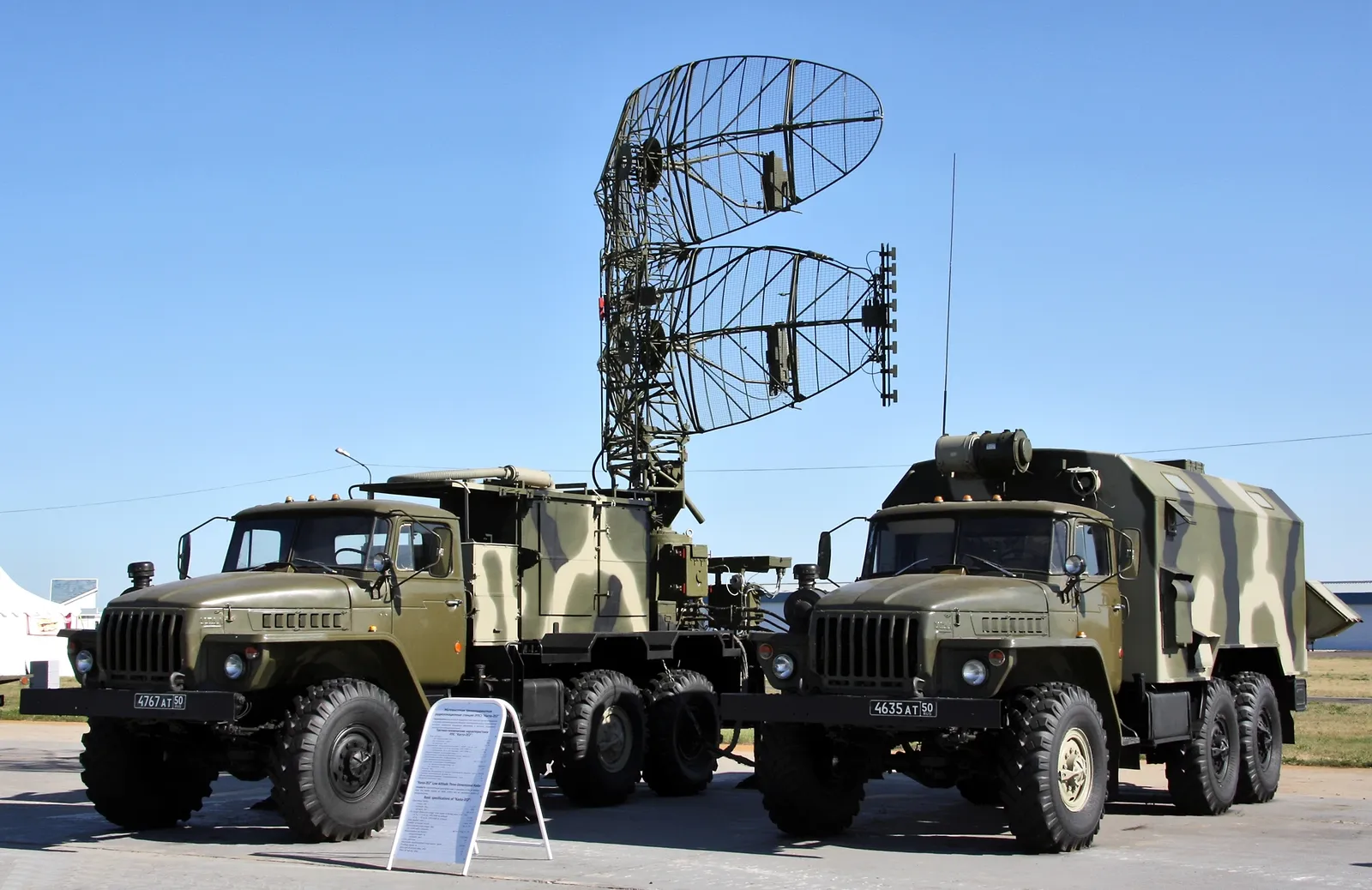
  • Antenna vehicle based on Ural-4320 for 35N6 Kasta surveillance radar
  • Antenna vehicle based on Ural-4320 (for 35N6 Kasta surveillance radar)
  • Ural-4320 Kasta antenna vehicle
  • Casta
  • Casta 2E1
  • Flat Face-E

The 35N6 Kasta is a mobile UHF-band low-altitude surveillance radar associated with the Kasta-2-1/Kasta-2E1 branch of Russia's air-defense sensor network. Open radar references describe the 51U6/Kasta-2E1 as a two-coordinate low-altitude radar with separate antenna and operator or command-post elements; Janes identified a two-vehicle KamAZ-43114 system near Buhaivka, and Oryx plus WarSpotting list destroyed Russian Kasta command-post and antenna vehicles in the 2014 Russia-Ukraine War.

Role in Conflicts

Side
Russia

Russian forces fielded 35N6/51U6 Kasta radars as air-defense surveillance assets in eastern Ukraine before and during the full-scale war. OSCE and Janes reporting documented a two-vehicle 51U6 Kasta-2E1 near Buhaivka in February 2021; Oryx lists destroyed Russian command posts for both 51U6 Kasta-2E1 and 35N6 Kasta radars as well as antenna vehicles; WarSpotting records a destroyed command post for a 51U6 Kasta-2E1 in Zaporizhzhia oblast and 2026 KamAZ 6x6 antenna-vehicle losses in Berdiansk raion; and Ukrainian reporting describes strikes on Kasta elements in occupied Ukrainian territory.

Role details
Profile / Specs

Profile

Origin
Soviet Union / Russia
Built by
Almaz-Antey
Type
Mobile low-altitude air-surveillance radar
Service note
Late-Soviet Kasta low-altitude radar family, retained in Russian service and documented in the 2022 full-scale phase of the Russia-Ukraine War
Designer
VNIIRT / Almaz-Antey radar-industrial lineage
Designed
Late Soviet period; Kasta-2E1 publicly associated with 1989 introduction in open references
Produced
Late Soviet and post-Soviet Kasta family production and modernization period

Specifications

Radar role
Low-altitude air surveillance, coordinate reporting, target detection, and airspace monitoring
Radar band
UHF band / decimeter-band reporting in open Kasta-2E1 references
Coordinate type
Two-coordinate radar in Ukrainian strike reporting and Kasta-2E1 reference descriptions
Target set
Aerodynamic air targets, including low- and extremely-low-altitude aircraft, missiles, and drones
Published low-altitude detection figure
Up to 20 air targets per minute; targets at 100 m altitude reported at 44 km and targets up to 6,000 m reported at 115 km in the Ukrinform/Brovdi account
System composition
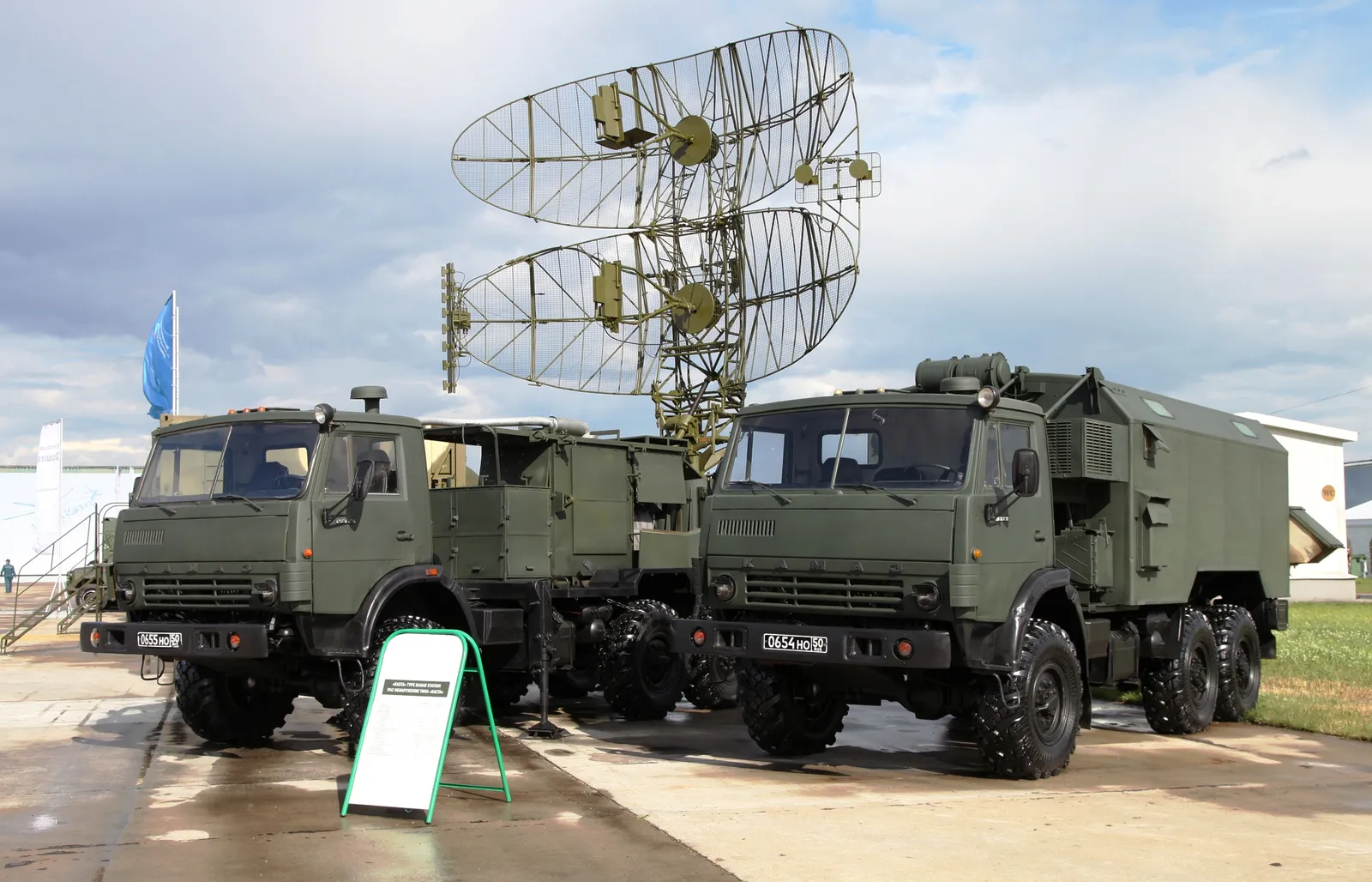
Kasta-2E1 references describe separate antenna/peripheral and command-post or operator elements; Janes described a two-vehicle KamAZ-43114 6x6 system observed near Buhaivka, and Oryx separately lists destroyed command-post and antenna vehicles for 51U6/35N6 Kasta-family systems
Operator shelter link
Radartutorial states that the operator shelter can be connected by cable and positioned up to 300 m from the antenna
Antenna vehicle chassis
WarSpotting identifies a Ural-4320-based antenna vehicle for the 35N6 Kasta, while Oryx separately lists one destroyed Ural-4320 antenna vehicle and three destroyed KamAZ 6x6 antenna vehicles for 35N6 Kasta radars
Related designation
51U6 Kasta-2E1 / Kasta-2-1; related but distinct 39N6 Kasta-2E2 appears in the same Kasta family
NATO reporting name
Flat Face-E in open Kasta family references
Low-Altitude Radar Role And Vehicles

The 35N6 Kasta branch is useful to air-defense units because it covers the low-altitude part of the air picture, where terrain and radar-horizon limits make target detection harder. Ukrainian reporting on the 2026 Zaporizhzhia strike described the radar as a two-coordinate system used to monitor airspace, locate aerodynamic targets at extremely low altitude, and support air-traffic or air-defense control tasks.

Primary task

Low-altitude air surveillance and coordinate reporting for aircraft, missiles, drones, and other aerodynamic targets.

51U6 system layout

Radartutorial places the Casta 2E1 on two KamAZ trucks and notes that the operator shelter can be cabled away from the antenna. Janes likewise described the Kasta-2E1 observed near Buhaivka as a two-vehicle KamAZ-43114 6x6 system.

Command-post evidence

Oryx separates destroyed command posts for 51U6 Kasta-2E1 and 35N6 Kasta radars from antenna-vehicle losses. WarSpotting also records a destroyed Russian command post for a 51U6 Kasta-2E1 in Zaporizhzhia oblast on March 1, 2026.

Designation boundary

35N6/51U6 references align with Kasta-2E1 or Kasta-2-1; 39N6/Kasta-2E2 is a later related 3D system.

Variants

Open sources often blur Kasta designations. This entry is centered on the 35N6 / 51U6 Kasta-2-1 or Kasta-2E1 low-altitude surveillance radar; 39N6 Kasta-2E2 is a later related system and should not be treated as the same record unless a source explicitly uses the designation that way.

VariantConfigurationDesignation notes
35N6 / 51U6 Kasta-2E1Two-coordinate low-altitude surveillance radar

Radartutorial and Wikimedia Commons identify the 35N6/51U6 branch as Kasta-2E1 or Kasta-2-1, a UHF-band low-altitude air-surveillance radar with two antenna vehicles in the Kasta-2E1 system.

Sources: Radartutorial 51U6 Kasta-2E1, Wikimedia Commons 35N6 Kasta Category

39N6 / 39N6E Kasta-2E2Later three-coordinate Kasta family radar

Radartutorial distinguishes the later 39N6 Kasta-2E2 as a mobile 3D low-altitude surveillance radar with stronger performance than the earlier 51U6/35N6 branch.

Sources: Radartutorial 39N6 Kasta-2E2

Timeline

35N6 Kasta surveillance radar Key Events

  1. Kasta-2E1 service-era reference

    Open reference data associates Kasta-2E1/51U6 with a late-Soviet introduction period, placing the 35N6 branch before the later Kasta-2E2 family member.

    Sources: Radartutorial 51U6 Kasta-2E1

  2. 35N6 displayed at Engineering Technologies forum

    Wikimedia Commons records an open-license photograph of a 35N6 Kasta radar at the Engineering Technologies 2012 international forum.

    Sources: Wikimedia Commons 35N6 Kasta Image

  3. OSCE observes 51U6 Kasta-2E1 near Buhaivka

    The OSCE Special Monitoring Mission reported that a mini-UAV spotted a 51U6 Kasta-2E1 target-and-acquisition radar in a training area near non-government-controlled Buhaivka, south-west of Luhansk; Janes described the observed Kasta-2E1 as a two-vehicle system on KamAZ-43114 6x6 chassis.

    Sources: OSCE SMM Daily Report 38/2021, Janes OSCE Kasta Identification

  4. Ukrainian strike footage on Kasta elements

    Militarnyi reported Ukrainian special-forces strikes on elements of a Russian 35N6 Kasta radar, identifying the system as a UHF-band low-altitude two-coordinate surveillance radar.

    Sources: Militarnyi 35N6 Kasta Strike

  5. KamAZ antenna vehicle destroyed near Manuilivka

    WarSpotting recorded a destroyed Russian antenna vehicle based on a KamAZ 6x6 for the 35N6 Kasta surveillance radar near Manuilivka in Berdiansk raion.

    Sources: WarSpotting Kasta KamAZ Manuilivka

  6. Kasta radar and 51U6 command-post loss recorded

    Ukrinform reported that Ukraine's Unmanned Systems Forces and Special Operations Forces destroyed a Russian Kasta radar in Zaporizhzhia region, and WarSpotting separately recorded a destroyed command post for a 51U6 Kasta-2E1 surveillance radar in Zaporizhzhia oblast on the same date.

    Sources: Ukrinform Kasta Zaporizhzhia Strike, WarSpotting 51U6 Kasta Command Post Zaporizhzhia

  7. Khortytsia Brigade strike report

    Defense Express reported a Khortytsia Brigade strike on a Russian 35N6 Kasta radar station in occupied Zaporizhzhia, framing the radar as a low-altitude air-surveillance node in Russia's layered air-defense network.

    Sources: Defense Express 35N6 Kasta Zaporizhzhia

  8. Second KamAZ antenna vehicle recorded near Yelyseivka

    WarSpotting recorded another destroyed Russian KamAZ 6x6 antenna vehicle for the 35N6 Kasta surveillance radar near Yelyseivka in Berdiansk raion.

    Sources: WarSpotting Kasta KamAZ Yelyseivka

Media
Related Weapon Systems
1L125 Niobium-SV, Mobile VHF three-coordinate air-defense surveillance radar, Air DefenseAir Defense1L125 Niobium-SVMobile VHF three-coordinate air-defense surveillance radarThe 1L125 Niobium-SV is a Russian mobile VHF/meter-band, three-coordinate radar built for ground-forces air defense and developed by NNIIRT within the Almaz-Antey group. Rosoboronexport's 1L125E export profile describes a 5-500 km, 360-degree surveillance radar for detecting, tracking, identifying, and reporting aerodynamic and ballistic targets, including low-observable aircraft; Ukrainian and sanctions-derived records identify Niobium-SV radars in Russian service during the Russia-Ukraine war.
1L13-3 Nebo-SV, Mobile VHF two-coordinate air-surveillance radar, Air DefenseAir Defense1L13-3 Nebo-SVMobile VHF two-coordinate air-surveillance radarThe 1L13-3 Nebo-SV is a Soviet/Russian mobile meter-band radar for ground-forces air defense, built to search for aircraft, helicopters, UAVs, and other air targets and pass range-and-bearing data to command posts or missile batteries. It is a two-coordinate predecessor to the 1L119 Nebo-SVU: sources describe it with a 72-element VHF antenna array, separate IFF interrogator, six-person crew, and fighter-target detection figures reaching roughly 350 km at high altitude.
36D6 / ST-68U surveillance radar, Mobile three-coordinate air-surveillance radar, Air DefenseAir Defense36D6 / ST-68U surveillance radarMobile three-coordinate air-surveillance radarThe 36D6 / ST-68U Tin Shield family is a mobile Soviet-legacy three-coordinate surveillance radar used to detect and track low-, medium-, and high-altitude air targets for air-defense command posts, SAM units, and air-traffic-control tasks. Ukrainian sources identify Iskra as the enterprise behind ST-68U/19Zh6 development history and later 35D6/36D6M modernization, while open technical references describe the 36D6 as an S-band radar with 360-degree azimuth coverage, four beams, 350 kW peak transmitter power, and target-data output to automated air-defense users. In the 2014 Russia-Ukraine War, visually documented loss lists and General Staff-derived reporting place 36D6/ST-68U radars on both sides of the air-defense fight.
39N6 Kasta-2E2 surveillance radar, Mobile 3D low-altitude air-surveillance radar, Air DefenseAir Defense39N6 Kasta-2E2 surveillance radarMobile 3D low-altitude air-surveillance radarThe 39N6 Kasta-2E2 is a Russian mobile 3D low-altitude air-surveillance radar in the Kasta family, intended to detect and track aircraft, helicopters, drones, and cruise missiles while feeding air-defense command networks. It is distinct from the older 35N6/51U6 Kasta-2E1 branch and has been documented as a Russian radar target in occupied Ukraine, Crimea, Zaporizhzhia, and southern Russia during the 2014 Russia-Ukraine War.
48Ya6-K1 Podlet-K1, Mobile three-coordinate low-altitude air-surveillance radar, Air DefenseAir Defense48Ya6-K1 Podlet-K1Mobile three-coordinate low-altitude air-surveillance radarThe 48Ya6-K1 Podlet-K1 is a Russian mobile three-coordinate radar complex built to detect and track low-altitude air targets for air-defense units. Public reporting describes the system as a multi-vehicle package with a radar/antenna vehicle, command or operator-control vehicle, and power-support vehicle on KamAZ chassis, while Rosoboronexport markets the export Podlet-K1KE for automated detection, tracking, identification, and flight-information tasks in air-defense and air-force radio-engineering units. Ukraine-war reporting documents Russian Podlet-K1 losses and strikes tied to the S-300 and S-400 air-defense network.

Sources