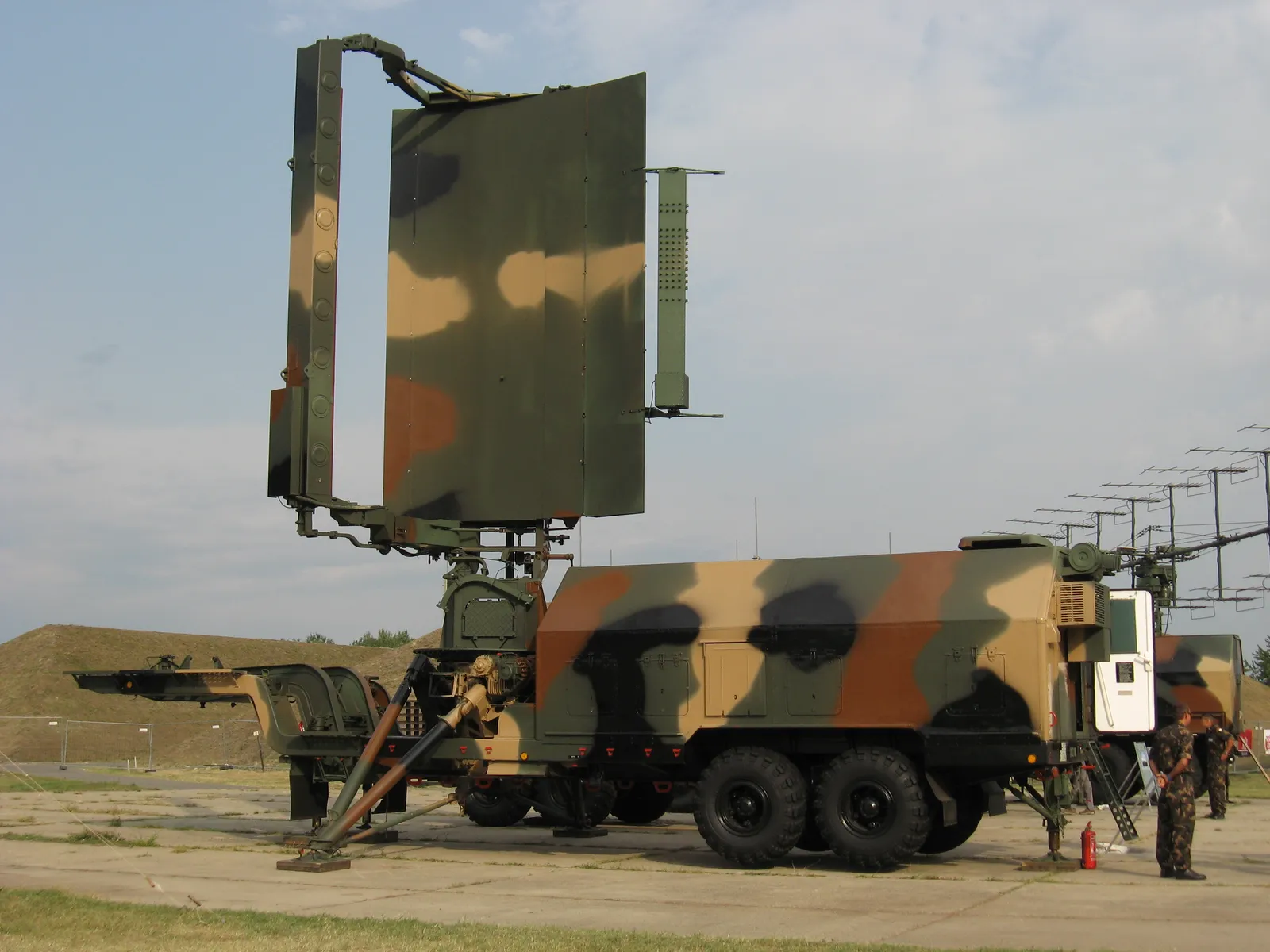


Russian and Ukrainian 36D6/ST-68U radars are directly documented in the war: Oryx lists Russian damaged examples and Ukrainian destroyed or damaged examples, an official Armed Forces of Ukraine report says an ST-68 at occupied Feodosia was struck in May 2026, and WarSpotting lists a Russian 36D6/ST-68U damaged at Feodosiia in June 2026.
Role detailsAir Defense
36D6 / ST-68U surveillance radar
Also known as
- 36D6
- 36D6M
- 36D6-M
- 36D6M1-1
- 35D6
- 35D6M
- ST-68U
- ST-68UM
- 19Zh6
- 19Z6
- 5N59
- Tin Shield
- Tin Shield B
- СТ-68У
- 19Ж6
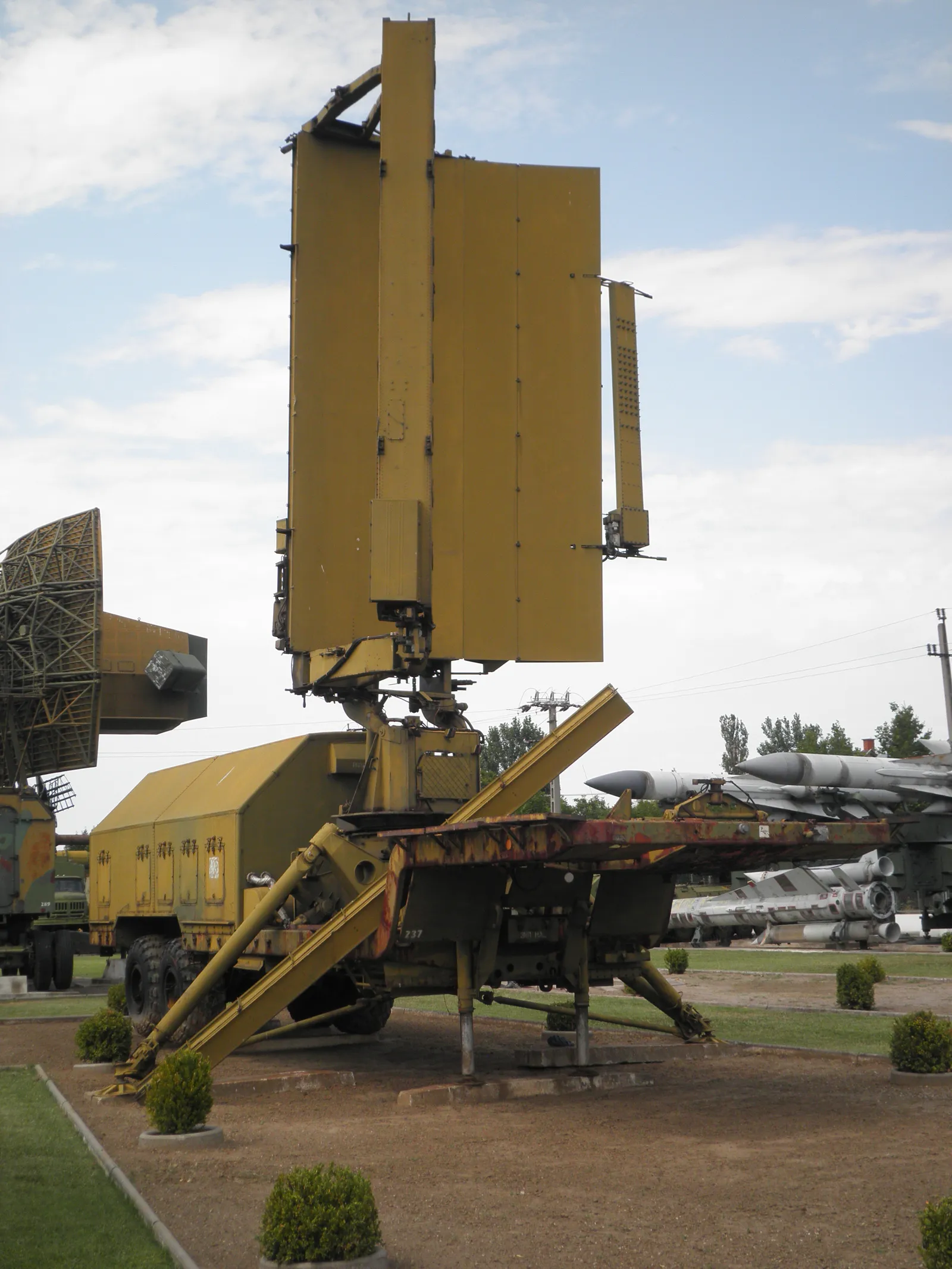
The 36D6 / ST-68U Tin Shield family is a mobile Soviet-legacy three-coordinate surveillance radar used to detect and track low-, medium-, and high-altitude air targets for air-defense command posts, SAM units, and air-traffic-control tasks. Ukrainian sources identify Iskra as the enterprise behind ST-68U/19Zh6 development history and later 35D6/36D6M modernization, while open technical references describe the 36D6 as an S-band radar with 360-degree azimuth coverage, four beams, 350 kW peak transmitter power, and target-data output to automated air-defense users. In the 2014 Russia-Ukraine War, visually documented loss lists, WarSpotting entries, and General Staff-derived reporting place 36D6/ST-68U radars on both Russian and Ukrainian sides of the air-defense fight, including repeated Russian radar losses in occupied Crimea.
Role in Conflicts
Ukraine War Documentation
Public evidence in the 2014 Russia-Ukraine War shows the Tin Shield family as an active air-defense sensor on both sides, not just a legacy inventory item. The strongest compact evidence is visual loss tracking and official Ukrainian reporting of radar strikes in occupied territory.
Russian use
Oryx and WarSpotting list Russian 36D6/ST-68U examples damaged in the war, including a Feodosiia entry dated June 27, 2026.
Ukrainian use
Oryx lists Ukrainian 36D6/ST-68U examples destroyed or damaged during the Russian invasion of Ukraine.
Crimea strike context
The Armed Forces of Ukraine reported that an ST-68 radar at occupied Feodosia was hit in May 2026 as part of Russia's air-defense network.
Profile / Specs
Profile
- Origin
- Soviet Union / Ukraine
- Type
- Mobile three-coordinate air-surveillance radar
- Service note
- 1980s-present
- Designer
- Research and Production Complex Iskra
- Designed
- ST-68U adopted in 1980; 35D6 conceptual modernization reported in 1987
- Produced
- 1980s-present modernization and support
Specifications
- Radar band
- S-band in Defense Express 36D6M material
- Radar type
- Mobile three-coordinate air-surveillance radar
- Primary function
- Detection, tracking, identification, and target-data output for air-defense users and air-traffic-control tasks
- Azimuth coverage
- 360 degrees
- Elevation coverage
- 0 to 30 degrees in Defense Express 36D6M data; -20 to 30 degrees in GlobalSecurity 36D6 data
- Scan interval
- 5.1 seconds in Defense Express 36D6M data; 5 or 10 seconds in GlobalSecurity 36D6 data
- Transmitter peak power
- 350 kW
- Average transmitter power
- 3 kW in GlobalSecurity 36D6 data
- Number of beams
- 4
- Track throughput
- More than 300 in Defense Express 36D6M data; at least 100 simultaneous targets in GlobalSecurity 36D6 data
- Low-altitude detection example
- About 42 km against a 1 m2 RCS target at 100 m altitude in Defense Express 36D6M data
- Range with upgraded 36D6 package
- Detection distances listed from 4 to 400 km, with 360 km for a 1 m2 RCS target at 15,000 m altitude in Defense Express upgrade data
- Target localization accuracy
- GlobalSecurity lists 250 m range, 20 minutes azimuth, and 400 m altitude accuracy for 36D6; Defense Express upgrade data lists 180 m range and 0.4 degree azimuth error
- Clutter suppression
- Greater than 48 dB in Defense Express 36D6M data
- Active jamming suppression
- 20 dB in Defense Express 36D6M and upgrade data
- Deployment/stow time
- 30 minutes for 36D6M in Defense Express data; 1-2 hours in GlobalSecurity 36D6 data depending on configuration
- Transport elements
- Two vehicles in Defense Express 36D6M data and GlobalSecurity's no-tower 36D6 description
- Optional tower
- 40V6M1 tower raises antenna phase centers to 23 m in GlobalSecurity 36D6 description
Radar Role And Configuration
The 36D6 / ST-68U family is a sensor rather than an interceptor. Its value is in building an air picture, identifying friend-or-foe returns, and passing target data to air-defense users or air-traffic-control operators.
Radar class
Mobile three-coordinate air-surveillance and target-designation radar.
Air-defense role
Used independently, inside automated control systems, or with S-300-family SAM batteries according to open technical references.
Target set
Low-, medium-, and high-altitude air targets, including low-flying targets and cruise-missile-class threats in jamming and clutter conditions.
Mobility package
GlobalSecurity describes two KrAZ-type vehicles for a version without the 40V6M1 tower, while Defense Express lists two transport vehicles for the 36D6M upgrade.
Variants
Tin Shield designations overlap Soviet/Russian industrial, GRAU, export, and Ukrainian modernization names. Sources treat 5N59/ST-68, 19Zh6/ST-68U, and 35D6/36D6/ST-68UM as the same broad Tin Shield family, while 35D6M, 36D6M, and 36D6M1-1 are Ukrainian modernized forms of the 35D6/36D6 lineage.
| Variant | Configuration | Designation notes |
|---|---|---|
| 5N59 / ST-68 | Original Tin Shield family designation | Air Power Australia lists 5N59/ST-68 as the earlier designation in the Tin Shield sequence. Sources: Air Power Australia Tin Shield |
| ST-68U / 19Zh6 | Baseline Soviet three-coordinate radar | GlobalSecurity's Iskra profile describes ST-68U / 19Zh6 as the three-coordinate station adopted in 1980, while Radartutorial identifies ST-68U as a former Warsaw Pact medium-range 3D air-defense radar. Sources: GlobalSecurity Iskra profile, Radartutorial ST-68U Profile |
| 35D6 / 36D6 / ST-68UM | Later Tin Shield family designation | Air Power Australia groups 35D6/36D6/ST-68UM within the same Tin Shield designation chain, while GlobalSecurity's Iskra profile links the 1987 modernization of ST-68U / 19Zh6 to the 35D6 type. Sources: Air Power Australia Tin Shield, GlobalSecurity Iskra profile |
| 36D6M | Ukrainian modernized 3D surveillance radar | Defense Express describes 36D6M as an Iskra Ukrainian upgrade of Soviet-legacy 35D6 technology, used with automated air-defense systems, S-300 SAM batteries, and low-flying target search under jamming. Sources: Defense Express Iskra radar demonstration, Defense Express Closing Air Coverage Gaps |
| 35D6M | Modernized 19Zh6 radar | Ukrainian Military Pages reported that Iskra repaired and modernized a 19Zh6 radar that received the new 35D6M index after modernization. |
| 36D6M1-1 | Ukrainian-made 3D mobile air-defense radar | CSIS Missile Threat reported that the U.S. Army Contracting Command received at least one Ukrainian-made 36D6M1-1 3D mobile air-defense radar system. Sources: CSIS 36D6M1-1 Transfer |
Supported Air-Defense Systems
Tin Shield radars served as acquisition and search radars for early S-300P-family batteries while also operating as general air-surveillance radars.
| Compatible item | Item type | Compatibility evidence |
|---|---|---|
 | Long-range surface-to-air missile system | Sources identify the 36D6/ST-68U Tin Shield family as an acquisition, reconnaissance, or targeting radar associated with S-300P/PM/PMU/PMU1 and S-300PMU systems. Sources: GlobalSecurity 36D6 Tin Shield profile, Air Power Australia Tin Shield, Defense Express Iskra radar demonstration |
Timeline
36D6 / ST-68U surveillance radar Key Events
ST-68U / 19Zh6 adopted
GlobalSecurity's Iskra profile identifies the ST-68U / 19Zh6 three-coordinate radar station as an Iskra development adopted in 1980.
Sources: GlobalSecurity Iskra profile
35D6 modernization lineage begins
The same Iskra profile links 1987 work on modernizing the ST-68U / 19Zh6 to the later 35D6 family.
Sources: GlobalSecurity Iskra profile
36D6M1-1 delivered to U.S. Army channels
CSIS Missile Threat reported that U.S. Army Contracting Command received a Ukrainian-made 36D6M1-1 3D mobile air-defense radar system.
Sources: CSIS 36D6M1-1 Transfer
19Zh6 modernization reported as 35D6M
Ukrainian Military Pages reported an Iskra capital repair and modernization of a 19Zh6 radar that received the 35D6M index after the work.
Sources: Ukrainian Military Pages Iskra 19Zh6 modernization
ST-68 struck at occupied Feodosia
The Armed Forces of Ukraine reported that Ukrainian forces hit an ST-68 air-target detection radar station at Russian-occupied Feodosia; Ukrainian News and United24 carried the same General Staff-linked claim.
Sources: Armed Forces of Ukraine ST-68 Feodosia Strike, Ukrainian News ST-68 Feodosia Strike, United24 ST-68 Feodosia Strike
WarSpotting logs damaged Russian 36D6/ST-68U
WarSpotting entry 45603 lists a Russian 36D6 ST-68U surveillance radar damaged at Feodosiia in the Russo-Ukrainian War.
Sources: WarSpotting 36D6 ST-68U Feodosiia
Media
36D6 / ST-68U surveillance radar Images
Related Weapon Systems


Sources
GlobalSecurity Iskra profilePublisher: GlobalSecurity.org | Note: Supports Iskra manufacturer background, ST-68U / 19Zh6 development history, 1980 adoption, 1987 35D6 modernization lineage, and Iskra radar-production context. | Accessed: 2026-07-05Radartutorial ST-68U ProfilePublisher: Radartutorial | Note: Supports ST-68U / Tin Shield identity as a medium-range 3D air-defense radar used for detecting and tracking low-altitude targets. | Accessed: 2026-07-05Radartutorial 36D6 ProfilePublisher: Radartutorial | Note: Supports 36D6 identity and technical context including 350 kW peak power, 3 kW average power, 200 km instrumented range, and 250 m range resolution. | Accessed: 2026-07-05GlobalSecurity 36D6 Tin Shield profilePublisher: GlobalSecurity.org | Note: Supports 36D6 role, S-300PMU reconnaissance and targeting context, mobility, optional 40V6M1 tower, target-processing capacity, and technical specifications. | Accessed: 2026-07-05Air Power Australia Tin ShieldPublisher: Air Power Australia | Note: Supports Tin Shield designation structure, ST-68U/19Zh6 and 35D6/36D6/ST-68UM family context, semimobile configuration, 40V6M/40V6MD mast option, S-300P/PM/PMU/PMU1 acquisition-radar relationship, and selected technical figures. | Accessed: 2026-07-05Defense Express Closing Air Coverage GapsPublisher: Defense Express | Note: Supports Ukrainian 36D6M and 36D6 upgrade context, Iskra manufacturer background, air-defense and S-300 role, Ukrainian Air Force adoption language, and technical data for the 36D6/36D6M modernization package. | Accessed: 2026-07-05Defense Express Iskra radar demonstrationPublisher: Defense Express | Note: Supports 36D6M as a Ukrainian Iskra upgrade of Soviet-legacy 35D6 technology, its use with automated air-defense systems and S-300 SAM batteries, and fielding to Ukrainian military units. | Accessed: 2026-07-05Ukrainian Military Pages Iskra 19Zh6 modernizationPublisher: Ukrainian Military Pages | Note: Supports Iskra capital repair and modernization of a 19Zh6 radar into the 35D6M index, Ukrainian Armed Forces service context, and optional remote-workplace and SAM-interaction equipment. | Accessed: 2026-07-05CSIS 36D6M1-1 TransferPublisher: CSIS Missile Threat | Note: Supports 36D6M1-1 as a Ukrainian-made 3D mobile air-defense radar, its low-altitude target and jamming-context role, air-traffic-control function, and reported U.S. Army Contracting Command receipt. | Accessed: 2026-07-05Wikimedia Commons ST-68U radar imagePublisher: Wikimedia Commons | Note: Supports primary image provenance and licensing for a CC BY 3.0 photograph of an ST-68U / 36D6 / Tin Shield radar of the Hungarian Air Force. | Accessed: 2026-07-05Wikimedia Commons ST-68U 01 imagePublisher: Wikimedia Commons | Note: Supports additional gallery image provenance and licensing for a CC BY-SA 4.0/GFDL photograph of an ST-68U / 19Zh6 / Tin Shield radar at Kecel. | Accessed: 2026-07-05Oryx Russian Equipment LossesPublisher: Oryx | Note: Supports 2014 Russia-Ukraine War direct conflict-use/loss context by listing visually documented Russian 36D6 ST-68U surveillance radars damaged during the Russian invasion of Ukraine. | Accessed: 2026-07-05Oryx Ukrainian Equipment LossesPublisher: Oryx | Note: Supports 2014 Russia-Ukraine War direct conflict-use/loss context by listing visually documented Ukrainian 36D6 ST-68U surveillance radars destroyed or damaged during the Russian invasion of Ukraine. | Accessed: 2026-07-05NV Russian Radar Strike ReportPublisher: The New Voice of Ukraine | Note: Supports 2014 Russia-Ukraine War direct conflict-use by reporting General Staff statements that Ukrainian forces struck a Russian ST-68 radar station in occupied Feodosia used in Russia's air-defense network. | Accessed: 2026-07-05Armed Forces of Ukraine ST-68 Feodosia StrikePublisher: Armed Forces of Ukraine | Note: Supports 2014 Russia-Ukraine War direct conflict-use by officially reporting that Ukrainian Defense Forces hit an ST-68 air-target detection radar station at Feodosia in occupied Crimea on the night of May 28, 2026. | Accessed: 2026-07-05United24 ST-68 Feodosia StrikePublisher: United24 Media | Note: Supports 2014 Russia-Ukraine War direct conflict-use by reporting General Staff statements that Ukrainian forces struck an ST-68 radar station in occupied Feodosia on May 28, 2026 as part of Russia's air-defense network in Crimea. | Accessed: 2026-07-05Ukrainian News ST-68 Feodosia StrikePublisher: Ukrainian News Agency | Note: Supports 2014 Russia-Ukraine War direct conflict-use by reporting General Staff statements that Ukrainian Defense Forces hit an ST-68 air-target detection radar station at Feodosia in occupied Crimea. | Accessed: 2026-07-05WarSpotting 36D6 ST-68U FeodosiiaPublisher: WarSpotting | Note: Supports 2014 Russia-Ukraine War direct conflict-use by listing a visually confirmed Russian 36D6 ST-68U surveillance radar damaged at Feodosiia on June 27, 2026. | Accessed: 2026-07-05UNN General Staff ST-68 Strike ReportPublisher: Ukrainian National News | Note: Supports 2014 Russia-Ukraine War direct conflict-use by reporting General Staff statements that Ukrainian forces struck an ST-68 air-target detection radar in Feodosia used by Russian forces to detect, track, and transmit air-target coordinates. | Accessed: 2026-07-05