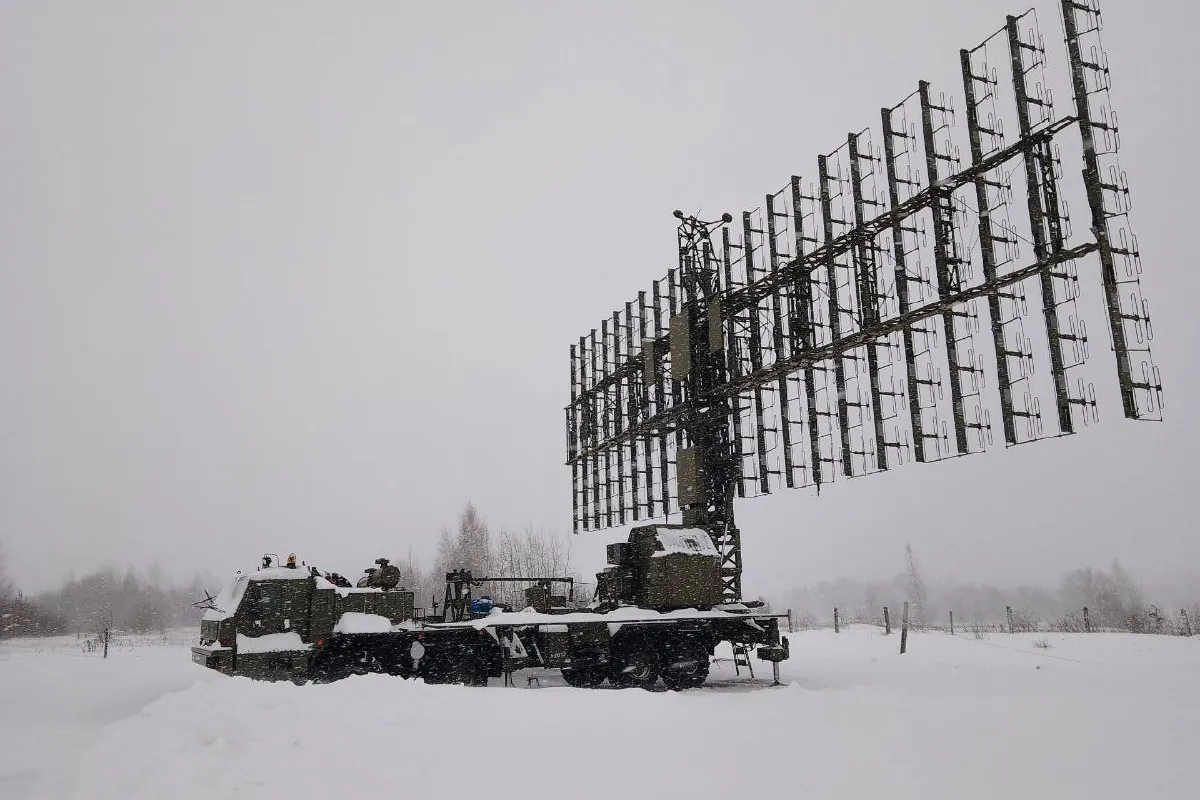


Ukrainian General Staff material lists 1L13-3 Nebo-SV among Ukrainian radio-technical troops' air-target warning and reconnaissance radars during the war; Russian MoD-linked reporting describes Russian Nebo-SV crews on Ukraine-war combat duty, and Ukrainian reporting identified Nebo-SV radars among Russian air-defense assets struck in occupied Crimea in November 2025 and in Luhansk Oblast in May 2026.
Role detailsAir Defense
1L13-3 Nebo-SV
Also known as
- 1L13
- 1L13 Nebo-SV
- 1L13-3 Nebo SV
- 1L13-3-1
- Nebo-SV
- Box Spring
- 1Л13 Небо-СВ
- 1Л13-3 Небо-СВ
- 1Л13-3-1 Небо-СВ
- Sky-SV
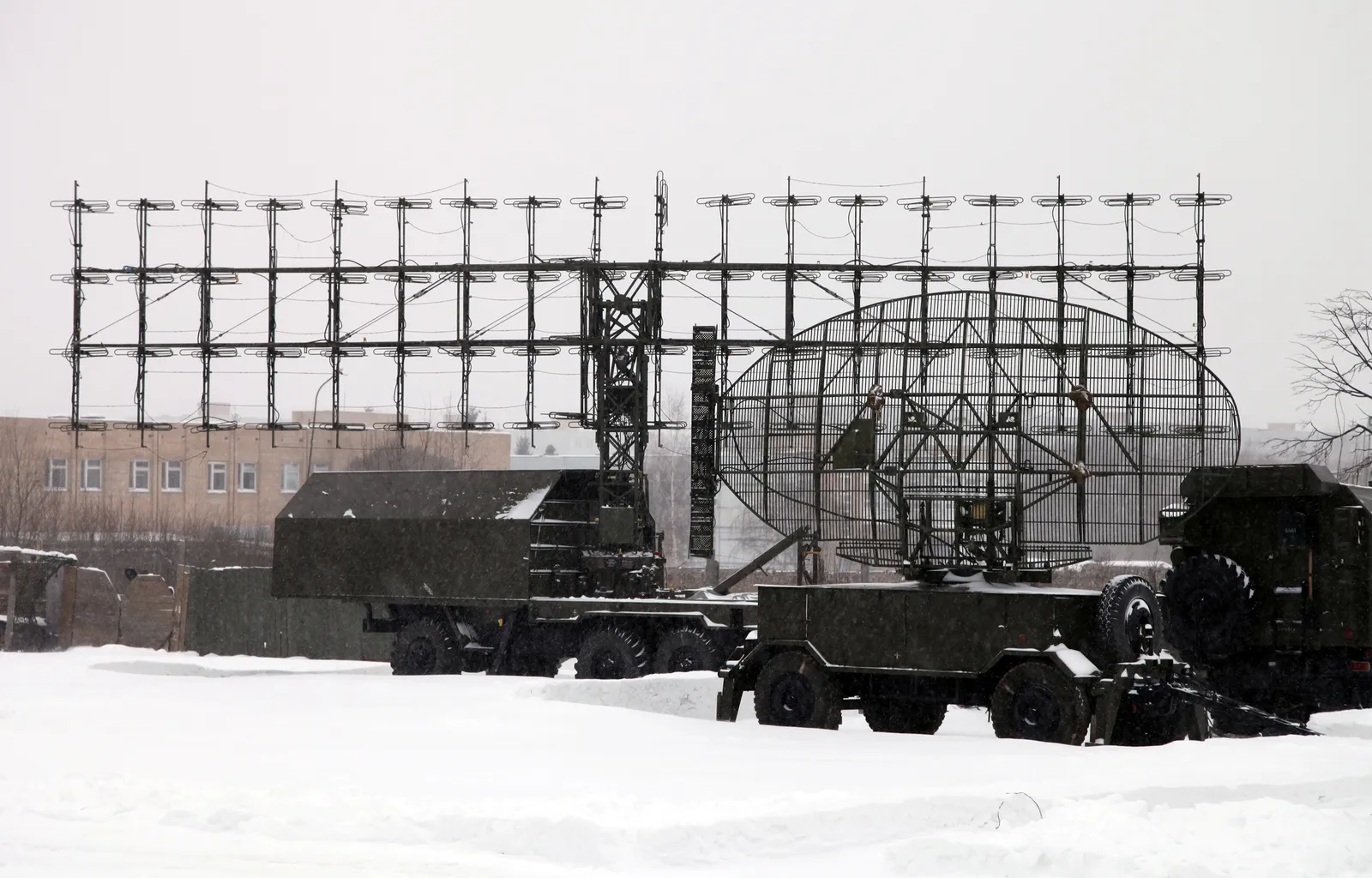
The 1L13-3 Nebo-SV is a Soviet/Russian mobile meter-band radar for ground-forces air defense, built to search for aircraft, helicopters, UAVs, and other air targets and pass range-and-bearing data to command posts or missile batteries. It is a two-coordinate predecessor to the 1L119 Nebo-SVU: sources describe it with a 72-element VHF antenna array, separate IFF interrogator, six-person crew, and fighter-target detection figures reaching roughly 350 km at high altitude.
Role in Conflicts
Service Context
Open sources place the Nebo-SV in Soviet/Russian ground-forces air defense and in inherited or export air-surveillance networks. The compact conflict row is limited to the Russia-Ukraine war because that is where direct conflict-use sources identify 1L13-3 Nebo-SV activity.
Soviet and Russian service
Russian technical histories describe development for ground-forces air defense, state trials in 1985, and service entry in 1986.
Ukrainian inventory and wartime use
A Ukrainian General Staff military-history publication lists 1L13-3 Nebo-SV among radio-technical troops' air-target warning and reconnaissance radars during the Russia-Ukraine war.
Reported Vietnamese inventory
A 2023 Foreign Military Review article on Vietnam's air-defense and air-force structure lists 1L13-3 Nebo-SV among Soviet/Russian-origin radar stations in Vietnamese service.
Source boundary
Export or inventory reporting is treated as service context only; it is not used as a conflict-use claim without a direct conflict source.
Profile / Specs
Profile
- Origin
- Soviet Union / Russia
- Type
- Mobile VHF two-coordinate air-surveillance radar
- Service note
- 1980s-present
- Designer
- Gorky/Nizhny Novgorod Research Institute of Radio Engineering (GNIIRT/NNIIRT)
- Designed
- Soviet development decision in 1981; development reported in 1982; state trials completed in 1985
- Produced
- Entered service in 1986; later modernized configurations advertised
- Developed from
- 55Zh6 Nebo meter-band radar family
- Developed into
- 1L119 Nebo-SVU and later Nebo/Niobium ground-forces radar lineage
Specifications
- Radar band
- Meter band / VHF
- Frequency range
- 180-220 MHz
- Radar type
- Mobile two-coordinate surveillance radar
- Primary function
- Air-target search, range and azimuth measurement, and target data output to air-defense users
- Instrumented range
- 360 km in Radartutorial and modernization-source tables
- Detection range
- Fighter-type target up to about 330-350 km at high altitude; about 60-70 km at low altitude in Russian reporting
- Altitude envelope
- Up to about 40 km in open reference tables
- Azimuth accuracy
- Up to 1 degree in Russian reporting
- Range accuracy
- Up to 600 m in Russian reporting
- Azimuth coverage
- 360 degrees
- Antenna array
- Folding flat antenna with 72 main radiating elements
- Antenna rotation
- 3 or 6 rpm in Radartutorial and reference tables
- Scan period
- 10 or 20 seconds
- Target handling
- 50 automatic target extractions in Vestnik PVO; up to 256 displayed targets for 1L13-3 in MilitaryRussia
- ECCM features
- Pulse-to-pulse frequency agility and automatic chaff rejection are described in U.S. Army ODIN material
- Peak power
- 120-140 kW across open sources
- Crew
- 6 personnel in baseline Russian reporting
- Deployment time
- About 40 minutes; about 3 minutes to switch on after deployment
- Transport elements
- Four baseline transport units in Vestnik PVO; modernization source describes two or three cabins
- Power consumption
- Up to 30 kW before modernization in the Technical Consulting comparison table
Radar Role And Configuration
The 1L13-3 Nebo-SV is a brigade-level sensor, not an interceptor. It supplies range-and-bearing information and air-picture updates to air-defense command posts or missile systems, while target altitude must come from a compatible height finder or from the receiving air-defense system's own radar.
Radar band
Meter-band / VHF surveillance radar.
Coordinate type
Two-coordinate radar: range and azimuth, with altitude supplied by separate systems.
Antenna
Folding flat antenna array with 72 main radiating elements in Russian descriptions.
Deployment package
Four baseline transport units in Vestnik PVO, with modernization material describing a reduced two- or three-cabin package depending on customer configuration.
Family position
Ground-forces mobile branch of the Nebo VHF radar line, followed by later Nebo-SVU and Niobium-SV developments.
Variants
The 1L13-3 Nebo-SV belongs to the Soviet/Russian Nebo meter-band radar family. Open references collapse some 1L13, 1L13-3, and 1L13-3-1 details, while treating 1L119 Nebo-SVU as a later three-coordinate derivative and 1L125 Niobium-SV as a newer ground-forces air-defense branch of the Nebo/Niobium lineage.
| Variant | Configuration | Designation notes |
|---|---|---|
| 1L13 Nebo-SV | Baseline mobile ground-forces VHF radar | The base Nebo-SV designation covers the mobile two-coordinate meter-band radar accepted into service in the mid-1980s. Sources: TopWar Nebo-SV Combat Use, VPK Name Look Beyond The Horizon |
| 1L13-3 / 1L13-3-1 Nebo-SV | Later modification designations | MilitaryRussia and GRAU index material list 1L13-3 and 1L13-3-1 Nebo-SV radar-station designations, with MilitaryRussia associating the later 1L13-3 line with digital-processing modifications. Sources: MilitaryRussia Nebo-SV Profile, GRAU Indexes Nebo-SV Entries |
 | Later three-coordinate VHF derivative | Air Power Australia and Russian reporting describe Nebo-SVU as an improved derivative of the 1L13 Nebo-SV/Box Spring line with a different antenna and three-coordinate capability. Sources: Air Power Australia Low Band Radars, TopWar Nebo-SV Combat Use |
 | Later Russian ground-forces VHF radar lineage | Defense Express describes Niobium-SV as a later development path tied to the 1L13 Nebo-SV and 1L119 Nebo-SVU family for Russian ground-forces air defense. |
| Modernized 1L13 Nebo-SV | Upgraded radar package | Technical Consulting describes a modernization package replacing the original tube transmitter with a solid-state transmitter, adding digital processing, and improving detection, track, and power figures. |
Air-Defense Systems Cued
Nebo-SV is a search and target-cueing radar rather than a missile launcher; its battlefield value comes from feeding air-picture data to air-defense command posts and missile systems.
| Compatible item | Item type | Compatibility evidence |
|---|---|---|
 | Medium-range surface-to-air missile system | Russian MoD-linked reporting described Nebo-SV and Buk-M2 operating together during the Ukraine war, with Nebo-SV crews searching for targets and passing target designation to Buk-M2 units. Sources: TopWar Nebo-SV Combat Use |
 | Long-range surface-to-air missile family | Air Power Australia places 1L13 Nebo-SV in the low-band early-warning layer that can cue higher-frequency engagement radars used by S-300-family air-defense systems. Sources: Air Power Australia Low Band Radars |
Timeline
1L13-3 Nebo-SV Key Events
Ground-forces Nebo-SV requirement issued
Vestnik PVO describes an August 1981 Soviet military-industrial decision that launched development of the mobile 1L13 Nebo-SV radar for ground-forces air defense.
Sources: Vestnik PVO Nebo-SV Profile
State trials completed
Vestnik PVO says state trials ran at Donguz from January to June 1985 before the system was accepted for service.
Sources: Vestnik PVO Nebo-SV Profile
Service entry reported
Vestnik PVO and MilitaryRussia describe 1986 service acceptance and serial production at the Gorky Television Plant named after V. I. Lenin.
Sources: Vestnik PVO Nebo-SV Profile, MilitaryRussia Nebo-SV Profile
Russian combat-duty footage reported
TopWar reported that Russia's Ministry of Defense released video of a Nebo-SV radar operating in the Ukraine war zone and separately showed it in a Buk-M2 context.
Sources: TopWar Nebo-SV Combat Use
Ukrainian service table lists 1L13-3
A Ukrainian MoD/General Staff military-history publication listed 1L13-3 Nebo-SV among air-target warning and reconnaissance radar assets used by Ukraine's radio-technical troops.
Sources: Ukrainian General Staff November 2022 Military-History Description
Crimea radar strike reporting names Nebo-SV
Ukraine's military intelligence service reported a strike on Russian air-defense equipment in occupied Crimea that included a Nebo-SV radar; Crimea.Realities later linked the reported target to a 1L13-3 Nebo-SV radar site near Yevpatoriya.
Sources: GUR Crimea Air-Defense Strike, Crimea Realities Crimea Strike Geolocation
Ukrainian reporting names Nebo-SV near Kamianka
Ukrinform reported that Ukraine's Unmanned Systems Forces struck a Russian Nebo-SV radar station near Kamianka, Luhansk Oblast, alongside other air-defense and logistics targets.
Sources: Ukrinform Nebo-SV Radar Strike
Media
1L13-3 Nebo-SV Images
Related Weapon Systems


Sources
Radartutorial Nebo-SV ProfilePublisher: Radartutorial | Note: Supports 1L13-3 Nebo-SV identity, Box Spring alias, VHF band, 180-220 MHz frequency range, instrumented range, beamwidth, antenna rotation, NNIIRT attribution, and 1L119 Nebo-SVU lineage. | Accessed: 2026-07-01ODIN 1L13-3 Nebo SV EntryPublisher: U.S. Army ODIN OE Data Integration Network | Note: Supports 1L13-3 Nebo SV / Box Spring identity, mobile two-dimensional early-warning radar classification, A/B-band framing, and ECCM descriptions including pulse-to-pulse frequency agility and automatic chaff rejection. | Accessed: 2026-07-01Vestnik PVO Nebo-SV ProfilePublisher: Vestnik PVO | Note: Supports 1L13 Nebo-SV development decision, Gorky Research Institute design context, Gorky Television Plant/NITEL production context, state-trial and service-entry timeline, baseline transport package, crew, scan period, and target-handling details. | Accessed: 2026-07-01Foreign Military Review Vietnam Air Defense 2023Publisher: Zarubezhnoe Voyennoye Obozreniye / Calameo | Note: Supports service-context reporting that Vietnam's air-defense and air-force radar inventory includes 1L13-3 Nebo-SV among Soviet/Russian-origin radar stations. | Accessed: 2026-07-01MilitaryRussia Nebo-SV ProfilePublisher: MilitaryRussia.ru | Note: Supports 1L13, 1L13-3, and 1L13-3-1 Nebo-SV designations, NNIIRT and Gorky Television Plant/NITEL production context, service acceptance, and later digital-processing modification notes. | Accessed: 2026-07-01GRAU Indexes Nebo-SV EntriesPublisher: Internet Archive / SALIS GRAU index compilation | Note: Supports GRAU-index designation context for 1L13 Nebo-SV, 1L13-3, 1L13-3-1, and 1L119 Nebo-SVU entries. | Accessed: 2026-07-01TopWar Nebo-SV Combat UsePublisher: Military Review / TopWar | Note: Supports 1L13 Nebo-SV design history, baseline configuration, specifications, service-entry timeline, and 2014 Russia-Ukraine War direct-use context by reporting Russian Nebo-SV radars fielded by Russia on combat duty and used with Buk-M2 target-cueing in Ukraine. | Accessed: 2026-07-01VPK Name Look Beyond The HorizonPublisher: VPK.name / Nezavisimoye Voyennoye Obozreniye | Note: Supports 2014 Russia-Ukraine War direct-use context by describing Nebo-SV fielded by Russia in military air defense during the Ukraine war, plus Buk-M2 cooperation context, detection ranges, crew, deployment timing, antenna description, and later Nebo-SVU lineage. | Accessed: 2026-07-01Air Power Australia Low Band RadarsPublisher: Air Power Australia | Note: Supports Nebo-SV/Box Spring identity, VHF low-band radar context, 1L13 relationship to Nebo-SVU, and the early-warning/cueing relationship to S-300-family and other integrated air-defense radars. | Accessed: 2026-07-01Ukrainian General Staff November 2022 Military-History DescriptionPublisher: Ministry of Defense of Ukraine / General Staff of the Armed Forces of Ukraine | Note: Supports 2014 Russia-Ukraine War direct-use context by listing 1L13-3 Nebo-SV used by Ukraine's radio-technical troops as an air-target warning and reconnaissance radar during the war. | Accessed: 2026-07-01VPK Name Nebo-SV Combat DutyPublisher: VPK.name / TsAMTO | Note: Supports 2014 Russia-Ukraine War direct-use context by reporting Russian Nebo-SV radar crews fielded by Russia on round-the-clock combat duty during the Ukraine war. | Accessed: 2026-07-01GUR Crimea Air-Defense StrikePublisher: Defense Intelligence of Ukraine | Note: Supports 2014 Russia-Ukraine War direct-use context by reporting a Ukrainian strike on Russian air-defense assets in occupied Crimea that included a Russian Nebo-SV radar. | Accessed: 2026-07-01Crimea Realities Crimea Strike GeolocationPublisher: Crimea.Realities / Radio Free Europe/Radio Liberty | Note: Supports 2014 Russia-Ukraine War direct-use context by linking the Crimea strike reporting to a Russian 1L13-3 Nebo-SV radar site near Yevpatoriya in occupied Crimea. | Accessed: 2026-07-01Ukrinform Nebo-SV Radar StrikePublisher: Ukrinform | Note: Supports 2014 Russia-Ukraine War direct-use context by reporting that Ukrainian Unmanned Systems Forces struck a Russian Nebo-SV radar station near Kamianka in Luhansk Oblast on May 27, 2026. | Accessed: 2026-07-02Technical Consulting Nebo-SV ModernizationPublisher: Technical Consulting | Note: Supports modernization-package composition, original versus upgraded 1L13-3 performance figures, frequency range, transport-unit count, crew, power, and transmitter/digital-processing changes. | Accessed: 2026-07-01Defense Express Russian Radar IdentificationPublisher: Defense Express | Note: Supports Nebo-SV family context, the 1L13-3 ground-forces branch, NNIIRT/NITEL industrial context, and later Niobium-SV lineage from Nebo-SV and Nebo-SVU. | Accessed: 2026-07-01Wikimedia Commons Nebo-SV Radar ImagePublisher: Wikimedia Commons | Note: Supports primary image provenance and CC BY 4.0 licensing for a Russian Ministry of Defense photo of a 1L13 Nebo-SV radar. | Accessed: 2026-07-01Wikimedia Commons Nebo-SV Deployed ImagePublisher: Wikimedia Commons | Note: Supports additional gallery image provenance and CC BY-SA 4.0 licensing for a 2012 photo of a deployed 1L13 Nebo-SV radar by Vitaly V. Kuzmin. | Accessed: 2026-07-01