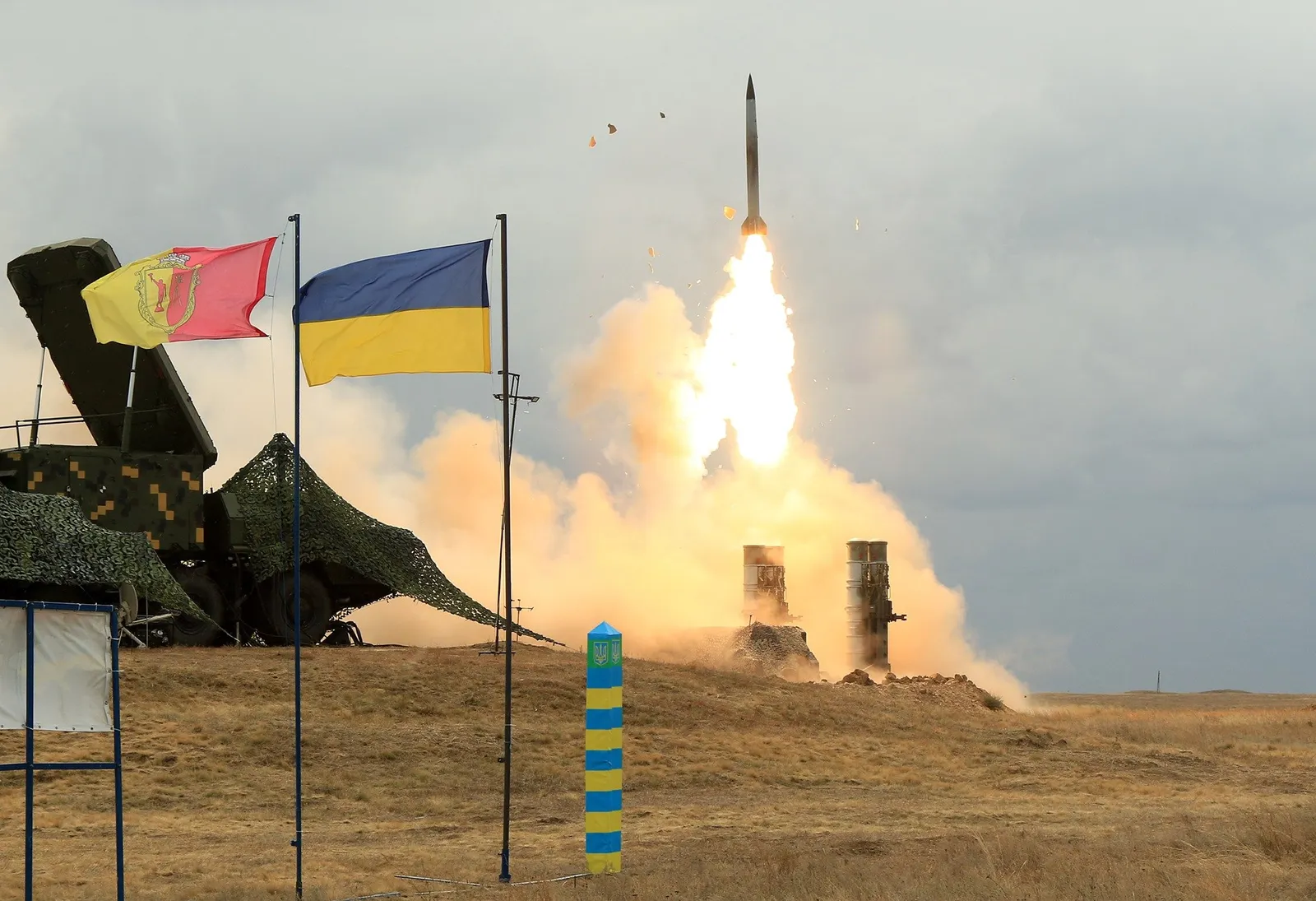


Operated by Ukraine for long-range air defense, reinforced by Slovakia's April 2022 transfer of its S-300PMU system; Russian forces also fired S-300 missiles at Ukrainian ground targets in the full-scale war.
Role detailsAir Defense
S-300
Also known as
- Favorit
- S-300PMU
- S-300 PMU
- S-300PMU-1
- S-300PMU-2 Favorit
- SA-10 Grumble
- SA-10C Grumble C
- SA-20 Gargoyle
- SA-20B Gargoyle B
- SA-12 Gladiator/Giant
The S-300 is a Soviet-designed long-range surface-to-air missile family spanning early P-series air-defense systems, export S-300PMU upgrades, and the tracked S-300V branch. Ukraine has relied on legacy S-300 batteries for area air defense, received Slovakia's S-300PMU in 2022, Russia has fired S-300 missiles at Ukrainian ground targets, and Iran fields S-300PMU-2 batteries around strategic sites.
Role in Conflicts
- Role in conflict
- Long-range air defense of Nagorno-Karabakh

Fielded by Armenian/Artsakh forces as long-range air defense during the 2020 war; IRSEM identifies an S-300PS battery in Nagorno-Karabakh, and CSIS reported Azerbaijani UAV and loitering-munition strikes against Armenian S-300 launchers, guidance stations, and radar.

Fielded by Russian/Syrian pro-government forces in Syria; Israel's defense minister confirmed Russian forces fired S-300 missiles at Israeli jets after a May 2022 strike near Masyaf.
Role details- Side
- Iran
- Role in conflict
- Long-range air defense of strategic sites

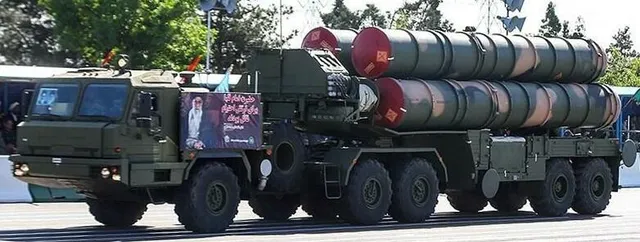
Fielded by Iran as part of its layered air-defense network during Operation Epic Fury; reporting identifies Iranian S-300/S-300PMU-2 batteries protecting Tehran and major nuclear facilities against U.S. and partner air operations.
Profile / Specs
Profile
- Origin
- Soviet Union / Russia; Slovak S-300PMU donor transfer to Ukraine
- Built in
- Soviet UnionRussia
- Type
- Long-range surface-to-air missile system
- Service note
- Cold War design still in wartime service
- Designer
- Almaz Central Design Bureau
- Designed
- Development began in 1967 for the S-300P family
- Produced
- S-300P family production began in the 1970s; later variants and refurbished export systems followed
Specifications
- Role
- Mobile, ground-based long-range SAM family for area air defense and selected missile-defense tasks
- Missiles
- 5V55K, 5V55R, 48N6, 48N6E2 and other family missiles depending on variant
- Range
- S-300P sources cite up to 150 km with 48N6; S-300PMU-2 references cite up to 200 km with 48N6E2
- S-300PMU configuration
- Mobile export P-series branch using four-round launcher vehicles and Flap Lid-family engagement radar support
- S-300PMU-2 components
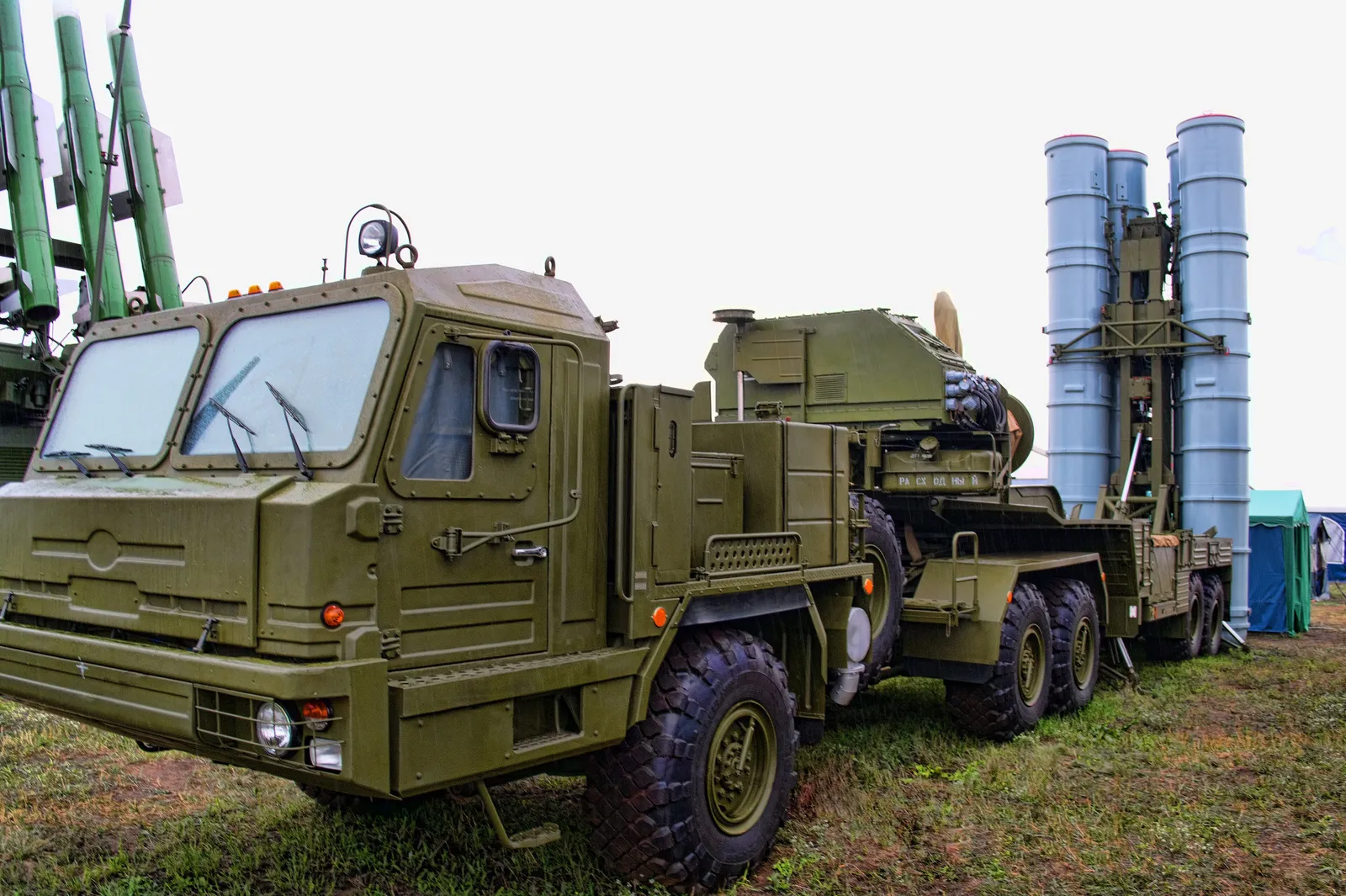
- Favorit references list 83M6E2 command-and-control elements, 30N6E2 illumination and guidance radar, 5P85SE/5P85TE launchers, and 48N6E2/48N6E missile options
- Warhead
- High-explosive fragmentation warheads, about 133-143 kg on S-300P missile types cited by CSIS
- Launcher
- 9P85-series TELs typically carry four ready-to-fire missile canisters
- Mobility
- Mobile ground system using truck, trailer, or tracked launch vehicles depending on branch
- System components
- Launcher vehicles operate with command posts and acquisition/engagement radars rather than as standalone launchers
Family Architecture
S-300 is best treated as a family name: conflict reporting often uses the umbrella designation while technical sources separate launcher, missile, and radar configurations by branch.
| Branch | Typical identity | Conflict relevance |
|---|---|---|
| S-300P / S-300PS | Road-mobile long-range SAM line using 5V55 and later missile options | Legacy P-series systems appear in Ukraine and Nagorno-Karabakh conflict-use reporting. |
| S-300PMU / PMU-1 / PMU-2 | Export and upgraded P-series configurations, including the PMU-2 Favorit and 48N6E2 missile fit | Slovakia's transferred Ukrainian system is identified as S-300PMU, while Iranian service reporting identifies S-300PMU-2 batteries around strategic sites. |
| S-300V | Tracked army air-defense branch with stronger anti-ballistic-missile emphasis | Branch identification should be kept separate unless a source names S-300V directly. |
Sources: S-300; FAS S-300PMU SA-10 Grumble; Rosoboronexport Favorit Brochure; Slovakia's Donated S-300 Surface-To-Air Missile System Is On Its Way; RETEX - 44 Days over Nagorno-Karabakh; Operation Epic Fury -- Air Campaign.
Variants
S-300 is a family designation rather than one fixed launcher. Open sources commonly separate the original P-series air-defense line, the export PMU upgrades, and the tracked S-300V branch with different missiles, launchers, and tactical roles.
| Variant | Configuration | Designation notes |
|---|---|---|
| S-300P | Original PVO long-range SAM line | Baseline S-300P family member associated with 5V55 and later 48N6 missile options in open missile references. Sources: S-300 |
| S-300PS | Mobile P-series system | A road-mobile P-series configuration; IRSEM identifies an S-300PS battery in Nagorno-Karabakh before the 2020 war. Sources: S-300, RETEX - 44 Days over Nagorno-Karabakh |
| S-300PMU | Export P-series configuration | Export-oriented P-series designation associated with a mobile battery architecture, four-round TEL vehicles, 30N6/Flap Lid engagement radar, Clam Shell low-altitude radar support, and 5V55 missile options in open references. Sources: S-300, FAS S-300PMU SA-10 Grumble, Slovakia's Donated S-300 Surface-To-Air Missile System Is On Its Way |
| S-300PMU-1 | Improved export configuration | Intermediate export upgrade in the PMU line; FAS describes it as an extended-range S-300PMU development with limited anti-ballistic-missile capability and 48N6-family missile options. Sources: S-300, FAS S-300PMU SA-10 Grumble |
| S-300PMU-2 Favorit | Longer-range export configuration | PMU-2 references cite 48N6E2 missiles, 30N6E2 illumination-and-guidance radar, 83M6E2 command-and-control elements, and engagement ranges up to 200 km; Iranian conflict-context sources identify S-300PMU-2 batteries around strategic sites. Sources: FAS S-300PMU SA-10 Grumble, Rosoboronexport Favorit Brochure, S-300 PMU2 SA-20B Gargoyle B, Operation Epic Fury -- Air Campaign |
| S-300V | Tracked army air-defense branch | Tracked S-300 branch developed for army air defense with a stronger anti-ballistic-missile emphasis than the P-series air-defense systems. Sources: S-300 |
System Components
S-300-family batteries combine launchers, engagement radars, command vehicles, and missile canisters; these cataloged component pages cover parts of that architecture.
| Compatible item | Item type | Compatibility evidence |
|---|---|---|
 | Engagement radar | 30N6-family radars provide target tracking, illumination, and missile-guidance functions across S-300P, PMU, PMU-1, and PMU-2 references. Sources: FAS S-300PMU SA-10 Grumble, Rosoboronexport Favorit Brochure |
 | S-300PS master TEL | The 5P85S is the command-capable launcher in the S-300PS and early PMU launcher group, controlling dependent launchers inside the battery architecture. |
 | S-300PS dependent TEL | The 5P85D adds ready missiles to the S-300PS launcher group while relying on the 5P85S master launcher and battery radar/control assets. |
 | S-300PM-family TEL | The 5P85SM belongs to the later S-300PM/PMU-1 launcher generation using 48N6-family missiles and PM-series radar/control architecture. Sources: Air Power Australia S-300P TEL Vehicles, Rosoboronexport Favorit Brochure |
Timeline
S-300 Key Events
S-300P development begins
Almaz began work on the S-300P family during the Cold War, creating the basis for the later road-mobile P-series and export PMU systems.
Sources: S-300
S-300P enters Soviet service
Open missile references place S-300P service entry in the late 1970s, before later mobile and export configurations expanded the family.
Sources: S-300
S-300PMU export branch takes shape
Open technical references describe the mobile S-300PMU as a mid-1980s export-oriented P-series branch using four-round launcher vehicles and Flap Lid-family engagement radar support.
Sources: FAS S-300PMU SA-10 Grumble
S-300PS appears in Nagorno-Karabakh war reporting
During the 2020 war, Armenian/Artsakh S-300 air-defense equipment became a high-value target for Azerbaijani UAV and loitering-munition attacks.
Sources: The Air and Missile War in Nagorno-Karabakh, RETEX - 44 Days over Nagorno-Karabakh
Slovakia transfers S-300PMU to Ukraine
Slovakia announced that it supplied its S-300 air-defense system to Ukraine; SIPRI transfer data and specialist reporting identify the donated system as one S-300PMU with associated 5V55U missiles.
Sources: Slovakia to Supply S-300 Air Defense System to Ukraine, SIPRI Arms Transfers Database, Slovakia's Donated S-300 Surface-To-Air Missile System Is On Its Way
Russian forces fire S-300 missiles over Syria
Israel's defense minister confirmed that Russian forces fired S-300 missiles at Israeli aircraft after a strike near Masyaf, a rare public confirmation of S-300 launch activity in Syria.
Sources: Russia Fired S-300 at Israeli Jets over Syria
Russia uses S-300 missiles against Ukrainian ground targets
Ukrainian officials and defense reporting documented Russian S-300 missiles being fired in a land-attack role, outside the system's normal surface-to-air mission.
Sources: Russia Now Firing S-300 Surface-To-Air Missiles At Land Targets In Ukraine
Related Weapon Systems


Sources
S-300Publisher: CSIS Missile Threat | Note: Supports S-300 family background, origin, service status, role, missile types, launchers, variants, development timeline, and core S-300P specifications. | Accessed: 2026-06-30S-300 PMU2 SA-20B Gargoyle BPublisher: Army Recognition | Note: Supports additional open-source S-300PMU2 variant specifications, including range, launcher, missile, radar, and guidance details. | Accessed: 2026-06-30FAS S-300PMU SA-10 GrumblePublisher: Federation of American Scientists | Note: Supports S-300PMU and S-300PMU-1/2 family background, mobile battery architecture, Flap Lid / Clam Shell / Big Bird radar context, four-canister launcher details, missile options, and PMU-2 range and missile distinctions. | Accessed: 2026-07-07Rosoboronexport Favorit BrochurePublisher: Rosoboronexport | Note: Supports S-300PMU-2 Favorit component and performance context, including 83M6E2 command-and-control, 30N6E2 illumination-and-guidance radar, 5P85SE/5P85TE launcher options, 48N6E2 missile options, and advertised engagement ranges. | Accessed: 2026-07-07Air Power Australia S-300P TEL VehiclesPublisher: Air Power Australia | Note: Supports S-300P/PMU-family TEL distinctions, including 5P85S and 5P85D master/dependent launcher roles, later 5P85SM/5P85SE-family context, and launcher architecture relationships. | Accessed: 2026-07-07SIPRI Arms Transfers DatabasePublisher: Stockholm International Peace Research Institute | Note: Supports 2014 Russia-Ukraine War direct transferred to Ukraine context through the repository's SIPRI-derived Ukraine transfer export, which lists Slovakia delivering one S-300PMU surface-to-air missile system and 45 5V55U missiles for the S-300PMU system in 2022. | Accessed: 2026-07-07Slovakia to Supply S-300 Air Defense System to UkrainePublisher: U.S. Department of Defense | Note: Supports 2014 Russia-Ukraine War direct supplied to Ukraine context for Slovakia supplying an S-300 air defense system in April 2022. | Accessed: 2026-06-30Slovakia's Donated S-300 Surface-To-Air Missile System Is On Its WayPublisher: The War Zone | Note: Supports 2014 Russia-Ukraine War direct supplied to Ukraine context by identifying Slovakia's April 2022 donated system as its Soviet-era S-300PMU and connecting the transfer to Ukrainian air-defense needs. | Accessed: 2026-07-07Russia Now Firing S-300 Surface-To-Air Missiles At Land Targets In UkrainePublisher: The War Zone | Note: Supports 2014 Russia-Ukraine War direct used by Russia and Ukraine context, including Russian S-300 missiles fired at Ukrainian ground targets. | Accessed: 2026-06-30The Air and Missile War in Nagorno-KarabakhPublisher: Center for Strategic and International Studies | Note: Supports 2020 Nagorno-Karabakh Conflict direct fielded by Armenia / Artsakh context for S-300 air defenses targeted by Azerbaijani UAVs and loitering munitions. | Accessed: 2026-06-30RETEX - 44 Days over Nagorno-KarabakhPublisher: Institut de recherche strategique de l'Ecole militaire | Note: Supports 2020 Nagorno-Karabakh Conflict direct fielded by Armenia / Artsakh context for an S-300PS surface-to-air battery installed in Nagorno-Karabakh before the 2020 war. | Accessed: 2026-06-30Russia Fired S-300 at Israeli Jets over SyriaPublisher: The Times of Israel | Note: Supports 2011 Syrian Civil War direct used by Syrian government and allies context for Russian forces firing S-300 missiles over Syria after a May 2022 strike near Masyaf. | Accessed: 2026-06-30Epic Fury Reveals Vulnerabilities in the Axis Behind IranPublisher: Jewish Institute for National Security of America | Note: Supports 2020 United States-Iran Conflict direct fielded by Iran context for S-300 air defenses employed by Iran against U.S. and partner air operations during Operation Epic Fury. | Accessed: 2026-06-30Operation Epic Fury -- Air CampaignPublisher: GlobalSecurity.org | Note: Supports 2020 United States-Iran Conflict direct fielded by Iran context for Iranian S-300PMU-2 battalions deployed around Tehran and major nuclear facilities during the Operation Epic Fury air campaign. | Accessed: 2026-06-30Iran Deploys S-300 Air Defense Around Nuclear SitePublisher: Voice of America | Note: Supports background on Iran deploying a Russian-made S-300 air-defense system around the Fordow nuclear facility after Russian deliveries resumed. | Accessed: 2026-06-30UA S-300 firing.jpgPublisher: Wikimedia Commons | Note: Supports image provenance for a Ukrainian S-300 launch image attributed to the General Staff of the Armed Forces of Ukraine and listed under CC BY 4.0. | Accessed: 2026-06-30Russian surface-to-air missile system S-300 PMU2 Favorit.jpgPublisher: Wikimedia Commons | Note: Supports image provenance for an S-300PMU2 Favorit image from MAKS 2011, credited to Andrey Korchagin and listed under CC BY-SA 2.0. | Accessed: 2026-06-30Iran S-300PMU-2 launcher.jpgPublisher: Wikimedia Commons | Note: Supports image provenance for an Iranian S-300PMU-2 launcher image from Tasnim News Agency, listed under CC BY 4.0. | Accessed: 2026-06-30