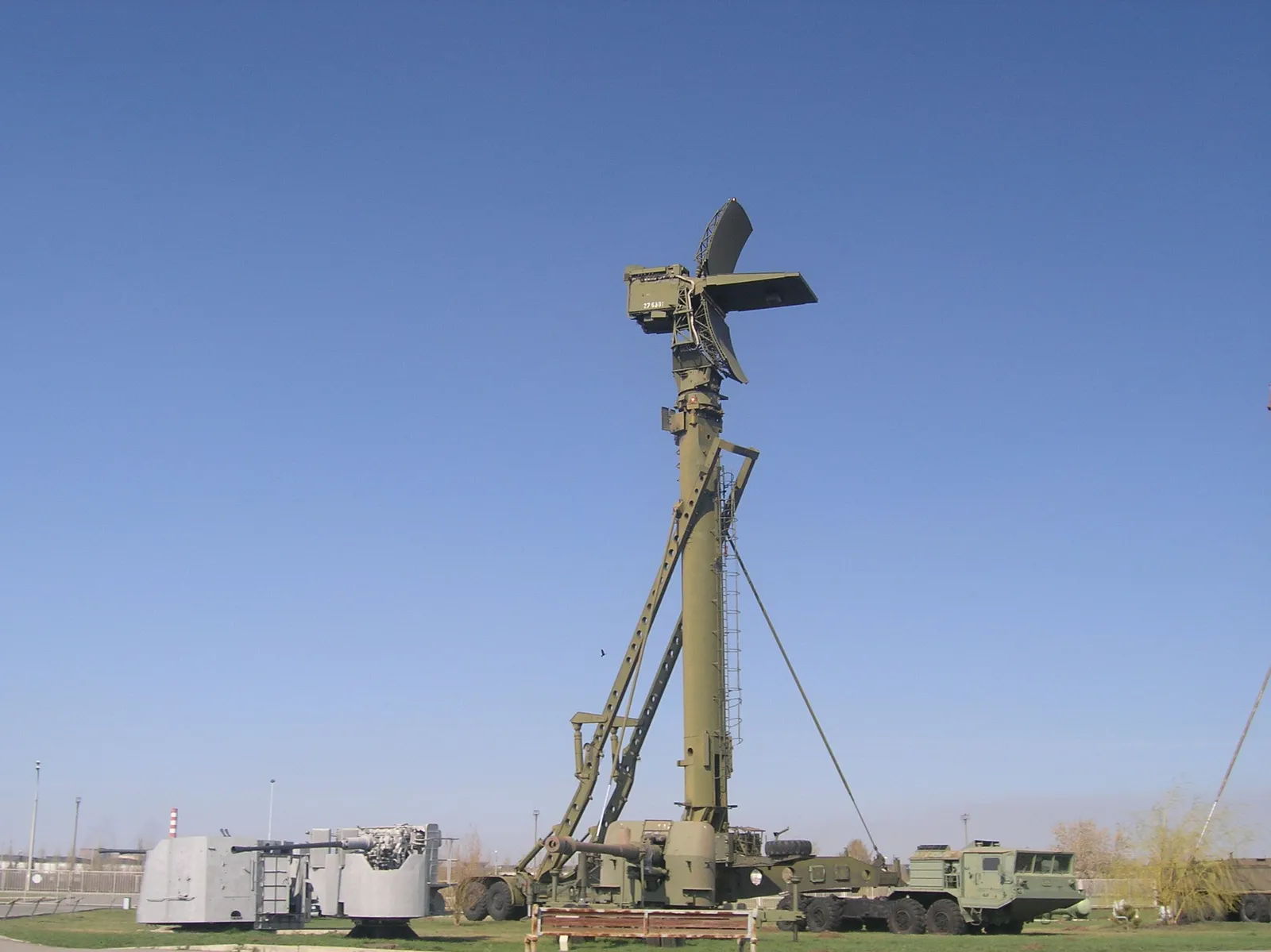


Ukraine received a Slovak S-300PMU radar set that Oryx identifies as including a 5N66M Clam Shell, while August 2025 reporting on the Voronezh/Baltimore airfield strike identified a Russian S-300 radar set as including a 76N6 target-detection radar.
Role detailsAir Defense
76N6 Clam Shell
Also known as
- 76N6 low-altitude detector
- 76N6 low-altitude acquisition radar
- Clam Shell
- 5N66
- 5N66M
- 76N6E
- 76N6S
- LAD
- Nizkovysotniy Obnaruzhitel
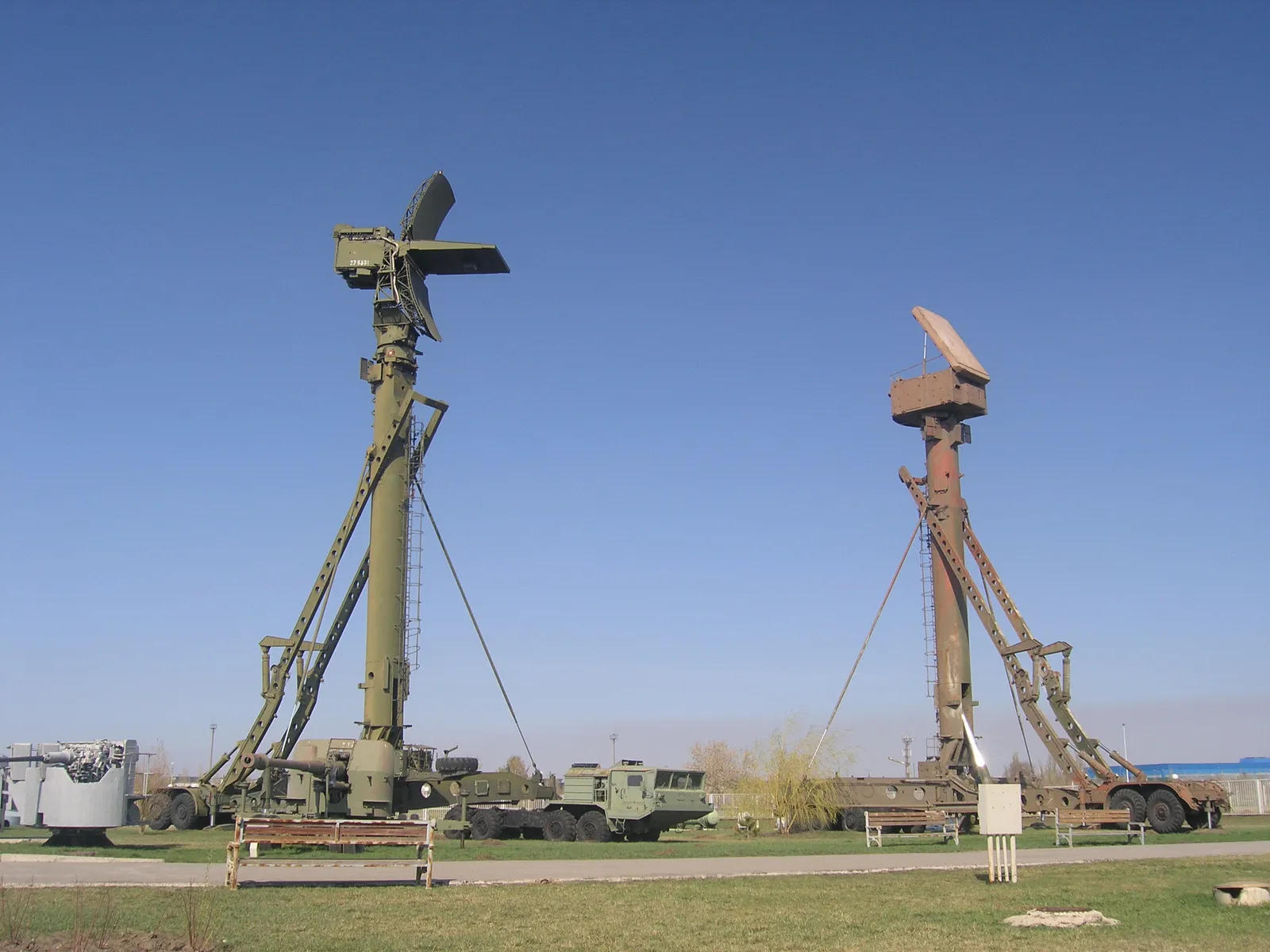
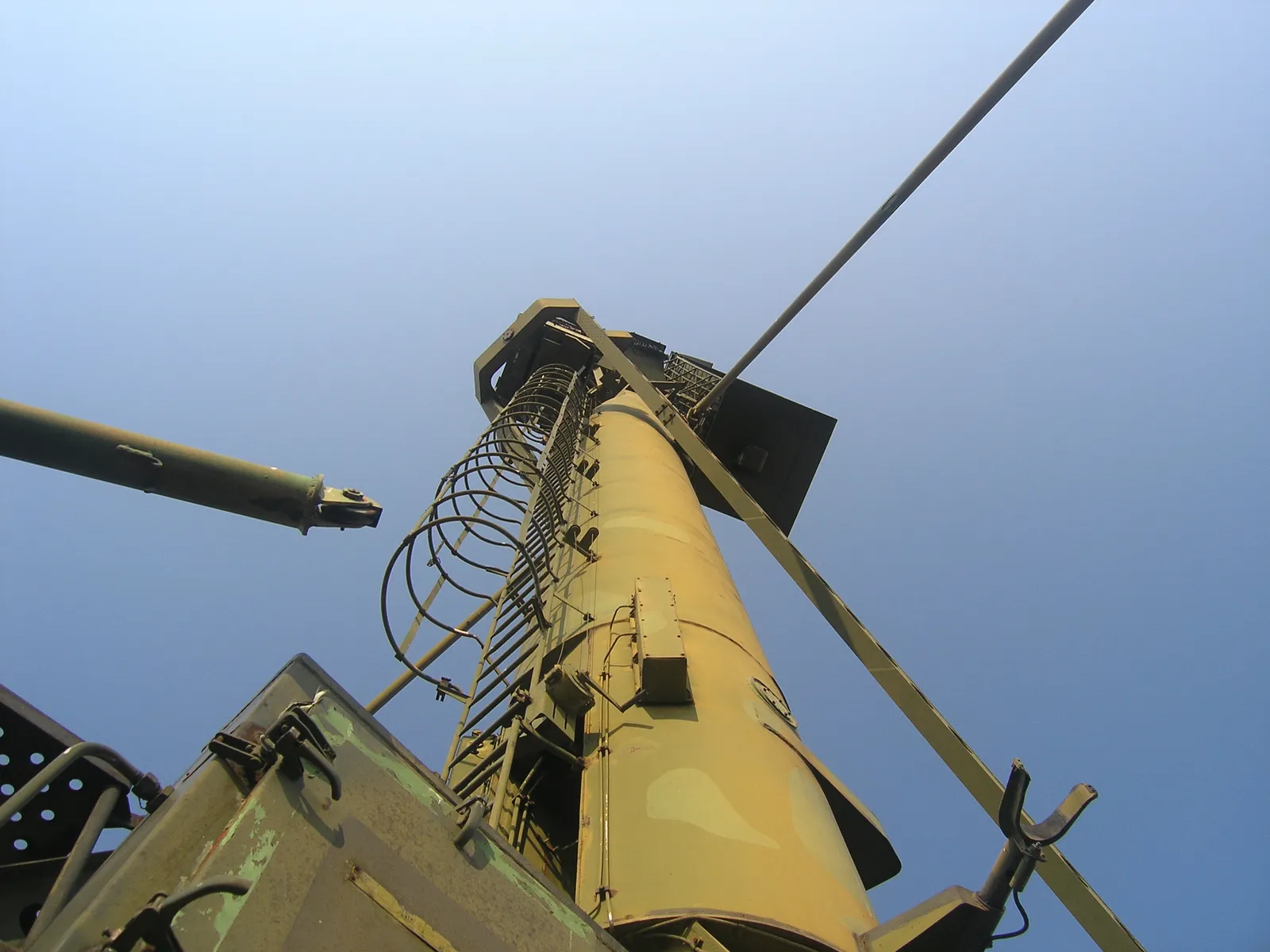
The 76N6 Clam Shell is a Soviet/Russian S-300-family low-altitude acquisition radar built to find small, low-flying targets such as cruise missiles and terrain-following aircraft. It supplements the S-300 battery's wider search and fire-control radars by improving coverage near the radar horizon, often from a 40V6M or 40V6MD mast. Direct Ukraine-war evidence identifies Clam Shell-family equipment in Slovakia's S-300PMU transfer to Ukraine and a 76N6 radar destroyed with Russian S-300 equipment at Voronezh in August 2025.
Role in Conflicts
Profile / Specs
Profile
- Origin
- Soviet Union / Russia
- Built by
- Almaz-Antey
- Type
- S-300-family low-altitude acquisition radar
- Service note
- Cold War S-300P-family radar line still documented with S-300 batteries in the 2020s
- Designer
- Lianozovo Electromechanical Plant (LEMZ) / S-300P radar-industrial lineage
- Produced
- Marketed with S-300PMU-era equipment by LEMZ in the 1990s; associated 5N66/5N66M/76N6 designations remain in S-300-family references
Specifications
- Radar role
- Low-altitude acquisition and target-designation radar for S-300/SA-10 battery fire-control systems
- NATO reporting name
- Clam Shell
- Associated designations
- 5N66, 5N66M, 76N6, 76N6E, and 76N6S in open references
- Transmission type
- Frequency-modulated continuous-wave radar in Air Power Australia and Military Periscope descriptions
- Primary target set
- Low-flying aircraft, cruise missiles, terrain-following aircraft, and other low-radar-cross-section targets in clutter
- Frequency band
- S band in the LEMZ specification table reproduced by Air Power Australia; some open S-300 radar tables classify Clam Shell in NATO I-band terms
- Detection range
- Air Power Australia's LEMZ table gives radar-horizon-limited performance at extremely low altitude, 90 km at 500 m altitude, and 120 km at 1,000 m altitude
- Tracked targets
- 180 targets in the LEMZ specification table reproduced by Air Power Australia
- Data output rate
- 3 seconds in the LEMZ specification table
- Antenna rotation
- 20 rpm in the LEMZ specification table
- Power
- 55 kW maximum power consumption and at least 1.4 kW average CW transmit power in the LEMZ specification table
- Mast options
- 40V6M and 40V6MD elevated mast configurations; Euro-SD describes approximate antenna-head heights around 24 m and 38 m
- Deployment time
- Air Power Australia's LEMZ table lists 1 hour to deploy on a 40V6M mast and a 2.5 minute warmup time
- Associated systems
- S-300P, S-300PT/PS, S-300PMU, and related SA-10/S-300-family batteries
Low-Altitude Search Role
The Clam Shell fills the low-altitude search layer in an S-300 battery. It is described as a frequency-modulated continuous-wave acquisition radar intended to detect low-radar-cross-section targets in clutter and electronic-countermeasure conditions, then provide target-track information to the fire-control system.
Sensor function
Low-altitude acquisition and target designation for S-300/SA-10 fire-control elements.
Low-altitude problem
Mast mounting helps push the radar horizon outward for aircraft, drones, cruise missiles, and terrain-following targets flying close to the ground.
Battery fit
The radar supplements, rather than replaces, the S-300 battery's long-range search radar and 30N6-family engagement radar.
Mobility cost
Euro-SD notes that mast-mounted radars can improve low-altitude coverage but add setup and takedown time, which matters for survivability.
Source references: Air Power Australia 76N6 Clam Shell; GlobalSecurity 76N6 Clam Shell; Military Periscope 76N6 Clam Shell; Euro-SD Long-range SAMs.
Variants
Open sources use several related designations for the Clam Shell low-altitude detector. The 5N66/5N66M and 76N6/76N6E names appear around S-300P, S-300PT/PS, and S-300PMU-family radar sets rather than as separate standalone weapons.
| Variant | Configuration | Designation notes |
|---|---|---|
| 5N66 / 5N66M | Early Clam Shell low-altitude detector designations | Air Power Australia groups 5N66 and 5N66M with the 76N6/76N6E Clam Shell family; Oryx separately identifies a Slovak 5N66M Clam Shell delivered for S-300PMU use. Sources: Air Power Australia 76N6 Clam Shell, Oryx Slovak Arms Deliveries to Ukraine |
| 76N6 / 76N6E | S-300PMU-family low-altitude acquisition radar | The LEMZ-backed technical summary treats 76N6/76N6E as Clam Shell family radars used to feed low-altitude target tracks to SA-10/S-300 fire-control elements. Sources: Air Power Australia 76N6 Clam Shell, Military Periscope 76N6 Clam Shell |
| 76N6 on 40V6M/40V6MD mast | Elevated low-altitude coverage configuration | Air Power Australia and Euro-SD describe the radar mounted on 40V6M/40V6MD mast systems to improve coverage of low-altitude targets near the radar horizon. Sources: Air Power Australia 76N6 Clam Shell, Euro-SD Long-range SAMs |
Air-Defense Systems
The 76N6 is a battery sensor rather than a standalone launcher; its catalog value comes from how it extends S-300-family low-altitude search coverage.
| Compatible item | Item type | Compatibility evidence |
|---|---|---|
 | Parent SAM family | Specialist and open-source references describe the Clam Shell as an S-300/SA-10 acquisition radar used with S-300P, S-300PMU, and related battery configurations. Sources: Air Power Australia 76N6 Clam Shell, GlobalSecurity 76N6 Clam Shell |
 | Engagement radar partner | The 76N6 feeds low-altitude target information into the S-300 engagement chain, complementing the 30N6 Flap Lid or Tomb Stone fire-control radar rather than replacing it. Sources: Air Power Australia 76N6 Clam Shell, Wikimedia 76N6 and 30N6 Image |
Timeline
76N6 Clam Shell Key Events
LEMZ brochure becomes an open reference point
Air Power Australia's 76N6 technical report cites a 1994 Lianozovo Electromechanical Plant brochure for Clam Shell specifications and S-300PMU-family context.
Sources: Air Power Australia 76N6 Clam Shell
Slovak S-300PMU radar set reaches Ukraine
Oryx lists Slovakia's S-300PMU-related radar deliveries to Ukraine as including one 5N66M Clam Shell, one 5N63S Flap Lid B, and one 36D6 Tin Shield.
Sources: Oryx Slovak Arms Deliveries to Ukraine
76N6 reported destroyed at Voronezh
Ukrainska Pravda, citing CyberBoroshno analysis, reported that a Russian S-300 radar set struck at the 108th Anti-Aircraft Missile Regiment and Baltimore airfield included 76N6 and 30N6 radars.
Sources: Ukrainska Pravda Voronezh S-300 Radars
Media
76N6 Clam Shell Videos
76N6 Clam Shell Images
Related Weapon Systems


Sources
Air Power Australia 76N6 Clam ShellPublisher: Air Power Australia | Note: Supports 76N6/5N66M Clam Shell identity, LEMZ brochure context, S-300/SA-10 relationship, low-altitude FMCW search role, mast use, and the listed specifications. | Accessed: 2026-07-02GlobalSecurity 76N6 Clam ShellPublisher: GlobalSecurity.org | Note: Supports 76N6/76N6S identity, S-300PMU battery relationship, automatic low-altitude target-search role, and target-designation function for the S-300 complex. | Accessed: 2026-07-02Military Periscope 76N6 Clam ShellPublisher: Military Periscope | Note: Supports country of origin, ground-radar identity, frequency-modulated continuous-wave target-acquisition role, dense-ECM framing, and low-RCS target focus. | Accessed: 2026-07-02Euro-SD Long-range SAMsPublisher: European Security & Defence | Note: Supports the 76N6 relationship to S-300, 40V6M/40V6MD mast use, approximate mast heights, radar-horizon context, and setup/takedown tradeoff for mast-mounted air-defense radars. | Accessed: 2026-07-02Oryx Slovak Arms Deliveries to UkrainePublisher: Oryx | Note: Supports 2014 Russia-Ukraine War direct transferred to Ukraine context for a Slovak 5N66M Clam Shell radar delivered with S-300PMU-related radar equipment. | Accessed: 2026-07-02Ukrainska Pravda Voronezh S-300 RadarsPublisher: Ukrainska Pravda | Note: Supports 2014 Russia-Ukraine War direct fielded/lost by Russia context for a 76N6 radar identified with Russian S-300 equipment hit at the 108th Anti-Aircraft Missile Regiment and Baltimore airfield in Voronezh in August 2025. | Accessed: 2026-07-02Wikimedia 76N6 Clam Shell ImagePublisher: Wikimedia Commons | Note: Image provenance and license page for the primary 76N6 Clam Shell acquisition radar image, photographed by ShinePhantom and published under Creative Commons Attribution-ShareAlike 3.0. | Accessed: 2026-07-02Wikimedia 76N6 and 30N6 ImagePublisher: Wikimedia Commons | Note: Image provenance and license page for the gallery image showing a 76N6 acquisition radar beside a 30N6 Flap Lid fire-control radar, published under Creative Commons Attribution-ShareAlike 3.0. | Accessed: 2026-07-02Wikimedia 76N6 Clam Shell Image 6Publisher: Wikimedia Commons | Note: Image provenance and license page for an additional 76N6 Clam Shell acquisition radar gallery image from the Togliatti technical museum, photographed by ShinePhantom. | Accessed: 2026-07-02