Air Defense

92N6A engagement radar

Also known as
  • 92N6A
  • 92N6
  • 92N6E
  • 92N2E
  • Grave Stone
  • Gravestone radar
  • S-400 engagement radar
  • S-400 fire-control radar

The 92N6A is a Russian 92N6-family engagement radar associated with the S-400 Triumf air-defense system. Public sources describe the 92N6/92N6E Grave Stone as the multifunction radar that acquires and tracks targets, prepares launches, guides missiles, and exchanges fire-control data with the S-400 command system; conflict rows are limited to sources that directly name the 92N6 or 92N6E family rather than generic S-400 deployments.

Role in Conflicts

Side
Russia

Ukrainian military intelligence reported destroying a Russian S-400 command-post position in occupied Crimea on 1-2 November 2025, including a 92N6E multifunction radar; Suspilne later reported Ukraine's Special Operations Forces saying a February 2026 Crimea strike destroyed another 92N6E radar station with S-400 system elements.

Role details
Conflict Reporting Scope

The conflict rows use direct 92N6-family evidence, not generic reports that only mention complete S-400 batteries. Ukraine sources name 92N6E radar stations in reported Crimea strikes; Syria sources identify a 92N6E at Khmeimim and discuss the 92N6 engagement radar in Russian S-400 units deployed at Khmeimim and near Masyaf. Public sources found for India-Pakistan fighting supported Indian S-400 use generally, but did not provide a clean direct 92N6A/92N6E radar-specific record.

Source references: GUR Crimea 92N6E Strike; Suspilne Crimea S-400 Strike; InformNapalm Khmeimim S-400 Positions; Could Russian S-400s Protect Syria Against Cruise Missiles?

Profile / Specs

Profile

Origin
Russia
Built by
Almaz-Antey
Type
Mobile engagement and missile-guidance radar
Service note
S-400-family engagement radar lineage entering service with the S-400 system in the late 2000s, with 92N6A described in open sources as an upgraded 92N6 form
Designer
Almaz-Antey radar design lineage in open-source S-400 descriptions
Designed
92N6-family development associated with the S-400 modernization effort in the early 2000s
Produced
Late 2000s-present for the broader 92N6/S-400 family; subtype production totals are not publicly confirmed
Number built
Not publicly confirmed
Developed from
30N6 / Tomb Stone and Flap Lid engagement-radar lineage in specialist S-400 descriptions

Specifications

Radar family
92N6 / 92N6A / 92N6E Grave Stone engagement-radar family
System role
S-400 multifunctional radar for target search, acquisition, auto-tracking, target selection, launch preparation, missile guidance, and information exchange with the 30K6E control system
Frequency band
I/J band in Radartutorial's 92N6E description
Antenna
Phased-array engagement radar with digital beam steering in specialist descriptions
Targets tracked
Up to 100 targets tracked in Track While Scan mode in Air Power Australia's S-400 technical analysis
Engagement tracking
Precision tracking of six targets concurrently for missile engagements in Air Power Australia's S-400 analysis
Missile guidance
Radartutorial describes control of up to 12 40N6 missiles against six targets; Air Power Australia describes command-link, semi-active, and track-via-missile/seeker-aided guidance support
Mounted platform
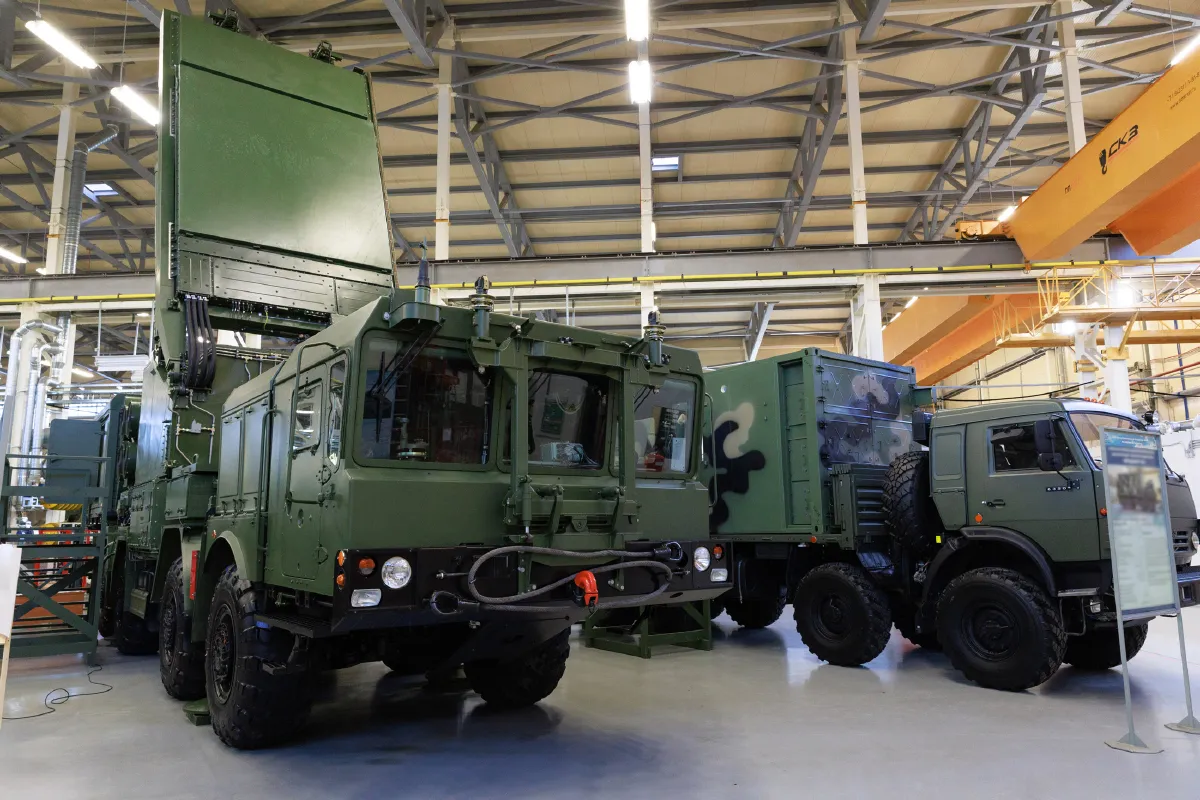
MZKT-7930 8x8 wheeled vehicle is listed for 92N6-family radar mobility in specialist and reference descriptions
Cited radar range
Army Recognition cites up to 480 km for 92N6A and up to 250 km for the export 92N6E; Radartutorial lists 400 km for 92N6E missile-control context
Associated system
S-400 Triumf / SA-21 Growler air-defense missile system
Engagement-Radar Role

The 92N6 family sits between the S-400 command-and-search layer and the launchers. Rosoboronexport's export description gives the 92N6E the engagement tasks: search from target-designation data or autonomously, acquire and track targets, select targets for destruction, prepare launches, guide missiles, and exchange information with the 30K6E control system.

Primary function

Multifunctional engagement radar for target tracking, launch preparation, missile guidance, and automatic data exchange in the S-400 architecture.

Designation caution

The export 92N6E is well described publicly; the 92N6A designation appears in open sources as an upgraded form, but subtype-specific primary-source detail remains limited.

Source references: S-400 "Triumph"; 92N6E "Grave Stone"; 92N6 92N6E Grave Stone Radar.
Variants

Open sources use 92N6, 92N6A, 92N6E, and 92N2E designations for closely related S-400 engagement-radar forms; export and domestic subtype details are not always separated consistently.

VariantConfigurationDesignation notes
92N6Baseline Grave Stone engagement radar

Army Recognition describes the 92N6 as the initial S-400-family phased-array engagement radar, while Radartutorial describes the 92N6E family as a missile-guidance radar for the SA-21/S-400 system.

Sources: 92N6E "Grave Stone", 92N6 92N6E Grave Stone Radar

92N6AUpgraded domestic-family form

Army Recognition identifies 92N6A as an upgraded 92N6 form with enhanced anti-jamming, signal processing, tracking precision, and a higher cited radar range; public primary-source detail for the subtype remains sparse.

Sources: 92N6 92N6E Grave Stone Radar

92N6EExport multifunctional radar

Rosoboronexport lists the 92N6E multifunctional radar in the S-400 export set and describes its target search, acquisition, missile-launch, guidance, and data-exchange tasks.

Sources: S-400 "Triumph"

92N2EAlternate open-source designation

Open-source S-400 summaries sometimes list 92N2E as an alternate designation for the 92N6E multifunctional radar; this record keeps 92N2E as an alias rather than a separate catalog page.

Sources: S-400 Missile System

Air-Defense System Context

The 92N6A page is treated as a component record because public conflict reporting normally identifies complete S-400 batteries rather than isolating a domestic engagement-radar subtype.

Compatible itemItem typeCompatibility evidence
S-400 Triumf, Long-range mobile surface-to-air missile system, Air DefenseS-400 TriumfLong-range surface-to-air missile system

Rosoboronexport describes the 92N6E multifunctional radar as the S-400 element that searches, acquires, selects targets, prepares launches, guides missiles, and exchanges information with the 30K6E control system.

Sources: S-400 "Triumph"

91N6A surveillance and tracking radar, Mobile air-surveillance and battle-management radar, Air Defense91N6A surveillance and tracking radarSurveillance and battle-management radar

The 91N6-family radar builds the long-range air picture for the same air-defense architecture, while the 92N6-family radar performs the engagement and missile-guidance layer.

Sources: S-400 "Triumph", 92N6E "Grave Stone"

Timeline

92N6A engagement radar Key Events

  1. S-400 service-entry context

    CSIS Missile Threat lists the S-400 Triumf entering Russian service in 2007, establishing the parent system context for the 92N6-family engagement radar.

    Sources: S-400 Triumf

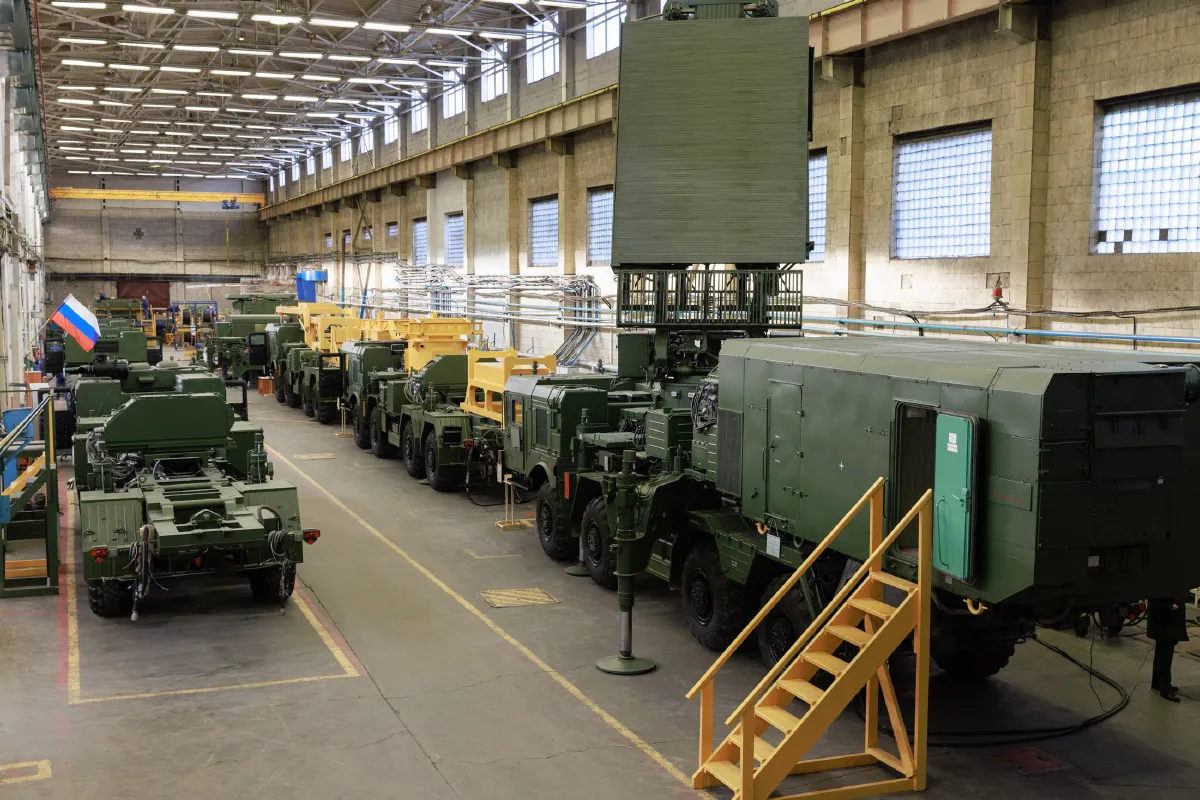
  2. Factory imagery of 92N6E assembly

    A Wikimedia Commons image page identifies a 92N6E radar assembly line at an Almaz-Antey factory, illustrating continuing public visibility of the export-family radar in Russian defense-industrial media.

    Sources: File:92N6E radar assembly line.jpg

Media

92N6A engagement radar Videos

92N6A engagement radar Images

Related Weapon Systems
P-35/P-37 Bar Lock radar, Transportable 2D air-surveillance and GCI radar, Electronic WarfareElectronic WarfareP-35/P-37 Bar Lock radarTransportable 2D air-surveillance and GCI radarThe P-35/P-37 Bar Lock family is a Soviet transportable two-coordinate radar line used for air surveillance, fighter guidance, and target assignment to air-defense missile systems. The family links the 1RL110 P-35 Saturn and later 1RL139 P-37 Mech designations, with documented use from North Vietnam's air-defense network, Syria's T4 airbase, and Iraq's 1991 IADS to Russian and Ukrainian radar losses or targeting in the 2014 Russia-Ukraine War; open air-defense references also place P-35M/Bar Lock search radar in S-200/SA-5 site architecture.
48Ya6-K1 Podlet-K1, Mobile three-coordinate low-altitude air-surveillance radar, Air DefenseAir Defense48Ya6-K1 Podlet-K1Mobile three-coordinate low-altitude air-surveillance radarThe 48Ya6-K1 Podlet-K1 is a Russian mobile three-coordinate radar complex built to detect and track low-altitude air targets for air-defense units. Public reporting describes the system as a multi-vehicle package with a radar/antenna vehicle, command or operator-control vehicle, and power-support vehicle on KamAZ chassis, while Rosoboronexport markets the export Podlet-K1KE for automated detection, tracking, identification, and flight-information tasks in air-defense and air-force radio-engineering units. Ukraine-war reporting documents Russian Podlet-K1 losses and strikes tied to the S-300 and S-400 air-defense network.
30N6 engagement radar, S-300-family engagement and missile-guidance radar, Air DefenseAir Defense30N6 engagement radarS-300-family engagement and missile-guidance radarThe 30N6 is the S-300P-family engagement radar lineage known by NATO as Flap Lid and, on later export configurations, Tomb Stone. The 5N63S Flap Lid B branch is the self-propelled S-300PS-era configuration, giving S-300P, S-300PS, S-300PMU, and S-300PMU-2 batteries target tracking, illumination, and missile-guidance functions rather than serving as a standalone weapon. Direct conflict records place Flap Lid-family radars in Ukraine and Nagorno-Karabakh losses, and satellite-based analysis identified a 30N6/30N6E radar as the probable S-300 component hit near Isfahan in April 2024.
9K33 Osa, Short-range self-propelled surface-to-air missile system, Air DefenseAir Defense9K33 OsaShort-range self-propelled surface-to-air missile systemThe 9K33 Osa, NATO reporting name SA-8 Gecko, is a Soviet short-range self-propelled surface-to-air missile system that combines search radar, tracking radar, command guidance, and ready-to-fire missiles on a single amphibious 6x6 TELAR. Cataloged conflict records show the system across several generations of air-defense use: Syrian Osa-AK vehicles in Lebanon in 1982, Iraqi SA-8s in the Gulf War air-defense network, captured Georgian systems in 2008, rebel-held examples in Syria, Armenian and Ukrainian battlefield use, and Indian OSA-AK service during Operation Sindoor.
MT-LB with ZU-23 anti-aircraft gun, Improvised tracked self-propelled anti-aircraft gun, Air DefenseAir DefenseMT-LB with ZU-23 anti-aircraft gunImprovised tracked self-propelled anti-aircraft gunThe MT-LB with ZU-23 anti-aircraft gun is an improvised tracked fire-support and short-range air-defense vehicle that combines the Soviet MT-LB multipurpose armored tractor with a twin 23 mm ZU-23 gun mount. Public records show the configuration in Iraqi, Russian, Ukrainian, Syrian, and Armenian or Artsakh service contexts, with documented examples ranging from an Iraqi wreck in Baghdad to vehicles destroyed, damaged, or captured in later wars.

Sources