- Side
- Russia

Russian 5P85SM2-01 launchers for the S-400 Triumf are separately listed in visual equipment-loss records for the full-scale phase of the Russia-Ukraine War, including destroyed and damaged examples.
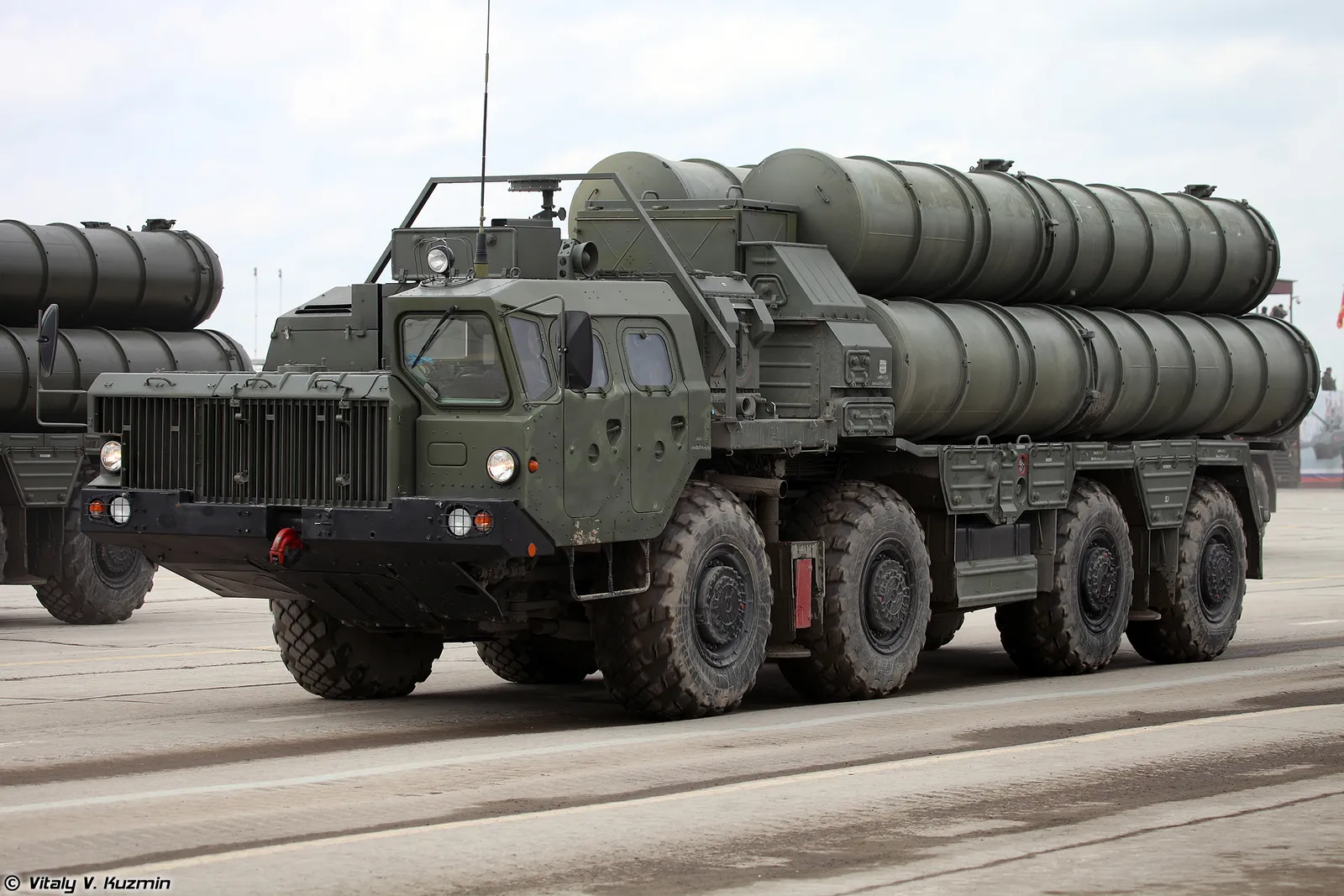
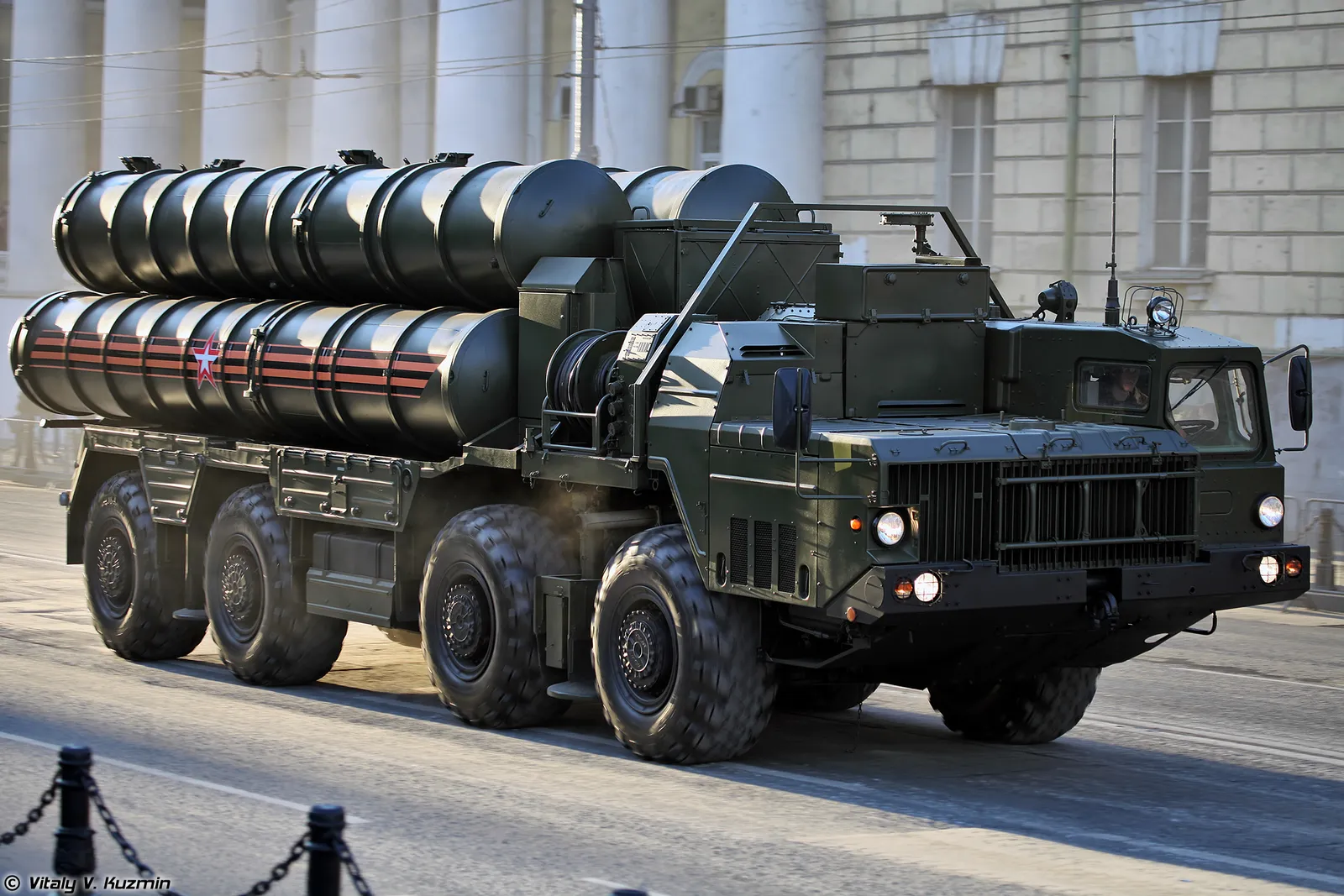
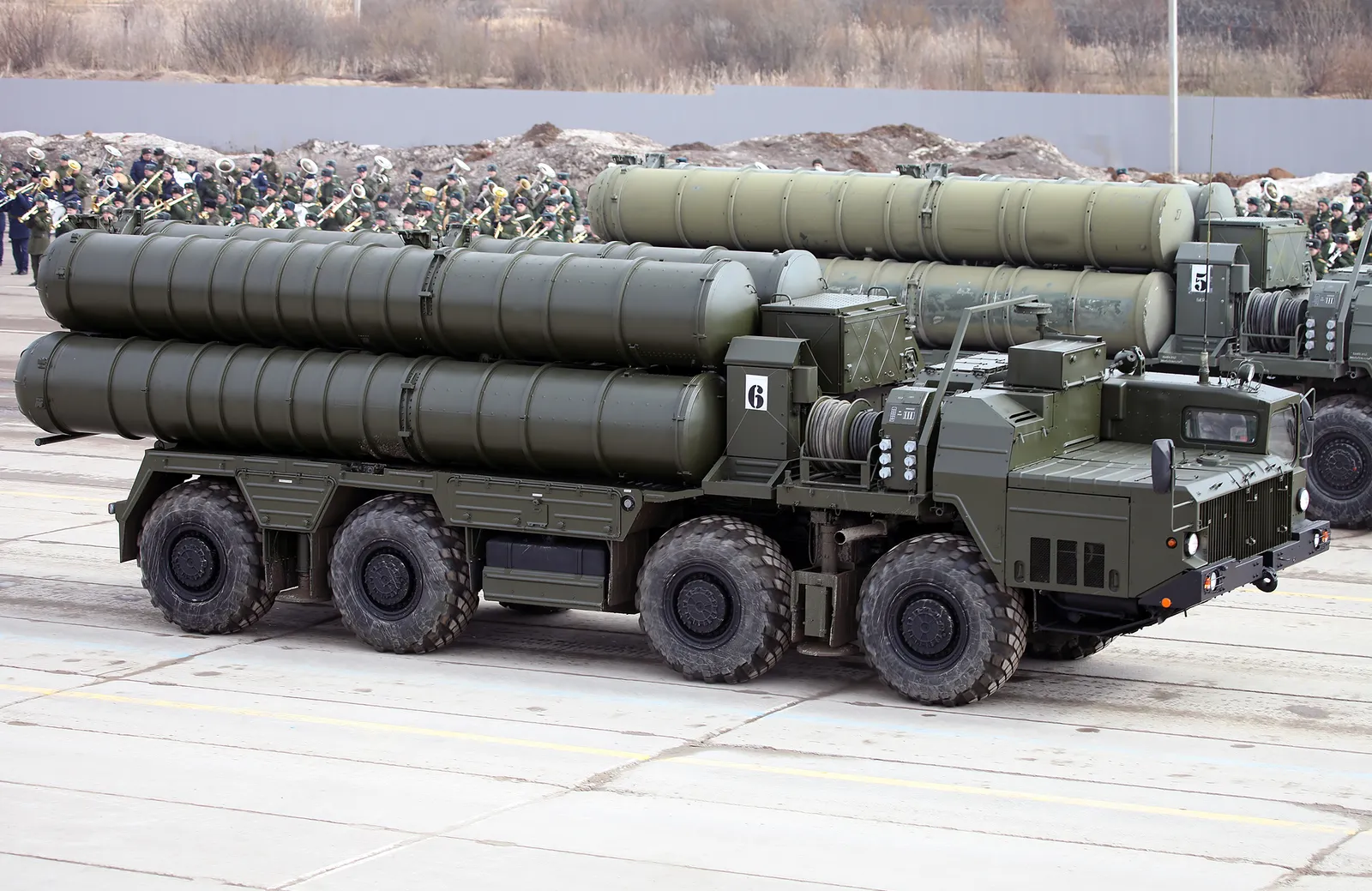
Role detailsThe 5P85SM2-01 is a self-propelled transporter-erector-launcher associated with Russia's S-400 Triumf long-range air-defense system. It carries four launch canisters on a MAZ-543M-family heavy wheeled chassis and depends on the S-400 battery's command post, search radars, and 92N6E engagement radar for target data and missile guidance. Visual-loss tracking has separately documented Russian 5P85SM2-01 launchers in Ukraine, making the TEL identifiable beyond generic S-400 system references.
Russian 5P85SM2-01 launchers for the S-400 Triumf are separately listed in visual equipment-loss records for the full-scale phase of the Russia-Ukraine War, including destroyed and damaged examples.
Role detailsOpen sources distinguish several S-400 launcher branches. The 5P85SM2-01 is the MAZ-543M-family self-propelled launcher seen in Russian service imagery and visual-loss records, while towed 5P85T2 / 5P85TE2 and newer 51P6E or 5P90-series launchers appear in S-400 component descriptions.
| Variant | Configuration | Designation notes |
|---|---|---|
 | Towed S-400 launcher branch | S-400 launcher references distinguish the towed 5P85TE2 semitrailer, normally pulled by a BAZ-64022 tractor, from the MAZ-family self-propelled 5P85SM2-01 TEL. Sources: Air Power Australia S-300P TEL Vehicles, Air Power Australia S-400 Components, Army Recognition S-400 |
| 51P6E / 5P85TE3 / 5P85SE3 | Later export launcher designation set | Rosoboronexport's export description names the 51P6E launcher and 5P85TE3 / 5P85SE3 launchers in the S-400 ADMS launcher set. Sources: Rosoboronexport S-400 Triumph |
| 5P90S | Newer self-propelled TEL line | Specialist references describe 5P90S as a later self-propelled S-400 TEL on the BAZ-6909 series, distinct from the MAZ-hosted 5P85SM/SE2 lineage. Sources: Air Power Australia S-400 Components |
 | Earlier S-300PM-family launcher | The cataloged 5P85SM belongs to the S-300PM / S-300PM1 / S-300PM2 launcher lineage; the 5P85SM2-01 page separates the S-400 launcher designation used in later visual references. Sources: Air Power Australia S-400 Components, VDayRehearsal05052016-40.jpg |
The 5P85SM2-01 is meaningful as a launcher component of the S-400 battery rather than as an independent air-defense system.
| Compatible item | Item type | Compatibility evidence |
|---|---|---|
 | Long-range surface-to-air missile system | Rosoboronexport describes the S-400 as a mobile multi-channel air-defense missile system with command, radar, and launcher elements; the launcher count can reach twelve in one ADMS set. Sources: Rosoboronexport S-400 Triumph |
| Related S-300PM-family self-propelled launcher | Specialist launcher references place the 5P85SM/SE2 lineage between S-300PM-family launcher development and later S-400 launcher variants, making it the closest existing catalog neighbor. Sources: Air Power Australia S-400 Components |
| Related S-400 towed launcher | Air Power Australia identifies the 5P85TE2 as a baseline S-400 semitrailer towed by a BAZ-64022 tractor, a separate launcher branch from the self-propelled 5P85SM2-01. |
The 5P85SM2-01 carries ready missile canisters, raises them for vertical launch, and receives the battery-level firing solution through the S-400 command-and-radar architecture. Rosoboronexport's S-400 export description separates the launcher from the 55K6E command post, 91N6E radar system, 92N6E multifunctional radar, and 96L6E2 all-altitude detector.
Four full-size S-400 missile canisters on the TEL.
The launcher depends on S-400 command and radar vehicles for target processing, target designation, launch preparation, and missile guidance.
Commons and image-catalog sources identify the 5P85SM2-01 with a MAZ-543M-family chassis, distinguishing it from towed BAZ-based S-400 launchers.
Sources: Rosoboronexport S-400 Triumph; VDayRehearsal05052016-40.jpg; Alabino05042017-69.jpg.
CSIS places Russian S-400 service entry in 2007, establishing the service generation for the launcher family.
Sources: CSIS S-400 Triumf
A Wikimedia Commons file from a 2016 Moscow Victory Day rehearsal identifies the photographed vehicle as a 5P85SM2-01 TEL for the S-400 system.
Sources: VDayRehearsal05052016-40.jpg
A second Commons-hosted Vitaly Kuzmin image from Alabino identifies the vehicle as a 5P85SM2-01 launcher from an S-400 system.
Sources: Alabino05042017-69.jpg
Oryx's Russian loss list separately tracks 5P85SM2-01 launchers for S-400 among visually documented air-defense losses during the full-scale invasion.
Sources: Oryx Russian Equipment Losses
Militarnyi reported that a destroyed S-400 component found in Zaporizhzhia Oblast was identified as a 5P85SM2-01 transporter-erector-launcher.
Sources: Militarnyi Zaporizhzhia S-400 Component
WarSpotting records a Russian 5P85SM2-01 TEL for the 40R6 S-400 as destroyed at Dzhankoi airbase after earlier operation at the same site.
Sources: WarSpotting 5P85SM2-01 Dzhankoi