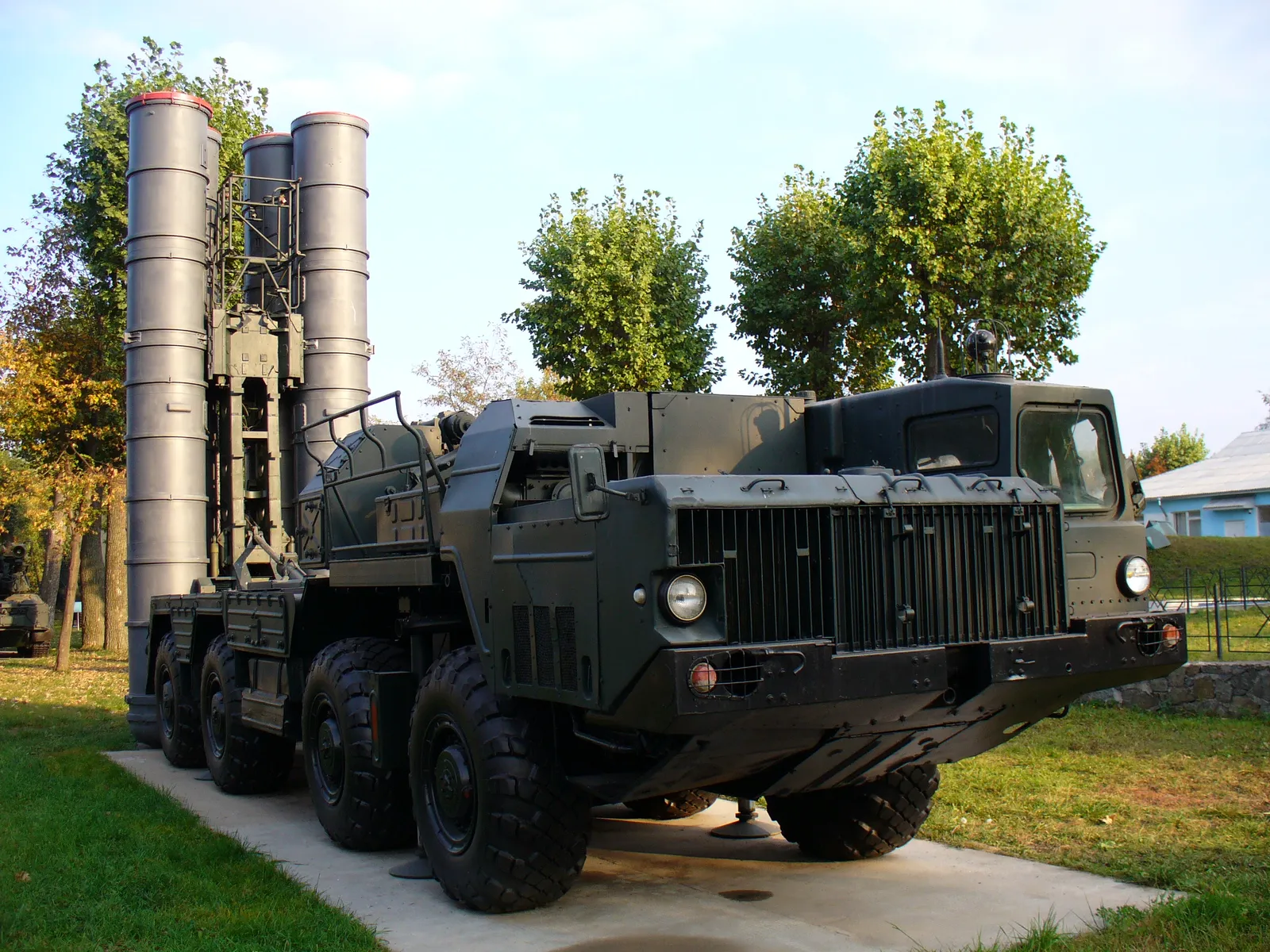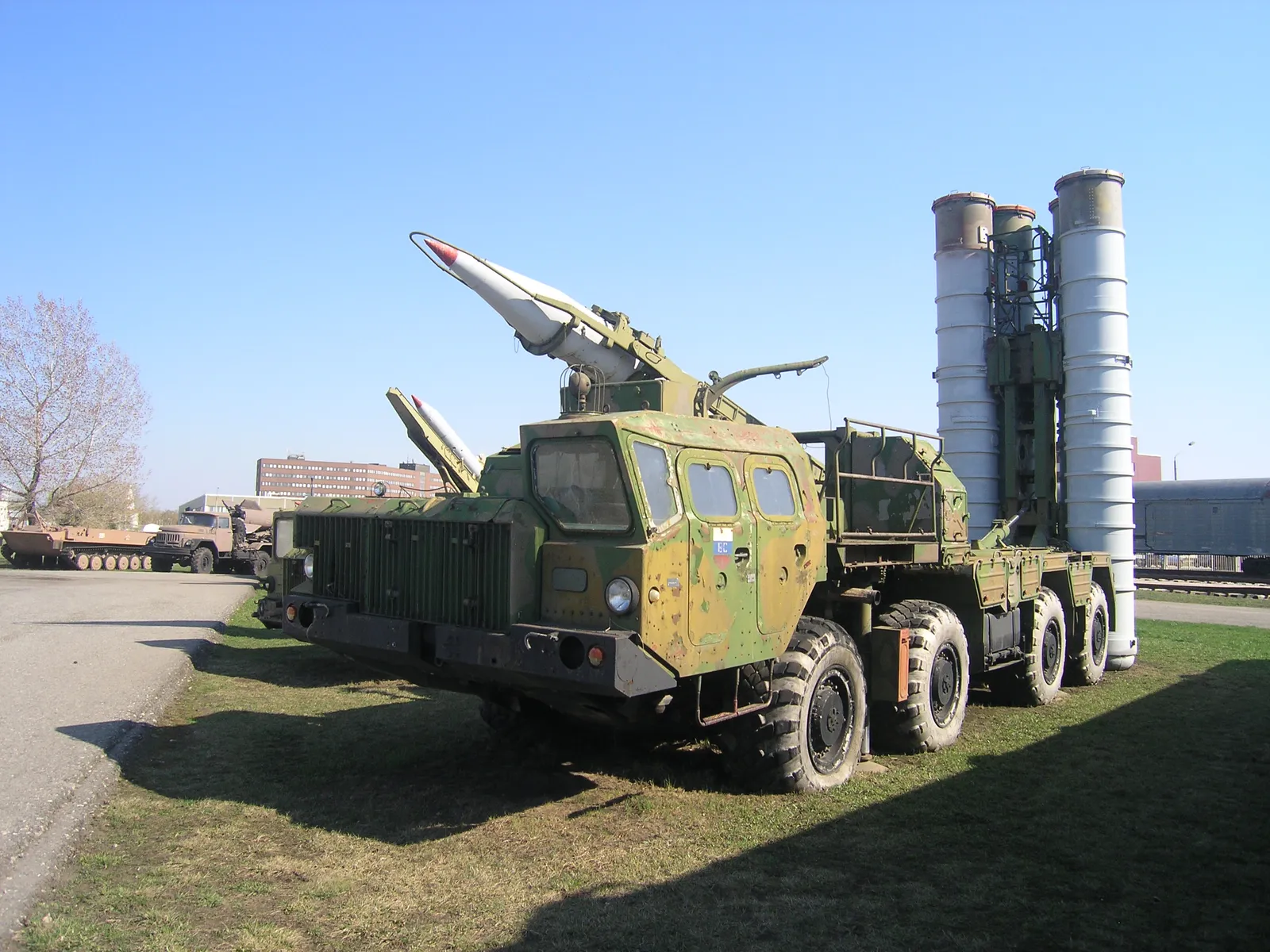
- Side
- Ukraine

Ukrainian 5P85S S-300PS launchers are separately listed in Oryx visual-loss records, including destroyed, damaged, and captured examples during Russia's full-scale invasion.
Role detailsThe 5P85S is the master self-propelled transporter-erector-launcher in early S-300PS launcher groups. It carries four S-300 missile canisters, adds the control electronics that coordinate paired 5P85D slave launchers under the S-300PS engagement radar, and has been documented as Ukrainian and Armenian/Artsakh S-300PS battlefield materiel in open-source loss records.
Ukrainian 5P85S S-300PS launchers are separately listed in Oryx visual-loss records, including destroyed, damaged, and captured examples during Russia's full-scale invasion.
Role detailsOryx records Armenian/Artsakh 5P85S launchers for S-300PS destroyed during the 2020 fighting, including losses attributed to loitering-munition strikes.
Open sources distinguish the 5P85S from the 5P85D by command role. The S-series TEL carried the control cabin and datalink hardware for the launcher group, while D-series vehicles acted as dependent launchers in the same S-300PS battery architecture.
| Variant | Configuration | Designation notes |
|---|---|---|
 | Slave TEL | The paired 5P85D carries the same four-canister launcher load but lacks the 5P85S control cabin and depends on the master TEL in the 5P85SD launcher group. Sources: Air Power Australia S-300P TEL Vehicles, Army Recognition 5P85S |
| 5P85SE | Later autonomous export TEL line | Later self-propelled export launchers kept the autonomous TEL concept but replaced the bulky 5P85S/SU control cabin with smaller electronics enclosures. |
| 5P85T / 5P85TE | Towed launcher branch | The towed launcher line belongs to the broader S-300PM/PMU family and is separate from the self-propelled 5P85S and 5P85D S-300PS launcher group. |
The launcher is defined by its role inside S-300PS and early S-300PMU fire units rather than by independent sensor or missile guidance.
| Compatible item | Item type | Compatibility evidence |
|---|---|---|
 | Long-range surface-to-air missile system | The 5P85S is the master TEL in S-300PS launcher groups, carrying the control logic and datalink hardware for paired 5P85D launchers under the battery engagement radar. Sources: Air Power Australia S-300P TEL Vehicles, Army Recognition 5P85S |
| Dependent S-300PS launcher | Technical references describe a 5P85SD launcher group with one 5P85S master TEL and up to two 5P85D dependent launchers, giving the fire unit more ready canisters while retaining centralized launch control. Sources: Air Power Australia S-300P TEL Vehicles, Missilery S-300PS |
 | S-300PS engagement radar | The 5P85S launcher group operates under the 5N63S Flap Lid B / 30N6 engagement radar, which supplies the battery fire-control context for the S-300PS launchers. Sources: Air Power Australia S-300P TEL Vehicles, Missilery S-300PS, Army Recognition 5P85S |
The 5P85S is the command-capable launcher in the S-300PS self-propelled launcher group. Its large F3S cabin behind the driver's compartment distinguishes it from the 5P85D and houses the control logic and datalink equipment used to coordinate dependent launchers.
A typical 5P85SD group is described with one 5P85S/SU master TEL and up to two 5P85D/DU dependent launchers.
Four transport-launch containers with 5V55-series S-300 missiles are carried on the launcher rails.
The 5P85S links the local launcher group to the 5N63S Flap Lid B engagement radar; dependent launchers were constrained by cable and datalink geometry.
Sources: Air Power Australia S-300P TEL Vehicles; Army Recognition 5P85S; Missilery S-300PS.
Almaz began work on the S-300P family, the parent air-defense line for later road-mobile S-300PS launcher vehicles.
Sources: CSIS S-300
Open references identify the S-300PS generation as the point where the 5P85S master TEL and 5P85D dependent launchers became central to the self-propelled launcher layout.
Sources: Air Power Australia S-300P TEL Vehicles, Army Recognition 5P85S
Oryx's 2020 Nagorno-Karabakh loss list separately records Armenian/Artsakh 5P85S launchers for S-300PS among documented air-defense losses.
Sources: Oryx Nagorno-Karabakh Losses
Oryx's Ukrainian equipment-loss list separately tracks 5P85S launchers for S-300PS during Russia's full-scale invasion.
Sources: Oryx Ukrainian Equipment Losses