Air Defense

9A317M TELAR

Also known as
  • Buk-M3 TELAR
  • 9K317M Buk-M3 TELAR
  • 9A317M Buk-M3
  • 9A317ME
  • 9A317ME TELAR
  • Viking TELAR
  • Buk-M3 Viking TELAR
  • SA-27 Gollum TELAR

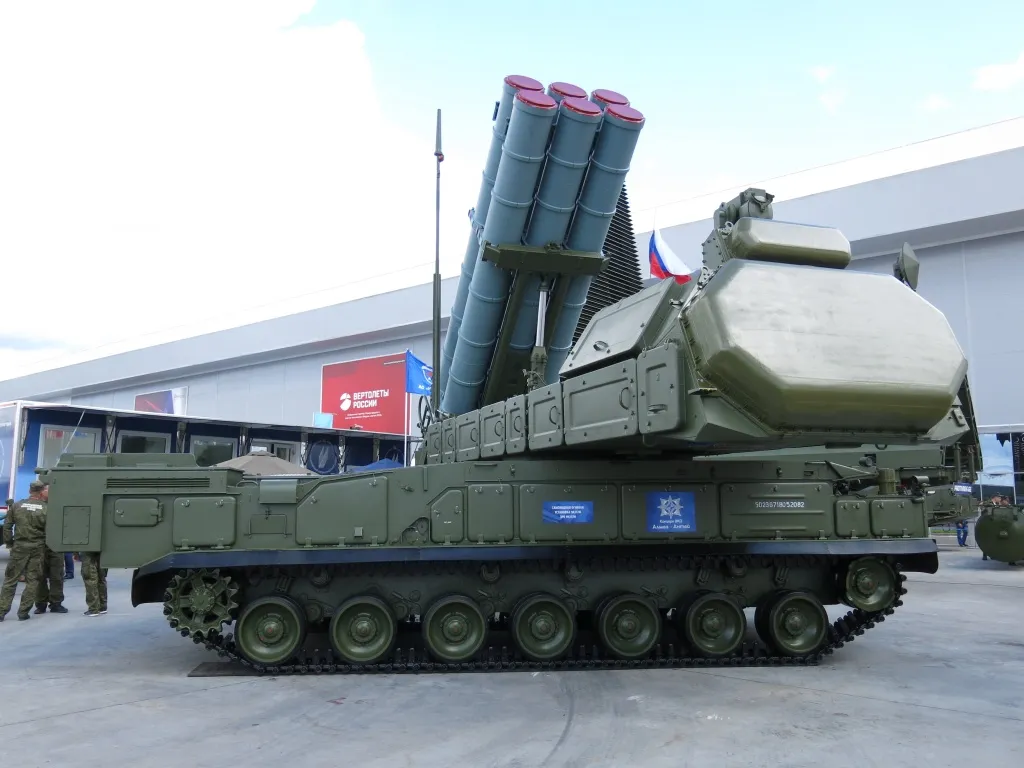
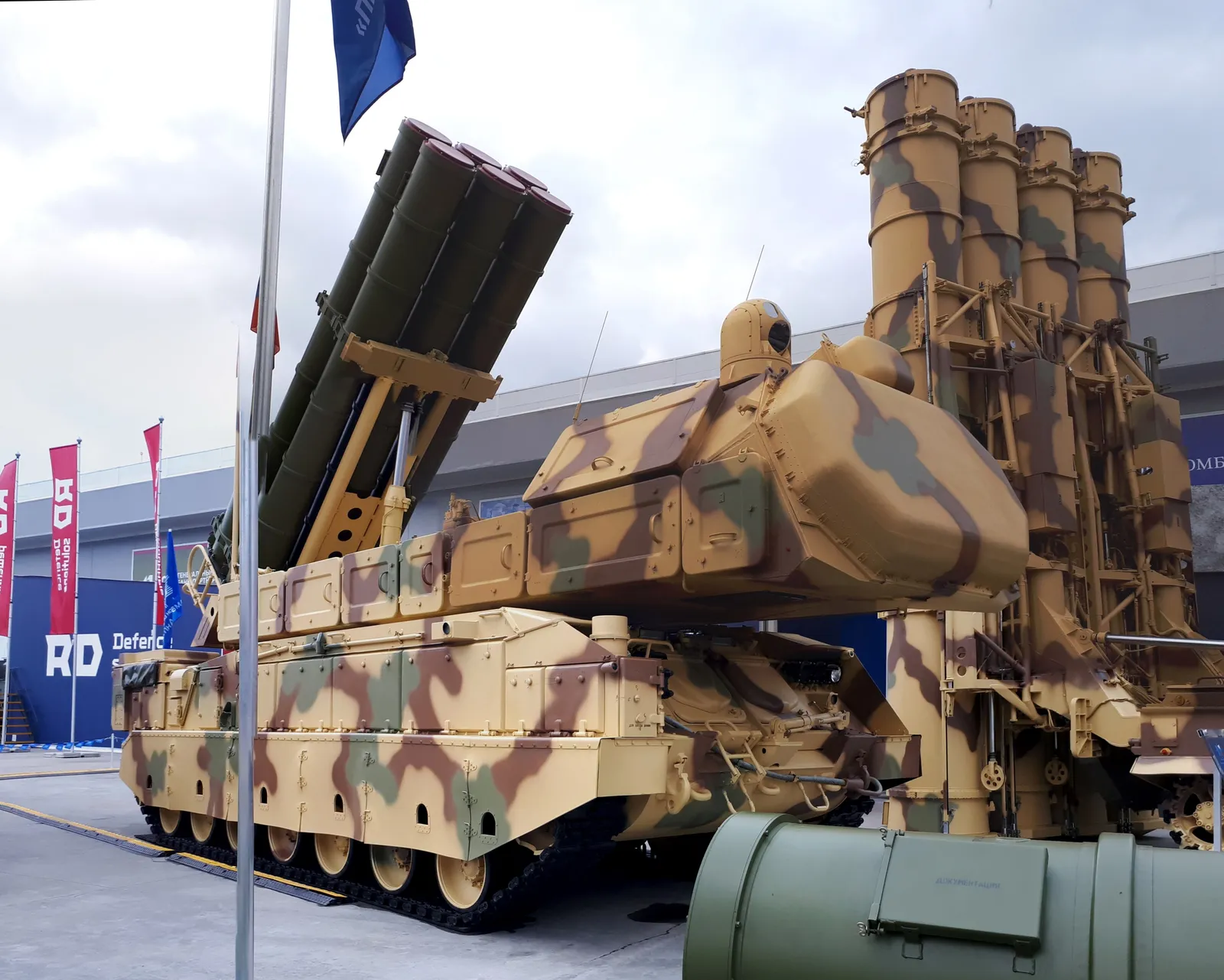
The 9A317M TELAR is the autonomous tracked firing vehicle for Russia's 9K317M Buk-M3 medium-range surface-to-air missile system. Open technical sources describe it as a six-canister, radar-equipped self-propelled firing unit able to receive target designation, track targets, prepare missile flight tasks, illuminate targets, and launch 9M317M-family missiles; Ukraine-war reporting and loss documentation identify Russian 9A317M TELARs and Buk-M3 launchers as battlefield air-defense targets.

Role in Conflicts

Side
Russia

Russian 9A317M TELARs and 9K317M Buk-M3 launchers are documented in Ukraine-war reporting and loss tracking: Euromaidan Press cited footage of a Russian Buk-M3 force package in Kursk Oblast that included a 9A317M TELAR, Ukrainska Pravda reported a Ukrainian intelligence strike on a Russian 9K317M Buk-M3 in occupied Zaporizhzhia Oblast, and WarSpotting lists multiple Russian 9A317M TELAR losses.

Role details
Profile / Specs

Profile

Origin
Russia
Type
Tracked Buk-M3 transporter erector launcher and radar
Service note
Buk-M3 generation firing vehicle adopted by Russia in 2016 and documented during the full-scale phase of the 2014 Russia-Ukraine War.
Designer
V. V. Tikhomirov Scientific Research Institute of Instrument Design (NIIP)
Designed
Buk-M3 development under chief designer E. A. Pigin from 2007 in Missilery.info's summary
Produced
Adopted and first supplied to Russian forces in 2016; serial production organized at Ulyanovsk Mechanical Plant

Specifications

Parent system
9K317M Buk-M3 medium-range surface-to-air missile system
Vehicle role
Autonomous self-propelled firing unit / TELAR with onboard target detection, tracking, illumination, missile flight-task preparation, launch, and radio-correction functions
Ready missiles
Six 9M317M-family missiles in transport-launch containers on the 9A317M TELAR
Missile family
9M317M for Buk-M3; export 9M317ME in Viking references
Chassis
GM-5969 tracked chassis in Missilery.info's 9A317M description; Army Recognition describes a GM-569/GM-569A tracked armored chassis for Buk-M3/Viking
Crew
4 in Army Recognition's Buk-M3 vehicle specifications
Engagement range
2.5-70 km for Buk-M3 target range in Missilery.info; Rosoboronexport lists up to 65 km slant range for Viking against aircraft with 2 m2 RCS
Target kill altitude
0.015-35 km in Missilery.info's Buk-M3 characteristics
Simultaneous targets
Up to six targets for a 9A317M firing unit; up to 36 air targets for a full Buk-M3 configuration
Radar sector
9A317M illumination/guidance station sector listed by Missilery.info as +/-45 degrees azimuth and up to +70 degrees elevation, expanding after target track setup
Maximum target speed
3,000 m/s in Missilery.info's Buk-M3 characteristics; Rosoboronexport lists up to 4,800 m/s for Viking targets
Vehicle dimensions
Army Recognition lists about 9.3 m length, 3.25 m width, and 3.8 m height
Road speed and range
Army Recognition lists 70 km/h maximum road speed and 500 km road range
Variants
VariantConfigurationDesignation notes
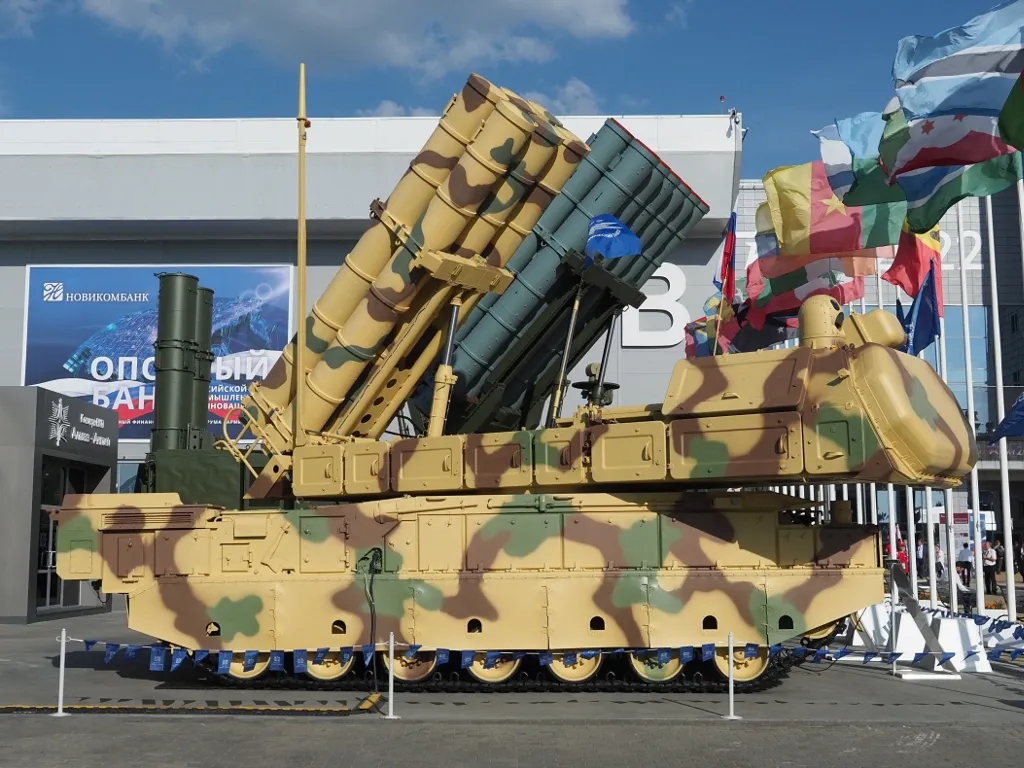
9A317ME TELARExport Viking self-propelled firing unit

Rosoboronexport's Viking export page describes the 9A317ME self-propelled firing unit, while Commons identifies the primary image as a 9A317ME TELAR at Army-2022.

Sources: Viking - Rosoboronexport, File:9A317ME Buk-M3-Viking ARMY-2022.jpg

9A317 TELAR, Tracked Buk-M2 transporter erector launcher and radar, Air Defense9A317 TELAREarlier Buk-M2 TELAR

The 9A317M succeeds the Buk-M2 generation 9A317 firing vehicle with a six-canister Buk-M3 launch arrangement and updated radar/fire-control functions.

Sources: 9K317M Buk-M3 - Missilery.info, Buk-M3 Viking 9K317M - Army Recognition

Launched Missiles

The 9A317M is documented with the Buk-M3 missile branch in sealed transport-launch containers.

Launched itemItem typeLaunch evidence
9M317 surface-to-air missile, Medium-range surface-to-air missile, Munitions9M317 surface-to-air missile9M317 family missile record

Missilery.info identifies the 9M317M missile as part of Buk-M3 and describes it as a longer-range development of the 9M317 missile; the linked catalog record covers the broader 9M317 family context.

Sources: 9K317M Buk-M3 - Missilery.info

Buk-M3 Firing-Unit Context

The 9A317M is the radar-equipped firing vehicle inside the Buk-M3 battery, not the entire 9K317M system. That distinction matters because battlefield reports may name a Buk-M3 system, a launcher, or a specific TELAR depending on the evidence visible in the imagery.

Firing unit

Missilery.info describes the 9A317M autonomous self-propelled firing unit with a multichannel illumination and guidance station, digital computer, communications, launch automation, and six transport-launch containers for 9M317M missiles.

Export label

Rosoboronexport uses 9A317ME for the Viking export self-propelled firing unit and describes it as able to engage up to six targets from its own launcher and an attached 9A316ME launcher.

Launcher split

Army Recognition and Missilery.info distinguish the six-missile TELAR from the 9A316M/ME launcher, which carries twelve missiles but receives launch data from a firing unit or illumination radar.

Sources: 9K317M Buk-M3 - Missilery.info; Viking - Rosoboronexport; Buk-M3 Viking 9K317M - Army Recognition.

Timeline

9A317M TELAR Key Events

  1. Buk-M3 development context

    Missilery.info says Buk-M3 development under chief designer E. A. Pigin began in 2007 at the Tikhomirov institute.

    Sources: 9K317M Buk-M3 - Missilery.info

  2. Adoption and first Russian delivery

    Missilery.info places Buk-M3 adoption in 2016 and says the first Buk-M3 division was supplied to Russian armed forces in October 2016.

    Sources: 9K317M Buk-M3 - Missilery.info

  3. Buk-M3 Viking shown publicly

    MDAA's Army Recognition summary reported Almaz-Antey's Army-2018 presentation of the Buk-M3 Viking and described a battery with two 9A317M TELARs and one 9A316M TEL.

    Sources: Almaz-Antey Presents Buk-M3 Viking - MDAA

  4. 9A317M TELAR identified in Kursk strike footage

    Euromaidan Press cited Militarnyi's review of strike footage showing a Russian Buk-M3 package in Kursk Oblast with a 9A316M TEL and a 9A317M TELAR.

    Sources: Ukraine Degrades Russian Air Defense - Euromaidan Press

  5. Ukrainian intelligence reports Buk-M3 strike

    Ukrainska Pravda reported that Ukrainian Defence Intelligence struck a Russian 9K317M Buk-M3 system near Oleksandrivka in occupied Zaporizhzhia Oblast.

    Sources: Russian Buk-M3 Destroyed in Zaporizhzhia - Ukrainska Pravda

Related Weapon Systems
1L125 Niobium-SV, Mobile VHF three-coordinate air-defense surveillance radar, Air DefenseAir Defense1L125 Niobium-SVMobile VHF three-coordinate air-defense surveillance radarThe 1L125 Niobium-SV is a Russian mobile VHF/meter-band, three-coordinate radar built for ground-forces air defense and developed by NNIIRT within the Almaz-Antey group. Rosoboronexport's 1L125E export profile describes a 5-500 km, 360-degree surveillance radar for detecting, tracking, identifying, and reporting aerodynamic and ballistic targets, including low-observable aircraft; Ukrainian and sanctions-derived records identify Niobium-SV radars in Russian service during the Russia-Ukraine war.
1L13-3 Nebo-SV, Mobile VHF two-coordinate air-surveillance radar, Air DefenseAir Defense1L13-3 Nebo-SVMobile VHF two-coordinate air-surveillance radarThe 1L13-3 Nebo-SV is a Soviet/Russian mobile meter-band radar for ground-forces air defense, built to search for aircraft, helicopters, UAVs, and other air targets and pass range-and-bearing data to command posts or missile batteries. It is a two-coordinate predecessor to the 1L119 Nebo-SVU: sources describe it with a 72-element VHF antenna array, separate IFF interrogator, six-person crew, and fighter-target detection figures reaching roughly 350 km at high altitude.
2K22 Tunguska, Tracked self-propelled gun-missile air defense system, Air DefenseAir Defense2K22 TunguskaTracked self-propelled gun-missile air defense systemThe 2K22 Tunguska is a Soviet-designed tracked short-range air defense system that combines twin 30 mm autocannons, 9M311-family surface-to-air missiles, search and tracking radars, and a protected self-propelled chassis. Built to cover maneuver formations against low-flying aircraft, helicopters, cruise missiles, and later unmanned threats, it appears in the 2014 Russia-Ukraine War on both Russian and Ukrainian sides, with Russian combat losses and Ukrainian missile firings documented in open sources.
30N6 engagement radar, S-300-family engagement and missile-guidance radar, Air DefenseAir Defense30N6 engagement radarS-300-family engagement and missile-guidance radarThe 30N6 is the S-300P-family engagement radar lineage known by NATO as Flap Lid and, on later export configurations, Tomb Stone. The 5N63S Flap Lid B branch is the self-propelled S-300PS-era configuration, giving S-300P, S-300PS, S-300PMU, and S-300PMU-2 batteries target tracking, illumination, and missile-guidance functions rather than serving as a standalone weapon. Direct conflict records place Flap Lid-family radars in Ukraine and Nagorno-Karabakh losses, and satellite-based analysis identified a 30N6/30N6E radar as the probable S-300 component hit near Isfahan in April 2024.
35N6 Kasta surveillance radar, Mobile low-altitude air-surveillance radar, Air DefenseAir Defense35N6 Kasta surveillance radarMobile low-altitude air-surveillance radarThe 35N6 Kasta is a mobile UHF-band low-altitude surveillance radar associated with the Kasta-2-1/Kasta-2E1 branch of Russia's air-defense sensor network. Open radar references describe the 51U6/Kasta-2E1 as a two-coordinate low-altitude radar with separate antenna and operator or command-post elements; Janes identified a two-vehicle KamAZ-43114 system near Buhaivka, and Oryx plus WarSpotting list destroyed Russian Kasta command-post and antenna vehicles in the 2014 Russia-Ukraine War.

Sources