Air Defense

9A317 TELAR

Also known as
  • Buk-M2 TELAR
  • 9K317 Buk-M2 TELAR
  • 9A317 Buk-M2
  • 9A310M2
  • 9A310M2 Buk-M2
  • SA-17 Grizzly TELAR

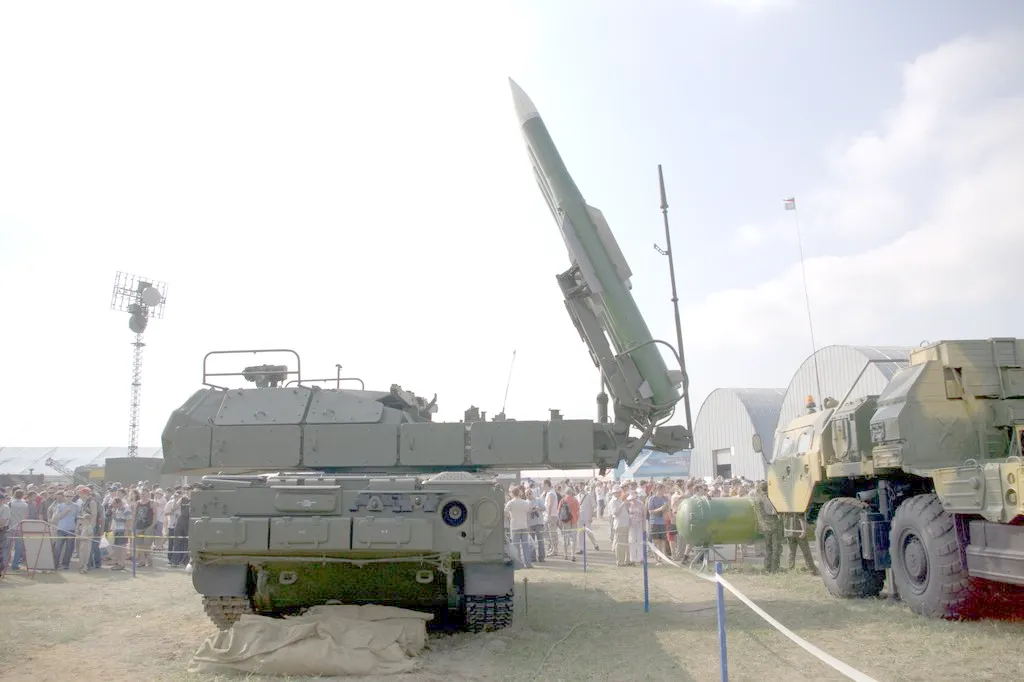
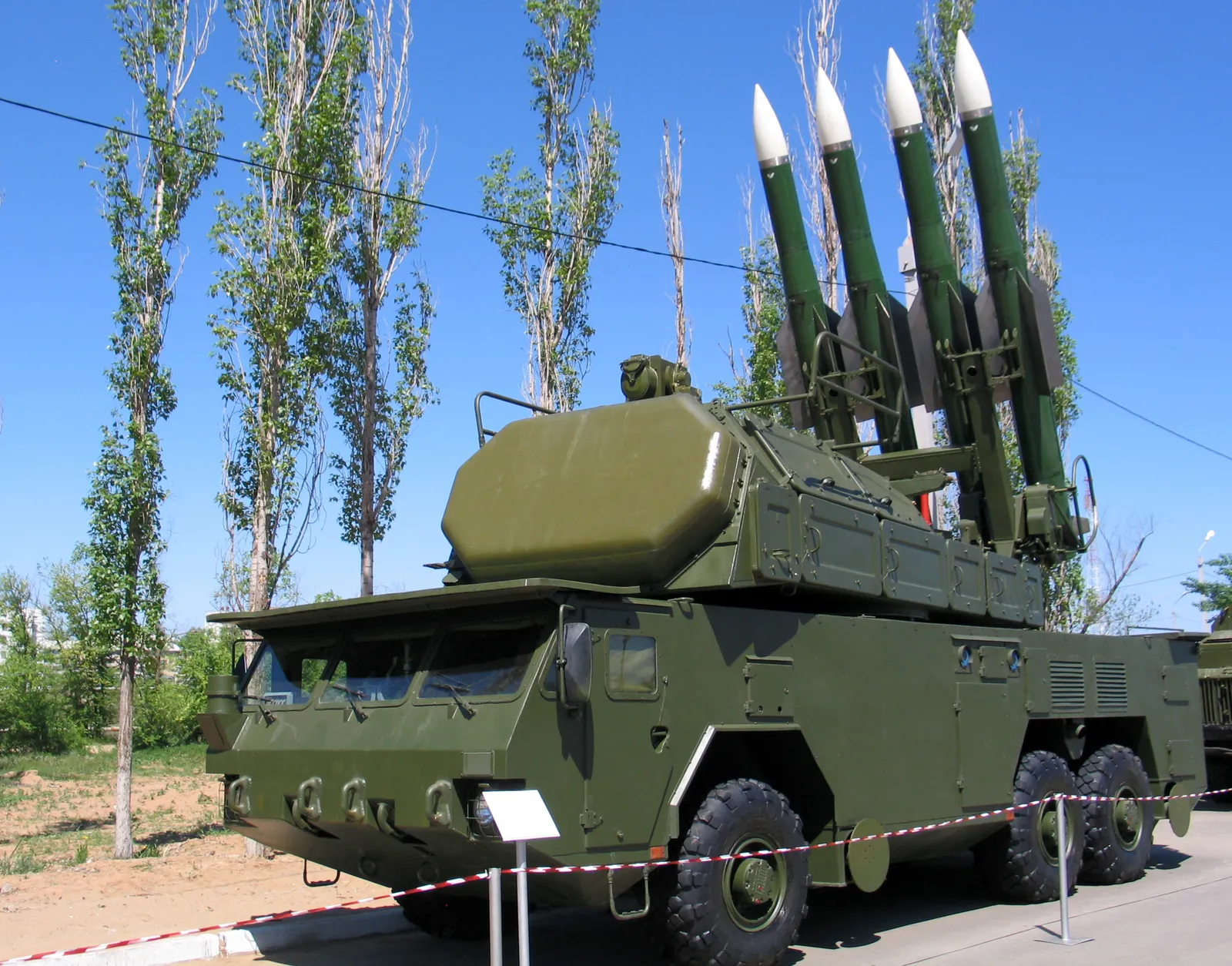
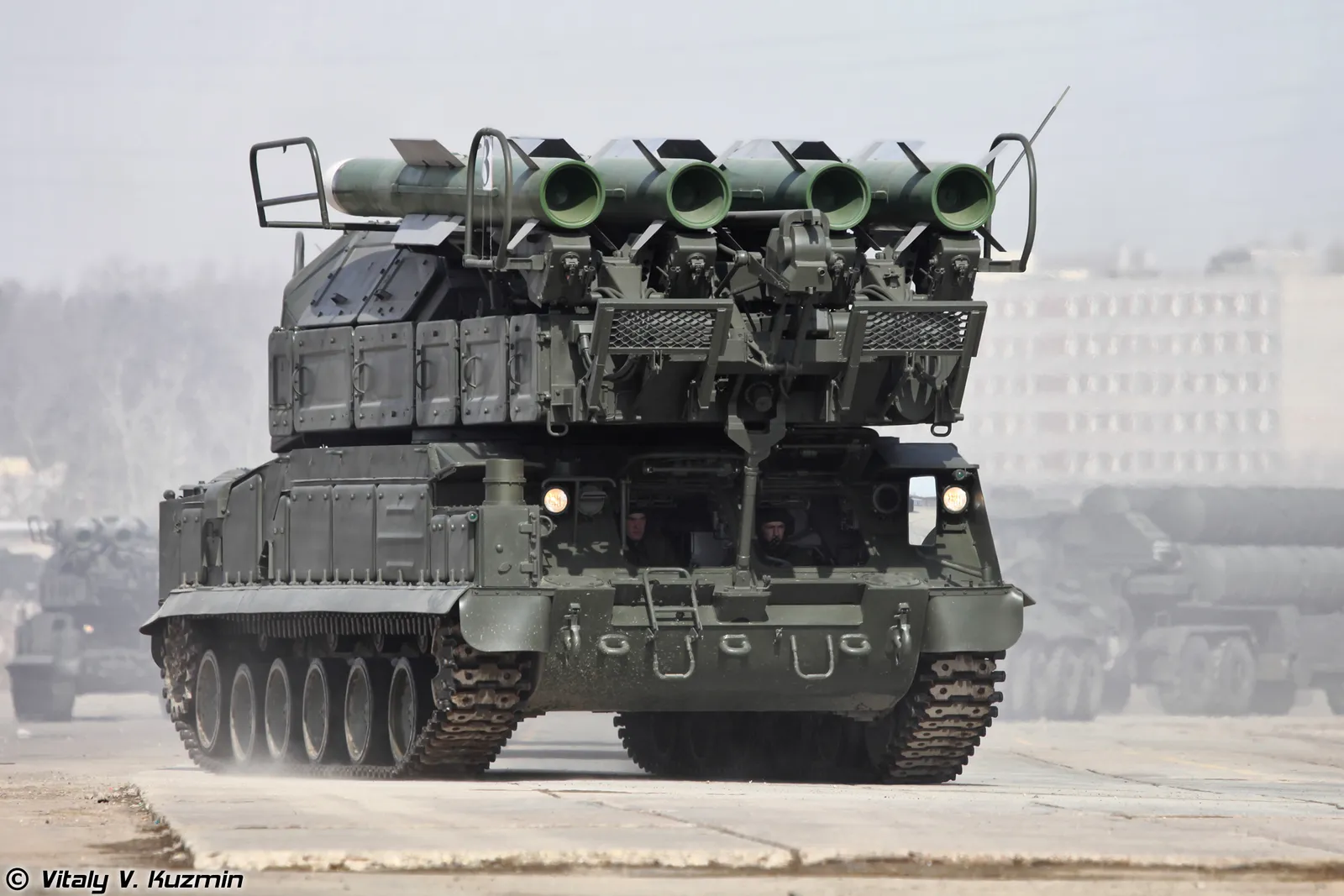
The 9A317 TELAR is the tracked self-propelled firing vehicle for the 9K317 Buk-M2 medium-range surface-to-air missile system. Open technical references describe it as a GM-569-based launcher-radar vehicle with four ready 9M317-family missiles, onboard target detection and illumination, and autonomous firing capability; Ukraine-war loss reporting ties Russian 9A317 TELARs to visually documented battlefield losses.

Role in Conflicts

Side
Russia

Oryx's visually documented Russian equipment-loss list records multiple 9A317 TELARs for Buk-M2 as destroyed, damaged, or captured during the 2014 Russia-Ukraine War; older secondary reporting sometimes used the 9A310M2 label for the same Buk-M2 firing-vehicle loss lane.

Role details
Profile / Specs

Profile

Origin
Russia
Type
Tracked Buk-M2 transporter erector launcher and radar
Service note
Buk-M2 generation vehicle documented in Russian service during the full-scale phase of the 2014 Russia-Ukraine War.
Designer
V. V. Tikhomirov Scientific Research Institute of Instrument Design (NIIP)
Designed
Buk-M2 development completed in the late Soviet period; serial production resumed in the 2000s
Produced
Modern 9K317 Buk-M2 serial production reported from 2008; TELAR-specific production totals are not publicly confirmed in the sources used here

Specifications

System
9K317 Buk-M2 medium-range surface-to-air missile system
Vehicle role
Self-propelled firing vehicle / TELAR with onboard detection, tracking, illumination, and missile-guidance functions
Designation caveat
9A317 is the standard Buk-M2 TELAR designation in current technical and loss-list references; 9A310M2 appears in older conflict-loss reporting for Buk-M2 TELARs
Ready missiles
Four ready-to-launch 9M317-family surface-to-air missiles
Chassis
GM-569 tracked chassis in Missilery.info's 9A317 description
Crew
4
Target detection area
Missilery.info lists up to 120 km detection range for the 9A317 radar against a 1-2 m2 target at 3 km altitude
Fired targets
Up to four targets for the 9A317 firing vehicle in Missilery.info's Buk-M2 data
Reaction time
About 5 seconds in Missilery.info's 9A317 description
Combat weight
About 35 tons for the 9A317 self-propelled firing vehicle
Dimensions
About 8.0 m long, 3.3 m wide, and 3.8 m high for the 9A317 vehicle
System Context

The TELAR is best read against the existing Buk-M2 system page because the launcher-radar vehicle is one combat element inside a larger battery.

Compatible itemItem typeCompatibility evidence
Buk-M2, Tracked medium-range surface-to-air missile system, Air DefenseBuk-M2Parent air-defense system

Missilery.info places the 9A317 self-propelled firing vehicle inside the 9K317 Buk-M2 system, while Ukraine-war loss reporting identifies Buk-M2 TELARs as Russian battlefield air-defense assets.

Sources: 9K317 Buk-M2 - Missilery.info, Russian Equipment Losses - Oryx

Launched Missiles
Launched itemItem typeLaunch evidence
9M317 surface-to-air missile, Medium-range surface-to-air missile, Munitions9M317 surface-to-air missileBuk-M2 surface-to-air missile

Buk-M2 system references list the 9M317 missile as the TELAR's primary missile family, with four missiles carried ready to launch.

Sources: 9K317 Buk-M2 - Missilery.info, Buk-M2E - Army Recognition

9M317E surface-to-air missile, Export medium-range surface-to-air missile, Munitions9M317E surface-to-air missileExport Buk-M2E surface-to-air missile

The linked export missile record covers the 9M317E context used with Buk-M2E/9A317E systems rather than the domestic Russian tracked Buk-M2 TELAR label.

Sources: Buk-M2E - Army Recognition

Designation Notes

The useful identification boundary is the Buk-M2 firing vehicle. Current technical references and Oryx loss listings use 9A317 for the Buk-M2 self-propelled firing vehicle, while some older Ukraine-war secondary summaries used 9A310M2 for Buk-M2 TELAR losses.

Technical label

Missilery.info describes the 9K317 Buk-M2 self-propelled firing vehicle as 9A317, with radar, four ready missiles, a four-person crew, and autonomous firing capability in a sector of responsibility.

Loss-list label

Oryx's current Russia equipment-loss page lists Buk-M2 firing-vehicle losses under 9A317 TELAR.

Older reporting label

SOFREP's Oryx-derived Bayraktar TB2 loss summary used 9A310M2 for two Buk-M2 TELAR losses, so that designation remains as an alias rather than the page title.

Sources: 9K317 Buk-M2 - Missilery.info; Russian Equipment Losses - Oryx; Bayraktar TB2 Drones Wreak Havoc - SOFREP.

Timeline

9A317 TELAR Key Events

  1. Buk-M2 serial-production context

    Missilery.info reports that Ulyanovsk Mechanical Plant began serial production of the modern 9K317 Buk-M2 complex in 2008.

    Sources: 9K317 Buk-M2 - Missilery.info

  2. Buk-M2 TELAR strike reported under older label

    SOFREP quoted Ukraine Weapons Tracker footage of a destroyed 9K317 Buk-M2 TELAR and repeated older Oryx-derived reporting that listed two Buk-M2 TELARs under the 9A310M2 label.

    Sources: Bayraktar TB2 Drones Wreak Havoc - SOFREP

  3. Current loss lists use 9A317

    The current Oryx Russia equipment-loss page lists Russian Buk-M2 firing-vehicle losses under 9A317 TELAR, matching the designation used by Buk-M2 technical references.

    Sources: Russian Equipment Losses - Oryx, 9K317 Buk-M2 - Missilery.info

Media

9A317 TELAR Images

Related Weapon Systems
1L125 Niobium-SV, Mobile VHF three-coordinate air-defense surveillance radar, Air DefenseAir Defense1L125 Niobium-SVMobile VHF three-coordinate air-defense surveillance radarThe 1L125 Niobium-SV is a Russian mobile VHF/meter-band, three-coordinate radar built for ground-forces air defense and developed by NNIIRT within the Almaz-Antey group. Rosoboronexport's 1L125E export profile describes a 5-500 km, 360-degree surveillance radar for detecting, tracking, identifying, and reporting aerodynamic and ballistic targets, including low-observable aircraft; Ukrainian and sanctions-derived records identify Niobium-SV radars in Russian service during the Russia-Ukraine war.
1L13-3 Nebo-SV, Mobile VHF two-coordinate air-surveillance radar, Air DefenseAir Defense1L13-3 Nebo-SVMobile VHF two-coordinate air-surveillance radarThe 1L13-3 Nebo-SV is a Soviet/Russian mobile meter-band radar for ground-forces air defense, built to search for aircraft, helicopters, UAVs, and other air targets and pass range-and-bearing data to command posts or missile batteries. It is a two-coordinate predecessor to the 1L119 Nebo-SVU: sources describe it with a 72-element VHF antenna array, separate IFF interrogator, six-person crew, and fighter-target detection figures reaching roughly 350 km at high altitude.
2K22 Tunguska, Tracked self-propelled gun-missile air defense system, Air DefenseAir Defense2K22 TunguskaTracked self-propelled gun-missile air defense systemThe 2K22 Tunguska is a Soviet-designed tracked short-range air defense system that combines twin 30 mm autocannons, 9M311-family surface-to-air missiles, search and tracking radars, and a protected self-propelled chassis. Built to cover maneuver formations against low-flying aircraft, helicopters, cruise missiles, and later unmanned threats, it appears in the 2014 Russia-Ukraine War on both Russian and Ukrainian sides, with Russian combat losses and Ukrainian missile firings documented in open sources.
30N6 engagement radar, S-300-family engagement and missile-guidance radar, Air DefenseAir Defense30N6 engagement radarS-300-family engagement and missile-guidance radarThe 30N6 is the S-300P-family engagement radar lineage known by NATO as Flap Lid and, on later export configurations, Tomb Stone. The 5N63S Flap Lid B branch is the self-propelled S-300PS-era configuration, giving S-300P, S-300PS, S-300PMU, and S-300PMU-2 batteries target tracking, illumination, and missile-guidance functions rather than serving as a standalone weapon. Direct conflict records place Flap Lid-family radars in Ukraine and Nagorno-Karabakh losses, and satellite-based analysis identified a 30N6/30N6E radar as the probable S-300 component hit near Isfahan in April 2024.
35N6 Kasta surveillance radar, Mobile low-altitude air-surveillance radar, Air DefenseAir Defense35N6 Kasta surveillance radarMobile low-altitude air-surveillance radarThe 35N6 Kasta is a mobile UHF-band low-altitude surveillance radar associated with the Kasta-2-1/Kasta-2E1 branch of Russia's air-defense sensor network. Open radar references describe the 51U6/Kasta-2E1 as a two-coordinate low-altitude radar with separate antenna and operator or command-post elements; Janes identified a two-vehicle KamAZ-43114 system near Buhaivka, and Oryx plus WarSpotting list destroyed Russian Kasta command-post and antenna vehicles in the 2014 Russia-Ukraine War.

Sources