

Tor-series systems, including 9K330/9A330 and 9K331/9A331 Tor-M1 vehicles, were documented with Russian or Russian-backed forces in Ukraine from the 2014 Donbas phase; full-scale invasion loss records later listed Russian 9A330 TLARs as destroyed, damaged, and captured, with WarSpotting identifying a Russian 9A330 captured at Dorohynka on 2022-03-20. Ukraine also reactivated 9K330 Tor systems after 2014, and one Ukrainian 9A330 TLAR was visually documented as damaged during the full-scale phase.
Role detailsAir Defense
9A330 Tor TLAR
Also known as
- 9K330 Tor
- Tor
- SA-15 Gauntlet
- 9A330
- Tor TLAR
- Tor TELAR
- Transporter Launcher and Radar
- TLAR
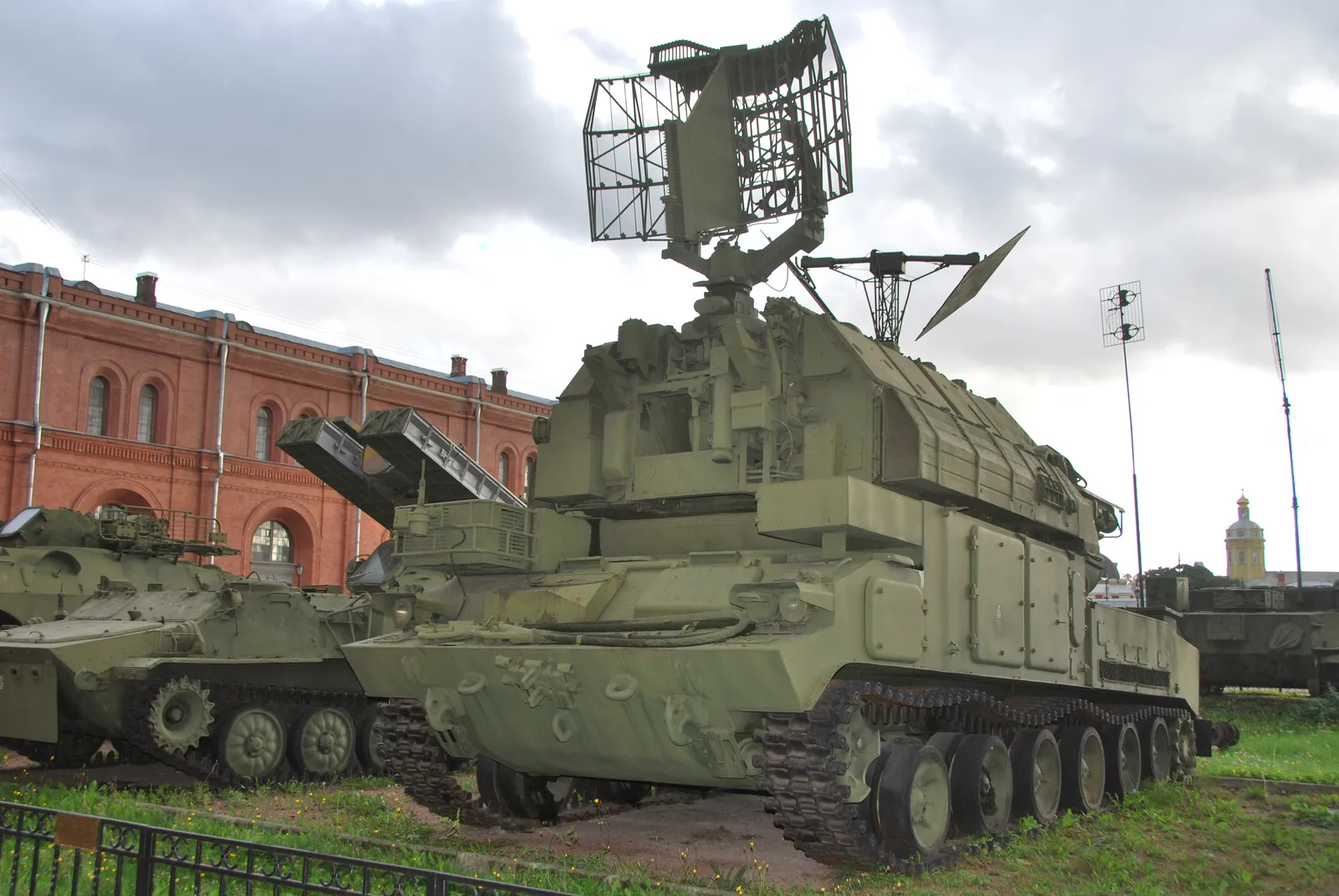
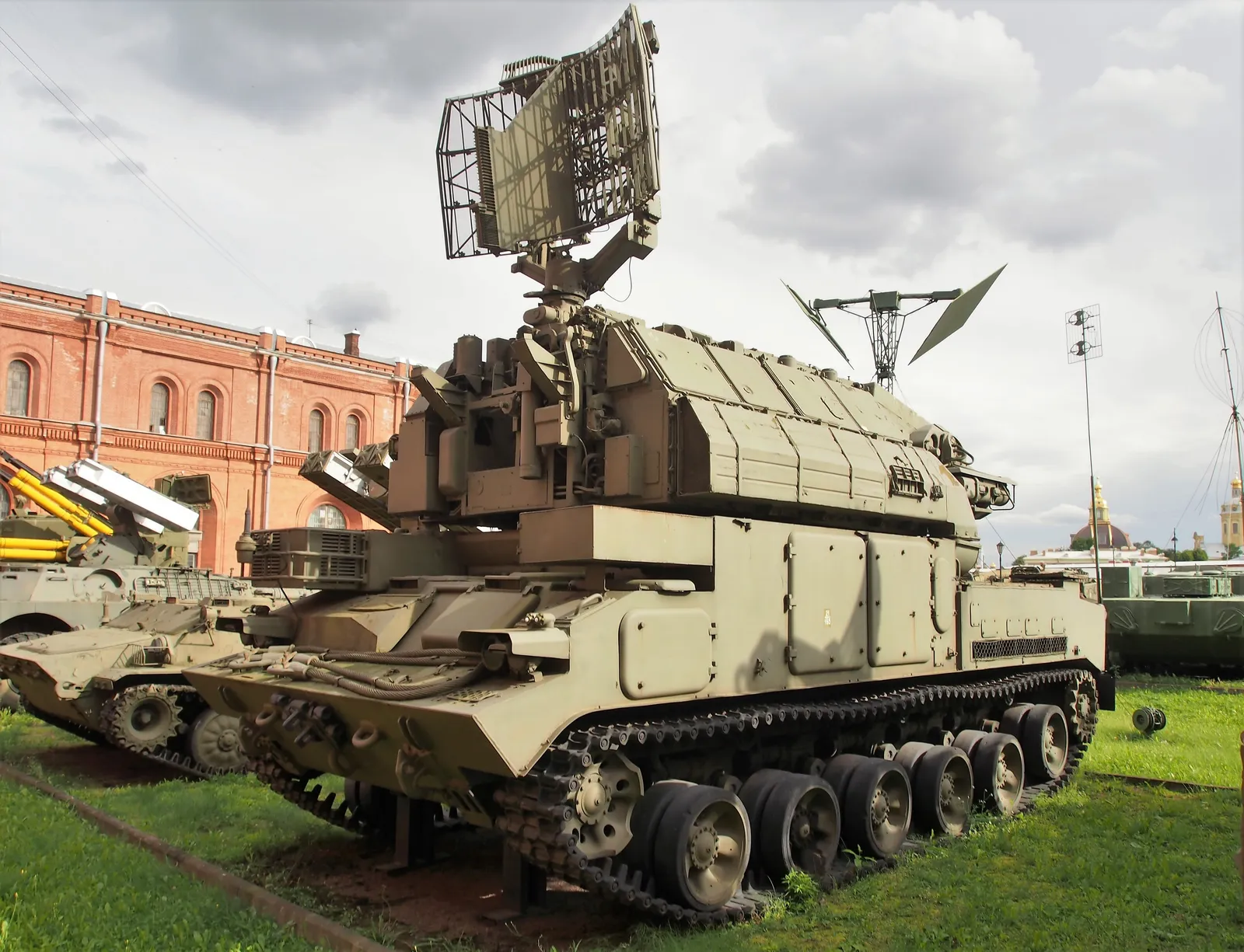
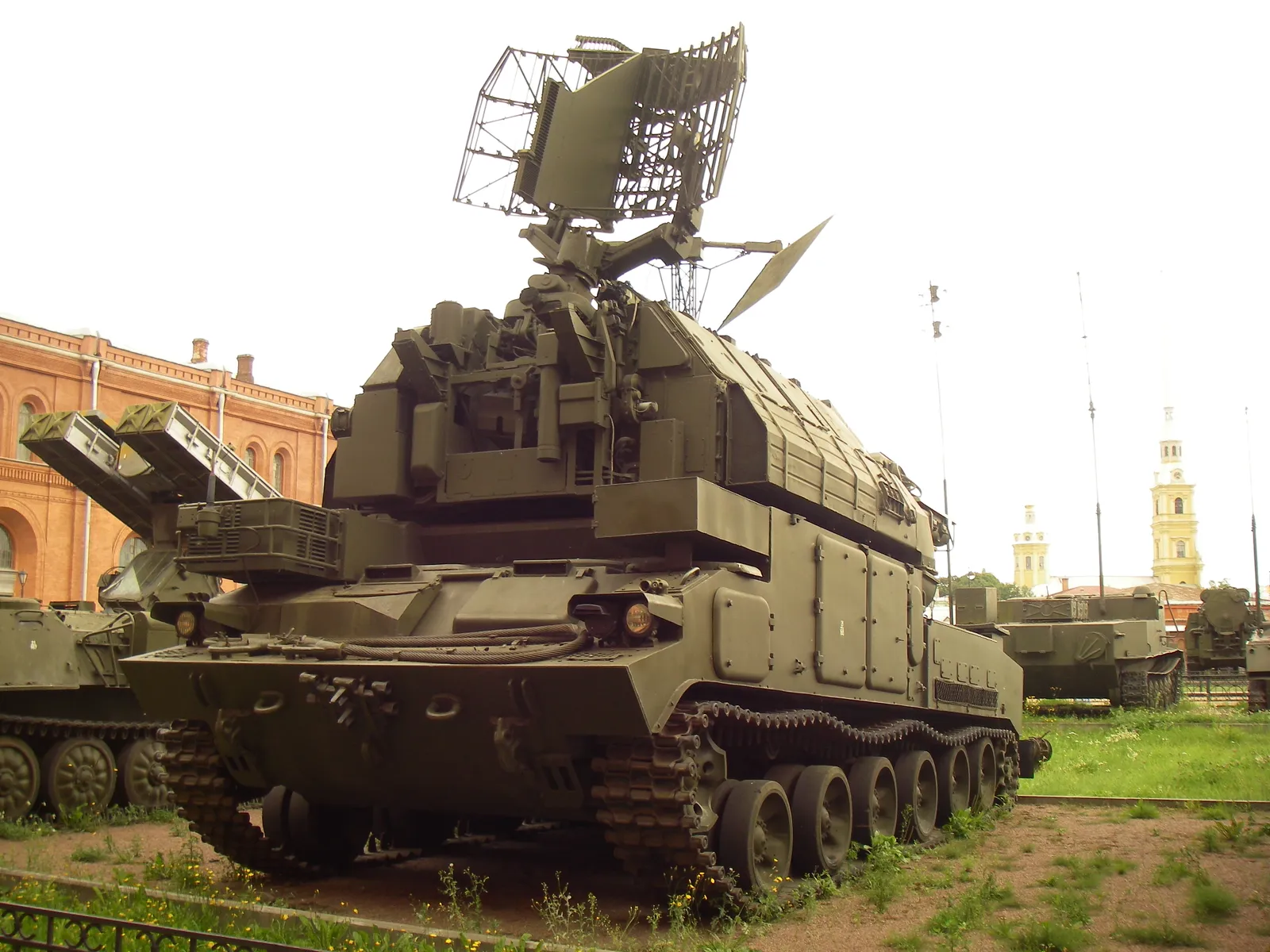
The 9A330 Tor TLAR is the tracked transporter-launcher-and-radar vehicle for the original Soviet 9K330 Tor short-range surface-to-air missile system. It combines acquisition radar, engagement radar, command-guided 9M330 missiles, and a tracked GM-series chassis in a self-contained battlefield air-defense vehicle, making it the earlier Tor-family branch that preceded the 9A331 Tor-M1 and modern Tor-M2 configurations.
Role in Conflicts
Profile / Specs
Profile
- Origin
- Soviet Union / Russia
- Type
- Short-range self-propelled surface-to-air missile system
- Service note
- Late Cold War and post-Soviet short-range air defense
- Designer
- NIEMI / Antey system design under V.P. Efremov; 9A330 combat vehicle led by I.M. Drize; 9M330 missile developed by MKB Fakel under P.D. Grushin
- Designed
- 1975-1985 development period; state testing ran from December 1983 to December 1984
- Produced
- Serial 9A330 production organized after 1986 acceptance; Tor-family production continued in later variants
- Developed from
- Replacement for 9K33 Osa
- Developed into
- 9A331 Tor-M1 and later Tor-M2 family launchers
Specifications
- NATO reporting name
- SA-15 Gauntlet
- System designation
- 9K330 Tor
- Launcher vehicle
- 9A330 tracked transporter-launcher-and-radar vehicle
- Role
- Division-level mobile short-range air defense against aircraft, helicopters, cruise missiles, guided or precision weapons, glide bombs, and remotely piloted aircraft or UAV-type targets
- Basing
- Mobile, ground-based tracked launcher
- Missile armament
- 8 ready-to-fire vertically launched 9M330 missiles on the baseline 9A330 combat vehicle; later Tor-M/Tor-M1 branches used 9M331-family missiles
- Guidance
- Radio-command guidance supported by onboard acquisition and tracking radars; 9M330 uses vertical ejection before motor ignition
- Engagement range
- Up to 12 km with the original 9M330 missile; later 9M331/Tor-M1 data extends the family envelope to about 15 km
- Engagement altitude
- 10 m to 6,000 m for original 9M330-era data
- Detection range
- About 25 km for the target-acquisition radar
- Warhead
- About 14.5-15 kg high-explosive fragmentation warhead for 9M330/9M331-era Tor missiles
- Crew
- 4-person baseline combat crew reported by Russian technical histories; some English references count 3 operators depending on vehicle-crew method
- Combat weight
- About 32 tonnes for the baseline 9A330 with eight missiles and crew; later Tor/Tor-M1 references may list higher weights
- Road speed
- About 65 km/h
- Dimensions
- Length 7.5 m; width 3.3 m; height 5.1 m
- Chassis
- GM-355 tracked chassis for the original 9A330 branch
- Service status
- Operational Tor family; original 9A330 vehicles remain documented in Ukrainian service evidence
Launcher Identity
The 9A330 is best treated as a launcher vehicle inside the wider 9K330 Tor system rather than as a standalone missile. Public references describe the Tor as a mobile SHORAD system and identify the 9A330 vehicle as the self-contained launcher/radar element that carries ready 9M330-series missiles.
Catalog boundary
This page separates the original 9A330 TLAR from the newer Tor-M2 record, whose battlefield and export coverage belongs to the modern 9K332/Tor-M2 family.
Sources: Tor (SA-15 Gauntlet); SA-15 TOR-M1 9A331 SA-15 Gauntlet.
Predecessor link
CSIS and specialist references describe Tor as a short-range air-defense successor to earlier Soviet mobile SHORAD systems, with the cataloged 9K33 Osa serving as the relevant predecessor branch.
Sources: Tor (SA-15 Gauntlet); 9K330 Tor - Weaponsystems.net.
Variants
The original Tor family uses system and combat-vehicle designations: 9K330/9A330 for the baseline Tor, followed by Tor-M1 and later Tor-M2 family developments.
| Variant | Configuration | Designation notes |
|---|---|---|
 | Improved Tor-M1 launcher | CSIS describes Tor-M1 as an upgraded Tor-series system with the 9M331 missile and improved engagement characteristics over the original 9K330 branch. Sources: Tor (SA-15 Gauntlet), SA-15 TOR-M1 9A331 SA-15 Gauntlet |
| Tor-M1T | Wheeled or stationary Tor-M1 derivative | Army Recognition lists Tor-M1T and stationary versions as Tor-M1 modifications within the wider Tor family. Sources: SA-15 TOR-M1 9A331 SA-15 Gauntlet |
 | Modernized Tor-family system | The catalog's Tor-M2 record covers the newer 9K332/Tor-M2 family, including tracked, wheeled, modular, Arctic, and later export configurations. Sources: Tor (SA-15 Gauntlet) |
| 3K95 Kinzhal | Naval Tor-family derivative | CSIS identifies 3K95 Kinzhal as the navalized Tor variant with NATO reporting name SA-N-9 Gauntlet. Sources: Tor (SA-15 Gauntlet) |
Tor-Family Branches
The catalog separates original Tor, Tor-M1, and Tor-M2 records so launcher identity, conflict evidence, and imagery stay tied to the vehicle branch named in sources.
| Compatible item | Item type | Compatibility evidence |
|---|---|---|
| Follow-on launcher | The 9A331 Tor-M1 record covers the improved 9K331/Tor-M1 branch that followed the original 9K330/9A330 vehicle. Sources: Tor (SA-15 Gauntlet), SA-15 TOR-M1 9A331 SA-15 Gauntlet |
| Modernized successor family | The Tor-M2 page covers later 9K332/Tor-M2-family launchers, separating modern Tor-M2 conflict records from this original 9A330 branch. Sources: Tor (SA-15 Gauntlet) |
 | Predecessor SHORAD system | Specialist references describe the 9K330 Tor as a replacement for the older 9K33 Osa short-range air-defense system. Sources: 9K330 Tor - Weaponsystems.net |
Timeline
9A330 Tor TLAR Key Events
Tor development period begins
Technical histories trace the Tor program to a 1975 Soviet authorization, before 1983-1984 state testing and 1986 acceptance of the original 9K330 system.
Sources: 9K330 Tor - Missilery, Tor Missile System
Original Tor enters service
CSIS lists the 9K330 Tor as operational from 1986, making the 9A330 TLAR the original land-based launcher branch of the Tor family.
Sources: Tor (SA-15 Gauntlet)
Tor-M1 branch follows
CSIS treats Tor-M1 as a follow-on upgraded Tor-series system, separating it from the earlier 9K330 branch represented by the 9A330 launcher.
Sources: Tor (SA-15 Gauntlet)
Ukrainian 9A330 loss documented
Oryx's Ukrainian equipment-loss list for the full-scale Russian invasion records a damaged 9A330 Tor TLAR for the 9K330 Tor system.
Sources: Attack On Europe: Documenting Ukrainian Equipment Losses During The Russian Invasion Of Ukraine
Russian 9A330 captured at Dorohynka
WarSpotting identifies a Russian 9A330 TELAR for the 9K330 Tor as captured at Dorohynka, Pryluky raion, and transferred to Ukrainian support forces.
Sources: WarSpotting 9A330 Dorohynka
Media
9A330 Tor TLAR Images
Related Weapon Systems


Sources
Tor Missile SystemPublisher: Wikipedia | Note: Starting reference for 9K330/9A330 terminology, TLAR wording, design timeline, variant names, chassis context, and general system characteristics; claims were cross-checked against higher-quality sources where possible. | Accessed: 2026-07-05Tor (SA-15 Gauntlet)Publisher: CSIS Missile Threat | Note: Supports Tor family identity, NATO reporting name, SHORAD role, mobile ground basing, range class, operational status, service date, operators, Tor-M1/Tor-M2/Kinzhal variant context, and missile-warhead/specification background. | Accessed: 2026-07-059K330 Tor - MissileryPublisher: Missilery.info | Note: Supports baseline 9K330/9A330 technical history, 1975 authorization, 1983-1984 testing, 1986 acceptance, NIEMI/Antey/Fakel designer roles, 9A330 component layout, eight 9M330 missiles, GM-355 chassis, 32-tonne combat weight, engagement envelope, and serial production allocation. | Accessed: 2026-07-059K330 Tor - ODINPublisher: U.S. Army OE Data Integration Network | Note: Supports official U.S. Army OPFOR equipment identification for the 9K330 Tor as a Russian short-range surface-to-air missile system and radar-equipped mobile air-defense asset. | Accessed: 2026-07-05SA-15 TOR-M1 9A331 SA-15 GauntletPublisher: Army Recognition | Note: Supports 9A330/9A331 vehicle terminology, autonomous transporter-launcher-and-radar configuration, ready missile load, radar layout, range/altitude, dimensions, road speed, crew-count caveat, and Tor-M1/Tor-M1T variant context. | Accessed: 2026-07-05SA-15 GAUNTLET / 9K331 TorPublisher: GlobalSecurity.org | Note: Supports Kupol/IEMZ manufacturer context, Osa successor framing, integrated radar/launcher description, vertical-launch family background, and Tor-M1/Tor-M2 improvement sequence. | Accessed: 2026-07-059K330 Tor - Weaponsystems.netPublisher: Weaponsystems.net | Note: Supports specialist reference context for 9K330 Tor as a late Cold War Soviet self-propelled SAM system developed by Antei as a 9K33 Osa replacement, plus 1986 service, GM-355 chassis, 9M330/9M331 distinction, and IEMZ/Almaz-Antey producer context. | Accessed: 2026-07-05Tor Series SAMs in UkrainePublisher: Armament Research Services | Note: Supports 2014 Russia-Ukraine War direct conflict-use context by documenting Tor-series surface-to-air missile systems, including 9K330/9A330 and Tor-M1 vehicles, in Ukraine during the 2014 Donbas phase and attributing documented systems to Russian-backed separatists or Russian Ground Forces with sourcing caveats. | Accessed: 2026-07-05Back From The Dead: Ukraine's Tor SAMsPublisher: Oryx | Note: Supports 2014 Russia-Ukraine War direct conflict-use context by describing Ukraine's post-2014 effort to return 9K330 Tor systems to service and reporting Ukrainian-controlled Donetsk Oblast sightings before the full-scale invasion. | Accessed: 2026-07-05Attack On Europe: Documenting Russian Equipment Losses During The Russian Invasion Of UkrainePublisher: Oryx | Note: Supports 2014 Russia-Ukraine War direct conflict-use by Russian forces by documenting visually confirmed Russian losses of 9A330 TLARs for 9K330 Tor and 9A331 TLARs for 9K331 Tor-M1. | Accessed: 2026-07-05Attack On Europe: Documenting Ukrainian Equipment Losses During The Russian Invasion Of UkrainePublisher: Oryx | Note: Supports 2014 Russia-Ukraine War direct conflict-use by Ukrainian forces by documenting a damaged Ukrainian 9A330 Tor TLAR for the 9K330 Tor in the full-scale invasion equipment-loss list. | Accessed: 2026-07-05WarSpotting 9A330 DorohynkaPublisher: WarSpotting | Note: Supports 2014 Russia-Ukraine War direct conflict-use by identifying a Russian 9A330 TELAR for 9K330 Tor captured at Dorohynka, Pryluky raion, on 2022-03-20 and transferred to Ukrainian support forces. | Accessed: 2026-07-059A330 Tor.JPGPublisher: Wikimedia Commons | Note: Supports image provenance for the primary gallery image showing a 9A330 Tor vehicle under an open Commons license. | Accessed: 2026-07-059A330 Tor Artillery Museum Pic1Publisher: Wikimedia Commons | Note: Supports gallery image provenance for a public-domain Commons image of a 9A330 Tor museum vehicle in Saint Petersburg. | Accessed: 2026-07-059K330 Tor Museum 9A330 and 9M330 MissilesPublisher: Wikimedia Commons | Note: Supports gallery image provenance for a museum-displayed 9A330 launcher and 9M330 missiles on Commons. | Accessed: 2026-07-05