Air Defense

9A331 Tor-M1 TLAR

Also known as
  • 9A331
  • 9A331-1
  • 9K331 Tor-M1
  • Tor-M1
  • Tor M1
  • SA-15 Gauntlet
  • Transporter Launcher and Radar
  • TLAR

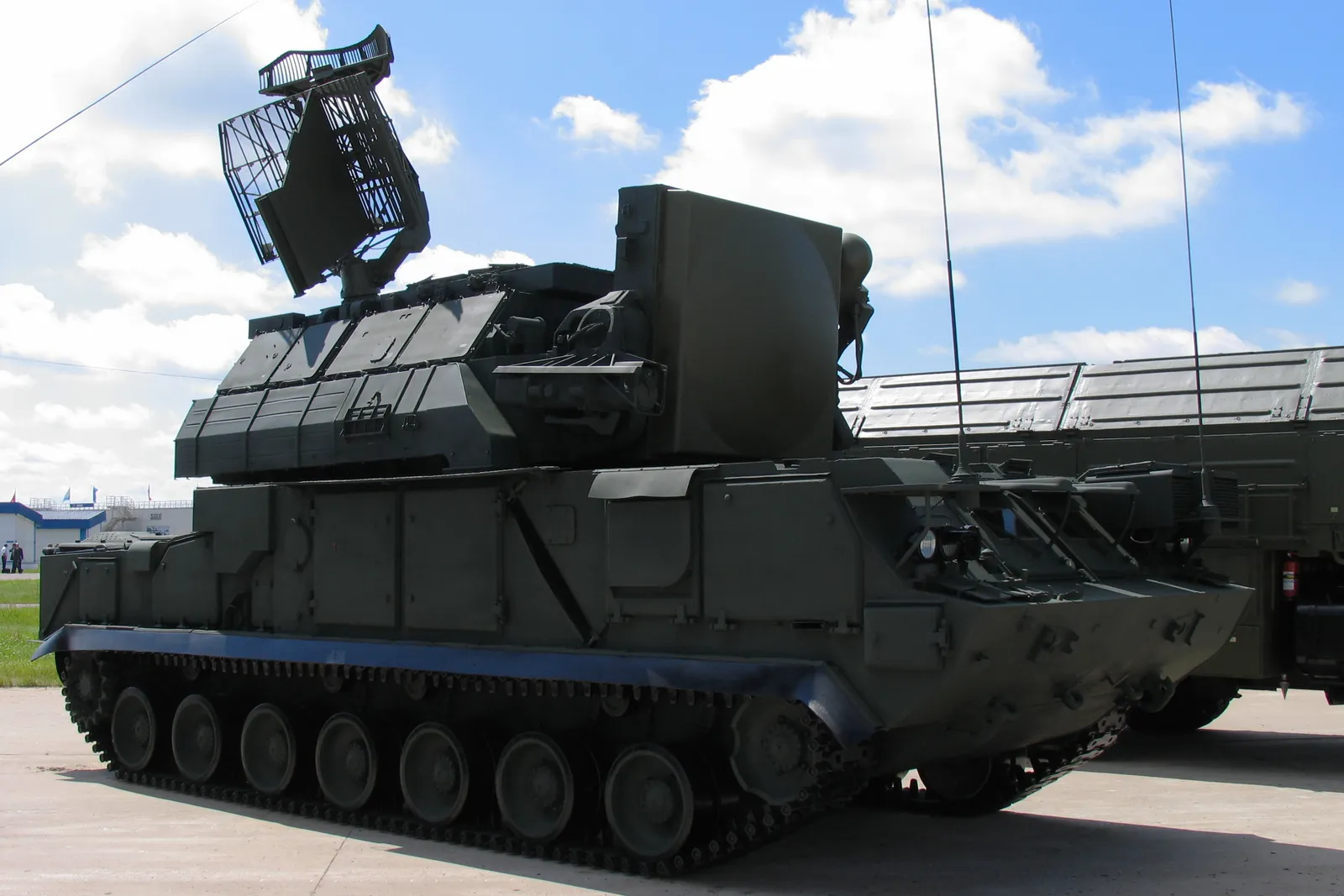
The 9A331 Tor-M1 TLAR is the tracked combat vehicle for the 9K331 Tor-M1 short-range surface-to-air missile system. It packages surveillance radar, engagement radar, command-guided 9M331 missiles, and a GM-5955 tracked chassis into a self-contained air-defense vehicle, bridging the original 9A330 Tor branch and later Tor-M2 family systems.

Role in Conflicts

Side
Russia

Russian forces fielded 9A331 TLARs for the 9K331 Tor-M1 during the full-scale phase of the war; Oryx lists visually confirmed destroyed, damaged, abandoned-and-destroyed, and captured Russian 9A331 examples separately from later 9A331M Tor-M2 launchers.

Role details
Profile / Specs

Profile

Origin
Soviet Union / Russia
Type
Short-range self-propelled surface-to-air missile system
Service note
Post-Cold War Tor-family short-range air defense
Designer
Antey Design Bureau / Almaz-Antey; Fakel Design Bureau for the 9M330 and 9M331 missiles
Designed
Late 1980s Tor-M1 development and testing period
Produced
1991-present Tor-M1 family service and production context
Developed from
9A330 Tor TLAR
Developed into
Tor-M2 family combat vehicles

Specifications

NATO reporting name
SA-15 Gauntlet
System designation
9K331 Tor-M1
Launcher vehicle
9A331 tracked transporter-launcher-and-radar combat vehicle
Role
Mobile short-range air defense against aircraft, helicopters, cruise missiles, guided bombs, precision weapons, UAVs, and similar low- to medium-altitude targets
Basing
Mobile, ground-based tracked launcher
Missile armament
8 ready-to-fire 9M330 or 9M331 missiles stored vertically
Guidance
Command-guided missiles supported by onboard acquisition and tracking radars
Engagement range
CSIS lists 15 km for Tor-M1 with the 9M331 missile; Army Recognition lists up to 12 km depending on version
Engagement altitude
Up to 6,000 m for Tor-M1 / 9M331-era data
Detection range
About 25 km for the target-acquisition radar
Targets engaged
Two targets simultaneously for Tor-M1-era fire units
Warhead
15 kg high-explosive fragmentation warhead for 9M331-family Tor missiles
Crew
3 reported in Army Recognition specifications, with older vehicle-layout descriptions sometimes counting four including driver/operators
Combat weight
About 34 tonnes for Tor-M1 class tracked vehicles
Road speed
About 65 km/h
Road range
About 500 km
Dimensions
Length 7.5 m; width 3.3 m; height 5.1 m
Chassis
GM-5955 tracked chassis for Tor-M1 according to Army Recognition
Tor-M1 Vehicle Boundary

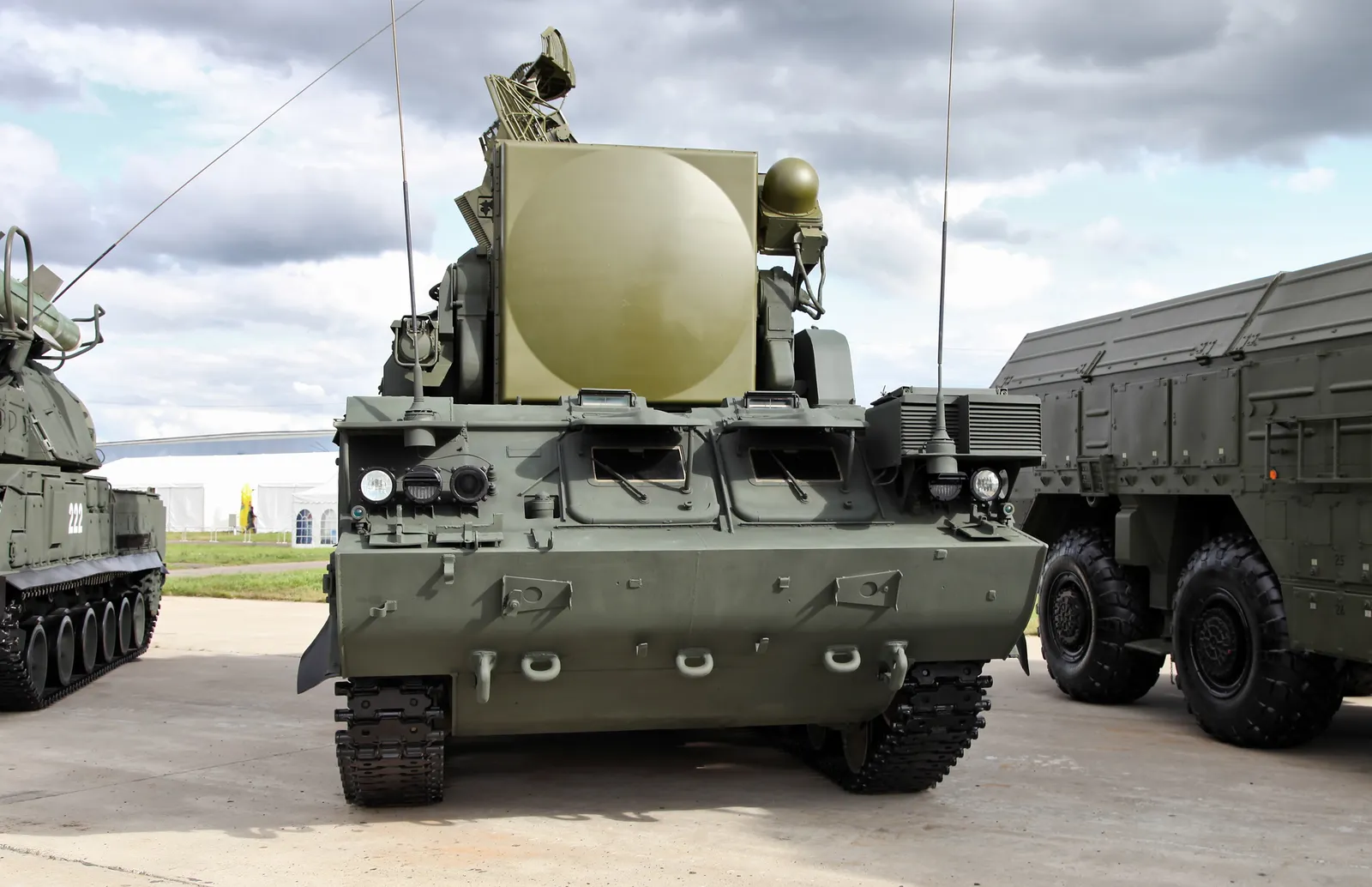
The 9A331 is best read as the Tor-M1 combat vehicle rather than the missile alone. It carries the radar, launcher, crew stations, and ready missiles on one tracked vehicle, while the broader 9K331 system can include battery command and support elements.

Catalog boundary

This page covers the Tor-M1 TLAR branch. The older 9A330 Tor TLAR and newer Tor-M2 pages handle adjacent Tor-family branches.

Sources: Tor (SA-15 Gauntlet); SA-15 TOR-M1 9A331 SA-15 Gauntlet.

Fire unit

Army Recognition describes the Tor-M1 combat vehicle as an autonomous transporter, launcher, and radar unit with top-mounted acquisition radar, frontal tracking radar, and eight ready missiles.

Source: SA-15 TOR-M1 9A331 SA-15 Gauntlet.

Variants

Tor-M1 sits between the original 9K330/9A330 Tor branch and the later Tor-M2 family. Public references distinguish the 9K331/9A331 Tor-M1 vehicle, wheeled or stationary Tor-M1 derivatives, and the 9A331M/Tor-M2 modernization path.

VariantConfigurationDesignation notes
9A330 Tor TLAR, Short-range self-propelled surface-to-air missile system, Air Defense9A330 Tor TLAROriginal Tor launcher

The existing catalog record covers the original 9K330/9A330 branch that preceded Tor-M1's improved 9K331/9A331 configuration.

Sources: Tor (SA-15 Gauntlet), SA-15 TOR-M1 9A331 SA-15 Gauntlet

Tor-M1TWheeled or stationary Tor-M1 derivative

Army Recognition lists Tor-M1T and stationary systems as modifications within the Tor-M1 family.

Sources: SA-15 TOR-M1 9A331 SA-15 Gauntlet

Tor-M1-2ULate M1-family Russian-service upgrade

CSIS describes Tor-M1-2U as the latest M1-family variant in Russian service, with higher engagement altitude, a three-person crew, and four-target engagement capability.

Sources: Tor (SA-15 Gauntlet)

Tor-M2, Short-range surface-to-air missile system, Air DefenseTor-M2Modern Tor-family successor

The catalog's Tor-M2 record covers the 9K332/Tor-M2 family, including tracked, wheeled, modular, Arctic, and later export configurations.

Sources: Tor (SA-15 Gauntlet)

Tor-Family Branches

The catalog separates the original Tor, Tor-M1, and Tor-M2 records so conflict rows and imagery stay tied to the exact vehicle branch named in sources.

Compatible itemItem typeCompatibility evidence
9A330 Tor TLAR, Short-range self-propelled surface-to-air missile system, Air Defense9A330 Tor TLARPredecessor launcher

The 9A330 page covers the original 9K330 Tor TLAR that preceded the 9A331 Tor-M1 vehicle.

Sources: Tor (SA-15 Gauntlet)

Tor-M2, Short-range surface-to-air missile system, Air DefenseTor-M2Successor family

The Tor-M2 page covers later 9K332/Tor-M2 launchers, including the 9A331M vehicles that Oryx lists separately from 9A331 Tor-M1 losses.

Sources: Attack On Europe: Documenting Russian Equipment Losses During The Russian Invasion Of Ukraine, Tor (SA-15 Gauntlet)

Timeline

9A331 Tor-M1 TLAR Key Events

  1. Original Tor branch enters service

    CSIS lists the first Tor-family system as entering service before the Tor-M1 follow-on branch.

    Sources: Tor (SA-15 Gauntlet)

  2. Tor-M1 branch introduced

    Army Recognition identifies the 9K331 Tor-M1 branch as introduced with the 9M331 missile and improved ability to engage two targets simultaneously.

    Sources: SA-15 TOR-M1 9A331 SA-15 Gauntlet

  3. M1-family updates exhibited

    CSIS notes that Russia exhibited several Tor-M1 update paths from 2005 onward, including M1A, M1B, M1V, M1G, and M1-2U.

    Sources: Tor (SA-15 Gauntlet)

  4. Russian 9A331 losses documented in Ukraine

    Oryx's visually confirmed Russian equipment-loss list separates 9A331 TLARs for 9K331 Tor-M1 from later 9A331M TLARs for 9K332 Tor-M2.

    Sources: Attack On Europe: Documenting Russian Equipment Losses During The Russian Invasion Of Ukraine

Media
Related Weapon Systems
1L125 Niobium-SV, Mobile VHF three-coordinate air-defense surveillance radar, Air DefenseAir Defense1L125 Niobium-SVMobile VHF three-coordinate air-defense surveillance radarThe 1L125 Niobium-SV is a Russian mobile VHF/meter-band, three-coordinate radar built for ground-forces air defense and developed by NNIIRT within the Almaz-Antey group. Rosoboronexport's 1L125E export profile describes a 5-500 km, 360-degree surveillance radar for detecting, tracking, identifying, and reporting aerodynamic and ballistic targets, including low-observable aircraft; Ukrainian and sanctions-derived records identify Niobium-SV radars in Russian service during the Russia-Ukraine war.
1L13-3 Nebo-SV, Mobile VHF two-coordinate air-surveillance radar, Air DefenseAir Defense1L13-3 Nebo-SVMobile VHF two-coordinate air-surveillance radarThe 1L13-3 Nebo-SV is a Soviet/Russian mobile meter-band radar for ground-forces air defense, built to search for aircraft, helicopters, UAVs, and other air targets and pass range-and-bearing data to command posts or missile batteries. It is a two-coordinate predecessor to the 1L119 Nebo-SVU: sources describe it with a 72-element VHF antenna array, separate IFF interrogator, six-person crew, and fighter-target detection figures reaching roughly 350 km at high altitude.
2K22 Tunguska, Tracked self-propelled gun-missile air defense system, Air DefenseAir Defense2K22 TunguskaTracked self-propelled gun-missile air defense systemThe 2K22 Tunguska is a Soviet-designed tracked short-range air defense system that combines twin 30 mm autocannons, 9M311-family surface-to-air missiles, search and tracking radars, and a protected self-propelled chassis. Built to cover maneuver formations against low-flying aircraft, helicopters, cruise missiles, and later unmanned threats, it appears in the 2014 Russia-Ukraine War on both Russian and Ukrainian sides, with Russian combat losses and Ukrainian missile firings documented in open sources.
30N6 engagement radar, S-300-family engagement and missile-guidance radar, Air DefenseAir Defense30N6 engagement radarS-300-family engagement and missile-guidance radarThe 30N6 is the S-300P-family engagement radar lineage known by NATO as Flap Lid and, on later export configurations, Tomb Stone. The 5N63S Flap Lid B branch is the self-propelled S-300PS-era configuration, giving S-300P, S-300PS, S-300PMU, and S-300PMU-2 batteries target tracking, illumination, and missile-guidance functions rather than serving as a standalone weapon. Direct conflict records place Flap Lid-family radars in Ukraine and Nagorno-Karabakh losses, and satellite-based analysis identified a 30N6/30N6E radar as the probable S-300 component hit near Isfahan in April 2024.
35N6 Kasta surveillance radar, Mobile low-altitude air-surveillance radar, Air DefenseAir Defense35N6 Kasta surveillance radarMobile low-altitude air-surveillance radarThe 35N6 Kasta is a mobile UHF-band low-altitude surveillance radar associated with the Kasta-2-1/Kasta-2E1 branch of Russia's air-defense sensor network. Open radar references describe the 51U6/Kasta-2E1 as a two-coordinate low-altitude radar with separate antenna and operator or command-post elements; Janes identified a two-vehicle KamAZ-43114 system near Buhaivka, and Oryx plus WarSpotting list destroyed Russian Kasta command-post and antenna vehicles in the 2014 Russia-Ukraine War.

Sources