Air Defense

5P85SM TEL

Also known as
  • 5P85SM
  • 5P85SM launcher
  • 5P85SM transporter erector launcher
  • 5P85SM TEL
  • 5P85CM
  • 5P85SM S-300PM
  • S-300PM 5P85SM
  • S-300PM1 5P85SM
  • S-300PM2 5P85SM
  • 5P85SE
  • 5P85SE2

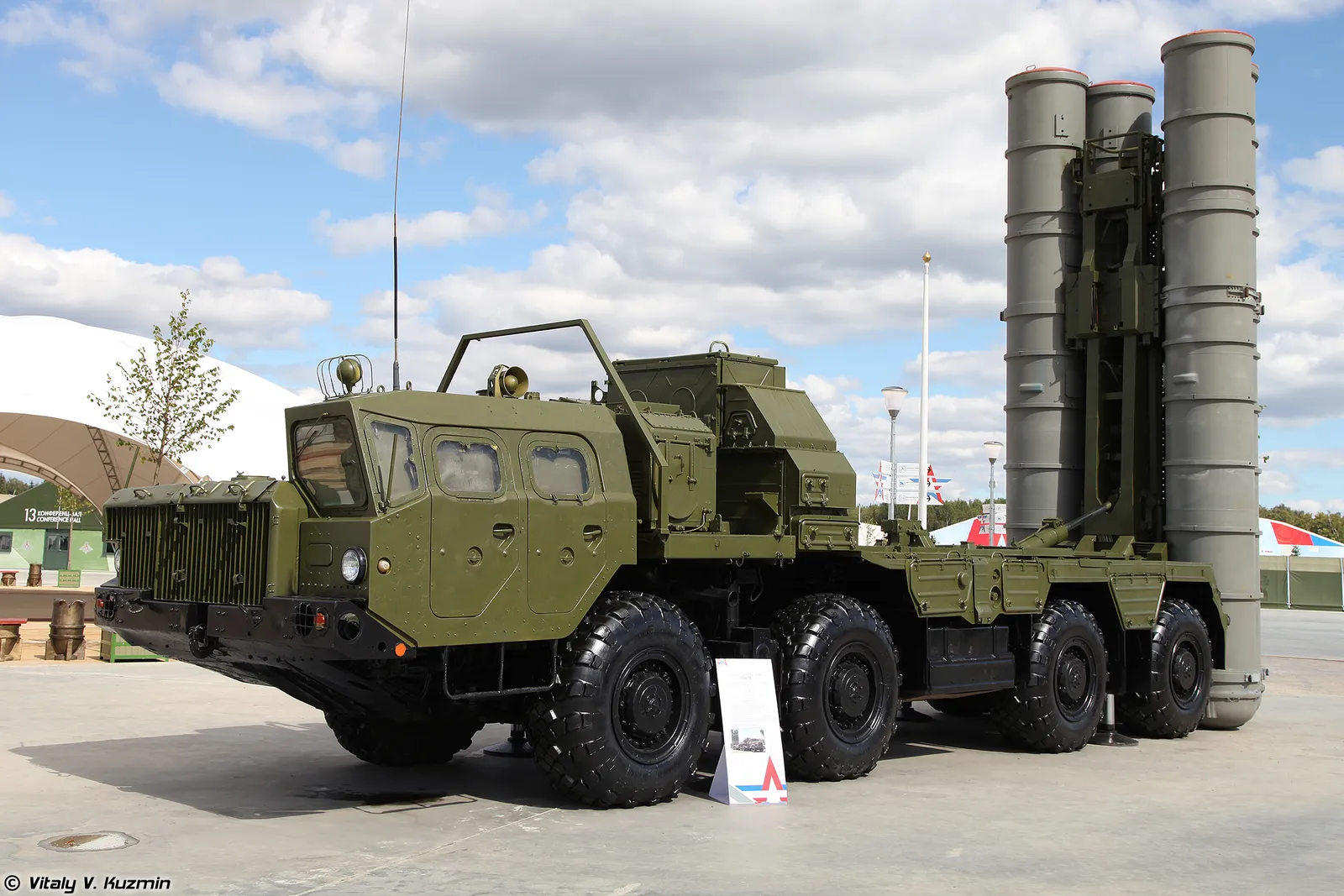
The 5P85SM is a modernized self-propelled S-300PM-family launcher developed after the 5P85S/D master-slave arrangement. It carries four 48N6-family missile canisters on a MAZ-543M-family chassis, uses improved prelaunch and autonomous power equipment, and is directly documented as Russian S-300PM1/PM2 battlefield materiel in Ukraine.

Role in Conflicts

Profile / Specs

Profile

Origin
Soviet Union / Russia
Type
S-300PM-series self-propelled transporter-erector-launcher
Service note
Late Cold War S-300PM development with documented use in the 2022 phase of the Russia-Ukraine War
Designer
KBSM / Special Machine-Building Design Bureau launcher work; Almaz Central Design Bureau parent S-300PM system
Designed
1983-1984 launcher development for S-300PM; S-300PM system development from 1985
Produced
Prototype launchers built in 1984-1986; S-300PM serial production began around 1990
Developed from
5P85S S-300PS self-propelled launcher family

Specifications

Role
Self-propelled transporter-erector-launcher for S-300PM / S-300PM1 / S-300PM2 family systems
Launcher load
Four missile transport-launch canisters
Missile family
48N6 / 48N6E family in S-300PM and S-300PMU-1 references
Chassis
MAZ-543M-family high-cross-country wheeled chassis in 5P85SM histories; 5P85SE references use MAZ-7910 / MAZ-543M-family context
Launch method
Vertical launch from sealed canisters after launcher elevation
Control arrangement
Interacts with the S-300PM engagement-radar control cabin through radio/telecode communication equipment
Power supply
Built-in autonomous power source 5S18M with gas-turbine basis in Missilery description
Parent system performance context
S-300PMU-1 references cite up to 150 km engagement range against aerodynamic targets and up to six targets engaged with up to twelve missiles guided
Variants

The 5P85SM sits between the earlier S-300PS 5P85S/D launchers and later export or S-400 launcher lines. Sources use 5P85SM for the S-300PM self-propelled launcher and 5P85SE / 5P85SE2 for closely related export or later-family configurations.

VariantConfigurationDesignation notes
5P85S TEL, S-300PS master transporter-erector-launcher, Air Defense5P85S TELEarlier S-300PS master launcher

The earlier 5P85S used the S-300PS master-launcher role and controlled dependent 5P85D launchers; the 5P85SM abolished that 5P85SD launcher-complex arrangement in favor of launchers directly integrated with the S-300PM system.

Sources: Missilery S-300PMU-1, Voenmeh Launcher History PDF

5P85D TEL, S-300PS slave transporter-erector-launcher, Air Defense5P85D TELEarlier S-300PS dependent launcher

The dependent 5P85D belonged to the older S-300PS launcher group; 5P85SM modernization removed the need for a local 5P85S master controlling two 5P85D launchers.

Sources: Missilery S-300PMU-1

5P85SE / 5P85SE2Export and later-family self-propelled launcher line

Open references describe 5P85SE as an autonomous S-300PMU/PMU-2 launcher and list 5P85SM/SE configurations across S-300PM, S-300PMU-1, and S-300PMU-2 family tables.

Sources: Army Recognition 5P85SE, Air Power Australia S-300P Site Configurations

Parent Air-Defense System

The 5P85SM is useful as a launcher entry because its role depends on the S-300PM-series battery architecture and associated engagement radar rather than independent targeting.

Compatible itemItem typeCompatibility evidence
S-300, Long-range surface-to-air missile system, Air DefenseS-300Long-range surface-to-air missile family

Missilery describes the S-300PM / S-300PMU-1 system as a further development of S-300PS using the 48N6 missile generation, with up to twelve self-propelled or towed launchers tied to radar and command vehicles.

Sources: Missilery S-300PMU-1

5P85S TEL, S-300PS master transporter-erector-launcher, Air Defense5P85S TELEarlier S-300PS master launcher

The 5P85SM retained the four-canister self-propelled launcher concept but replaced the older 5P85S-centered launcher-complex dependency with direct interaction with the S-300PM engagement-radar control cabin.

Sources: Missilery S-300PMU-1, Voenmeh Launcher History PDF

Modernized Launcher Architecture

The 5P85SM was developed for the S-300PM generation as an upgraded self-propelled launcher. Sources describe it as retaining four containerized missiles on a MAZ heavy wheeled chassis while adding improved prelaunch preparation equipment, drive-control hardware, autonomous power, hydraulic improvements, and remote launch sequencing from the engagement-radar control cabin.

Launcher load

Four 48N6-family missiles in sealed transport-launch canisters.

Control shift

The older 5P85S-plus-5P85D launcher group was replaced by launchers interacting directly with the S-300PM radar-control cabin.

Power and setup

The launcher includes an improved built-in autonomous power source and supports remotely commanded verticalization, prelaunch preparation, and firing.

Sources: Missilery S-300PMU-1; Voenmeh Launcher History PDF.
Timeline

5P85SM TEL Key Events

  1. 5P85SM launcher development begins

    Voenmeh and Missilery histories place 5P85SM self-propelled launcher development for the S-300PM system in 1983-1984 at KBSM in Leningrad.

    Sources: Voenmeh Launcher History PDF, Missilery S-300PMU-1

  2. Prototype launchers built for trials

    Missilery records 5P85SM prototype launchers built at the Bolshevik plant in Leningrad in 1984-1986 before factory and state trials at Sary-Shagan.

    Sources: Missilery S-300PMU-1

  3. S-300PM accepted into service

    S-300PM was accepted into service in 1993 after serial production began around 1990, tying the 5P85SM to the improved 48N6 missile generation.

    Sources: Voenmeh Launcher History PDF, Missilery S-300PMU-1

  4. Russian 5P85SM loss reported in Ukraine

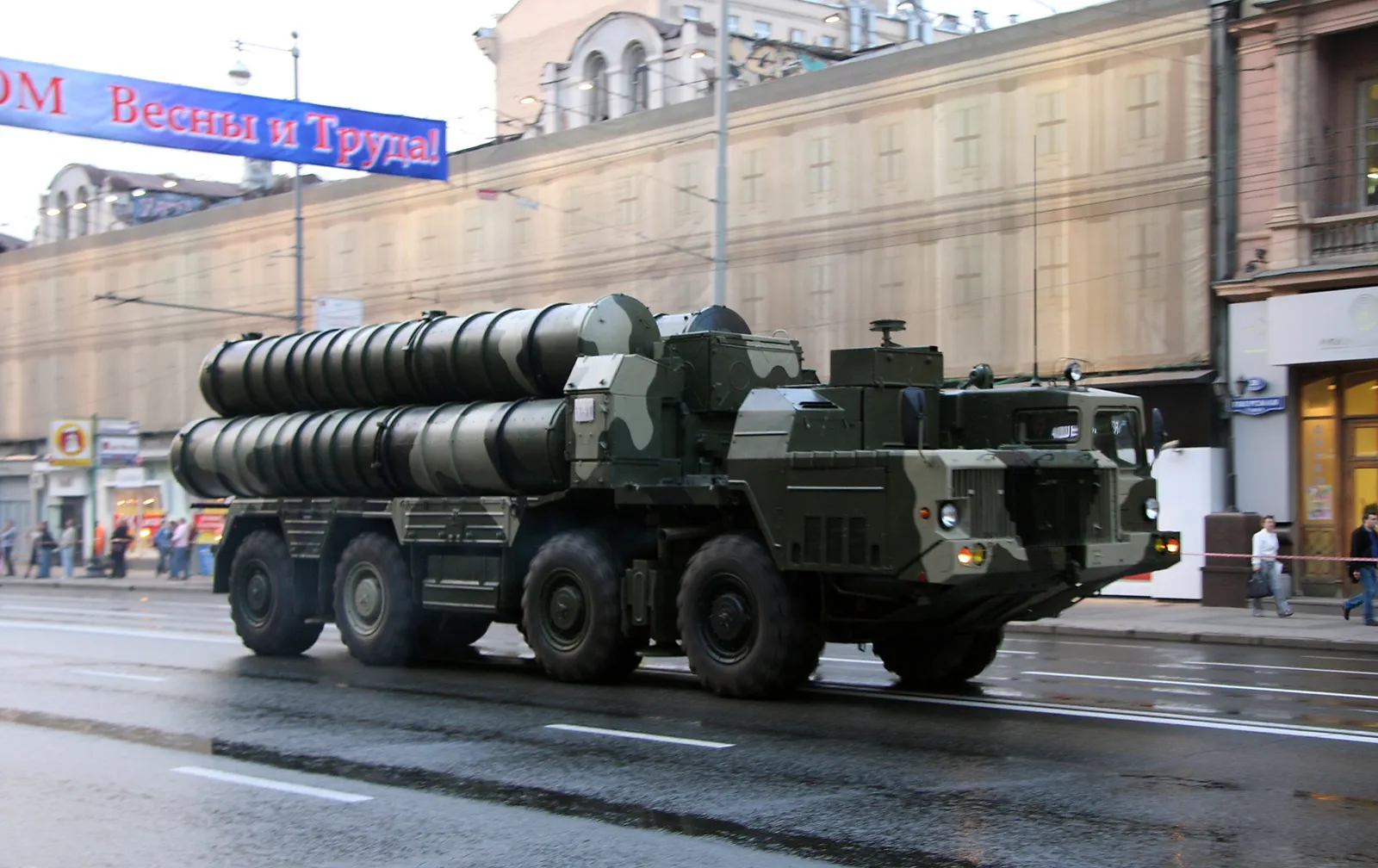
    The War Zone reported that a Russian 5P85SM launcher associated with S-300PM1/PM2 systems had been destroyed while moving in Zaporizhzhia Oblast.

    Sources: TWZ Ukraine Situation Report November 2022

Related Weapon Systems
1L125 Niobium-SV, Mobile VHF three-coordinate air-defense surveillance radar, Air DefenseAir Defense1L125 Niobium-SVMobile VHF three-coordinate air-defense surveillance radarThe 1L125 Niobium-SV is a Russian mobile VHF/meter-band, three-coordinate radar built for ground-forces air defense and developed by NNIIRT within the Almaz-Antey group. Rosoboronexport's 1L125E export profile describes a 5-500 km, 360-degree surveillance radar for detecting, tracking, identifying, and reporting aerodynamic and ballistic targets, including low-observable aircraft; Ukrainian and sanctions-derived records identify Niobium-SV radars in Russian service during the Russia-Ukraine war.
1L13-3 Nebo-SV, Mobile VHF two-coordinate air-surveillance radar, Air DefenseAir Defense1L13-3 Nebo-SVMobile VHF two-coordinate air-surveillance radarThe 1L13-3 Nebo-SV is a Soviet/Russian mobile meter-band radar for ground-forces air defense, built to search for aircraft, helicopters, UAVs, and other air targets and pass range-and-bearing data to command posts or missile batteries. It is a two-coordinate predecessor to the 1L119 Nebo-SVU: sources describe it with a 72-element VHF antenna array, separate IFF interrogator, six-person crew, and fighter-target detection figures reaching roughly 350 km at high altitude.
2K22 Tunguska, Tracked self-propelled gun-missile air defense system, Air DefenseAir Defense2K22 TunguskaTracked self-propelled gun-missile air defense systemThe 2K22 Tunguska is a Soviet-designed tracked short-range air defense system that combines twin 30 mm autocannons, 9M311-family surface-to-air missiles, search and tracking radars, and a protected self-propelled chassis. Built to cover maneuver formations against low-flying aircraft, helicopters, cruise missiles, and later unmanned threats, it appears in the 2014 Russia-Ukraine War on both Russian and Ukrainian sides, with Russian combat losses and Ukrainian missile firings documented in open sources.
30N6 engagement radar, S-300-family engagement and missile-guidance radar, Air DefenseAir Defense30N6 engagement radarS-300-family engagement and missile-guidance radarThe 30N6 is the S-300P-family engagement radar lineage known by NATO as Flap Lid and, on later export configurations, Tomb Stone. The 5N63S Flap Lid B branch is the self-propelled S-300PS-era configuration, giving S-300P, S-300PS, S-300PMU, and S-300PMU-2 batteries target tracking, illumination, and missile-guidance functions rather than serving as a standalone weapon. Direct conflict records place Flap Lid-family radars in Ukraine and Nagorno-Karabakh losses, and satellite-based analysis identified a 30N6/30N6E radar as the probable S-300 component hit near Isfahan in April 2024.
35N6 Kasta surveillance radar, Mobile low-altitude air-surveillance radar, Air DefenseAir Defense35N6 Kasta surveillance radarMobile low-altitude air-surveillance radarThe 35N6 Kasta is a mobile UHF-band low-altitude surveillance radar associated with the Kasta-2-1/Kasta-2E1 branch of Russia's air-defense sensor network. Open radar references describe the 51U6/Kasta-2E1 as a two-coordinate low-altitude radar with separate antenna and operator or command-post elements; Janes identified a two-vehicle KamAZ-43114 system near Buhaivka, and Oryx plus WarSpotting list destroyed Russian Kasta command-post and antenna vehicles in the 2014 Russia-Ukraine War.

Sources