- Side
- Russia

Russia fielded North Korean-supplied M1991 240 mm multiple rocket launchers during the war; Ukrainian military reporting later listed a North Korean M-1991 240 mm MLRS among targets struck in occupied territory.
Role detailsThe M1985 and M1991 are North Korean 240 mm road-mobile multiple rocket launcher systems identified by U.S. intelligence observation-year designations. The family includes a 12-tube M1985 and a 22-tube M1991, fires unguided spin-stabilized 240 mm rockets to roughly 40-60 km, and has now been documented in Russian service during the 2014 Russia-Ukraine War.
Russia fielded North Korean-supplied M1991 240 mm multiple rocket launchers during the war; Ukrainian military reporting later listed a North Korean M-1991 240 mm MLRS among targets struck in occupied territory.
Role detailsThe legacy M1985/M1991 family is best treated as a road-mobile unguided 240 mm rocket-artillery family, while later North Korean reporting describes newer guided or controllable 240 mm systems as replacement equipment rather than cleanly sourced M1985/M1991 variants.
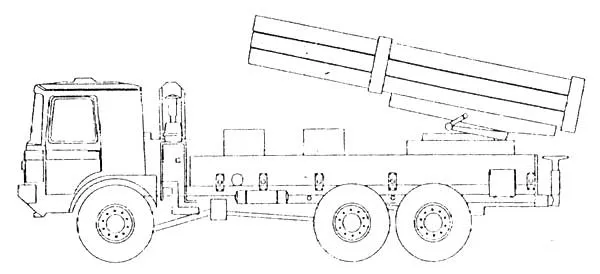
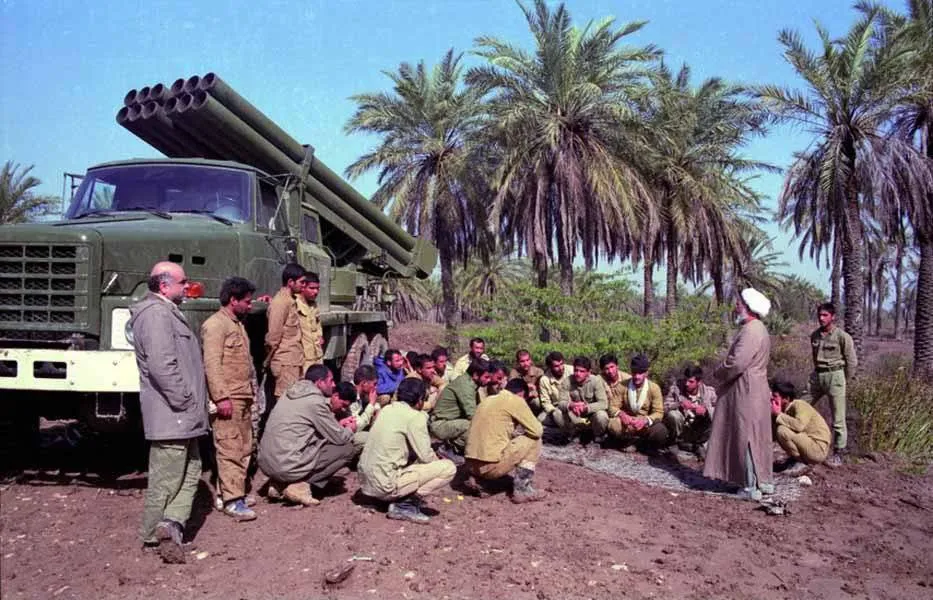
Twelve 240 mm tubes in two rows of six on a 6x6 truck chassis.
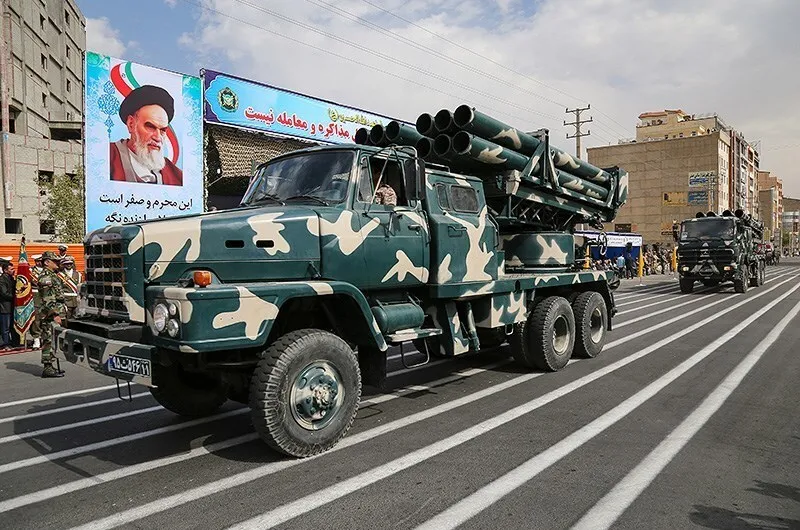
Twenty-two 240 mm tubes, commonly described as an 8/8/6 arrangement on a 6x6 truck.
Unguided, spin-stabilized 240 mm rockets with reported high-explosive, smoke, and incendiary warhead options.
Open sources identify Iran and Myanmar export context, but this entry only adds direct conflict use where sources tie the M1991 to Russia's war in Ukraine.
Open sources usually separate the family by launcher and tube configuration rather than by official North Korean model names; M1985 and M1991 are U.S. intelligence discovery-year designations.
| Variant | Configuration | Designation notes |
|---|---|---|
| M1985 | 12-tube 240 mm launcher | CSIS describes the M1985 as an Isuzu 6x6-mounted launcher with twelve 240 mm tubes in two rows of six. Sources: M1985/M1991 - Missile Threat - CSIS |
| M1991 | 22-tube 240 mm launcher | CSIS describes the M1991 as a 6x6 truck-mounted launcher with twenty-two tubes arranged in three rows; Army Recognition gives the common 8/8/6 tube layout. Sources: M1985/M1991 - Missile Threat - CSIS, M-1991 Juche 100 MLRS - Army Recognition |
| Juche 100 / updated 240 mm systems | Later North Korean 240 mm modernization line | State-media-derived reporting describes updated 240 mm systems with controllable shells and replacement deployment from 2024 to 2026; this entry keeps them distinct from legacy M1985/M1991 specifications unless a source directly links the designations. Sources: N. Korea says to deploy new multiple rocket launcher starting this year - Yonhap, North Korean leader Kim oversees weapons tests to bolster firepower along border - Reuters/SRN |
CSIS describes Iran's Fajr-3 as a modified and reproduced line derived from the M1985 export path.
| Compatible item | Item type | Compatibility evidence |
|---|---|---|
 | 240 mm artillery rocket | CSIS says North Korea exported the M1985 to Iran in the late 1980s, where it was slightly modified and reproduced as the Fajr-3. Sources: M1985/M1991 - Missile Threat - CSIS |
CSIS says U.S. intelligence designated the M1985 by the year the system was discovered; CSIS lists the family as in service from 1985.
Sources: M1985/M1991 - Missile Threat - CSIS
Open sources distinguish the M1991 from the M1985 by its larger 22-tube launcher on a 6x6 truck chassis.
Sources: M1985/M1991 - Missile Threat - CSIS, M-1991 Juche 100 MLRS - Army Recognition
CSIS reports that North Korea exported the M1985 to Iran in the late 1980s, where it was modified and reproduced as the Fajr-3 by Shahid Bagheri Industries.
Sources: M1985/M1991 - Missile Threat - CSIS
CSIS cites 2008 and 2010 reporting on North Korean deliveries of larger-caliber truck-mounted MLRS to Myanmar; UN-related reporting separately supports North Korean multiple-rocket-launcher transfers to Myanmar without naming this exact designation.
Sources: M1985/M1991 - Missile Threat - CSIS, UN: North Korea Shipped Banned Items to Syria, Myanmar - VOA/AP
Yonhap reported KCNA claims that an updated 240 mm multiple rocket launcher with controllable shells and an automatic fire-control system would be deployed to KPA units from 2024 to 2026.
Sources: N. Korea says to deploy new multiple rocket launcher starting this year - Yonhap
Kyrylo Budanov told The War Zone that North Korea had provided Russia with about 120 M-1991 240 mm multiple rocket launchers and expected further transfers.
Sources: More North Korean Artillery Troops Heading To Russia - The War Zone, Strengthened North Korea-Russian Relations Poses Risk to the US and its Allies - NCNK
ArmyInform listed a North Korean M-1991 240 mm MLRS among targets struck by Ukrainian unmanned-systems forces in occupied territory.
Sources: Enemy UAV depots, a North Korean MLRS, and a Russian SAM system - ArmyInform
Reuters/SRN reported KCNA claims for an upgraded 24-tube 240 mm launcher with autonomous precision guidance and a 90 km range; this entry treats it as a newer adjacent system unless directly tied to M1985/M1991 by a source.
Sources: North Korean leader Kim oversees weapons tests to bolster firepower along border - Reuters/SRN