
A U.S. Army/TRADOC Taliban tactics report describes Taliban rocket employment and identifies Chinese Type 63 107 mm launchers or field-expedient 107 mm launch arrangements among artillery, mortar, and rocket weapons used for indirect fire.
Role detailsArtillery
Type 63 107 mm multiple rocket launcher
Also known as
- PH-63
- Type 63 MRL
- Type 63/81 107 mm launcher
- H12
- Fadjr-1
- RO 107
- T-107
- Type 75
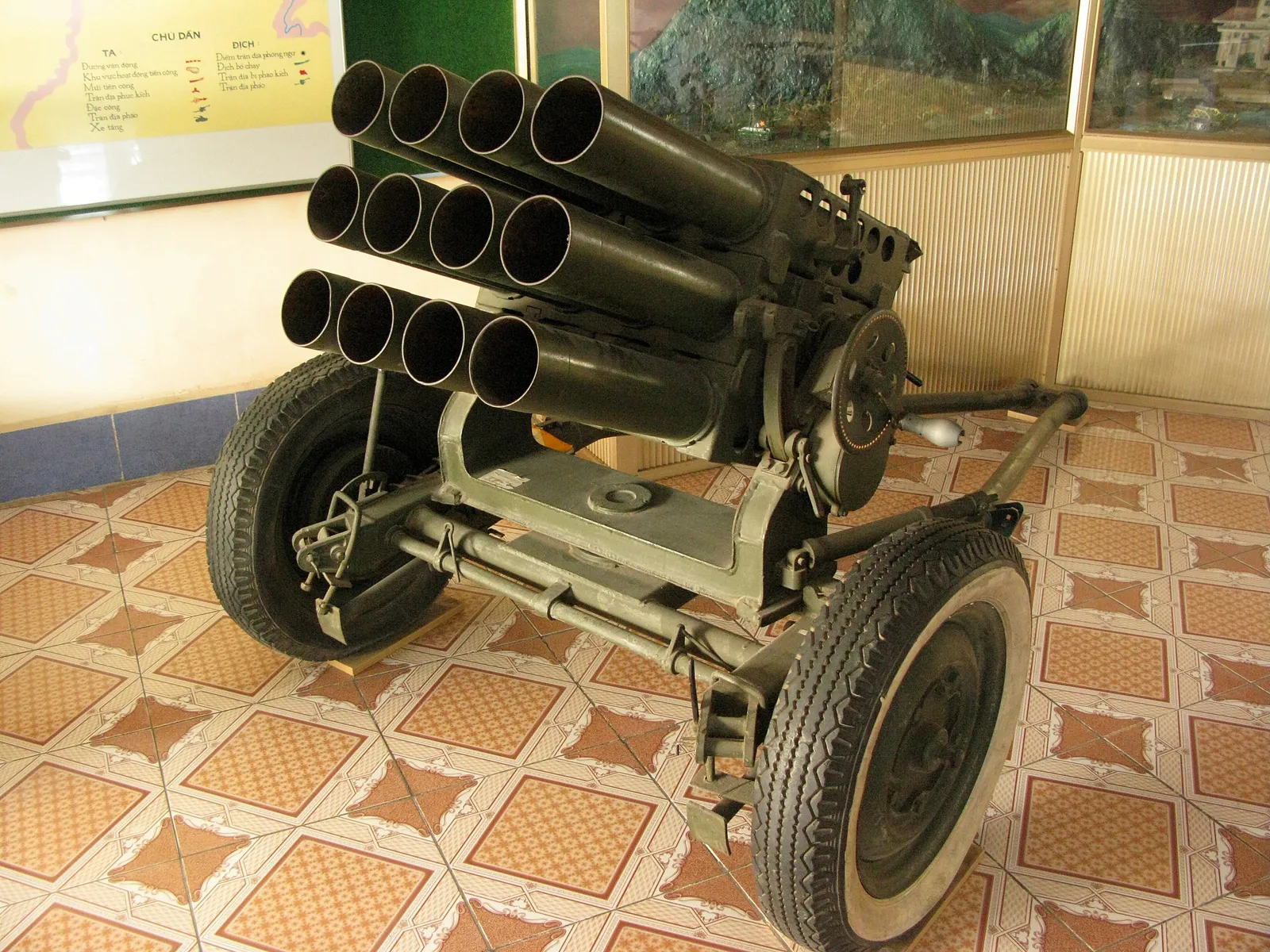
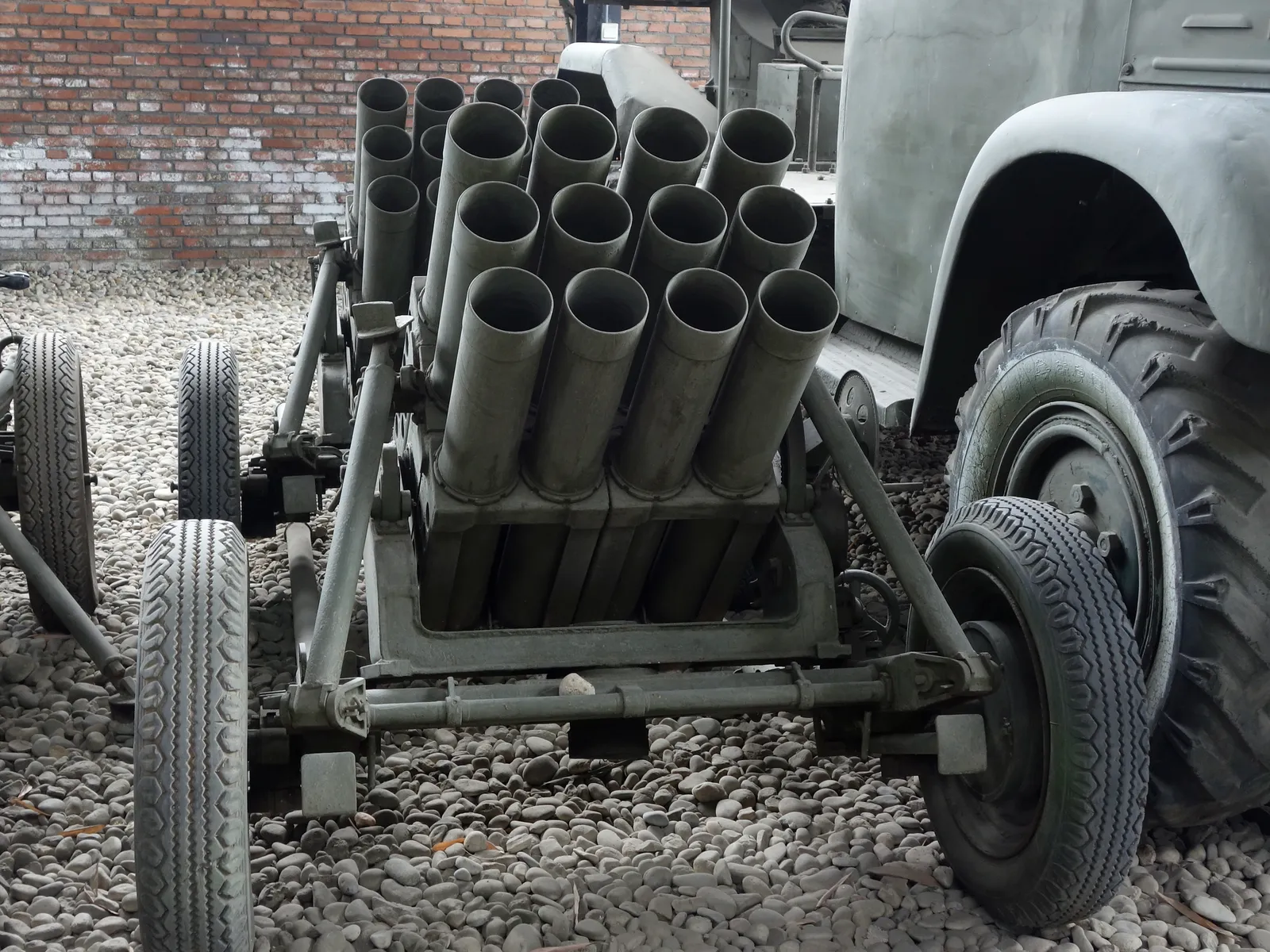
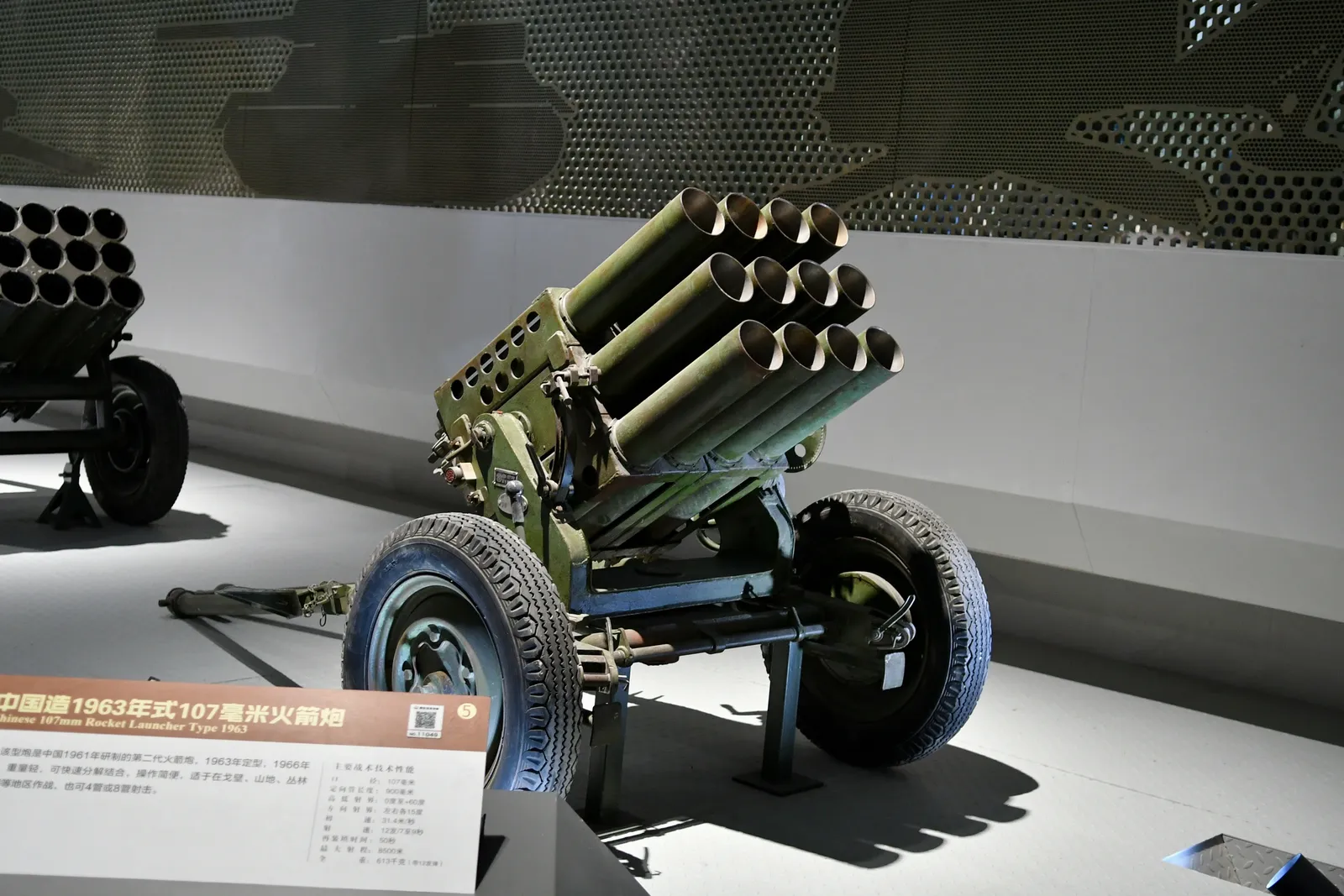
The Type 63 is a Chinese 12-tube 107 mm multiple rocket launcher designed for simple short-range area fire from a light split-trail carriage, truck mount, or derivative launcher. Developed by State Factory 847 and introduced with the PLA in 1963, the system became widely exported and copied; source-backed conflict records now show Taliban Type 63-family launcher use in Afghanistan, Boko Haram capture of a launcher in Niger, Russian Type-63 systems in Ukraine, and Houthi-aligned stocks in Yemen.
Role in Conflicts

Small Arms Survey reporting on Niger says Boko Haram captured one Type 63 107 mm multiple rocket launcher and crates of 107 mm Type 63 rockets during the Camp Bosso attack, supporting a captured-equipment row rather than confirmed firing.
- Side
- Russia

Ukrainian official and news reporting in 2026 documented Russian forces operating Type-63 multiple-launch rocket systems in Ukraine, including systems struck on the southern and Lyman fronts.
Role details
Oryx documents 107 mm Type 63 launchers in Houthi-aligned inventory inherited from pre-war Yemeni Army stocks, giving those forces a mobile short-range area-fire system while leaving individual firing incidents source-limited.
Role detailsProfile / Specs
Profile
- Origin
- China
- Type
- Towed 107 mm multiple rocket launcher
- Service note
- Introduced in 1963; widely exported and copied; documented in Taliban rocket tactics, Boko Haram captured materiel, Russian use in Ukraine, and Houthi-aligned inventory in Yemen
- Designer
- Factory 847
- Designed
- Late 1950s to 1961 development; finalized and accepted in 1963
- Unit cost
- Not publicly reported
- Produced
- 1963-present for the Type 63 family and international derivatives
- Number built
- Produced in large quantities; exact total not publicly reported
Specifications
- Caliber
- 107 mm
- Launcher
- 12 tubes arranged in three rows of four on a light two-wheel carriage
- Crew
- 5
- Maximum range
- About 8.5 km with standard ammunition
- Rate of fire
- Full 12-rocket salvo in about 7-9 seconds
- Ammunition
- Electrically initiated unguided spin-stabilized rockets, including high-explosive fragmentation types
- Loaded weight
- About 613 kg
- Travel dimensions
- About 2.6 m long, 1.4 m wide, and 1.1-1.2 m high in travel configuration
- Traverse and elevation
- Manual traverse and elevation; about 15-17 degrees traverse each side depending on variant
- Fire control
- Indirect or optical sighting with manual laying
- Mobility options
- Towed split-trail carriage, truck-mounted variants, and single-tube or improvised launch arrangements are documented across the wider family
- Typical tactical use
- Short-range area fire against positions, bases, or troop concentrations, with irregular forces also using small or improvised launch setups
Ammunition And Launch Methods
The launcher family is built around electrically initiated 107 mm unguided rockets, but the same ammunition lineage appears with towed launchers, truck mounts, single-tube launchers, and improvised launch stands.
Standard launcher
A 12-tube array in three rows of four on a light two-wheel carriage, laid manually for short-range area fire.
Rocket family
Spin-stabilized 107 mm rockets with electrical initiation, usually documented around an 8-8.5 km standard range.
Field adaptations
Sources document truck-mounted variants, single-tube launchers, and field-expedient firing arrangements used by regular and irregular forces.
Variants
The Type 63 family includes the Chinese baseline launcher, lightened and truck-mounted Chinese variants, single-tube launch arrangements, and foreign copies or derivatives that fire the same 107 mm rocket lineage.
| Variant | Configuration | Designation notes |
|---|---|---|
| Type 63 | Baseline Chinese 12-tube towed launcher | Weaponsystems.net and Army Guide describe the baseline launcher as a 12-tube, three-row weapon accepted or introduced with the PLA in 1963. Sources: Type 63, Type 63/81 Multiple Rocket Launcher |
| Type 63-I | Lightened airborne and mountain launcher | FAS lists Type 63-I as a packed model for airborne and mountain units within the 107 mm launcher family. Sources: Type 63 107mm Rocket Launcher |
| Type 81 | 4x4 truck-mounted 12-tube launcher | Army Guide and FAS describe Type 81 as a self-propelled 107 mm Type 63-family launcher mounted on a 4x4 truck. Sources: Type 63/81 Multiple Rocket Launcher, Type 63 107mm Rocket Launcher |
| Type 85 | Single-tube portable launcher | FAS describes Type 85 as a man-portable single-tube 107 mm launcher connected to the Type 63 rocket family. Sources: Type 63 107mm Rocket Launcher |
| RL812 | Egyptian derivative | Weaponsystems.net lists RL812 among Type 63-family variants or production derivatives. Sources: Type 63 |
| Fadjr-1 / Fajr-1 / Haseb | Iranian 107 mm derivative | Army Guide describes the Iranian Fajr-1 107 mm launcher system as similar to the NORINCO Type 63, while CSIS places Fajr-1 and Haseb in the Type 63 rocket lineage. Sources: 107-mm Iran Fajr-1 Rocket Weapon System, Hezbollah's Rocket Arsenal |
| RO 107 | South African derivative | Weaponsystems.net lists RO 107 in the Type 63 family, and DefenceWeb notes that South Africa manufactured a launcher copy under the RO 107 designation after using captured Type 63 launchers. |
| T-107 / T-107/122 | Turkish 107 mm launcher branch | Weaponsystems.net lists T-107 among Type 63-family derivatives, while Roketsan documents a modern T-107/122 multi-barrel launcher and 107 mm artillery rockets. Sources: Type 63, T-107/122 Multi Barrel Rocket Launcher System, Roketsan Artillery Rockets |
| Type 75 | North Korean derivative | Weaponsystems.net and FAS describe North Korean Type 75 or related self-propelled 107 mm systems as Type 63-family copies or derivatives. Sources: Type 63, Type 63 107mm Rocket Launcher |
| H12 | Vietnamese designation | Weaponsystems.net lists H12 among Type 63-family designations, and the primary image source identifies the displayed launcher as H12/Type 63. Sources: Type 63, Commons H12 Type 63 Multiple Rocket Launcher Image |
Ammunition Fired
The Type 63 launcher family is built around electrically initiated, unguided 107 mm rockets rather than a tube-artillery cartridge.
| Ammunition | Ammunition type | Firing evidence |
|---|---|---|
 | 107 mm unguided rocket | FAS identifies the Type 63 HE-fragmentation rocket as a spin-stabilized, electrically initiated round normally fired from trailer- or truck-mounted multiple launchers; Army Guide lists Type 63-2 ammunition for the Type 63/81 family. Sources: Type 63 107mm Rocket Launcher, Type 63/81 Multiple Rocket Launcher |
Compatible 107 mm Derivatives
Some foreign 107 mm rockets and launch systems sit in the Type 63 lineage, but compatibility is best stated conservatively unless a source documents a particular firing combination.
| Compatible item | Item type | Compatibility evidence |
|---|---|---|
 | Iranian 107 mm rocket derivative | Army Guide describes Iranian Fajr-1 107 mm rockets as assumed compatible with foreign 107 mm systems including Chinese systems, and CSIS places Fajr-1/Haseb in the Type 63 rocket lineage. Sources: 107-mm Iran Fajr-1 Rocket Weapon System, Hezbollah's Rocket Arsenal |
Timeline
Type 63 107 mm multiple rocket launcher Key Events
State Factory 847 develops light launcher
Chinese sources summarized by GlobalSecurity attribute 1961 development of the lightweight 107 mm towed rocket launcher to State Factory 847, after late-1950s trial work on 8 km field rocket launchers.
Sources: Type 63 107mm Rocket Launcher Program
PLA service begins
Army Guide and WeaponSystems.net identify 1963 as the Type 63's PLA service-entry year, with the baseline launcher built as a 12-tube short-range area-fire weapon.
Sources: Type 63/81 Multiple Rocket Launcher, Type 63
Type 63-2 rocket introduced
Army Guide describes the Type 63-2 ammunition as an improved 107 mm rocket introduced in 1975 for the Type 63/81 family.
Sources: Type 63/81 Multiple Rocket Launcher
Regular PLA use winds down
Army Guide states that the launcher was fielded in large numbers by PLA ground forces until the late 1990s, after which remaining Chinese service concentrated in airborne, mountain, and special operations units.
Sources: Type 63/81 Multiple Rocket Launcher
Taliban Type 63 launcher use described
A U.S. Army/TRADOC tactics report identifies Chinese Type 63 107 mm launchers in Taliban rocket tactics, while noting vehicle, improvised-stand, and wheeled-mount launch arrangements.
Sources: Taliban Top 5 Most Deadly Tactics Techniques and Procedures
Houthi-held launchers documented
Oryx listed 107 mm Type 63 multiple rocket launchers among Houthi-aligned systems inherited from pre-war Yemeni Army stocks.
Sources: Houthi Drone And Missile Handbook
Russian Type-63 system struck in Ukraine
Ukrainska Pravda, citing Ukraine's State Border Guard Service, reported that Ukrainian drone crews struck a Chinese-made Type 63 multiple-launch rocket system operated by Russian troops on the southern front.
Sources: Ukrainian Border Guards Hit Type 63 Rocket Launcher
Lyman-front Type-63 system destroyed
Ukrinform reported that Ukrainian border-guard drone crews destroyed a Russian Type-63 multiple-launch rocket system on the Lyman front.
Sources: Ukrainian Border Guards Destroy Russian Type-63 MLRS
Media
Type 63 107 mm multiple rocket launcher Videos
Type 63 107 mm multiple rocket launcher Images
Related Weapon Systems


Sources
Type 63Publisher: Weaponsystems.net | Note: Supports Type 63 background, Chinese origin, 12-tube layout, manual aiming, crew, range, rate of fire, weight, and variant context. | Accessed: 2026-07-04Type 63/81 Multiple Rocket LauncherPublisher: Army Guide | Note: Supports Factory 847 development background, NORINCO manufacturer context, PLA service entry, launcher layout, ammunition, crew, and range specifications. | Accessed: 2026-07-04Type 63 107mm Rocket Launcher ProgramPublisher: GlobalSecurity.org | Note: Supports development timeline context for State Factory 847 work on the 1963-type 107 mm lightweight towed rocket launcher. | Accessed: 2026-07-04Type 63 107mm Rocket LauncherPublisher: Federation of American Scientists | Note: Supports Type 63-family launcher and ammunition relationship context, including Type 63, Type 63-I, Type 81, Type 85, and electrically initiated 107 mm HE-fragmentation rocket descriptions. | Accessed: 2026-07-04107-mm Iran Fajr-1 Rocket Weapon SystemPublisher: Army Guide | Note: Supports Iranian Fajr-1/Haseb derivative context, including the Fajr-1 107 mm launcher system's similarity to the NORINCO Type 63 and stated compatibility assumptions with foreign 107 mm systems. | Accessed: 2026-07-04Hezbollah's Rocket ArsenalPublisher: Center for Strategic and International Studies | Note: Supports Fajr-1 and Haseb 107 mm rocket lineage context as Iranian copies or derivatives connected to the Chinese Type 63 family. | Accessed: 2026-07-04T-107/122 Multi Barrel Rocket Launcher SystemPublisher: Roketsan | Note: Supports Turkish T-107/122 derivative-branch context, including modern 107 mm launcher configuration and firing-control features. | Accessed: 2026-07-04Roketsan Artillery RocketsPublisher: Roketsan | Note: Supports Turkish TR-107 107 mm artillery rocket context used with the T-107/T-107/122 launcher branch. | Accessed: 2026-07-04Armscor Seeking Multiple Rocket LaunchersPublisher: DefenceWeb | Note: Supports South African RO 107 derivative context, including South African use of captured Type 63 launchers, local rocket manufacture, and Mechem's former RO 107 launcher copy. | Accessed: 2026-07-04Taliban Top 5 Most Deadly Tactics Techniques and ProceduresPublisher: U.S. Army TRADOC, hosted by Public Intelligence | Note: Supports 2001 War in Afghanistan direct-use context: Taliban artillery, mortar, and rocket tactics included 107 mm rocket launchers, and the deck identifies Chinese Type 63 107 mm launchers or field-expedient 107 mm launch arrangements. | Accessed: 2026-07-04At the Crossroads of Sahelian ConflictsPublisher: Small Arms Survey / Global Initiative Against Transnational Organized Crime | Note: Supports 2009 Boko Haram Insurgency direct captured-equipment context: reporting on the Camp Bosso attack lists one Type 63 107 mm multiple rocket launcher and crates of 107 mm Type 63 rockets among captured materiel. | Accessed: 2026-07-04Ukrainian Border Guards Hit Type 63 Rocket LauncherPublisher: Ukrainska Pravda | Note: Supports 2014 Russia-Ukraine War direct-use context: citing Ukraine's State Border Guard Service, the article reports a Chinese-made Type 63 multiple-launch rocket system operated by Russian troops and struck on the southern front. | Accessed: 2026-07-04Ukrainian Border Guards Destroy Russian Type-63 MLRSPublisher: Ukrinform | Note: Supports 2014 Russia-Ukraine War direct-use context: reporting says Ukrainian border-guard drone crews destroyed a Russian Type-63 multiple-launch rocket system on the Lyman front. | Accessed: 2026-07-04Houthi Drone And Missile HandbookPublisher: Oryx | Note: Supports 2014 Yemen Civil War direct-use context: 107 mm Type 63 launchers fielded by Houthi-aligned forces from pre-war Yemeni Army stocks. | Accessed: 2026-07-04Commons H12 Type 63 Multiple Rocket Launcher ImagePublisher: Wikimedia Commons | Note: Supports image provenance for a public-domain Type 63/H12 launcher photograph by Binh Giang. | Accessed: 2026-07-04Commons Type 63 107 mm Multiple Rocket Launcher ImagePublisher: Wikimedia Commons | Note: Supports image provenance for a CC BY-SA 4.0 Type 63 107 mm multiple rocket launcher photograph by Tyg728. | Accessed: 2026-07-04Commons Type 1963 107 mm Rocket Launcher ImagePublisher: Wikimedia Commons | Note: Supports image provenance for a CC BY-SA 4.0 Type 1963 107 mm rocket launcher photograph by Tyg728. | Accessed: 2026-07-04