Infantry Weapons

Type 56 assault rifle

Also known as
  • Chinese Type 56
  • NORINCO Type 56
  • Type 56 AK
  • Type 56 rifle
  • Type 56 assault rifle

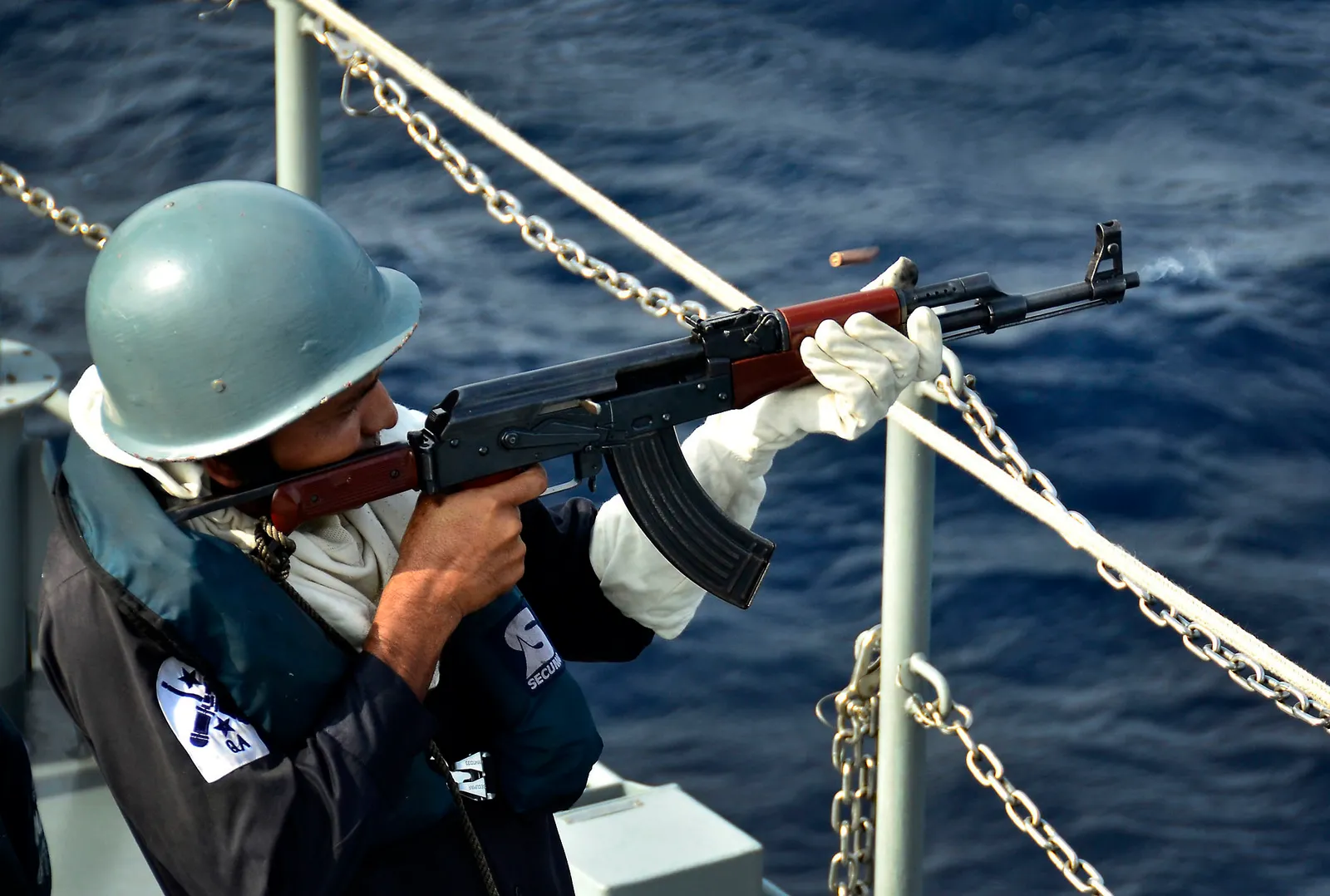
The Type 56 is China's 7.62x39mm Kalashnikov-pattern assault rifle family, adopted in 1956, built in very large numbers, and exported widely through state, surplus, and illicit channels. Its early rifles followed the Soviet AK-47 with milled receivers, later production used AKM-style stamped receivers under the same designation, and many examples are recognizable by a permanently attached folding spike bayonet. In the 2009 Boko Haram Insurgency, Small Arms Survey and Stimson reporting link Chinese Type 56 rifles to weapons seized from Boko Haram members and to materiel captured during the 2016 Bosso camp attack in Niger.

Role in Conflicts

Role in conflict
Small-unit assault rifle and captured stockpile weapon

Chinese Type 56 rifles were documented among weapons seized from Boko Haram members in Niger in 2015-2016 and among materiel taken by Boko Haram during the June 2016 Bosso camp attack, showing their use as insurgent small arms in the Lake Chad basin.

Profile / Specs

Profile

Origin
China
Type
7.62x39mm Kalashnikov-pattern assault rifle
Service note
Cold War design still circulating in recent insurgencies
Designer
Chinese Kalashnikov design lineage
Designed
Adopted by China in 1956 as a Kalashnikov-pattern rifle chambered for 7.62x39mm ammunition
Produced
1956-present for Type 56-family production and export variants
Number built
Millions across the Type 56 family

Specifications

Caliber
7.62x39mm
Operation
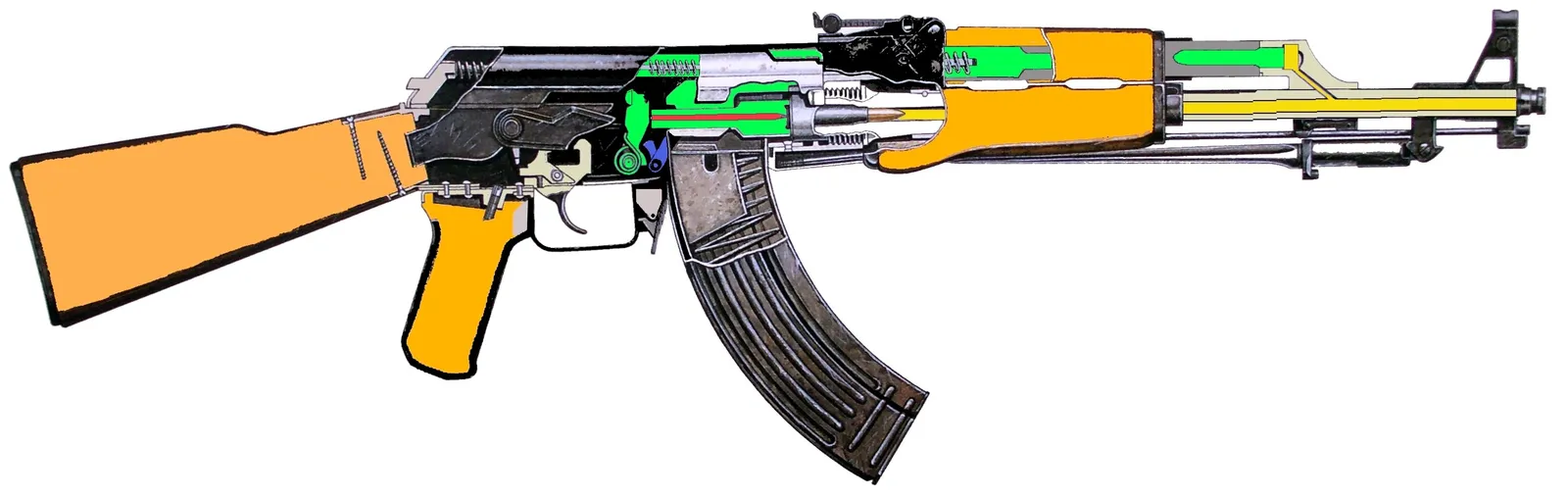
Gas-operated, rotating bolt, selective fire
Overall length
874 mm
Barrel length
414 mm
Weight
About 3.8 kg
Magazine
30-round detachable box magazine
Rate of fire
About 650 rounds per minute
Receiver
Early production used a milled receiver; later rifles used AKM-type stamped receivers under the same Type 56 designation
Distinctive features
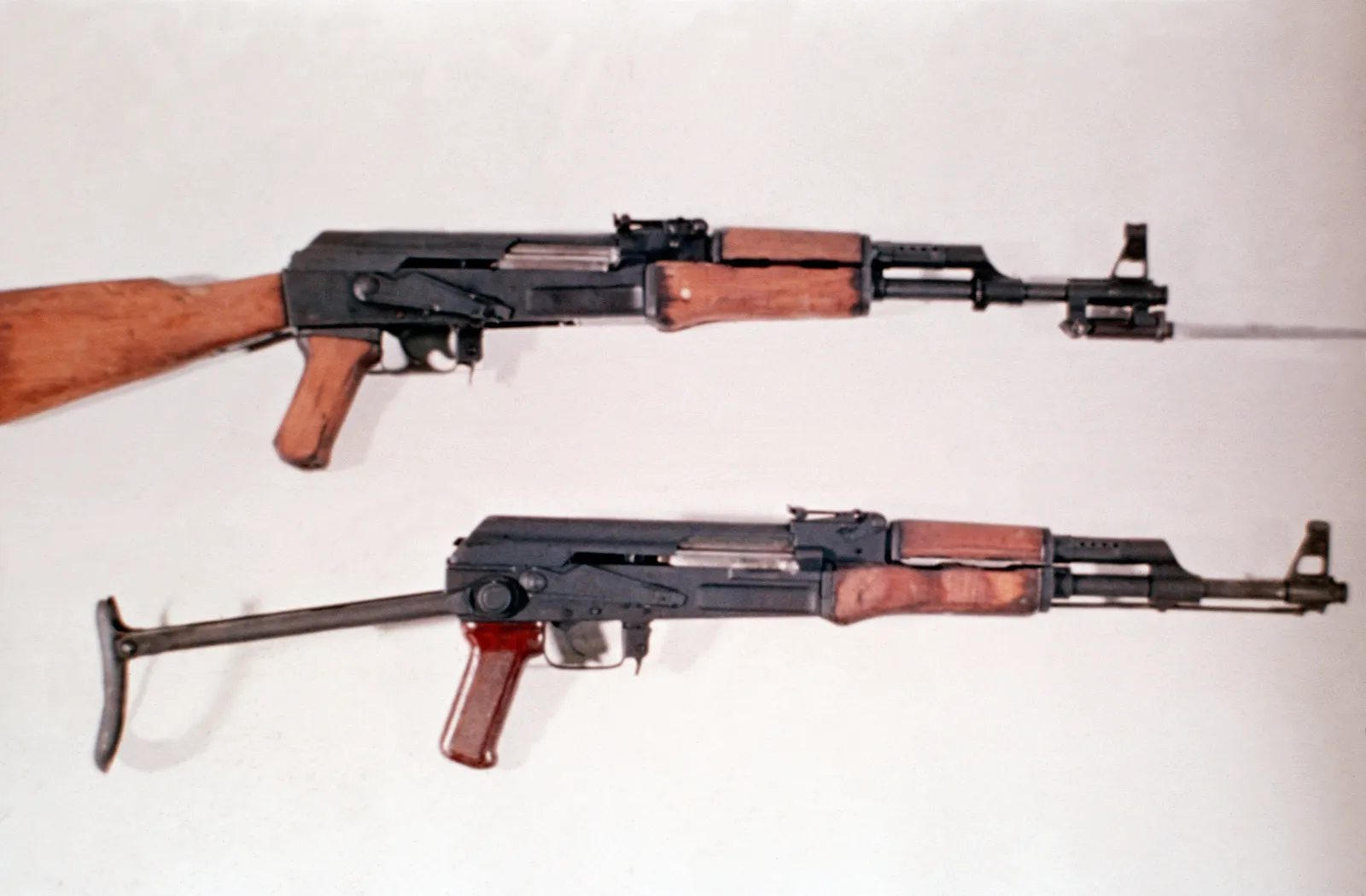
Fixed wooden stock on the baseline rifle and a folding non-detachable spike bayonet on many military examples
Variants
  • Type 56 fixed-stock baseline rifle
  • Type 56-1 under-folding-stock variant
  • Type 56-2 side-folding-stock variant
  • Type 56C compact short-barrel carbine
  • Type 56S and Type 56-1S semi-automatic export variants
Ammunition Fired

The Type 56 is a Kalashnikov-pattern rifle chambered for Soviet 7.62x39mm intermediate ammunition.

AmmunitionAmmunition typeFiring evidence
7.62x39mm cartridge, Intermediate rifle cartridge, Munitions7.62x39mm cartridgeIntermediate rifle cartridge

Modern Firearms lists the Type 56 assault rifle family as chambered for 7.62x39mm ammunition and fed from a 30-round magazine.

Sources: Type 56

Timeline

Type 56 assault rifle Key Events

  1. Chinese Type 56 adopted

    China adopted the Type 56 Kalashnikov-pattern assault rifle in 1956, chambering it for Soviet 7.62x39mm ammunition alongside the Type 56 SKS carbine.

    Sources: Type 56

  2. 1955 Vietnam War capture example manufactured

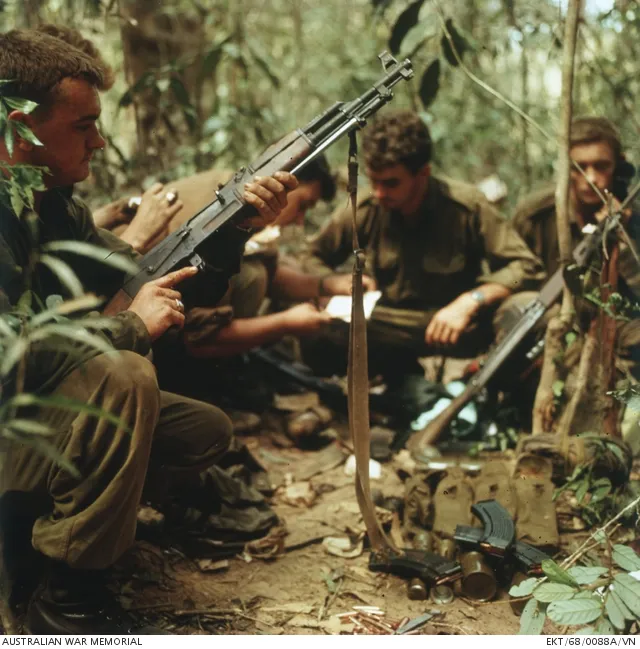
    The Australian War Memorial records a China-made Type 56 associated with North Vietnamese Forces, made around 1960 and later captured in Vietnam.

    Sources: Type 56 Assault Rifle : North Vietnamese Forces

  3. Front-line PLA replacement begins

    The PLA adopted the Type 81 in the early 1980s, gradually replacing full-size Type 56 rifles in front-line service while export production continued.

    Sources: Type 56

  4. Boko Haram seizures in Niger

    Small Arms Survey documented Chinese Type 56 and Type 56-1 rifles among weapons seized from Boko Haram members in Niger's Diffa region.

    Sources: At the Crossroads of Sahelian Conflicts

  5. Bosso camp materiel captured

    Small Arms Survey listed Type 56 and Type 56-2 rifles among materiel taken by Boko Haram during the Bosso military-camp attack in Niger.

    Sources: At the Crossroads of Sahelian Conflicts

Recognition and Variant Notes

Modern Firearms describes the original Type 56 as an AK-47 copy with a milled receiver, followed by later rifles with AKM-type stamped receivers that kept the Type 56 designation. A common recognition feature is the folding, non-detachable spike bayonet; Australian War Memorial and Royal Museums Greenwich object records also document Chinese-marked Type 56 examples with steel magazines, wooden furniture, and 7.62 mm chambering.

The Type 56-1 used an under-folding stock, the Type 56-2 used a side-folding stock, and the compact Type 56C shortened the rifle while retaining the Type 56 family identity.

Media
Related Weapon Systems
Type 56-1 assault rifle, 7.62x39mm under-folding-stock assault rifle, Infantry WeaponsInfantry WeaponsType 56-1 assault rifle7.62x39mm under-folding-stock assault rifleThe Type 56-1 is the under-folding-stock member of China's Type 56 Kalashnikov-pattern rifle family, chambered for 7.62x39mm ammunition and built for compact carriage by infantry and irregular forces. Modern Firearms and museum records identify it as a Chinese Type 56-family rifle made by state arms factories and NORINCO, while field and interdiction reporting links Type 56-1 rifles to Boko Haram seizures in Niger and Iran-backed supply channels for Houthi-aligned forces in Yemen.
AKM, 7.62x39mm assault rifle, Infantry WeaponsInfantry WeaponsAKM7.62x39mm assault rifleThe AKM is the stamped-receiver modernization of the Soviet Kalashnikov assault rifle, chambered for 7.62x39mm and built around a long-stroke gas piston and rotating bolt. Adopted in 1959, it reduced production burden compared with earlier milled-receiver AK rifles and became a widely licensed baseline for later 7.62mm Kalashnikov-pattern weapons. CAR and ARES field documentation continues to place AKM and AKM-pattern rifles in modern conflict stocks, from Islamic State recoveries in Iraq and Syria to Taliban captures in Afghanistan.
AK-47/AKM rifle family, Selective-fire assault rifle family, Infantry WeaponsInfantry WeaponsAK-47/AKM rifle familySelective-fire assault rifle familyAK-47/AKM-family rifles are Kalashnikov-pattern small arms derived from the Soviet AK-47 and 1959 AKM modernization, usually chambered in 7.62 x 39 mm. In the post-2015 catalog they appear with FARC dissidents in Colombia, gangs in Haiti, PKK fighters, GNA scouts in Libya, insurgents in Mali, Islamic State forces in Iraq and Syria, militants in Sinai, RSF units in Sudan, Hamas fighters in Gaza, Taliban fighters in Afghanistan, Boko Haram-linked militants in the Lake Chad basin, and Houthi-linked supply chains in Yemen.
AK-103-2 assault rifle, 7.62x39mm assault rifle variant, Infantry WeaponsInfantry WeaponsAK-103-2 assault rifle7.62x39mm assault rifle variantThe AK-103-2 is the three-round-burst export variant of the Russian AK-103, a 7.62x39mm AK-100-series rifle derived from the AK-74M layout but chambered for the older AKM cartridge. In the 2009 Boko Haram Insurgency context, available open-source evidence is limited: the specific AK-103-2 identification comes from visual reporting of Boko Haram militants around Lake Chad, while separate Nigerian court reporting documents alleged AK-103 rifle trafficking from Diffa toward a Boko Haram recipient.
AKMS, Folding-stock 7.62x39mm assault rifle, Infantry WeaponsInfantry WeaponsAKMSFolding-stock 7.62x39mm assault rifleThe AKMS is the under-folding-stock member of the Soviet AKM assault-rifle family, retaining the stamped receiver, long-stroke gas system, select-fire controls, and 7.62x39mm chambering while shortening the rifle for airborne troops, vehicle crews, and compact carry. Conflict Armament Research and ARES documentation places AKMS-family rifles in Islamic State stocks around Kobane and in a 2022 Ukrainian police seizure from an alleged Russian saboteur, showing how older Kalashnikov-pattern rifles remain visible in modern war.

Sources