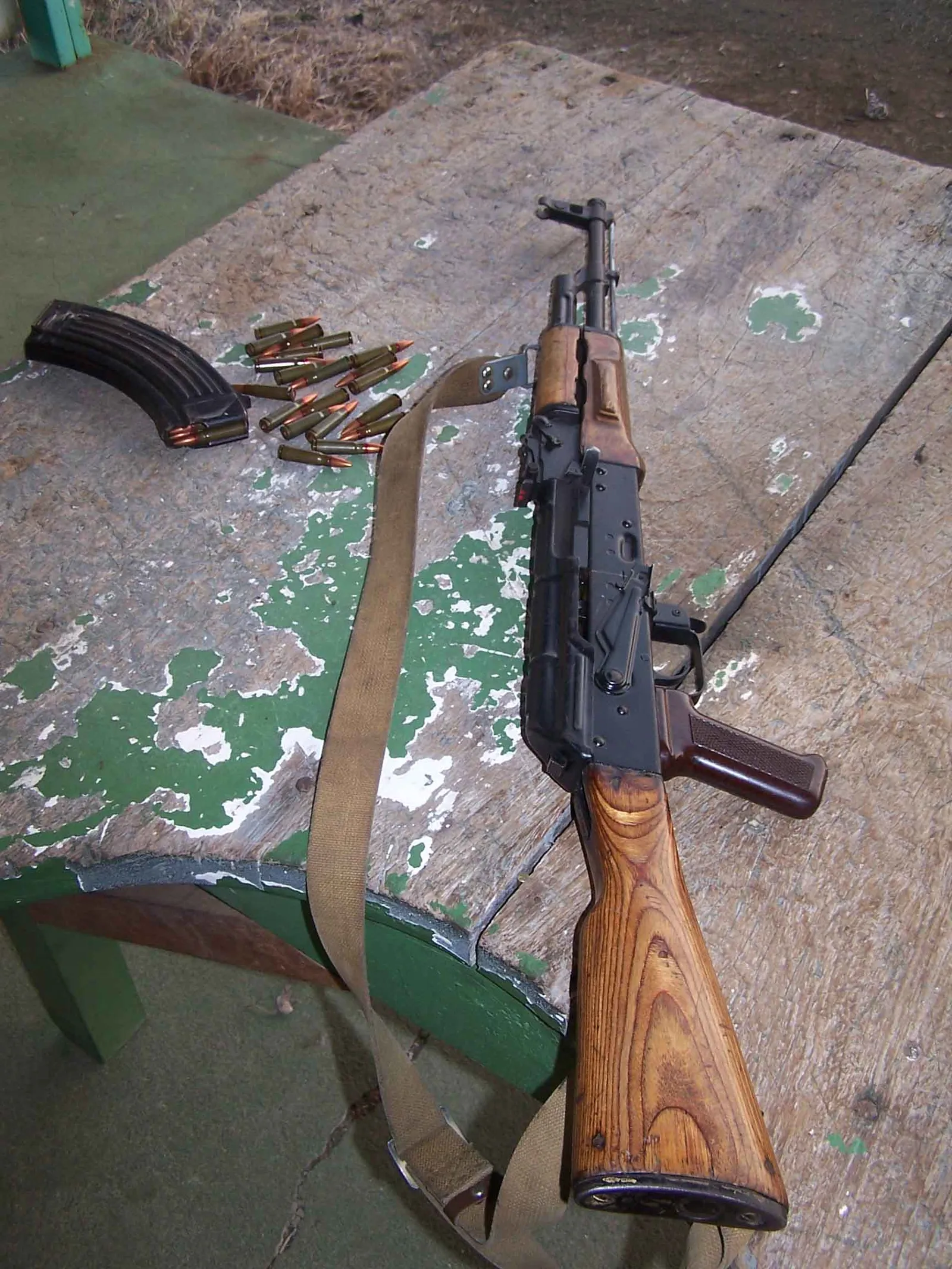

AP's Jan. 15, 2024 analysis of the 2023 Israel-Hamas War reported Hamas fighters using AK-47 assault rifles from China and Russia in Gaza and during the Oct. 7 attack.
Role detailsInfantry Weapons
AKM
Also known as
- Avtomat Kalashnikova Modernizirovanniy
- Avtomat Kalashnikova Modernized
- AKM 6P1
- 6P1
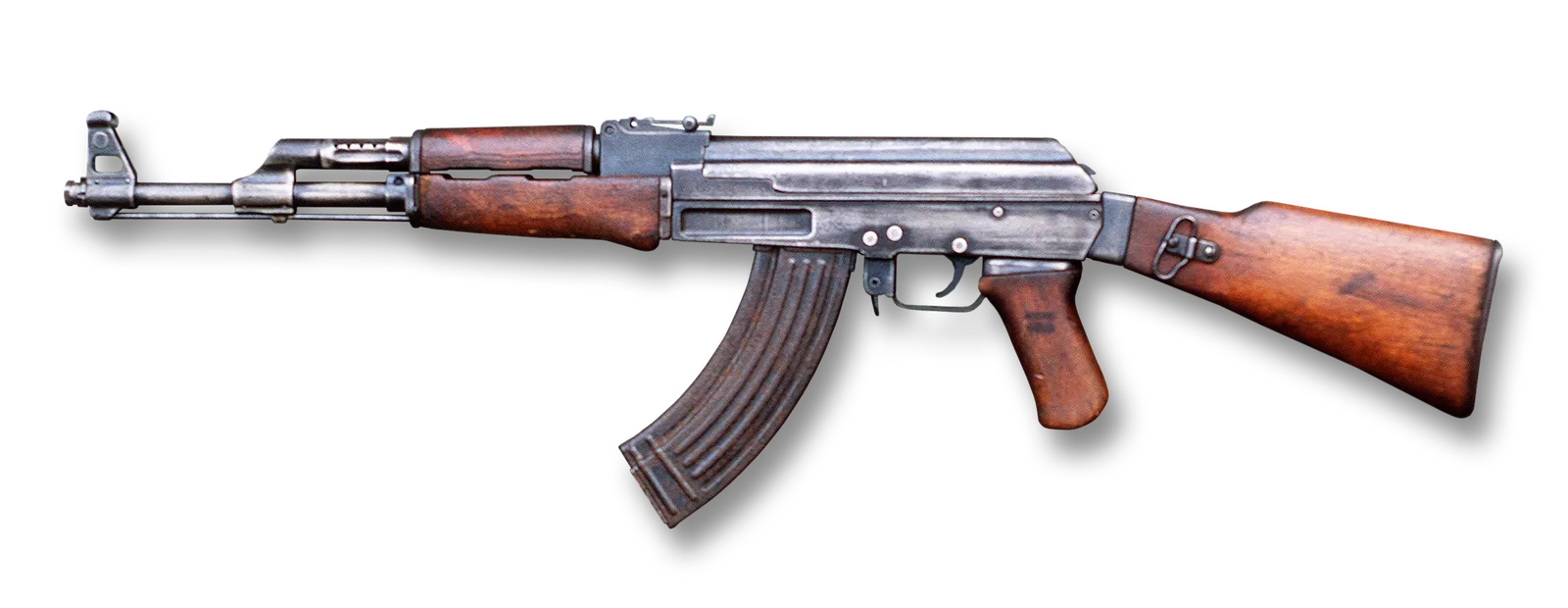
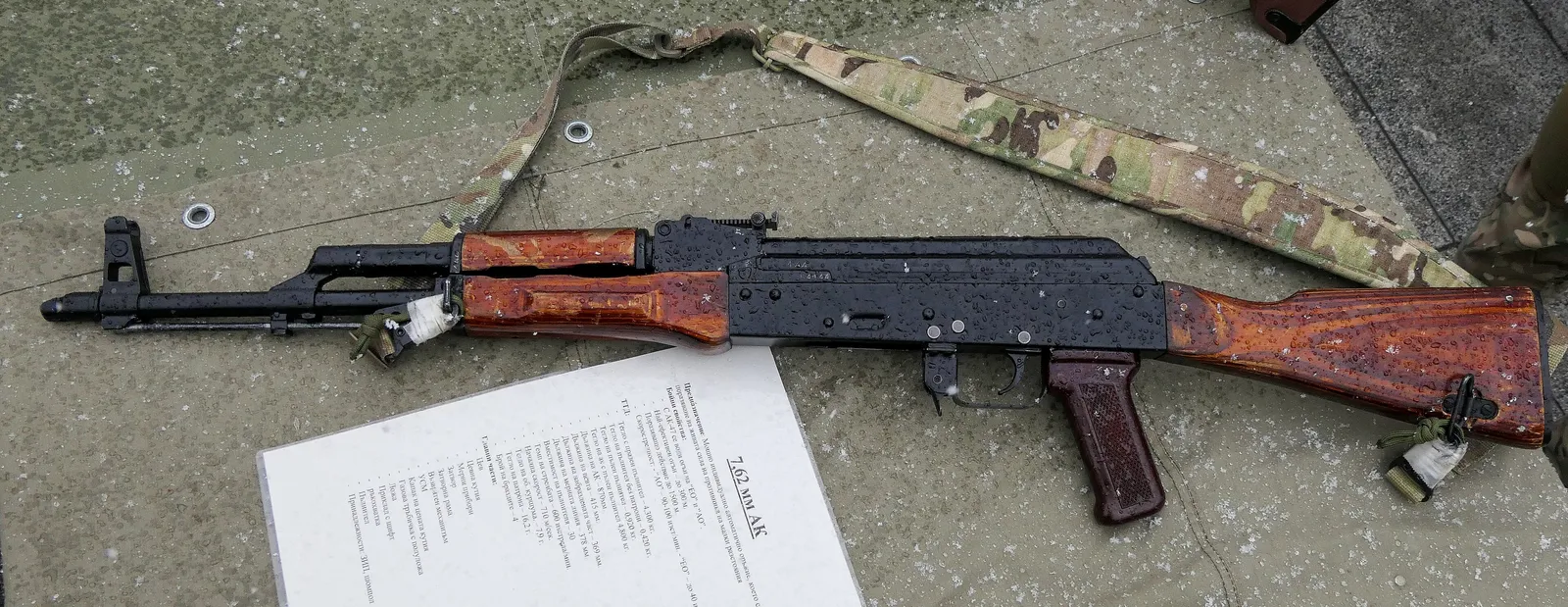
The AKM is the stamped-receiver modernization of the Soviet Kalashnikov assault rifle, chambered for 7.62x39mm and built around a long-stroke gas piston and rotating bolt. Adopted in 1959, it reduced production burden compared with earlier milled-receiver AK rifles and became a widely licensed baseline for later 7.62mm Kalashnikov-pattern weapons. CAR and ARES field documentation continues to place AKM and AKM-pattern rifles in modern conflict stocks, from Islamic State recoveries in Iraq and Syria to Taliban captures in Afghanistan.
Role in Conflicts


Ukrainian forces continued to train and serve with Soviet-pattern Kalashnikov rifles, including AKM assault rifles, during the full-scale invasion; CAR also documented an AKM rifle among weapons recovered from DPR/LPR formations in eastern Ukraine before 2022.
Role details- Side
- Islamic State

CAR's three-year investigation of Islamic State materiel in Iraq and Syria documented Soviet/Russian AK-47 and AKM rifles, Romanian AKM rifles, and related AKM-pattern variants in Islamic State-held or recovered weapon stocks during the coalition campaign.
Role detailsCAR documented three USSR-manufactured AKM 7.62x39 mm assault rifles captured from Islamic State forces by YPG forces at Avdoke, Syria in July 2014, and later reported 427 7.62x39 mm assault rifles among Islamic State weapons documented in Syria.
Role details
CAR documented the March 2016 FS Provence interdiction of 2,000 new-condition AKM-pattern assault rifles and assessed, using related weapons recovered in Yemen, that the dhow cargo was likely part of an Iran-linked supply route toward Yemen rather than confirmed battlefield use.
Role details- Role in conflict
- Insurgent small-arms use
Conflict Armament Research documented eight 7.62x39 mm AKM assault rifles seized from JAS- and ISWAP-affiliated militants in Niger and the Lake Chad area, linking the rifles to insurgent small-arms stocks in the 2009 Boko Haram Insurgency.

ARES documented AKM-type rifles among arms captured by the Taliban during the May-August 2021 Taliban conquest of Afghanistan, tying the rifle family to captured Afghan government and security-force stocks in the war's final campaign.
Role detailsProfile / Specs
Profile
- Origin
- Soviet Union
- Built in
- Soviet Unionlicensed producers
- Type
- 7.62x39mm assault rifle
- Service note
- Introduced in 1959; still encountered in current conflicts through legacy stocks and licensed production
- Designer
- Mikhail Kalashnikov
- Designed
- 1950s
- Produced
- 1959-1977 in Soviet production; later licensed and derivative production continued elsewhere
Specifications
- Cartridge
- 7.62x39mm M43
- Action
- Gas-operated, rotating bolt, select-fire
- Overall length
- 880 mm
- Barrel length
- 415 mm
- Empty weight
- About 3.3 kg
- Magazine
- 30-round detachable box magazine
- Cyclic rate
- About 600 rounds per minute
Design And Production Notes
The AKM kept the Kalashnikov long-stroke piston layout but moved the production baseline toward a stamped receiver, lighter magazines, updated furniture, and a slant muzzle compensator. Those changes are useful for identifying why many later national 7.62mm Kalashnikov rifles are described as AKM-pattern rather than simply AK-47 copies.
| Feature | AKM change | Catalog significance |
|---|---|---|
| Receiver | Stamped parts joined by welds and rivets replaced the heavier milled approach used on earlier AK production. | Supports the AKM's role as the lighter production modernization of the Soviet rifle family. |
| Controls and action | The rifle retained the gas piston, rotating bolt, fire selector, and select-fire layout of the Kalashnikov system. | Explains why ammunition, magazine, and training continuity matter across AK and AKM-pattern rifles. |
| Night and accessory fit | Night-sight variants added receiver rails, while the GP-25 was later fielded as a compatible underbarrel launcher. | Separates base AKM identity from accessory-equipped AKMN, AKML, and grenade-launcher configurations. |
Variants
AKM designations mostly separate stock configuration, night-sight mounting, and licensed national production rather than a change in basic 7.62x39mm operating system.
| Variant | Configuration | Designation notes |
|---|---|---|
 | Under-folding-stock variant | GunRF describes the AKMS, indexed 6P4, as the folding-stock AKM modification adopted alongside the AKM in 1959 for airborne and special-operation users. Sources: GunRF AKM and AKMS assault rifles |
| AKMN / AKML | Night-sight variants | GunRF identifies AKMN and AKML versions with a left-side receiver rail for active or passive night sights, including NSP-series optics. Sources: GunRF AKM and AKMS assault rifles |
| Licensed national AKM-pattern rifles | Foreign production and derivatives | GunRF and CAR describe broad foreign production and documented AKM-pattern examples, including Romanian AKM rifles and other national Kalashnikov derivatives recovered in conflict zones. Sources: GunRF AKM and AKMS assault rifles, Weapons of the Islamic State |
Ammunition Fired
The AKM's standard small-arms role is tied to the Soviet intermediate cartridge family used across AK-pattern rifles.
| Ammunition | Ammunition type | Firing evidence |
|---|---|---|
 | Intermediate rifle cartridge | GunRF lists the AKM cartridge as 7.62x39mm M1943 and describes the same round as the standard ammunition family for Kalashnikov weapons firing this caliber. Sources: GunRF AKM and AKMS assault rifles |
Underbarrel Grenade Launcher Compatibility
| Compatible item | Item type | Compatibility evidence |
|---|---|---|
 | 40 mm underbarrel grenade launcher | GunRF lists the GP-25 as mountable on AKM and AKMS assault rifles, adding a 40 mm grenade launcher option to the rifle. |
Timeline
AKM Key Events
AKM adopted by the Soviet Union
GunRF gives 8 April 1959 as the Soviet Council of Ministers adoption date for the 7.62mm AKM, indexed 6P1.
GP-25 compatibility enters Soviet service
GunRF describes the GP-25 grenade launcher as fielded in 1978 and mountable on AKM and AKMS rifles.
Islamic State recoveries documented in Iraq and Syria
CAR began documenting Islamic State weapons in Iraq and Syria in 2014; the report includes AKM and AKM-pattern rifles in recovered stocks.
Taliban captures include AKM-type rifles
ARES documented AKM-type rifles among arms captured by the Taliban during its May-August 2021 conquest of Afghanistan.
Related Weapon Systems


Sources
Soviet AKM riflePublisher: Imperial War Museums | Note: Supports AKM background, adoption context, Izhmash creator attribution, and physical dimensions for a Soviet AKM example. | Accessed: 2026-06-20AP Hamas weapons analysisPublisher: AP News | Note: Supports 2023 Israel-Hamas War direct conflict use; AP analysis reports Hamas fighters using AK-47 assault rifles from China and Russia. | Accessed: 2026-06-20Kalashnikov AKM modernized assault riflePublisher: Modern Firearms | Note: Supports AKM technical specifications including cartridge, length, barrel length, weight, magazine capacity, and cyclic rate. | Accessed: 2026-06-20GunRF AKM and AKMS assault riflesPublisher: GunRF | Note: Supports AKM adoption date, 6P1 designation, stamped-receiver production background, AKMS and night-sight variants, 7.62x39mm cartridge relationship, and selected technical specifications. | Accessed: 2026-06-30Ukraine launches large-scale production of assault riflesPublisher: Oboronka / Mezha Media | Note: Supports 2014 Russia-Ukraine War context for Ukrainian forces training with AKM assault rifles in 2024 and continued reliance on Kalashnikov-pattern rifles. | Accessed: 2026-06-20Weapons of the War in UkrainePublisher: Conflict Armament Research | Note: Supports direct 2014 Russia-Ukraine War documentation of AKM assault rifles recovered from DPR/LPR formations in eastern Ukraine. | Accessed: 2026-06-20Weapons of the Islamic StatePublisher: Conflict Armament Research | Note: Supports 2014 War Against the Islamic State direct conflict use under Operation Inherent Resolve: Supports 2014 Operation Inherent Resolve and 2011 Syrian Civil War context for AKM and AKM-pattern assault rifles documented among Islamic State weapons in Iraq and Syria. | Accessed: 2026-06-30Islamic State Weapons in Iraq and SyriaPublisher: Conflict Armament Research | Note: Supports 2011 Syrian Civil War direct use: documents three AKM 7.62x39 mm assault rifles captured from Islamic State forces by YPG forces at Avdoke, Syria in July 2014. | Accessed: 2026-07-05Arms Captured by the Taliban During Their Conquest of AfghanistanPublisher: Armament Research Services | Note: Supports 2001 War in Afghanistan direct conflict context for AKM-type rifles captured by the Taliban during the May-August 2021 campaign. | Accessed: 2026-06-30Maritime Interdictions of Weapon Supplies to Somalia and YemenPublisher: Conflict Armament Research | Note: Supports 2014 Yemen Civil War supply-chain context for the FS Provence seizure of 2,000 AKM-pattern assault rifles assessed as likely destined for Yemen. | Accessed: 2026-06-20Weapon Supplies Fueling Terrorism in the Lake Chad CrisisPublisher: Conflict Armament Research | Note: Supports 2009 Boko Haram Insurgency direct use: AKM assault rifles were used by JAS/Boko Haram and ISWAP-affiliated militants, with CAR documenting rifles seized from those groups in the Lake Chad area. | Accessed: 2026-06-21GunRF GP-25 rifle-attached grenade launcherPublisher: GunRF | Note: Supports the GP-25 relationship by listing AKM and AKMS rifles among host weapons for the 40 mm underbarrel grenade launcher. | Accessed: 2026-06-30AKM (rifle).jpgPublisher: Wikimedia Commons | Note: Supports image provenance and reuse terms for the primary AKM image, licensed under CC BY-SA 3.0 and GFDL. | Accessed: 2026-06-20AK-47 type II noBG.pngPublisher: Wikimedia Commons | Note: Supports image provenance and reuse terms for an AK-47 Type II illustration, licensed under CC BY-SA 4.0. | Accessed: 2026-06-20AKM rifle Bulgarian Special Forces.jpgPublisher: Wikimedia Commons | Note: Supports image provenance and reuse terms for a Bulgarian Special Forces AKM photo, licensed under CC BY-SA 4.0. | Accessed: 2026-06-20