Profile
- Type
- Reusable shoulder-fired anti-tank rocket launcher
- Conflict side
- Ukraine
- Origin
- Soviet Union
- Service note
- Introduced in the early 1960s; still widely used in modern conflicts
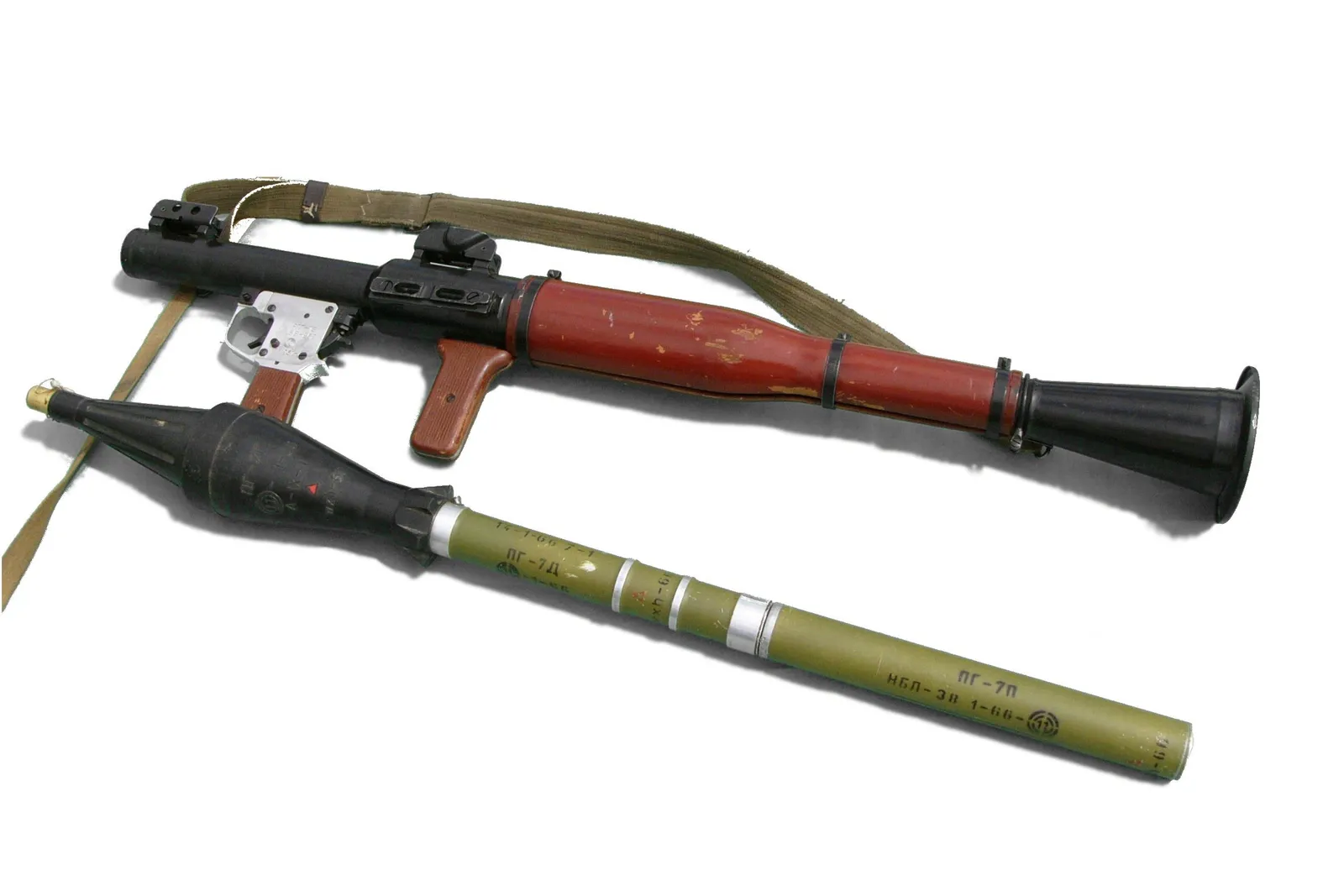
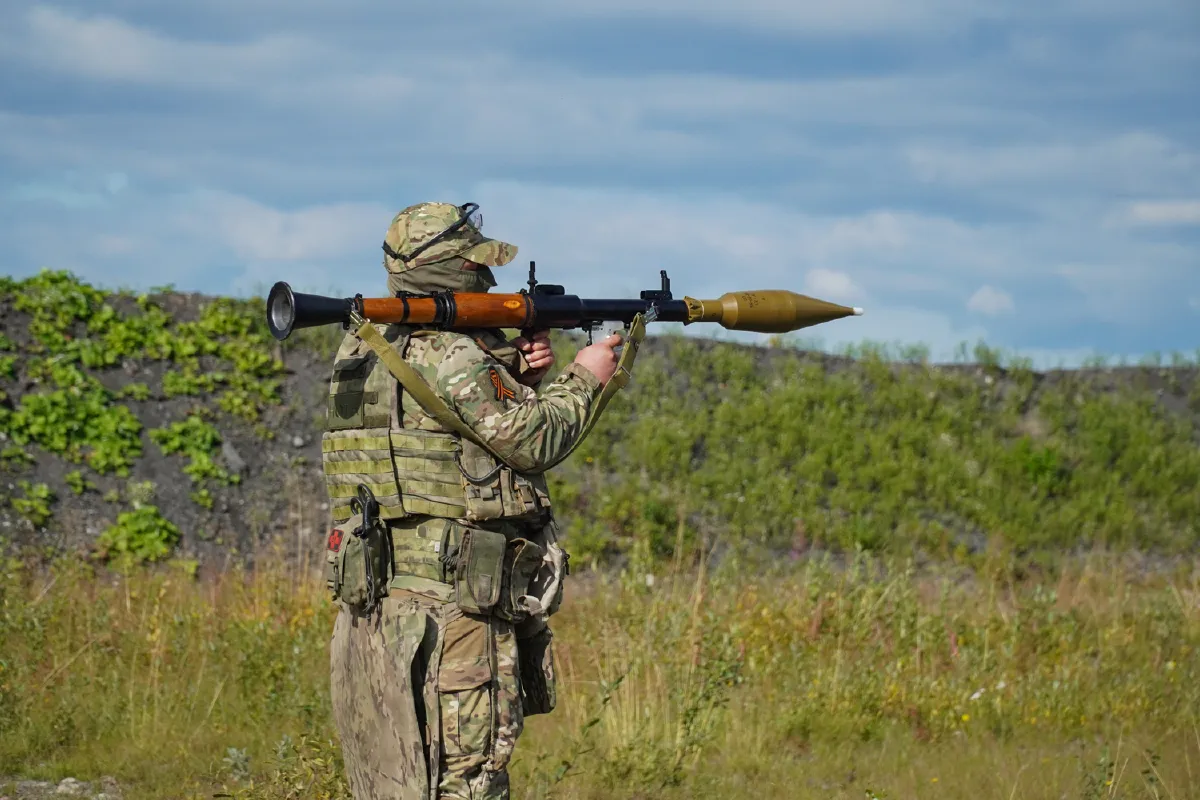
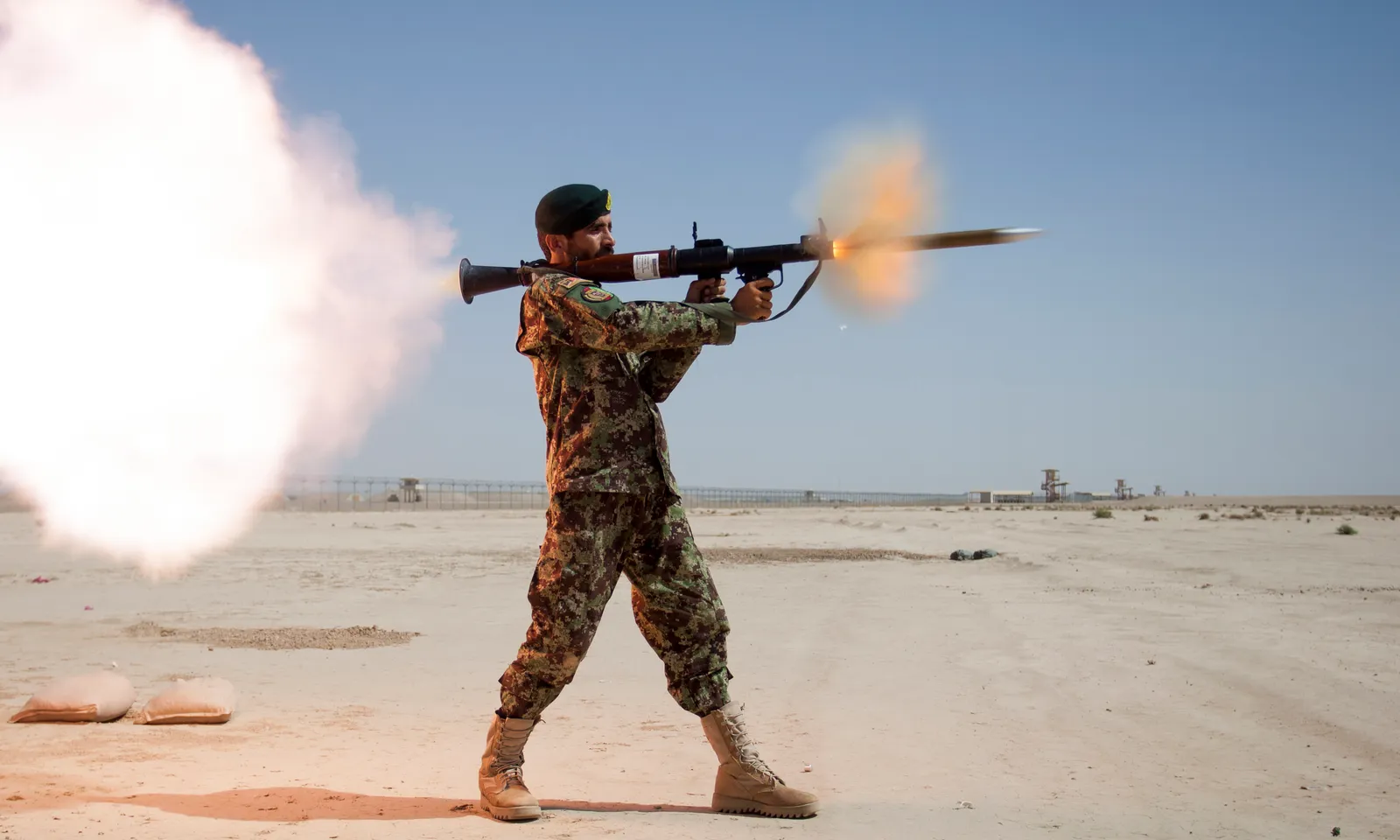
The RPG-7 is a Soviet-origin reusable shoulder-fired rocket launcher built around a simple 40 mm launch tube and a wide family of over-caliber anti-armor, fragmentation, and thermobaric rounds. Its low cost, portability, and large global stock make it a common infantry anti-armor and assault weapon, including in Ukrainian service during the Russia-Ukraine War.
Ukrainian forces have fielded RPG-7 launchers and compatible ammunition during Russia's full-scale invasion, including captured Iranian-origin RPG-7s transferred by the United States in April 2024 and RPG-7 launchers donated through Czech STV GROUP support.
9K111 FagotMan-portable anti-tank guided missile systemThe 9K111 Fagot, known to NATO as the AT-4 Spigot, is a Soviet man-portable SACLOS wire-guided anti-tank missile system built around the 9P135 tripod launcher and 9M111 missile family. Its compact launcher, vehicle-mount compatibility, and 2 to 2.5 km range kept it relevant for legacy users, including Russian anti-tank teams documented in the Russia-Ukraine War.
9K115 MetisMan-portable anti-tank guided missile systemThe 9K115 Metis is a Soviet/Russian man-portable, wire-guided anti-tank guided missile family developed for company-level infantry anti-armor fire. The original AT-7 Saxhorn system emphasized a light launcher and short-range portability, while the later 9K115-2 Metis-M and Metis-M1 variants use larger 130 mm missiles, tandem HEAT or thermobaric warheads, and ranges up to 2 km. In the Russia-Ukraine War, Russian forces have been documented using the upgraded AT-13 Saxhorn-2 / Metis-M variant against Ukrainian armor.
9M113 KonkursSACLOS wire-guided anti-tank guided missileThe 9M113 Konkurs, NATO reporting name AT-5 Spandrel, is a Soviet wire-guided anti-tank guided missile family built for infantry launchers and vehicle mounts such as BMP-series vehicles and the BRDM-2-based 9P148. Its SACLOS guidance, 135 mm missile body, and 4 km class engagement range kept it useful after the Cold War, including documented employment in the Russia-Ukraine War by Ukrainian-aligned forces and Russian units.
BGM-71 TOWHeavy anti-tank guided missileThe BGM-71 TOW is a U.S. heavy anti-tank guided missile built around tube launch, optical tracking, and command guidance through a wire or later radio-frequency link. Developed by Hughes and now produced and upgraded by Raytheon, it can be fired from dismounted launchers, HMMWVs, Bradley and Stryker vehicles, light armored vehicles, and helicopters, giving infantry and vehicle crews a long-range precision anti-armor weapon. In the Russia-Ukraine War, U.S. security assistance packages sent TOW missiles to Ukraine as part of the anti-armor mix used to offset Russian armored forces.