
ARES documented RPG-7 and Chinese Type 69 shoulder-fired launchers captured by the Taliban in Wardak province in July 2021 during the Taliban's offensive against Afghan government forces.
Role detailsInfantry Weapons
Type 69 RPG Launcher
Also known as
- Type 69 RPG
- Norinco Type 69
- Type 69-I
- Type 69-1
- M-69
The Type 69 RPG is a Chinese NORINCO-built derivative of the Soviet RPG-7, using a reusable 40 mm launch tube for over-caliber anti-armor and support rockets. The record now tracks direct Type 69 documentation across captured Taliban stocks in Afghanistan, Boko Haram materiel losses in Niger, Ukrainian training imagery, and Cambodian firing videos from the 2025 Thailand-Cambodia border clash.
Role in Conflicts

Boko Haram fighters used RPG-7-pattern rocket launchers during the June 2016 attack on the Bosso military camp in Niger; Small Arms Survey video analysis listed stolen RPG-type launchers including Type 69 among the materiel taken.
- Side
- Ukraine

The Armourer's Bench documented Chinese Type 69, apparently Type 69-1, launchers in Ukrainian service imagery from late 2023 and early 2024, including 22nd Separate Mechanised Brigade training photos.
Role details- Side
- Cambodia

The Armourer's Bench documented Cambodian troops with significant numbers of Type 69 RPGs during the July 2025 border clash, including videos of Cambodian soldiers firing Type 69 launchers from trench and machine-gun positions.
Profile / Specs
Profile
- Origin
- China
- Built by
- Norinco
- Type
- Reusable shoulder-fired rocket-propelled grenade launcher
- Service note
- Cold War design with continuing use in irregular and state arsenals
- Designer
- NORINCO
- Designed
- Approved in 1970 after Chinese reverse engineering of the RPG-7 pattern
- Produced
- 1970s-1980s for the basic Type 69, followed by improved Type 69-I production
- Developed from
- Soviet RPG-7 launcher family
Specifications
- Crew
- One operator; a second crew member can carry and reload rockets
- Caliber
- 40 mm launch tube with 85 mm rocket warheads
- Length
- 910 mm launcher
- Weight
- 5.6 kg launcher
- Effective range
- About 200 m against point targets; roughly 600 m maximum reach depending on rocket and conditions
- Sights
- Integral iron sights with optional optical, infrared, or night-vision sights
- Ammunition
- Single-shot reusable launcher firing Type 69-series HEAT, HE/HEAT, anti-personnel, smoke, incendiary, and tandem-warhead rockets
Recognition And Ammunition Notes
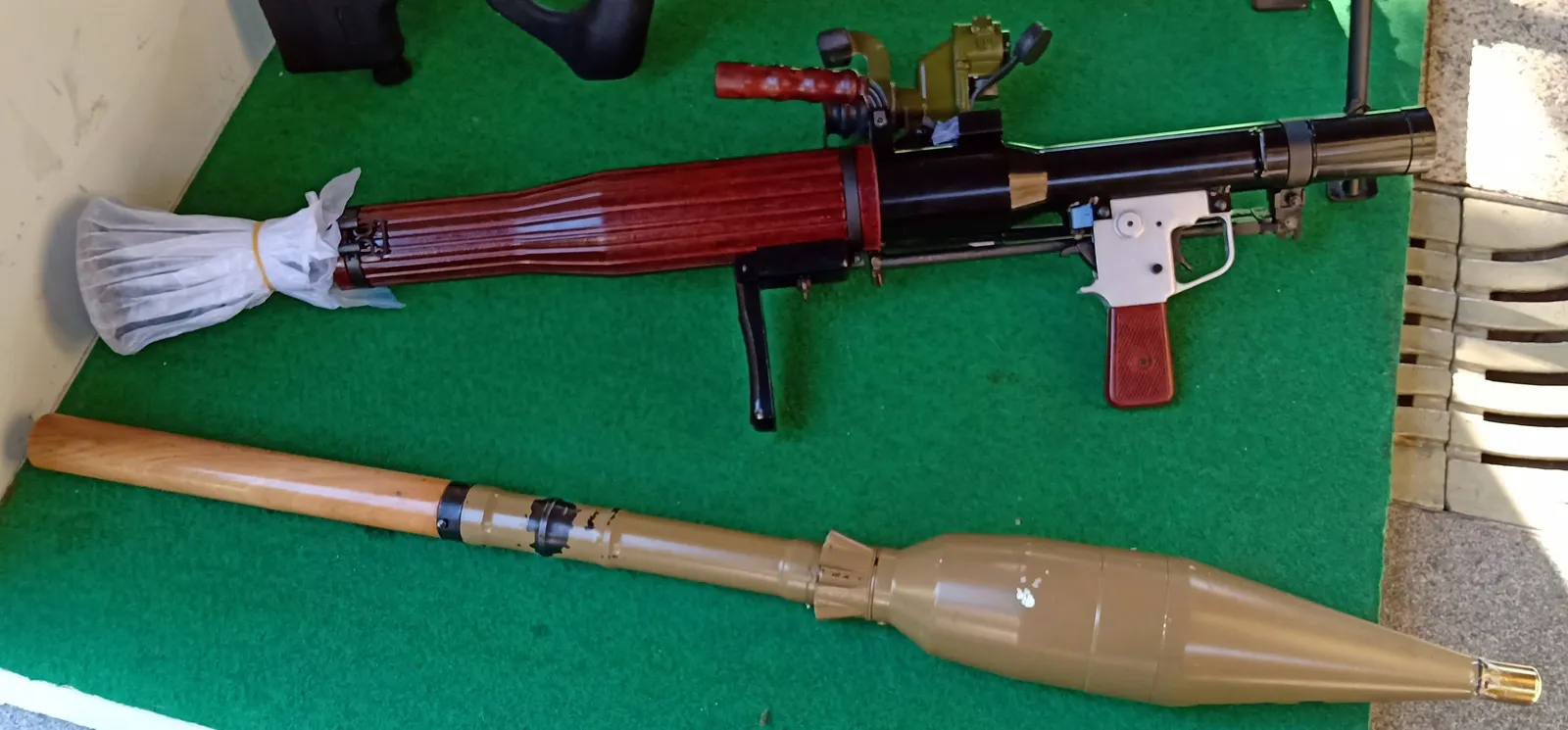
The Type 69 page is best read as a Chinese RPG-7-pattern launcher family rather than as a separate ammunition record. Public sources identify the launcher by its missing rear pistol grip, fluted orange-brown heat shield, forward bipod, top carrying handle, and removable shoulder support.
Parent pattern
Chinese reverse-engineered RPG-7 derivative built around a reusable 40 mm launch tube.
Improved launcher
Type 69-I or Type 69-1 is described as a slightly shorter 1980s update with different sight placement.
Rocket families
The launcher is associated with HEAT, HE/HEAT, airburst anti-personnel, incendiary, smoke, and tandem-warhead rocket types; Type 69-II and Type 69-III are treated here as rocket marks rather than launcher variants.
Sources: Chinese Type 69 RPGs in Ukraine; NORINCO Type 69 Rocket-Propelled Grenade Launcher; Type 69 RPG Chinese 85mm Rocket Propelled Grenade.
Timeline
Type 69 RPG Launcher Key Events
Chinese Type 69 approved
Military Factory describes the Chinese RPG-7 copy as approved by 1970 after early-1960s design and testing work.
PLA service entry
The Armourer's Bench places Type 69 entry into People's Liberation Army service in 1972 as a replacement for the earlier Type 56 launcher.
Type 69-I and improved rocket family
Sources distinguish the Type 69-I launcher as the improved form and describe later Type 69-series rocket options beyond the basic HEAT round.
Taliban capture Type 69 launchers
ARES documented RPG-7 and Chinese Type 69 shoulder-fired launchers captured by the Taliban in Wardak province during the 2021 offensive.
Ukrainian brigade imagery
The Armourer's Bench recorded 22nd Separate Mechanised Brigade photos showing Ukrainian troops training with Type 69 launchers.
Cambodian border fighting
The Armourer's Bench documented Cambodian troops with Type 69 RPGs during the July 2025 Thailand-Cambodia border fighting, including firing videos from field positions.
Media
Type 69 RPG Launcher Images
Related Weapon Systems


Sources
Type 69 RPG Chinese 85mm Rocket Propelled GrenadePublisher: U.S. Army ODIN Worldwide Equipment Guide | Note: Supports Type 69 RPG background, Chinese origin, NORINCO manufacturer context, and general launcher specifications. | Accessed: 2026-07-01NORINCO Type 69 Rocket-Propelled Grenade LauncherPublisher: Military Factory | Note: Supports background, NORINCO production, launcher dimensions, caliber, weight, sights, effective range, and variant context. | Accessed: 2026-07-01At the Crossroads of Sahelian ConflictsPublisher: Small Arms Survey | Note: 2009 Boko Haram Insurgency: used by Boko Haram in the June 2016 Bosso attack, where the report describes RPG-7-pattern launchers in the assault and lists stolen RPG-type launchers including Type 69. | Accessed: 2026-06-21Arms Captured by the Taliban during their Conquest of AfghanistanPublisher: Armament Research Services | Note: 2001 War in Afghanistan: documents RPG-7 and Chinese Type 69 shoulder-fired launchers captured by the Taliban in Wardak province in July 2021. | Accessed: 2026-07-01Chinese Type 69 RPGs in UkrainePublisher: The Armourer's Bench | Note: 2014 Russia-Ukraine War: documents Chinese Type 69, apparently Type 69-1, launchers seen in Ukrainian service imagery and training photographs from late 2023 and early 2024. | Accessed: 2026-07-01Small Arms of the 2025 Thai-Cambodia Border ClashPublisher: The Armourer's Bench | Note: 2025 Thailand-Cambodia Border Conflict: documents Cambodian troops carrying and firing Type 69 RPGs during the July 2025 border fighting. | Accessed: 2026-07-01Type 69 RPG at Philippine Army 122nd Anniversary Caravan, croppedPublisher: Wikimedia Commons | Note: Image provenance and CC BY-SA 4.0 licensing for the cropped Type 69 RPG display photo. | Accessed: 2026-06-21Geronimo paratroopers train with Bangladesh ArmyPublisher: Wikimedia Commons | Note: Image provenance for a public-domain U.S. Army photograph depicting a Bangladesh Army Type 69 RPG. | Accessed: 2026-06-21Defense.gov News Photo 040903-M-1947M-030Publisher: Wikimedia Commons | Note: Image provenance for a public-domain U.S. Marine Corps photograph categorized by Wikimedia Commons as Type 69 RPG in Iraqi service. | Accessed: 2026-06-21