Infantry Weapons

RPG-22

Also known as
  • RPG-22 Netto
  • Netto
  • 6G18

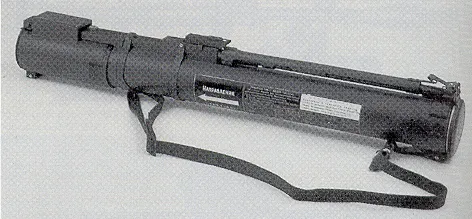
The RPG-22 Netto is a Soviet disposable anti-tank rocket launcher developed as a larger-caliber successor to the RPG-18, firing a 72.5 mm HEAT rocket from a telescoping aluminum-and-fiberglass tube. Open-source documentation places it in Soviet-Afghan War service, Islamic State inventories in Syria and Iraq, and both Ukrainian and Russian-linked hands during the Russia-Ukraine War.

Role in Conflicts

Side
Soviet Union and Afghan government forcesAfghan resistance forces
Role in conflict
Disposable assault and anti-armor launcher

U.S. Army training material describes Soviet troops using RPG-22 launchers against mujahideen strongholds in Afghanistan, while Forecast International says mujahideen forces also employed captured RPG-22s.

Role in conflict
Islamic State disposable anti-armor launcher

Amnesty International reported RPG-22 launchers among weapons deployed by Islamic State in Iraq, and Conflict Armament Research later counted one RPG-22-type launcher documented in Iraq within its IS field dataset.

DFRLab traced RPG-22s in Ukrainian forces and Russian-led separatist stocks by 2015, DVIDS documented Ukrainian army RPG-22 training at Yavoriv in 2017, and ARES documented an RPG-22 seized from alleged Russian saboteurs in Odessa on 27 February 2022.

Role details
Production And Price

Forecast International's 2023 market report is the clearest open-source snapshot of how many RPG-22s were made and what the launcher cost in reported market terms.

MetricReported figureContext
Russian production through 2022547,743Forecast International estimate for Russian contractors.
Bulgarian licensed productionOver 82,600Forecast International reports Bulgarian licensed production.
Reported 2023 unit price$801The report also lists a Bulgarian model at about $783.
Production outlookProduction line dormantForecast International says the RPG-22 line remained dormant while RPG-26 and RPG-27 production continued.
Profile / Specs

Profile

Origin
Soviet Union
Built by
BazaltVMZ Sopot
Type
Disposable shoulder-fired anti-tank rocket launcher
Service note
Late Cold War design, retained in post-Soviet inventories
Designer
Bazalt
Designed
Late 1970s
Unit cost
About $801 in 2023 USD; Forecast International listed a Bulgarian model at about $783
Produced
About 1980-1993 in Soviet/Russian production; licensed Bulgarian production by VMZ Sopot
Number built
At least 630,343 reported through 2022, including 547,743 Russian-produced launchers and over 82,600 Bulgarian licensed copies

Specifications

Crew
1
Caliber
72.5 mm
Armament
Single PG-22 HEAT rocket in a disposable launcher
Weight
2.7-2.8 kg loaded
Length
785 mm transport configuration; 850 mm ready to fire
Muzzle velocity
133 m/s
Effective range
About 150-200 m
Armor penetration
About 400 mm rolled homogeneous armor
Variants

The RPG-22 is part of the Soviet disposable-launcher line that moved from the lighter RPG-18 to later 72.5 mm and larger successors.

VariantConfigurationDesignation notes
RPG-18, Disposable anti-tank rocket launcher, Infantry WeaponsRPG-18Predecessor disposable launcher

Forecast International describes the RPG-22 as an improved version of the RPG-18.

Sources: RPG-18/RPG-22/RPG-26/RPG-27

RPG-26, Disposable anti-tank rocket launcher, Infantry WeaponsRPG-26Later disposable launcher

Forecast International describes the RPG-26 as an improved version of the RPG-22.

Sources: RPG-18/RPG-22/RPG-26/RPG-27

Timeline

RPG-22 Key Events

  1. Development begins as an RPG-18 successor

    Forecast International says the RPG-22 was developed as an improved version of the RPG-18, and Weaponsystems.net places the design work in the late 1970s.

    Sources: RPG-22 Neto, RPG-18/RPG-22/RPG-26/RPG-27

  2. Observed in Afghanistan after initial Soviet fielding

    Forecast International says the RPG-22 appeared in Afghanistan in 1986, about a year after its initial fielding with the Soviet Army; U.S. Army training material describes Soviet use of the RPG-22 in Afghanistan.

    Sources: RPG-18/RPG-22/RPG-26/RPG-27, IN0546 Lesson 2 RPG-22

  3. Documented in Islamic State stocks in Kobane

    Conflict Armament Research documented Russian and Bulgarian RPG-22 launchers among Islamic State weapons in Kobane, Syria.

    Sources: Islamic State Weapons in Kobane

  4. Ukrainian training at Yavoriv

    DVIDS documented Ukrainian army soldiers from the 1st Airmobile Battalion, 79th Air Assault Brigade training with RPG-22 launchers at Yavoriv.

    Sources: RPG qual at Yavoriv CTC BROLL

  5. Seized in Odessa during the 2022 invasion

    ARES documented an RPG-22 seized from alleged Russian saboteurs in Odessa during the opening days of Russia's full-scale invasion of Ukraine.

    Sources: Weapons & Equipment Seized from Alleged Russian Saboteurs in Ukraine (2022)

RPG Family Line

The RPG-22 is easier to understand as part of a short disposable-launcher lineage than as an isolated model.

SystemRelationSource note
RPG-18, Disposable anti-tank rocket launcher, Infantry WeaponsRPG-18PredecessorForecast International says the RPG-22 is an improved version of the RPG-18.
RPG-26, Disposable anti-tank rocket launcher, Infantry WeaponsRPG-26Later family memberThe same report says the RPG-26 is essentially an improved version of the RPG-22.
PG-22 grenadeLoaded roundVMZ describes the launcher as the RPG-22 rocket anti-tank grenade with PG-22 anti-tank grenade.
Media
Related Weapon Systems
RPG-7, Reusable shoulder-fired anti-tank rocket launcher, Infantry WeaponsInfantry WeaponsRPG-7Reusable shoulder-fired anti-tank rocket launcherThe RPG-7 is a Soviet-origin reusable shoulder-fired rocket launcher built around a simple 40 mm launch tube and a wide family of over-caliber anti-armor, fragmentation, and thermobaric rounds. Its low cost, portability, and large global stock make it a common infantry anti-armor and assault weapon, including documented Ukrainian service, Hamas use in Gaza, ISWAP use in the 2009 Boko Haram Insurgency, and insurgent use in Afghanistan.
RPG-29, Reusable shoulder-fired anti-tank rocket launcher, Infantry WeaponsInfantry WeaponsRPG-29Reusable shoulder-fired anti-tank rocket launcherThe RPG-29 Vampir is a Soviet-designed, reusable 105 mm anti-tank rocket launcher built by Bazalt for tandem HEAT and thermobaric rockets. Rosoboronexport describes it as a multiple-shot launcher with a 500 m sighting range and a 300-round lifespan, while reference sources place it in Soviet-era development and 1989 service entry. Its conflict record is strongest in close-range anti-armor and fortification attack reporting, including Hezbollah use in Lebanon, insurgent attacks on coalition armor in Iraq, Free Syrian Army imagery in Syria, Hamas anti-armor forces in Gaza, Houthi fielding in Yemen, and documented appearances in Ukraine.
PG-7VL rocket-propelled grenade, RPG-7-compatible HEAT rocket-propelled grenade round, MunitionsMunitionsPG-7VL rocket-propelled grenadeRPG-7-compatible HEAT rocket-propelled grenade roundThe PG-7VL is a Soviet-origin RPG-7-compatible high-explosive anti-tank round, also associated with the Luch designation and PG-7L grenade. Russian and Bulgarian product sources describe a 93 mm warhead, roughly 2.6 kg round weight, 300 m sighting or effective range, and about 500 mm armor penetration; conflict documentation places PG-7VL projectiles in Islamic State and PKK weapons stocks rather than tying them to a named firing incident.
RPG-32, Reusable shoulder-fired anti-tank and anti-structure rocket launcher, Infantry WeaponsInfantry WeaponsRPG-32Reusable shoulder-fired anti-tank and anti-structure rocket launcherThe RPG-32 is a Russian-designed, Jordan-assembled reusable shoulder-fired launcher marketed by JADARA as the Nashshab family. JADARA says the 105 mm launcher weighs 3 kg, rises to 12.4 kg ready to fire, and can switch between PG-32V tandem anti-tank and TBG-32V thermobaric grenades in sealed tubes. ARES reporting has documented the system with Ansar al-Sharia/AQAP fighters in Yemen and Kurdish CT Unit personnel in northern Iraq, while later open-source imagery placed the weapon in Ukrainian hands during the 2014 Russia-Ukraine War.

Sources