Infantry Weapons

RPG-18

Also known as
  • RPG-18 Mukha
  • Mukha
  • PG-18 rocket
  • RPG-18 anti-tank grenade

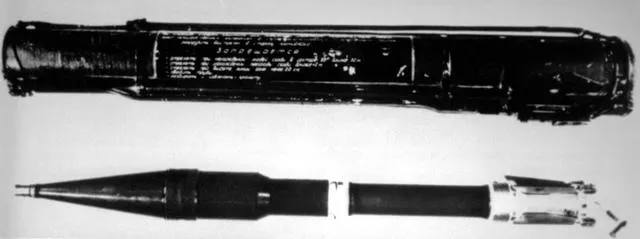
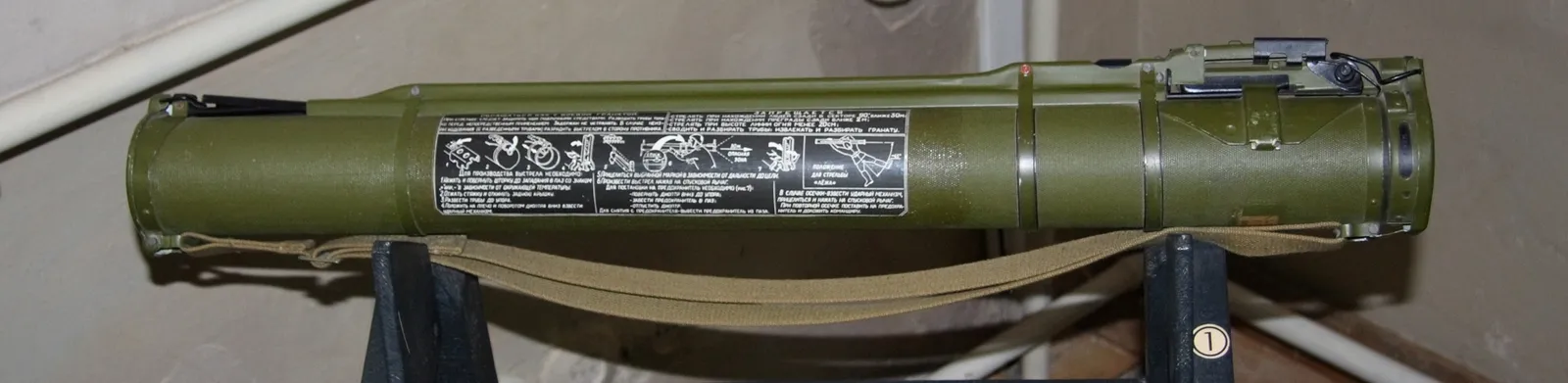
The RPG-18 Mukha is a Soviet disposable, shoulder-fired anti-tank rocket launcher built around a telescoping launch tube and a 64 mm PG-18 HEAT rocket. It gave infantry a light short-range anti-armor weapon before later RPG-22 and RPG-26 successors, and conflict sources document the type from Afghanistan and Grozny to Ukrainian use as a carried launcher and improvised FPV-drone payload.

Role in Conflicts

Side
Soviet Union and Afghan government forces
Role in conflict
Disposable anti-armor launcher

Forecast International's RPG family profile says the RPG-18 was initially employed in Afghanistan in 1984, documenting Soviet-side battlefield fielding of the disposable launcher during the war.

Role in conflict
Urban anti-armor launcher

A Foreign Military Studies Office article on Chechen anti-armor tactics in Grozny describes Chechen hunter-killer cells armed with RPG-7 or RPG-18 launchers during the 1994-1995 urban fighting.

Ukrainian forces used RPG-18 launchers during the full-scale war, including a reported June 2022 strike on a Russian BMP-2; Greek and defense reporting also list 815 RPG-18 anti-tank launchers among early 2022 aid from Greece, and later reporting documented Ukrainian FPV-drone adaptation tests.

Role details
Role in conflict
Disposable anti-armor launcher

Conflict Armament Research documented two RPG-18-type 64 mm rocket launchers recovered from Islamic State forces in Iraq in its 2014-2017 weapons dataset.

Profile / Specs

Profile

Origin
Soviet Union
Built by
Bazalt
Type
Disposable anti-tank rocket launcher
Service note
Introduced in the mid-1970s; documented from Afghanistan and Chechnya through legacy-stock use in the 2014 Russia-Ukraine War
Designer
State Research and Production Enterprise Bazalt
Designed
Early 1970s
Produced
1970s-1990s
Developed into
RPG-22, RPG-26, and RPG-27 disposable-launcher family

Specifications

Crew
1 operator
Caliber
64 mm PG-18 rocket
Warhead
High-explosive anti-tank shaped charge
Effective range
Up to 200 m
Armor penetration
Up to 300-375 mm of rolled homogeneous armor, depending on source and test basis
Weight
About 2.6 kg loaded
Length
705 mm collapsed; 1,050 mm extended
Launcher type
Disposable telescoping launch tube
Arming distance
About 2-15 m after launch
Self-destruct
About 4-6 seconds after firing
Disposable Launcher Design

RPG-18 is useful to read as a compact disposable system rather than only as a grenade-launcher designation. The launcher, rocket, and sighting arrangement were built around one-shot infantry use at short range.

FeatureWhat it means for useSource labels
Telescoping tubeThe launcher is carried collapsed and extended before firing, giving a compact transport length while still providing a full launch tube.RPG-18 light anti-armour weapon; Current Opposing Forces Antiarmor Weapons
64 mm PG-18 rocketThe single HEAT rocket gives infantry a light anti-armor option, but range and penetration are limited compared with later larger-caliber disposable launchers.RPG-18 light anti-armour weapon; RPG-18 Mukha Russian Anti-Tank Rocket Launcher
Backblast and self-destruct limitsTraining material emphasizes short-range employment, danger behind the launcher, and a projectile self-destruct interval after launch.Current Opposing Forces Antiarmor Weapons
Family successorsForecast International treats RPG-22, RPG-26, and RPG-27 as later disposable-launcher successors rather than RPG-18 subvariants.RPG-18/RPG-22/RPG-26/RPG-27
Variants

The RPG-18 itself was the 64 mm Mukha model; later Soviet/Russian disposable launchers are better treated as family successors rather than subvariants of the same launcher.

VariantConfigurationDesignation notes
RPG-22, Disposable shoulder-fired anti-tank rocket launcher, Infantry WeaponsRPG-22Larger 72.5 mm successor

Forecast International describes the RPG-22 as an improved version of the RPG-18.

Sources: RPG-18/RPG-22/RPG-26/RPG-27

RPG-26, Disposable anti-tank rocket launcher, Infantry WeaponsRPG-26Simplified 72.5 mm successor

The same RPG family profile places the RPG-26 after the RPG-22 in the disposable-launcher lineage.

Sources: RPG-18/RPG-22/RPG-26/RPG-27

RPG-27 Tavolga, Disposable anti-tank rocket launcher, Infantry WeaponsRPG-27 TavolgaHeavier tandem-HEAT family member

The RPG-27 is a later, larger-caliber disposable launcher in the same Soviet/Russian family covered by the Forecast profile.

Sources: RPG-18/RPG-22/RPG-26/RPG-27

Timeline

RPG-18 Key Events

  1. RPG-18 enters Soviet service

    Open reference sources place RPG-18 service entry in the mid-1970s after early-1970s development of the disposable Mukha launcher.

    Sources: RPG-18/RPG-22/RPG-26/RPG-27, RPG-18 light anti-armour weapon

  2. Documented in Afghanistan

    Forecast International reports the RPG-18 was initially employed in Afghanistan in 1984 during the Soviet-Afghan War.

    Sources: RPG-18/RPG-22/RPG-26/RPG-27

  3. Chechen urban anti-armor use reported

    A Foreign Military Studies Office article on Grozny combat describes Chechen anti-armor cells armed with RPG-7 or RPG-18 launchers during the First Chechen War.

    Sources: Infantry's Armor Antitank Weapons in Chechnya

  4. Greece supplies RPG-18 launchers to Ukraine

    Greek reporting listed 815 RPG-18 anti-tank weapons among early Greek military aid to Ukraine after Russia's full-scale invasion.

    Sources: Greek Role within NATO is Upgraded

  5. FPV-drone adaptation reported

    Army Recognition reported Ukrainian adaptation of RPG-18 launchers as FPV-drone payloads during the Russia-Ukraine War.

    Sources: Ukraine Adapts RPG-18 Rocket Launchers to FPV Drones in Ongoing Conflict with Russia

Media
Related Weapon Systems
RPG-7, Reusable shoulder-fired anti-tank rocket launcher, Infantry WeaponsInfantry WeaponsRPG-7Reusable shoulder-fired anti-tank rocket launcherThe RPG-7 is a Soviet-origin reusable shoulder-fired rocket launcher built around a simple 40 mm launch tube and a wide family of over-caliber anti-armor, fragmentation, and thermobaric rounds. Its low cost, portability, and large global stock make it a common infantry anti-armor and assault weapon, including documented Ukrainian service, Hamas use in Gaza, ISWAP use in the 2009 Boko Haram Insurgency, and insurgent use in Afghanistan.
RPG-29, Reusable shoulder-fired anti-tank rocket launcher, Infantry WeaponsInfantry WeaponsRPG-29Reusable shoulder-fired anti-tank rocket launcherThe RPG-29 Vampir is a Soviet-designed, reusable 105 mm anti-tank rocket launcher built by Bazalt for tandem HEAT and thermobaric rockets. Rosoboronexport describes it as a multiple-shot launcher with a 500 m sighting range and a 300-round lifespan, while reference sources place it in Soviet-era development and 1989 service entry. Its conflict record is strongest in close-range anti-armor and fortification attack reporting, including Hezbollah use in Lebanon, insurgent attacks on coalition armor in Iraq, Free Syrian Army imagery in Syria, Hamas anti-armor forces in Gaza, Houthi fielding in Yemen, and documented appearances in Ukraine.
RPG-32, Reusable shoulder-fired anti-tank and anti-structure rocket launcher, Infantry WeaponsInfantry WeaponsRPG-32Reusable shoulder-fired anti-tank and anti-structure rocket launcherThe RPG-32 is a Russian-designed, Jordan-assembled reusable shoulder-fired launcher marketed by JADARA as the Nashshab family. JADARA says the 105 mm launcher weighs 3 kg, rises to 12.4 kg ready to fire, and can switch between PG-32V tandem anti-tank and TBG-32V thermobaric grenades in sealed tubes. ARES reporting has documented the system with Ansar al-Sharia/AQAP fighters in Yemen and Kurdish CT Unit personnel in northern Iraq, while later open-source imagery placed the weapon in Ukrainian hands during the 2014 Russia-Ukraine War.
M80 Zolja, Disposable 64 mm anti-tank rocket launcher, Infantry WeaponsInfantry WeaponsM80 ZoljaDisposable 64 mm anti-tank rocket launcherThe M80 Zolja is a Yugoslav-origin, single-shot 64 mm shoulder-fired anti-tank rocket launcher built around a disposable tube and HEAT rocket. Official Serbian export material presents the RBR M80 as a light infantry weapon for close-range engagements against armored vehicles and fortified positions, while conflict reporting documents Zolja-type weapons in the 2001 Insurgency in Macedonia, Boko Haram materiel evidence, and North Macedonian transfers to Ukraine.

Sources