- Side
- Russia

Documented in service with pro-Russian separatist forces in eastern Ukraine in 2014, with later CAR fieldwork recording RPG-26 launchers recovered from DPR/LPR armed formations.
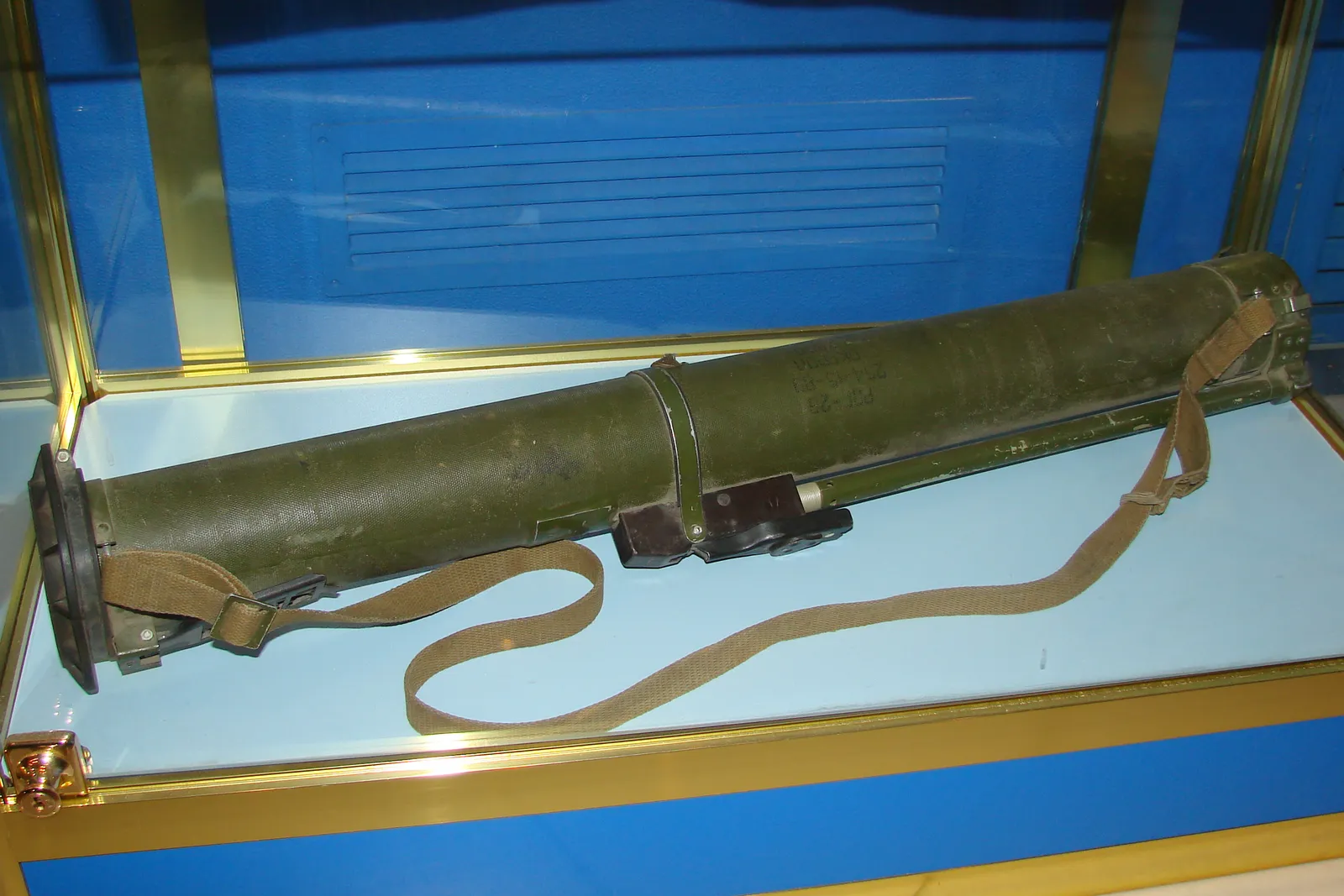
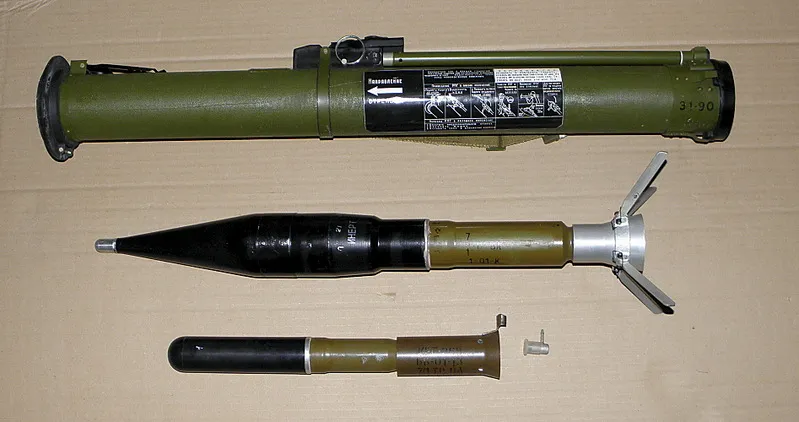
Role detailsThe RPG-26 Aglen is a Soviet/Russian disposable 72.5 mm anti-tank rocket launcher developed at Soviet army request in 1980 and adopted around 1985. It uses a rigid fiberglass tube and a single PG-26 HEAT rocket, and open-source reporting has documented RPG-26 or RPG-26-family launchers in Ukraine, Syria, and Yemen while technical references tie the design to the earlier RPG-22, the larger RPG-27, and the thermobaric RShG-2.
Documented in service with pro-Russian separatist forces in eastern Ukraine in 2014, with later CAR fieldwork recording RPG-26 launchers recovered from DPR/LPR armed formations.
Role detailsLiwa al-Quds fighters aligned with Syrian government forces were photographed with an RPG-26 during 2016 Aleppo-area fighting, documenting pro-government militia possession of the launcher.
Role detailsHouthi-aligned forces captured RPG-26 variants after Arab coalition aircraft accidentally air-dropped them into Houthi-controlled territory in April 2015, documenting in-conflict acquisition rather than confirmed firing.
Role detailsRPG-26 is usually treated as the simplified, improved successor to RPG-22. It keeps the disposable anti-armor concept but switches to a rigid non-telescoping tube, sits below the larger RPG-27 in the same development line, and became the base for the thermobaric RShG-2.
| Topic | What the sources say |
|---|---|
| Development start | Development began in 1980 at Soviet army request. |
| Launcher change | Compared with  |
| Family position |  |
| Later derivative | The RPG-26 design became the base for the thermobaric RShG-2. |
RPG-26 sits in the Soviet/Russian disposable launcher line between the earlier RPG-22 and the larger RPG-27, while RShG-2 reuses the RPG-26 layout for a thermobaric assault role.
| Variant | Configuration | Designation notes |
|---|---|---|
| Predecessor disposable launcher | Modern Firearms and Weaponsystems.net describe RPG-26 as a simplified RPG-22 successor with a rigid non-telescoping tube and improved rocket/warhead package. Sources: RPG-26 rocket-propelled antitank grenade, RPG-26 Aglen |
| RShG-2 | Thermobaric derivative | The same references identify RShG-2 as a thermobaric assault grenade derived from the RPG-26 design rather than a separate anti-tank launcher. Sources: RPG-26 rocket-propelled antitank grenade, RPG-26 Aglen |
| Larger adjacent family member | Weaponsystems.net places RPG-27 in the same disposable-launcher development line, using a larger caliber and tandem-warhead concept after RPG-26. Sources: RPG-26 Aglen |
Modern Firearms says development of the RPG-26 was initiated on request from the Soviet army in 1980.
Sources: RPG-26 rocket-propelled antitank grenade, RPG-26 Aglen
Modern Firearms and Weaponsystems.net both place official adoption or service entry around 1985, with production continuing after that point.
Sources: RPG-26 rocket-propelled antitank grenade, RPG-26 Aglen
ARES and Conflict Armament Research documented RPG-26 launchers among arms circulating in eastern Ukraine during the early phase of the Russia-Ukraine War.
Sources: Weapons of the War in Ukraine, Raising Red Flags: An Examination of Arms & Munitions in the Ongoing Conflict in Ukraine, 2014
CSIS summarized reporting that Arab coalition aircraft accidentally air-dropped RPG-26-family weapons into Houthi-controlled territory in Yemen.
Sources: The Missile War in Yemen
FDD's Long War Journal documented a Liwa al-Quds fighter aligned with Syrian government forces carrying an RPG-26 during Aleppo-area fighting.
Sources: Russian influence evident in Palestinian militia in Syria