Air Defense

9S18 Kupol

Also known as
  • 9S18 Dome
  • 9S18 Tube Arm
  • 9S18M1 Kupol-M1
  • 9S18M1 Snow Drift
  • 9S18M1-1
  • 9S18M1-2
  • 9S18M1-2 Kupol-M1-2
  • 9S18M1-2 Snow Drift
  • 9S18M1-3
  • 9S18M1E
  • 9С18М1-2
  • 9С18М1-2 Купол-М1-2
  • 9С18М1-3
  • 9С18М1-3 Купол
  • SOC 9S18
  • SOTs 9S18
  • 1RL135

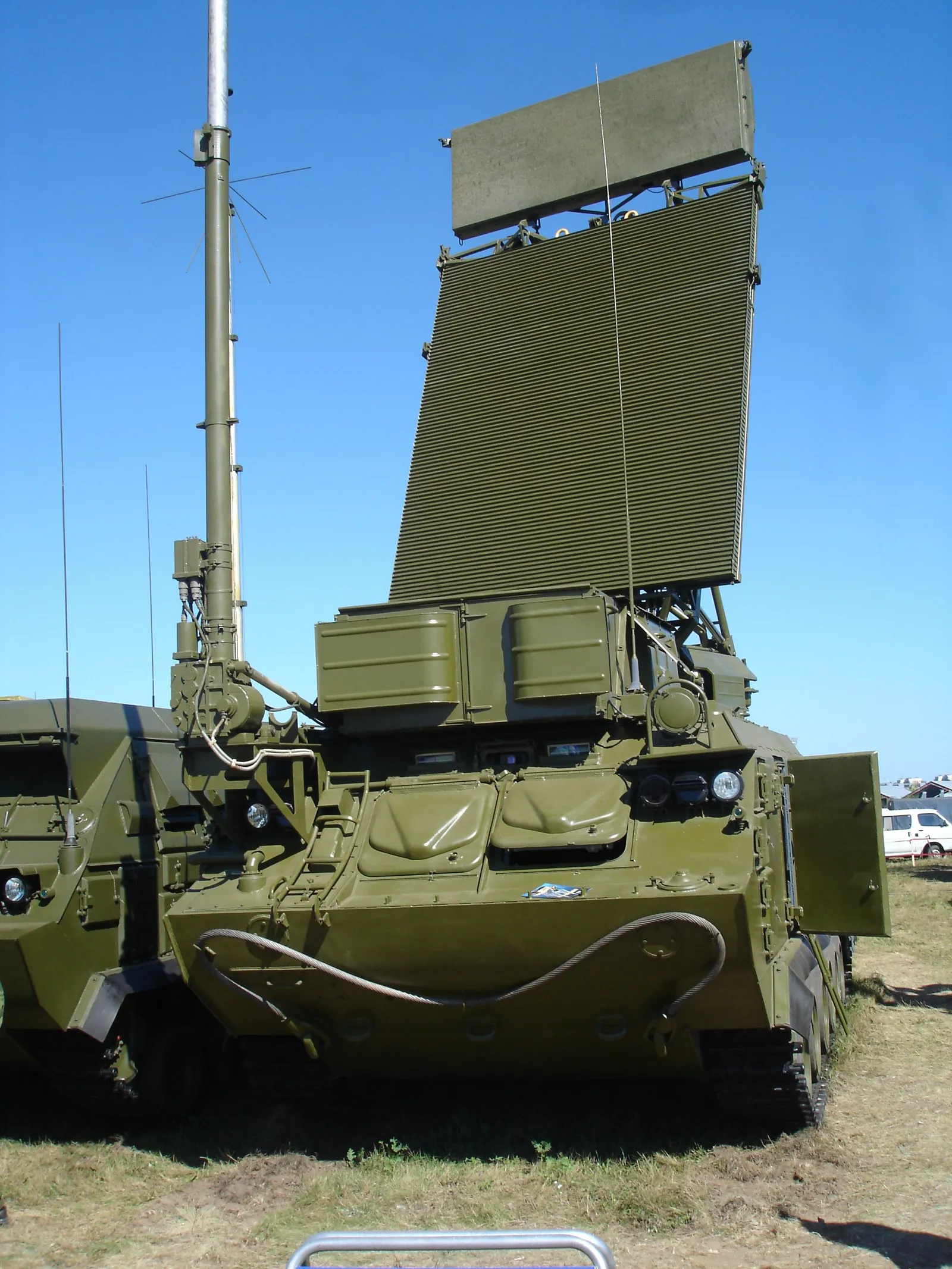
The 9S18 Kupol is a Soviet/Russian tracked target-acquisition radar for the Buk surface-to-air missile family, built to search for air targets and pass target-designation data to Buk command vehicles. Open references identify the original Tube Arm radar and later 9S18M1 Snow Drift derivatives, including the 9S18M1-2 and 9S18M1-3 radars, as surveillance elements for later Buk configurations; Ukraine war reporting has documented Russian 9S18 and 9S18M1-3 Kupol vehicles destroyed with Buk-family equipment.

Role in Conflicts

Profile / Specs

Profile

Origin
Soviet Union / Russia
Type
Tracked target-acquisition radar for Buk air-defense systems
Service note
Introduced with Soviet Buk-family air-defense systems and still documented in Russia-Ukraine War reporting
Designer
Tikhomirov Scientific Research Institute of Instrument Design (NIIP)
Designed
1970s Buk-family development
Produced
Late Soviet production with later Buk-M1, Buk-M1-2, and Buk-M2E derivatives

Specifications

Role
Mobile target-acquisition and target-designation radar for Buk-family air-defense batteries
Radar type
Three-coordinate coherent pulse radar with electronic elevation scanning and mechanical azimuth rotation in the 9S18 description
Frequency band
Centimeter-band radar; Radartutorial identifies the 9S18 as an F-band mobile 3D radar
Baseline detection range
110-120 km for air-object detection in GlobalSecurity's 9S18 description
9S18M1-3 detection range
VPK.name lists 140-150 km detection and identification range for the 9S18M1-3 target-detection radar
Low-altitude detection
Up to 45 km against low-flying targets around 30 m altitude in the GlobalSecurity 9S18 description
Target reporting
Up to 75 target indications per scan period for 9S18; later 9S18M1-3 described with up to 120 processed targets
Mobility
Tracked chassis, up to 65 km/h maximum speed in GlobalSecurity's technical-characteristics table
Environmental operating range
-50 C to +50 C ambient temperature in GlobalSecurity's 9S18 technical-characteristics table
Variants

Buk-family sources use 9S18 for the original Kupol/Tube Arm radar and 9S18M-series designations for later Snow Drift target-acquisition vehicles.

VariantConfigurationDesignation notes
9S18M1 Kupol-M1 / Snow DriftBuk-M1 target-acquisition radar

Air Power Australia describes the 9S18M1 Snow Drift as the revised acquisition radar introduced with Buk-M1, while open Buk composition tables list 9S18M1 as the Buk-M1 surveillance radar.

Sources: 9K37 Buk M1/M2 - Air Power Australia, Buk Missile System - Wikipedia

9S18M1-1 / 9S18M1-2Buk-M1-2 target-acquisition radar variants

GlobalSecurity lists 9S18M1-1 as a Buk-M1 modification and 9S18M1-2 as the 9S18M1 modification for the 9K37M1-2 Buk-M1-2 system; the Wikimedia image source identifies a Buk-M1-2 9S18M1-1 radar at MAKS 2005.

Sources: 9S18 Kupol Tube Arm - GlobalSecurity, Buk-M1-2 9S18M1-1 Image - Wikimedia Commons

9S18M1E / 9S18M1-3Later export or Buk-M2E-related derivative

Army Technology and Army Recognition identify 9S18M1E as a Buk-M2E detection and target-designation radar. VPK.name describes 9S18M1-3 as a target-detection radar derived from the Kupol family and intended to pass radar data to Buk-M2 command posts, while Defense Express has reported a Russian 9S18M1-3 loss with a Buk-M3 system in Ukraine.

Sources: Buk-M2E Air Defence Missile System - Army Technology, Buk-M2E - Army Recognition, 9S18 Kupol Tube Arm - GlobalSecurity, 9S18M1-3 Target Detection Radar - VPK.name, Buk-M3 Radar Destroyed in Donbas - Defense Express

Buk-Family Systems

The 9S18 family is a radar component rather than a missile launcher; it supports Buk batteries by searching airspace and feeding target data to command and firing vehicles.

Compatible itemItem typeCompatibility evidence
Buk-M2, Tracked medium-range surface-to-air missile system, Air DefenseBuk-M2Medium-range surface-to-air missile system

Buk-family references list 9S18M-series target-acquisition radars among the surveillance or detection elements of later Buk configurations, while the cataloged Buk-M2 page covers the missile system and firing vehicles.

Sources: Buk-M2E Air Defence Missile System - Army Technology, Buk-M2E - Army Recognition, 9K37 Buk M1/M2 - Air Power Australia

9M38M1 surface-to-air missile, Buk-family surface-to-air missile, Munitions9M38M1 surface-to-air missileBuk-family surface-to-air missile

The 9S18 radar does not launch missiles; it belongs to the Buk system context that used 9M38-family missiles in Buk-M1 and earlier Buk-family configurations.

Sources: Buk Missile System - Wikipedia, 9K37 Buk M1/M2 - Air Power Australia

Radar Role In Buk Batteries

The 9S18 Kupol family sits on the detection side of a Buk battery rather than on the firing vehicle itself. Sources describe it as a mobile three-coordinate radar that scans airspace, identifies targets, and sends target-designation data to the Buk command post, which then coordinates TELARs and launch vehicles.

Detection role

Searches for aircraft and other air targets before engagement radars and launchers take over the fire-control task.

Battery dependency

A destroyed or captured Kupol vehicle degrades a Buk unit's wide-area surveillance and target-designation capacity, even when launchers remain present.

Designation caution

Reports may use 9S18, 9S18M1, Kupol, Tube Arm, or Snow Drift for related radar variants; the exact vehicle variant is source-dependent.

Sources: 9S18 Kupol Tube Arm - GlobalSecurity; 9K37 Buk M1/M2 - Air Power Australia; Russian Buk-M1 Detection Radar Destroyed - Army Recognition.

Timeline

9S18 Kupol Key Events

  1. Buk-family development begins

    Open Buk-family histories place the start of 9K37 Buk development in the early 1970s, with Tikhomirov NIIP responsible for system design.

    Sources: Buk Missile System - Wikipedia, 9K37 Buk M1/M2 - Air Power Australia

  2. 9K37-1 Buk context enters service

    Air Power Australia describes the second Buk development phase as producing the 9S470 command post, 9S18 Kupol acquisition radar, and other vehicles for the 9K37-1 Buk system, with initial operational capability in 1980.

    Sources: 9K37 Buk M1/M2 - Air Power Australia

  3. 9S18M1-1 photographed at MAKS

    The Wikimedia Commons image record documents a Buk-M1-2 9S18M1-1 target-acquisition radar photographed at MAKS 2005 in Zhukovskiy.

    Sources: Buk-M1-2 9S18M1-1 Image - Wikimedia Commons

  4. Russian 9S18 Kupol loss reported in Ukraine

    Army Recognition reported that Ukrainian Special Forces destroyed a Russian Buk-M1 set that included a 9S18 Kupol detection radar.

    Sources: Russian Buk-M1 Detection Radar Destroyed - Army Recognition

  5. Luhansk-region strike reported

    Defense Express reported that Ukrainian forces destroyed a 9S18 Kupol target-acquisition radar alongside Buk-family air-defense equipment in Luhansk region.

    Sources: Kupol Radar Destroyed in Luhansk Strike - Defense Express

  6. 9S18M1-3 Buk-M3 radar loss reported

    Defense Express reported that Ukraine's Defense Intelligence destroyed a Russian 9S18M1-3 radar station belonging to a Buk-M3 system in the temporarily occupied Donbas.

    Sources: Buk-M3 Radar Destroyed in Donbas - Defense Express

Related Weapon Systems
1L125 Niobium-SV, Mobile VHF three-coordinate air-defense surveillance radar, Air DefenseAir Defense1L125 Niobium-SVMobile VHF three-coordinate air-defense surveillance radarThe 1L125 Niobium-SV is a Russian mobile VHF/meter-band, three-coordinate radar built for ground-forces air defense and developed by NNIIRT within the Almaz-Antey group. Rosoboronexport's 1L125E export profile describes a 5-500 km, 360-degree surveillance radar for detecting, tracking, identifying, and reporting aerodynamic and ballistic targets, including low-observable aircraft; Ukrainian and sanctions-derived records identify Niobium-SV radars in Russian service during the Russia-Ukraine war.
1L13-3 Nebo-SV, Mobile VHF two-coordinate air-surveillance radar, Air DefenseAir Defense1L13-3 Nebo-SVMobile VHF two-coordinate air-surveillance radarThe 1L13-3 Nebo-SV is a Soviet/Russian mobile meter-band radar for ground-forces air defense, built to search for aircraft, helicopters, UAVs, and other air targets and pass range-and-bearing data to command posts or missile batteries. It is a two-coordinate predecessor to the 1L119 Nebo-SVU: sources describe it with a 72-element VHF antenna array, separate IFF interrogator, six-person crew, and fighter-target detection figures reaching roughly 350 km at high altitude.
48Ya6-K1 Podlet-K1, Mobile three-coordinate low-altitude air-surveillance radar, Air DefenseAir Defense48Ya6-K1 Podlet-K1Mobile three-coordinate low-altitude air-surveillance radarThe 48Ya6-K1 Podlet-K1 is a Russian mobile three-coordinate radar complex built to detect and track low-altitude air targets for air-defense units. Public reporting describes the system as a multi-vehicle package with a radar/antenna vehicle, command or operator-control vehicle, and power-support vehicle on KamAZ chassis, while Rosoboronexport markets the export Podlet-K1KE for automated detection, tracking, identification, and flight-information tasks in air-defense and air-force radio-engineering units. Ukraine-war reporting documents Russian Podlet-K1 losses and strikes tied to the S-300 and S-400 air-defense network.
50N6A multifunction radar, Mobile multifunction radar for the S-350 Vityaz air-defense system, Air DefenseAir Defense50N6A multifunction radarMobile multifunction radar for the S-350 Vityaz air-defense systemThe 50N6A is a Russian mobile multifunction radar associated with the 50R6A/S-350 Vityaz air-defense system. It provides search, target tracking, fire-control, and missile-guidance support for Vityaz batteries, while official export data for the S-350E family gives the multifunction radar 150 km circular-scan and 230 km fixed-sector air-target detection modes. WarSpotting documented a Russian 50N6A radar destroyed in Donetsk oblast on January 1, 2026, making the component directly visible in the 2014 Russia-Ukraine War rather than only through its parent S-350 system.
55Zh6U Nebo-U, Transportable VHF three-coordinate air-surveillance radar, Air DefenseAir Defense55Zh6U Nebo-UTransportable VHF three-coordinate air-surveillance radarThe 55Zh6U Nebo-U is a Russian meter-band, three-coordinate radar for medium- and high-altitude air surveillance, target-coordinate reporting, and support to automated air-defense command systems. Developed by NNIIRT as a deep modernization of the earlier 55Zh6 Nebo, it uses a large cross-shaped phased-array antenna and has been documented in Russian service during the Russia-Ukraine war through reported Ukrainian strikes on Nebo-U radars in occupied Crimea.

Sources