Air Power Australia describes Soviet instructors using S-125 Neva / SA-3 Goa systems in Egypt during the War of Attrition, while U.S. diplomatic records document Israeli concern that Soviet-manned SA-3 sites in Egypt would increase aircraft losses and shape ceasefire calculations.
Air Defense
S-125 Neva/Pechora / SA-3 Goa
Also known as
- S-125
- S-125 Neva
- S-125 Pechora
- SA-3 Goa
- SA-3
- C-125
- 5V24
- 5V27
- V-600
- V-601
- Pechora-2M
- Pechora-2TM
- Newa-SC
- S-125 Newa-SC
- S-125 Newa SC
- S-125SC Newa
- NEWA SC
- PZR S-125 Newa-SC
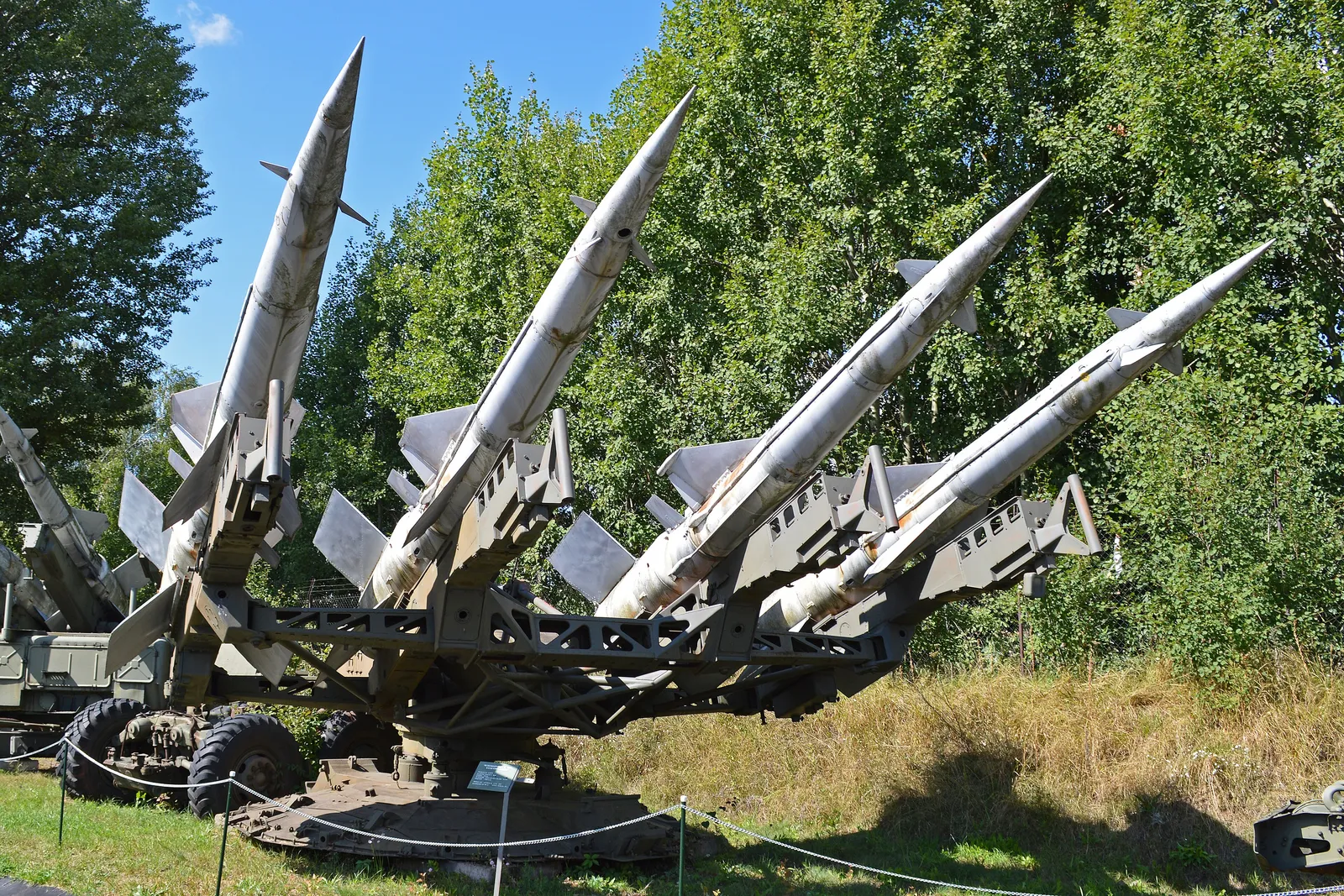
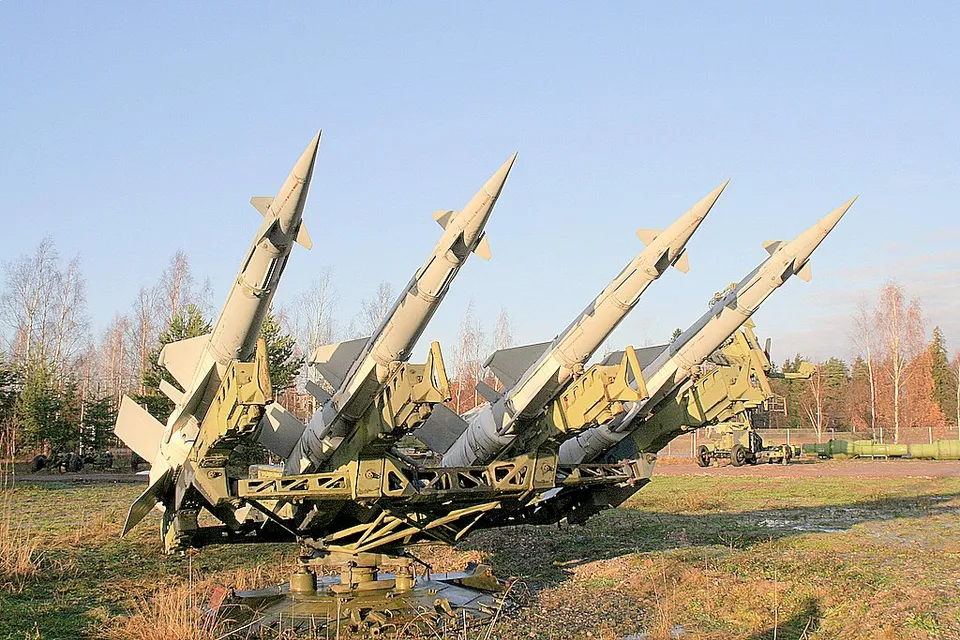
The S-125 Neva/Pechora, known to NATO as SA-3 Goa, is a Soviet command-guided surface-to-air missile system built to cover lower-altitude targets than earlier S-75 batteries. The family combines 5V24/V-600 or 5V27/V-601 missiles, SNR-125 Low Blow engagement radar, and twin- or four-rail launchers, with later Pechora upgrades adding mobile chassis, digital electronics, and optical tracking. Cataloged use spans Egyptian and Iraqi air-defense service, Yugoslav S-125 combat in Operation Allied Force, Syrian and Houthi-aligned legacy sites, Azerbaijani Pechora-2TM use, Ukrainian Newa-SC service, and Indian Pechora employment during Operation Sindoor.
Role in Conflicts
- Side
- EgyptSyria

Air Power Australia says the S-125 Neva / SA-3 Goa repeated its War of Attrition performance in the 1973 Yom Kippur War as part of the Arab surface-to-air missile threat facing Israeli aircraft.
- Side
- Iraq

Air Power Australia states that Iraq used S-125 Neva / SA-3 Goa systems extensively during the Iran-Iraq War, while cautioning that reliable kill statistics are not available because both sides overstated combat claims.
- Side
- Iraq
Air Power Australia assesses that the S-125 Neva / SA-3 Goa was compromised and less effective during Desert Storm but is usually credited with some Iraqi surface-to-air missile kills against coalition aircraft.
Role details
The Aeronautical Museum in Belgrade states that the Yugoslav 250th Missile Brigade's 3rd Missile Division used an S-125 Neva system to shoot down a U.S. F-117 during the 1999 bombing of the Federal Republic of Yugoslavia; Air Power Australia also credits S-125 systems with the F-117 and an F-16 loss during Operation Allied Force.
Russian defense officials said Syrian air-defense units fielded S-125 systems among the Soviet-era weapons used to repel the 14 April 2018 U.S., British, and French missile strikes; U.S. officials separately said Syrian surface-to-air missiles did not stop the coalition weapons from hitting their targets.
Role details- Side
- Ukraine

Ukrainian forces have fielded S-125-family systems during the war, including Polish-donated Newa-SC systems; Ukrainian Air Force reporting described S-125 crews intercepting Russian Kalibr cruise missiles, other missiles, and UAVs, while later Newa-SC kill-marking analysis suggests possible ballistic-missile engagements but remains caveated.
Role details- Side
- India

Indian government reporting said Pechora air-defense systems were used as part of Operation Sindoor after Pakistani drone and missile attacks on northern and western Indian military targets; India Today, citing the IAF, reported Pechora deployment on May 8-9 to counter Pakistani drone incursions.
- Side
- Azerbaijan

Azerbaijani forces used Belarusian-upgraded S-125-2TM Pechora-2TM systems during the 2020 war; leaked Tetraedr reporting cited by OCCRP, Buro Media, and Hetq credited the systems with destroying 11 Armenian UAVs.

Oryx reported that the first Saudi-led airstrikes in March 2015 focused in part on the single S-125 SAM site around Sanaa; Washington Institute analysis separately assessed that Houthi forces seized Yemeni ex-Soviet SAMs and radars, including SA-3 systems, documenting Houthi-aligned fielding rather than confirmed S-125 launches.
Role detailsMissiles, Radar, And Launchers
The S-125 family is best understood as a battery built around command-guided missiles, the SNR-125 Low Blow engagement radar, and rail launchers that evolved from prepared-site layouts to mobile upgrade packages. V-601 is the alternate designation for the 5V27 missile associated with the improved S-125M / SA-3B branch, not a separate launcher family.
| Component | Type | Documented role |
|---|---|---|
| 5V24 / V-600 and 5V27 / V-601 | Surface-to-air missiles | Two-stage solid-fuel rounds steered by radio-command guidance from the engagement radar. |
| SNR-125 Low Blow | Engagement radar | Tracks the target and missile, computes the intercept path, and sends command uplinks to guide the missile. |
| 5P71 and 5P73 | Launchers | Two-rail and four-rail launchers used in baseline batteries, with later upgrades mounting launch equipment on mobile truck chassis. |
| P-15/P-19 and PRV-10/PRV-11 | Associated sensors | Acquisition and height-finding radars documented as supporting sensors for S-125 battery operations. |
Profile / Specs
Profile
- Origin
- Soviet Union
- Built by
- Almaz Central Design Bureau
- Type
- Short- to medium-range surface-to-air missile system
- Service note
- Introduced in the early 1960s; still operated in upgraded and legacy forms
- Designer
- Almaz Central Design Bureau
- Designed
- Development began in 1956; S-125 Neva achieved IOC in 1961
- Unit cost
- Not publicly standardized
- Produced
- Mid-1960s through the 1980s for Soviet production, with later spare-part support and modernization packages
- Number built
- Not publicly confirmed
Specifications
- Guidance
- Radio-command guidance from SNR-125 Low Blow engagement radar
- Missiles
- V-600/5V24 and V-601/5V27 two-stage solid-fuel surface-to-air missiles
- V-601 / 5V27 missile
- S-125M Neva-M / SA-3B missile round introduced with the improved four-rail launcher family, with later 5V27D missiles used by S-125M1 and Newa-SC-compatible upgrades
- Engagement range
- About 3.5-18 km for common 5V27 variants, with some references listing up to about 25 km slant or operational range and later Pechora upgrades extending farther
- Engagement altitude
- Low- to medium-altitude envelope, with references listing roughly 20-100 m minimum altitude and up to about 14-18 km depending on missile and upgrade
- Warhead
- Approximately 60-70 kg high-explosive fragmentation warhead, variant dependent
- Launcher
- Fixed or semi-mobile two-rail 5P71 and four-rail 5P73 launchers, with later mobile upgrade packages
- Battery components
- Typical batteries include one SNR-125 Low Blow engagement radar, four 5P71 or 5P73 launchers, and PR-14 transporter/transloader vehicles
- Associated radars
- P-15/P-19 acquisition radars and PRV-10/PRV-11 height-finders are documented with S-125 batteries
- Pechora-2M mobility
- Pechora-2M mounts the 5P71 launcher and SNR-125 radar elements on MZKT-8022 6x6 trucks and is designed for roughly 25-minute deploy/stow cycles
- Newa-SC modernization
- Polish Newa-SC upgrades placed launchers on tracked chassis, moved the KA SC antenna column and KDN SC command cabin onto a MAZ-543SC vehicle, added solid-state command/receiver electronics and a CCD television sight, and kept 5V27U/5V27D missile compatibility
Variants
S-125 designations distinguish the original Soviet Neva family, Pechora export naming, missile and launcher upgrades, and later national modernization packages.
| Variant | Configuration | Designation notes |
|---|---|---|
| S-125 Neva / SA-3A | Initial land-based configuration | The initial S-125 Neva / SA-3A used V-600/5V24 missiles and two-rail 5P71 launchers for low-altitude air defense. |
| S-125M Neva-M / SA-3B | Improved missile and launcher package | The S-125M Neva-M introduced the V-601/5V27 missile and four-rail 5P73 launcher, extending the family beyond the original two-rail layout. |
| S-125M1 Neva-M1 | Countermeasures and optical-tracking upgrade | The M1 upgrade followed Middle Eastern combat experience and added improved countermeasures resistance, a Karat television tracker, and 5V27D missile compatibility. |
| S-125 Pechora | Export family designation | Pechora is the export-family name commonly attached to S-125 systems and later modernization packages outside Soviet service. Sources: S-125 SA-3 GOA, Almaz 5V24/5V27/S-125 Neva/Pechora / SA-3 Goa |
| Pechora-2M | Mobile deep-modernization package | Pechora-2M modernization mounts launcher and radar elements on MZKT-8022 trucks and adds upgraded missiles, digital electronics, electro-optical tracking, and shorter deploy/stow cycles. Sources: Legacy Air Defence System Upgrades / S-125-2M Pechora 2M |
| S-125-2TM Pechora-2TM | Belarusian Tetraedr modernization | Leaked Tetraedr reporting cited by OCCRP and Buro Media identifies Azerbaijani S-125-2TM Pechora-2TM systems used against Armenian UAVs in 2020. Sources: Azerbaijan Destroyed Armenian Drones With Belarusian Weapons, Leaked Report Says, Merchants of Death |
| S-125 Newa-SC | Polish self-propelled and digital modernization | The Newa-SC modernization is the Polish S-125 branch that combined a KDN SC command-and-guidance cabin, updated antenna-column electronics, tracked launcher chassis, and a MAZ-543SC radar/command vehicle; Ukrainian service has been publicly reported since the full-scale phase of the 2014 Russia-Ukraine War. Sources: WZE NEWA SC modernization, Old Soviet Design, Polish Upgrade: Ukraine's S-125 Newa-SC System May Be Defeating Ballistic Threats |
Timeline
S-125 Neva/Pechora / SA-3 Goa Key Events
Development begins
Soviet designers began work on the S-125 to supplement S-75 high-altitude coverage with a lower-altitude engagement envelope against aircraft and cruise-missile-type targets.
Sources: Almaz 5V24/5V27/S-125 Neva/Pechora / SA-3 Goa
S-125 Neva enters service
The S-125 Neva / SA-3A achieved initial operational capability and deployed as part of the Moscow-region SAM belt.
Sources: Almaz 5V24/5V27/S-125 Neva/Pechora / SA-3 Goa
S-125M1 upgrade follows combat experience
Operational lessons from Middle Eastern service helped drive the S-125M1 Neva-M1 upgrade, adding improved countermeasures resistance, television angle tracking, and the heavier 5V27D missile.
Sources: Almaz 5V24/5V27/S-125 Neva/Pechora / SA-3 Goa
F-117 shot down over Yugoslavia
The Aeronautical Museum in Belgrade says Yugoslav air-defense troops used an S-125 Neva system to shoot down a U.S. F-117A near Budjanovci during the 1999 NATO air campaign.
Sources: F-117 Nighthawk
Sanaa site targeted in Yemen
Oryx reported that early Saudi-led airstrikes in Yemen targeted, among other air-defense assets, the single S-125 SAM site around Sanaa after Houthi-aligned forces had taken over the national air-defense apparatus.
Sources: Saudi Aircraft Pound Al-Dailami Airbase In Yemen, Destroying U.S. Delivered Aircraft
Reported Syrian use during coalition strikes
Russian defense officials said Syrian units used S-125 systems during the response to U.S., British, and French strikes, while U.S. officials assessed that Syrian missiles did not prevent coalition weapons from reaching their targets.
Sources: Vladimir Putin calls US-led Syria strikes an 'act of aggression', Strikes Successful Against Syrian Chemical Weapons, DoD Officials Say
Pechora-2TM reported in Nagorno-Karabakh
OCCRP and Buro Media reported from leaked Tetraedr material that Azerbaijani Pechora-2TM crews used the upgraded S-125 family system against Armenian UAVs during the 2020 war.
Sources: Azerbaijan Destroyed Armenian Drones With Belarusian Weapons, Leaked Report Says, Merchants of Death
Newa-SC systems confirmed in Ukrainian service
Defense Express reported that a Ukrainian military video provided public confirmation that modernized Polish S-125 SC systems had reached Ukrainian service; FEPS later listed S-125 Newa SC systems among Polish military equipment donated to Ukraine.
Sources: Ukrainian Air Force Used Patriot SAM System During Bryansk Air Defense, Europe and the War in Ukraine
Ukrainian S-125 crew operations described
Defense Express, citing Ukrainian Air Force material, described S-125 crew operations against Russian long-range missiles and UAVs, including a reported Kalibr intercept.
Sources: Ukrainian S-125 Air Defense System from the 1960s First Shoots Down a Kalibr
Pechora named in Operation Sindoor
India's Press Information Bureau listed Pechora among the air-defense systems used during Operation Sindoor after Pakistani drone and missile attacks against northern and western Indian military targets.
Sources: Operation SINDOOR: The Rise of Aatmanirbhar Innovation in Modern Warfare
Media
S-125 Neva/Pechora / SA-3 Goa Videos
S-125 Neva/Pechora / SA-3 Goa Images
Related Weapon Systems


Sources
Almaz 5V24/5V27/S-125 Neva/Pechora / SA-3 GoaPublisher: Air Power Australia | Note: Supports S-125 background, Almaz design context, low-altitude air-defense role, radar components, and baseline technical characteristics. Direct conflict-use support: S-125 systems used by Soviet-supported Egyptian forces in the 1969 War of Attrition; S-125 systems used by Egyptian and Syrian air defenses in the 1973 Yom Kippur War; S-125 systems used by Iraqi forces in the 1980 Iran-Iraq War; S-125 systems used by Iraqi air defenses in the 1990 Gulf War / Desert Storm campaign; and S-125 systems used by Yugoslav air defenses in 1999 Kosovo War / Operation Allied Force. | Accessed: 2026-07-04S-125 Neva/Pechora (SA-3 Goa)Publisher: U.S. Army ODIN Worldwide Equipment Guide | Note: Supports S-125 specifications including missile dimensions, launch weight, warhead, and Pechora upgrade range data. | Accessed: 2026-06-20FRUS Cease-Fire Agreement Document 104Publisher: U.S. Department of State, Office of the Historian | Note: Supports 1969 War of Attrition direct-use context: U.S. records discuss Soviet-manned SA-3 air-defense sites in Egypt, Israeli concerns about increased aircraft losses, and ceasefire calculations around those sites. | Accessed: 2026-07-04Vladimir Putin calls US-led Syria strikes an 'act of aggression'Publisher: The Guardian | Note: Supports April 2018 U.S., UK, and French strikes in the 2011 Syrian Civil War direct use: S-125 systems were fielded by Syrian government air-defense forces during the response to the U.S.-led missile strike, according to a Russian defense ministry official quoted in the report. | Accessed: 2026-06-20Strikes Successful Against Syrian Chemical Weapons, DoD Officials SayPublisher: U.S. Air Force / DoD News | Note: Supports April 2018 U.S., UK, and French strikes in the 2011 Syrian Civil War context for Syrian surface-to-air missile launches and the U.S. assessment that coalition weapons hit their targets. | Accessed: 2026-06-20S-125 SA-3 GOAPublisher: Federation of American Scientists | Note: Supports technical context for SA-3 guidance, launchers, performance envelope, and system role. | Accessed: 2026-06-24Legacy Air Defence System Upgrades / S-125-2M Pechora 2MPublisher: Air Power Australia | Note: Supports Pechora-2M modernization details including MZKT-8022 mobility, upgraded 5V27D/5V27DE missiles, digital electronics, electro-optical tracker, and deploy/stow timing. | Accessed: 2026-06-24F-117 NighthawkPublisher: Aeronautical Museum in Belgrade | Note: Supports 1999 Kosovo War / Operation Allied Force direct use: Yugoslav air-defense troops used an S-125 Neva system to shoot down an F-117A on 27 March 1999 during the bombing of the Federal Republic of Yugoslavia. | Accessed: 2026-07-04Operation SINDOOR: The Rise of Aatmanirbhar Innovation in Modern WarfarePublisher: Press Information Bureau, Government of India | Note: Supports 2025 India-Pakistan Conflict direct use: Pechora air-defense systems were used by Indian forces as part of Operation Sindoor after Pakistani drone and missile attacks. | Accessed: 2026-06-21Pechora unleashed: Inside the Indian stealth killer that hunted Pakistani dronesPublisher: India Today | Note: Supports 2025 India-Pakistan Conflict direct use: Pechora air-defense systems were used by the Indian Air Force on May 8-9, 2025, to counter Pakistani drone incursions. | Accessed: 2026-06-21Azerbaijan Destroyed Armenian Drones With Belarusian Weapons, Leaked Report SaysPublisher: Organized Crime and Corruption Reporting Project | Note: Supports 2020 Nagorno-Karabakh Conflict direct use: Pechora-2TM systems were used by Azerbaijani forces against Armenian UAVs during the 2020 war. | Accessed: 2026-06-20Merchants of DeathPublisher: Buro Media | Note: Supports 2020 Nagorno-Karabakh Conflict direct use: S-125-2TM Pechora-2TM systems were used by Azerbaijani combat crews in operations that destroyed Armenian UAVs. | Accessed: 2026-06-20Saudi Aircraft Pound Al-Dailami Airbase In Yemen, Destroying U.S. Delivered AircraftPublisher: Oryx | Note: Supports 2014 Yemen Civil War direct use: an S-125 SAM site around Sanaa was fielded by Houthi-aligned forces after Yemen's air-defense apparatus was taken over by Houthi militants and then targeted by Saudi-led airstrikes. | Accessed: 2026-06-20Iran's Support to Houthi Air Defenses in YemenPublisher: The Washington Institute for Near East Policy | Note: Supports 2014 Yemen Civil War direct-use context: assesses that Houthi forces seized Yemeni ex-Soviet SAMs and radars, including SA-3 systems, after taking Sanaa and other areas. | Accessed: 2026-07-06Old Soviet Design, Polish Upgrade: Ukraine's S-125 Newa-SC System May Be Defeating Ballistic ThreatsPublisher: Defense Express | Note: Supports 2014 Russia-Ukraine War direct-use context and Newa-SC modernization context: reports Ukrainian service of Polish-upgraded S-125 Newa-SC systems, their use against Russian aerial threats, and caveats around interpreting ballistic-missile kill markings. | Accessed: 2026-07-06Ukrainian Air Force Used Patriot SAM System During Bryansk Air DefensePublisher: Defense Express | Note: Supports 2014 Russia-Ukraine War direct-use context: reports Ukrainian public confirmation that modernized Polish S-125 SC systems were received by Ukraine and describes Newa-SC mobility and electronics characteristics. | Accessed: 2026-07-06Ukrainian S-125 Air Defense System from the 1960s First Shoots Down a KalibrPublisher: Defense Express | Note: Supports 2014 Russia-Ukraine War direct use: Ukrainian Air Force reporting described S-125 crew combat operations, including a Kalibr cruise-missile intercept and additional Russian missiles and UAVs. | Accessed: 2026-07-06Europe and the War in UkrainePublisher: Foundation for European Progressive Studies | Note: Supports 2014 Russia-Ukraine War direct transfer context: lists S-125 Newa SC missile systems among Polish military equipment donated to Ukraine after the 2022 full-scale invasion. | Accessed: 2026-07-08WZE NEWA SC modernizationPublisher: Wojskowe Zakłady Elektroniczne S.A. | Note: Supports Newa-SC modernization details: the Polish PZR NEWA SC was made by modernizing the Soviet-built S-125M, retained 5V27U/5V27D missiles, added a KDN SC command-and-guidance cabin, modernized antenna-column electronics, used tracked launcher chassis, and placed the KA SC antenna column and KDN SC cabin on a MAZ-543SC vehicle. | Accessed: 2026-07-07Polish S-125 Neva-Pechora SAM system imagePublisher: Wikimedia Commons | Note: Supports image provenance and licensing for the primary gallery image of four V-600 missiles on an S-125 quadruple launcher. | Accessed: 2026-06-20S-125 Pechora / SA-3 Goa imagePublisher: Wikimedia Commons | Note: Supports image provenance and reuse terms for a second gallery image showing S-125 Pechora missiles at the Finnish anti-aircraft museum. | Accessed: 2026-06-20