Naval Systems

Project 1239 Sivuch / Bora-class missile hovercraft

Also known as
  • Project 1239
  • Project 1239 Sivuch
  • Bora-class
  • Bora-class corvette
  • Dergach-class

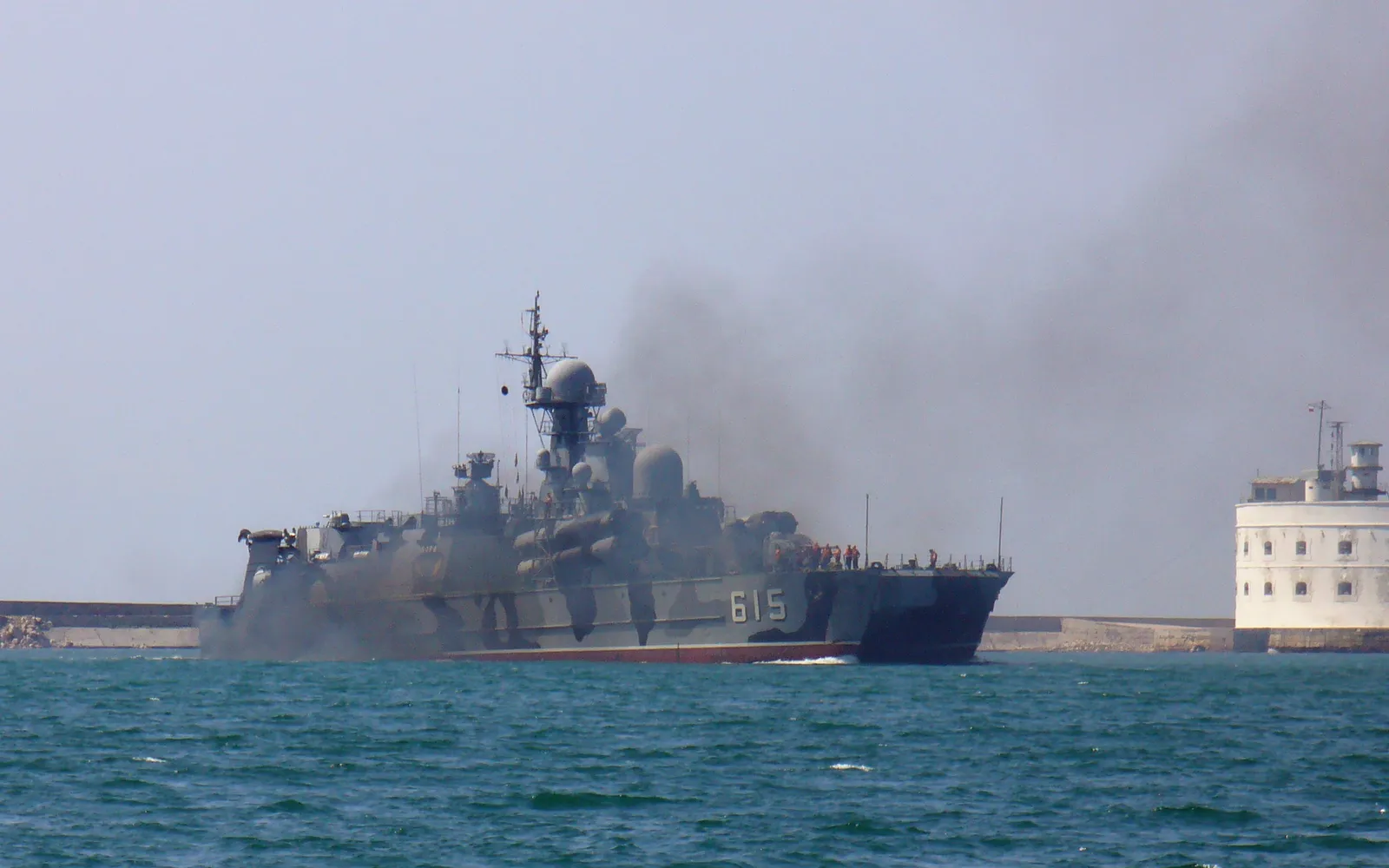
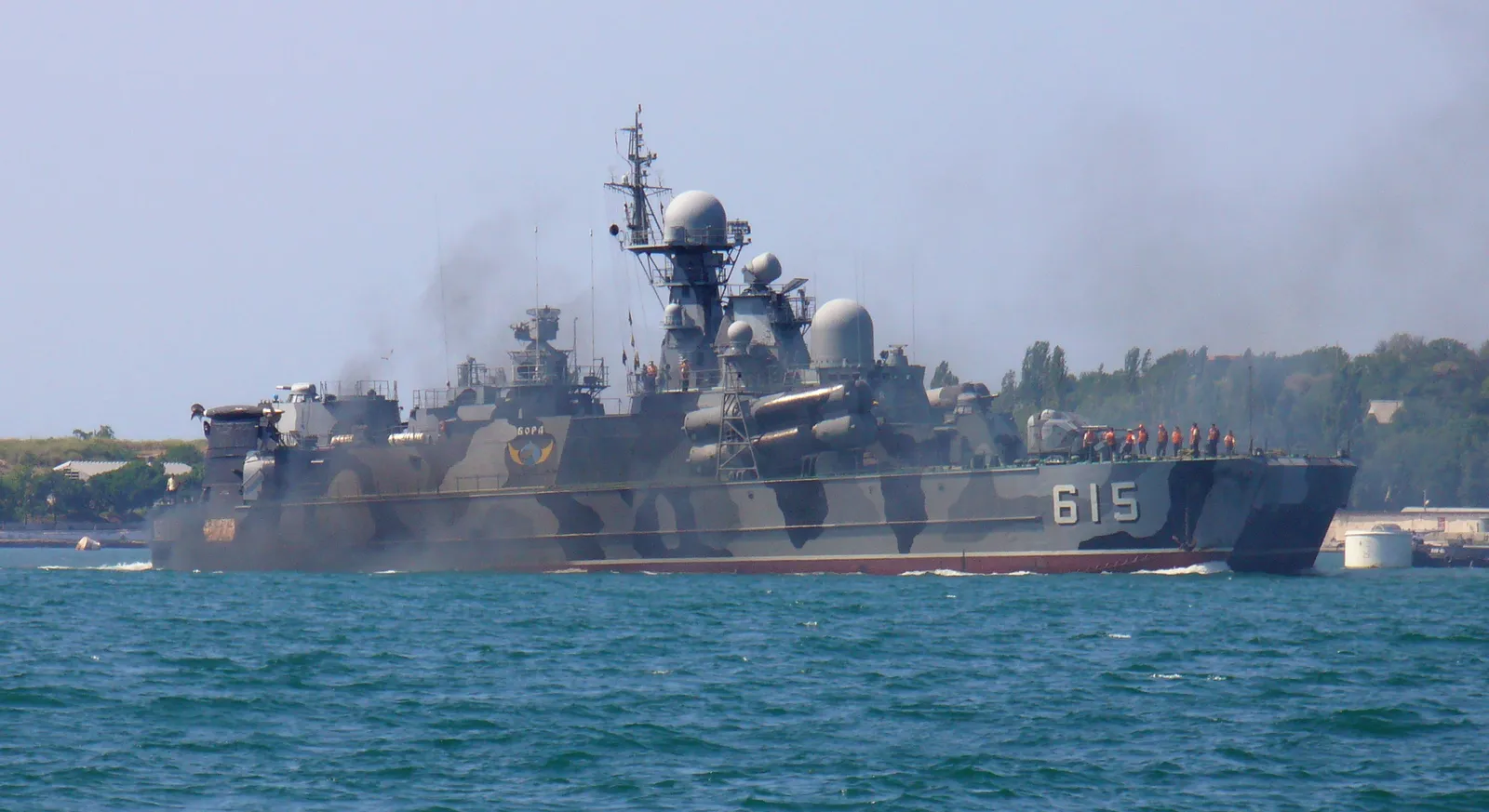
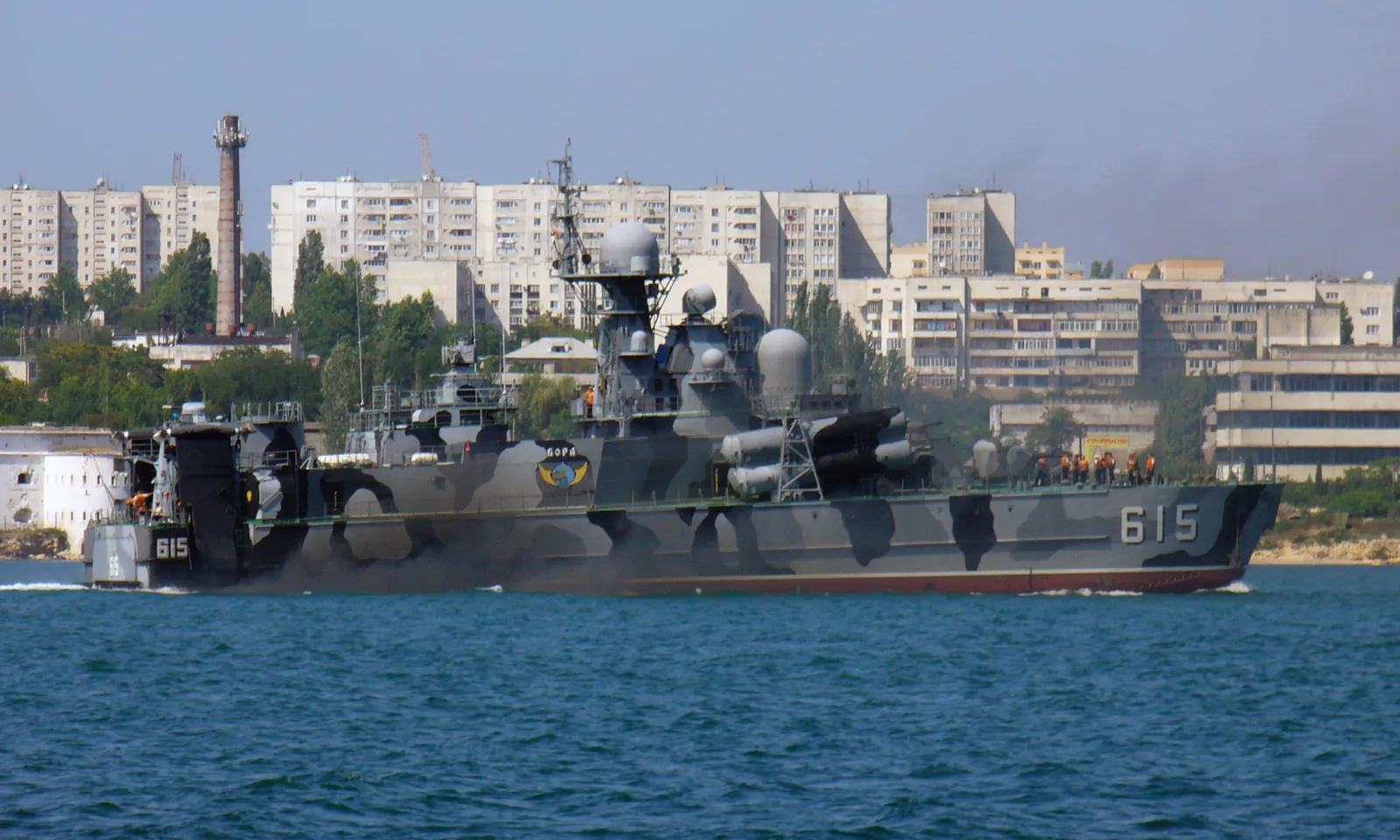
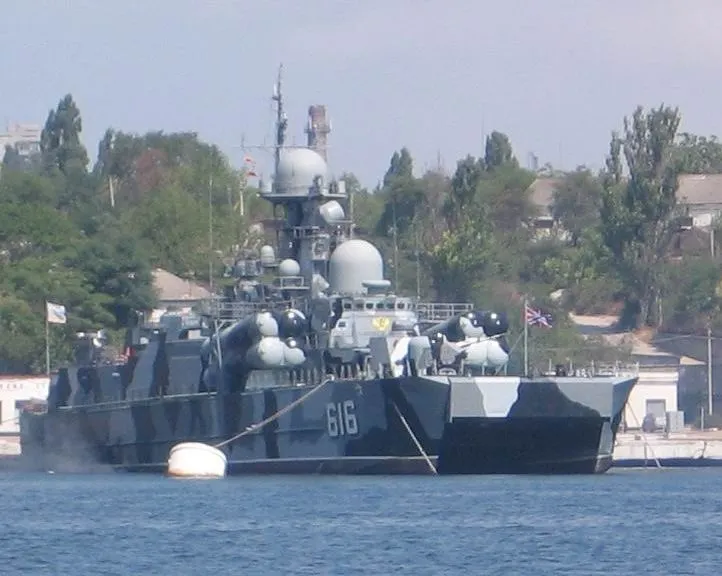
Project 1239 Sivuch, better known as the Bora class, is a Soviet-designed Russian Navy surface-effect guided-missile corvette family built at Zelenodolsk for high-speed coastal defense. The two-ship class combines catamaran, hydrofoil, and air-cushion features and carries Moskit anti-ship missiles plus an Osa-MA point-defense missile system.

Role in Conflicts

Side
Russia

The Russian Black Sea Fleet ship Samum was reported struck by a Ukrainian Sea Baby unmanned surface vessel while entering Sevastopol Bay on 14 September 2023; Ukrainian-source reporting said the vessel was damaged, while Russia said it destroyed the attacking naval drone.

Role details
Profile / Specs

Profile

Origin
Soviet Union
Type
Surface effect guided-missile corvette
Service note
1989-present
Designer
Almaz design bureau
Designed
Early 1980s
Produced
1987-2000
Number built
2

Specifications

Displacement
About 1,000-1,050 tonnes
Length
About 63.9-66 m
Beam
About 17.0-17.2 m
Speed
About 52.7-55 knots
Range
About 2,500 nautical miles
Crew
About 35-68
Armament
8 P-270 Moskit anti-ship missiles, Osa-MA SAM system, AK-176M gun, and two AK-630 CIWS mounts
Surface-Effect Design And Loadout

Project 1239 is described as a sidewall air-cushion missile ship: a catamaran-style hull rides with an air-cushion assist at high speed while retaining enough seaworthiness to use weapons in rough coastal conditions.

FeatureSourced detailOperational effect
Hull and lift conceptCatamaran, hydrofoil, and air-cushion features developed by Almaz for a high-speed small missile ship.Lets a roughly 1,000-ton corvette reach 50-knot-class speeds for coastal-defense and surface-strike missions.
Main strike batteryTwo four-cell launchers for P-100 Moskit anti-ship missiles.Gives the class a heavy anti-ship salvo despite its small-ship displacement.
Point defenseOsa-MA2 launcher with 9M33-family missiles, plus AK-176M and AK-630 gun systems.Provides short-range air-defense and close-in self-protection around the missile battery.
Variants

The published Project 1239 record covers the two completed Sivuch/Bora-class ships rather than separate subvariants.

VariantConfigurationDesignation notes
Bora (ex-Sivuch)Lead Project 1239 ship

Built at Zelenodolsk, commissioned on 30 December 1989 as Sivuch, and renamed Bora on 18 March 1992.

Sources: Kchf.ru: Missile Corvette Bora - Project 1239 / Bora class, RussianShips.info: Air Cushion Missile Ship Project 1239

SamumSecond Project 1239 ship

Launched in 1992, commissioned on 26 February 2000, and listed by RussianShips.info as transferred from the Baltic Fleet to the Black Sea Fleet in July 2002.

Sources: RussianShips.info: Air Cushion Missile Ship Project 1239

Carried Missiles

Project 1239 ships combine an anti-ship missile battery with a short-range shipborne air-defense launcher.

Launched itemItem typeLaunch evidence
9M33 Osa, Command-guided short-range surface-to-air missile family, Munitions9M33 OsaOsa-MA surface-to-air missile family

RussianShips.info lists a ZIF-122 Osa-MA2 launcher with 20 9M33-family missiles as part of the Project 1239 armament.

Sources: RussianShips.info: Air Cushion Missile Ship Project 1239

Timeline

Project 1239 Sivuch / Bora-class missile hovercraft Key Events

  1. Lead ship commissioned

    Kchf.ru says the lead ship Bora was commissioned on 30 December 1989 after being built at Zelenodolsk.

    Sources: Kchf.ru: Missile Corvette Bora - Project 1239 / Bora class

  2. Lead ship renamed Bora

    Kchf.ru notes that the lead ship was renamed Bora on 18 March 1992 after entering Soviet service as Sivuch.

    Sources: Kchf.ru: Missile Corvette Bora - Project 1239 / Bora class

  3. Samum commissioned

    RussianShips.info lists Samum as the second completed Project 1239 ship and gives 26 February 2000 as its commissioning date.

    Sources: RussianShips.info: Air Cushion Missile Ship Project 1239

  4. Samum transferred to the Black Sea Fleet

    RussianShips.info lists Samum in Baltic Fleet service before its transfer to the Black Sea Fleet on 25 July 2002.

    Sources: RussianShips.info: Air Cushion Missile Ship Project 1239

  5. Samum attacked near Sevastopol

    The Kyiv Independent reported that Ukrainian SBU sources described a Sea Baby strike on Samum as it entered Sevastopol Bay; the same report noted Russia's claim that it destroyed a Ukrainian naval drone attacking the hovercraft.

    Sources: Kyiv Independent: Ukraine hits Russian missile-carrying ship with sea drone, Al Jazeera: Ukraine strikes Russian ships, state-of-the-art aerial defences in Crimea

Media
Related Weapon Systems
Project 20380 / Steregushchiy-class corvette, Missile corvette, Naval SystemsNaval SystemsProject 20380 / Steregushchiy-class corvetteMissile corvetteProject 20380, known to NATO as the Steregushchiy class, is a Russian Navy guided-missile corvette family designed by Almaz and built by Severnaya Verf and Amur Shipyard for coastal escort, anti-surface, anti-submarine, and amphibious-support missions. The baseline ships combine Uran anti-ship missiles, Redut or Kortik air defense depending on hull, Paket-NK torpedo launchers, and a Ka-27 helicopter facility in a reduced-radar-signature corvette that remained in active Russian service during the 2014 Russia-Ukraine War.
P-270 Moskit, Supersonic anti-ship cruise missile, MunitionsMunitionsP-270 MoskitSupersonic anti-ship cruise missileThe P-270 Moskit, also known as 3M80/3M82 and SS-N-22 Sunburn, is a Soviet and Russian supersonic anti-ship cruise missile developed by MKB Raduga and produced at Progress plant in Arsenyev. The family is centered on shipboard strike from Sovremenny destroyers, Tarantul missile corvettes, and Project 1239 surface-effect corvettes, pairing inertial midcourse navigation with active/passive radar terminal homing and a low-altitude ramjet flight profile.
Project 22800 Karakurt-class guided-missile corvette, Small missile ship / guided-missile corvette, Naval SystemsNaval SystemsProject 22800 Karakurt-class guided-missile corvetteSmall missile ship / guided-missile corvetteThe Project 22800 Karakurt-class guided-missile corvette is a Russian small missile ship class designed by Almaz Central Marine Design Bureau for near-sea missile and artillery missions. Russian service ships pair an eight-cell universal naval firing system for Kalibr or Oniks cruise missiles with a 76.2 mm gun and, on later units, Pantsir-M air defense; contracts and deliveries have involved Pella, Zelenodolsk, and Amur shipyards since the first hull was laid down in 2015.
Project 1124 Albatros / Grisha-class anti-submarine corvette, Anti-submarine corvette class, Naval SystemsNaval SystemsProject 1124 Albatros / Grisha-class anti-submarine corvetteAnti-submarine corvette classThe Project 1124 Albatros, known to NATO as the Grisha class, is a Soviet anti-submarine corvette family built for coastal ASW patrols, base protection, and convoy escort. The compact ships combined sonar, Osa-M point-defense missiles, torpedo tubes, and RBU-6000 launchers; Ukrainian Grisha-family hulls later became part of the 2014 Russia-Ukraine War record through the Crimea naval seizures and the destruction of ex-Ukrainian Ternopil as a Russian Black Sea Fleet target ship in 2023.
Project 1234 Ovod / Nanuchka-class missile corvette, Guided missile corvette family, Naval SystemsNaval SystemsProject 1234 Ovod / Nanuchka-class missile corvetteGuided missile corvette familyProject 1234 Ovod, known in NATO reporting as the Nanuchka class, is a Soviet guided-missile corvette family built around a compact high-speed hull with heavy anti-ship missile armament. Soviet Project 1234 and 12341 ships carried P-120 Malakhit missiles and an Osa-M point-defense launcher, while export Project 1234E boats carried P-15/P-20 Termit missiles; documented combat losses connect Libyan export hulls to the 1986 Gulf of Sidra fighting, NATO's 2011 Libya campaign, and the 2014 Benghazi fighting.

Sources